R. Paul Murrmann – författare
Visar alla böcker från författaren R. Paul Murrmann. Handla med fri frakt och snabb leverans.
3 produkter
3 produkter
10 781 kr
Skickas inom 10-15 vardagar
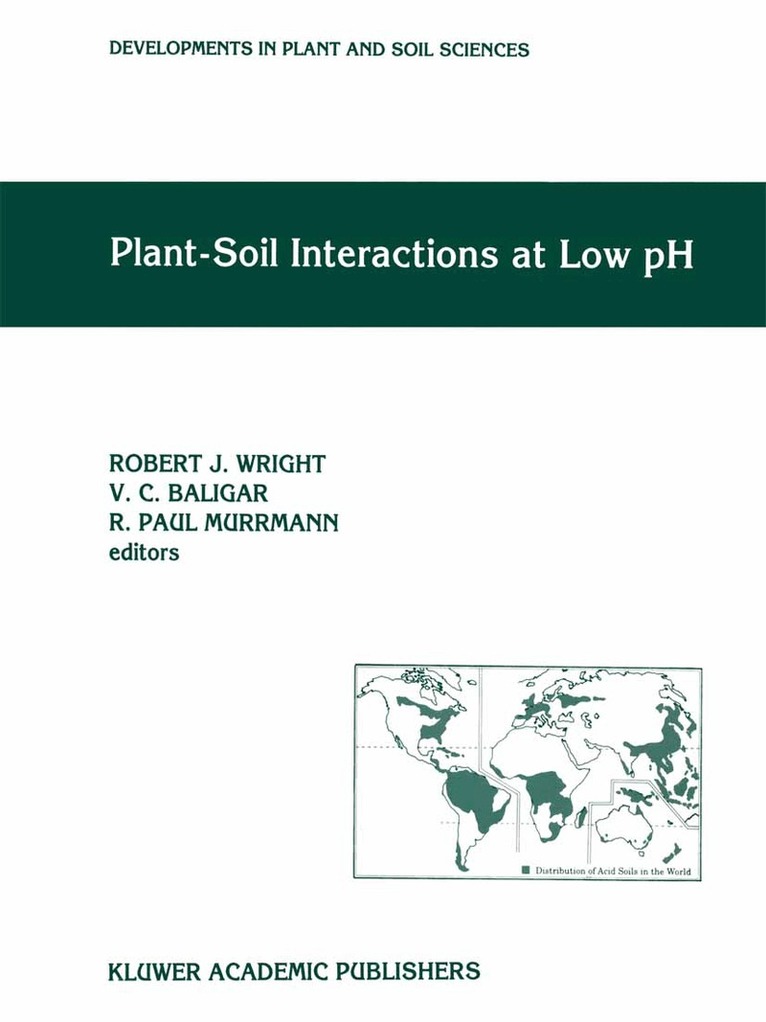
Soil acidity is a major limitation to crop production in many parts of the world. Plant growth inhibition results from a combination of factors, including aluminum, manganese, and hydrogen ion toxicities and deficiencies of essential elements, particularly calcium, magnesium, phosphorus, and molybdenum. Agricultural management practices and acid precipitation have increased acid inputs into the ecosystem and heightened concern about soil acidity problems. While application of lime has proved to be effective in ameliorating surface soil acidity in many areas, significant soil acidity problems still exist. Scientists from Alberta, Canada, recognized the need to provide a forum for researchers from different disciplines to exchange information and ideas on solving problems of plant growth in acid soils. As a result of their efforts, the First International Symposium on Plant-Soil Interactions at Low pH was held at Grande Prairie, Alberta, Canada, in July 1987. In many acid soil areas, liming materials are not readily available, the cost may be prohibitive, or subsoil acidity cannot be corrected by surface application of lime. New management approaches involving both the plant and the soil are needed in these situations. Progress has been made in the selection and breeding of acid-tolerant plants. However, continued progress will be limited by our lack of understanding of the physiological and biochemical basis of differential acidity tolerance among plants.
Häftad, Engelska, 2012
5 335 kr
Skickas inom 10-15 vardagar
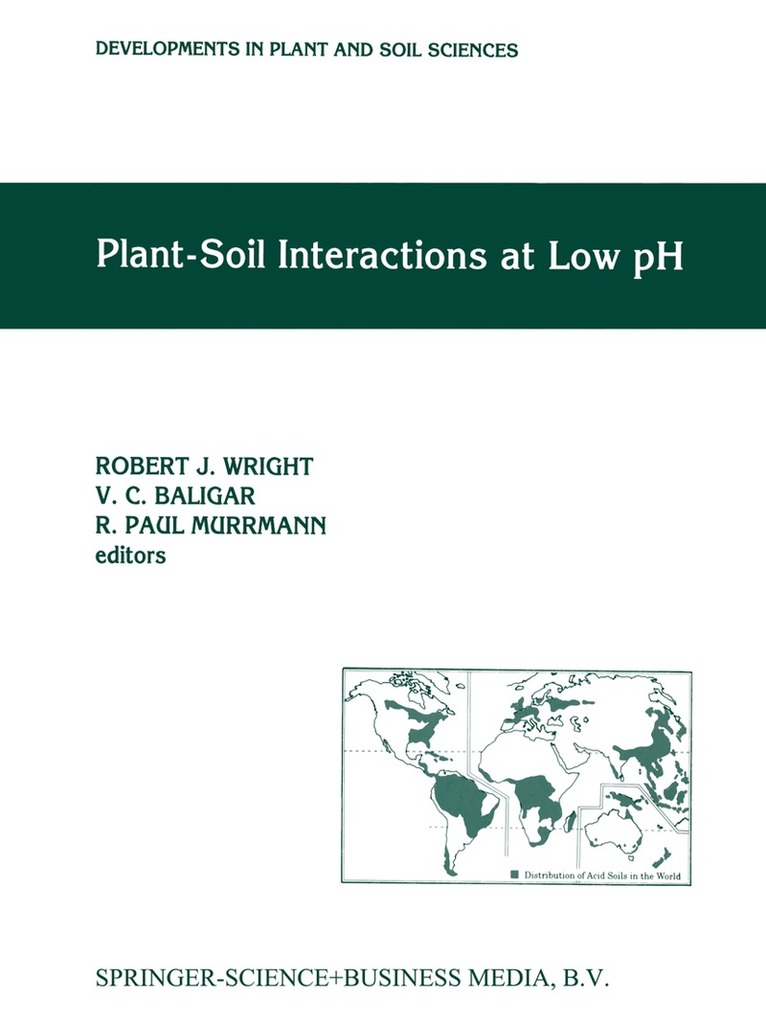
Soil acidity is a major limitation to crop production in many parts of the world. Plant growth inhibition results from a combination of factors, including aluminum, manganese, and hydrogen ion toxicities and deficiencies of essential elements, particularly calcium, magnesium, phosphorus, and molybdenum. Agricultural management practices and acid precipitation have increased acid inputs into the ecosystem and heightened concern about soil acidity problems. While application of lime has proved to be effective in ameliorating surface soil acidity in many areas, significant soil acidity problems still exist. Scientists from Alberta, Canada, recognized the need to provide a forum for researchers from different disciplines to exchange information and ideas on solving problems of plant growth in acid soils. As a result of their efforts, the First International Symposium on Plant-Soil Interactions at Low pH was held at Grande Prairie, Alberta, Canada, in July 1987. In many acid soil areas, liming materials are not readily available, the cost may be prohibitive, or subsoil acidity cannot be corrected by surface application of lime. New management approaches involving both the plant and the soil are needed in these situations. Progress has been made in the selection and breeding of acid-tolerant plants. However, continued progress will be limited by our lack of understanding of the physiological and biochemical basis of differential acidity tolerance among plants.
E-bok
PDF, Engelska, 20126 862 kr
Läs direkt efter köp
Soil acidity is a major limitation to crop production in many parts of the world. Plant growth inhibition results from a combination of factors, including aluminum, manganese, and hydrogen ion toxicities and deficiencies of essential elements, particularly calcium, magnesium, phosphorus, and molybdenum. Agricultural management practices and acid precipitation have increased acid inputs into the ecosystem and heightened concern about soil acidity problems. While application of lime has proved to be effective in ameliorating surface soil acidity in many areas, significant soil acidity problems still exist. Scientists from Alberta, Canada, recognized the need to provide a forum for researchers from different disciplines to exchange information and ideas on solving problems of plant growth in acid soils. As a result of their efforts, the First International Symposium on Plant-Soil Interactions at Low pH was held at Grande Prairie, Alberta, Canada, in July 1987. In many acid soil areas, liming materials are not readily available, the cost may be prohibitive, or subsoil acidity cannot be corrected by surface application of lime. New management approaches involving both the plant and the soil are needed in these situations. Progress has been made in the selection and breeding of acid-tolerant plants. However, continued progress will be limited by our lack of understanding of the physiological and biochemical basis of differential acidity tolerance among plants.