Raúl L. Madrid - Böcker
Visar alla böcker från författaren Raúl L. Madrid. Handla med fri frakt och snabb leverans.
8 produkter
8 produkter
347 kr
Skickas inom 7-10 vardagar
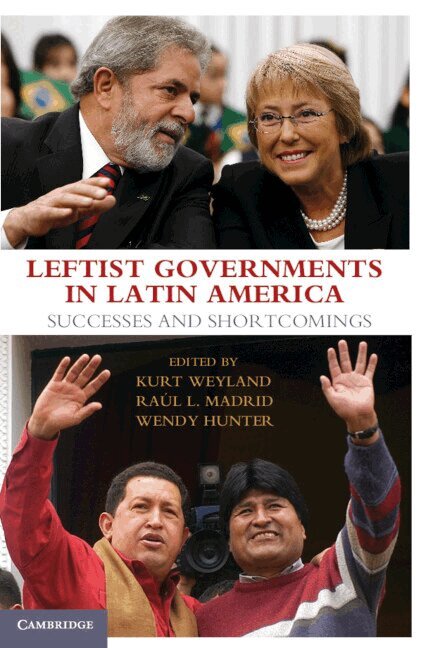
Can Latin America's 'new left' stimulate economic development, enhance social equity, and deepen democracy in spite of the economic and political constraints it faces? This is the first book to systematically examine the policies and performance of the left-wing governments that have risen to power in Latin America during the last decade. Featuring thorough studies of Bolivia, Brazil, Chile, and Venezuela by renowned experts, the volume argues that moderate leftist governments have attained greater, more sustainable success than their more radical, contestatory counterparts. Moderate governments in Brazil and Chile have generated solid economic growth, reduced poverty and inequality, and created innovative and fiscally sound social programs, while respecting the fundamental principles of market economics and liberal democracy. By contrast, more radical governments, exemplified by Hugo Chávez in Venezuela, have expanded state intervention and popular participation and attained some short-term economic and social successes.
334 kr
Skickas inom 7-10 vardagar
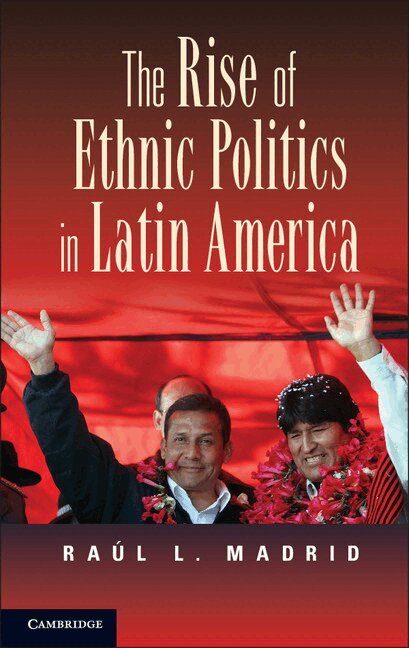
The Rise of Ethnic Politics in Latin America explores why indigenous movements have recently won elections for the first time in the history of the region. Raúl L. Madrid argues that some indigenous parties have won by using inclusive populist appeals to reach out to whites and mestizos. Indigenous parties have managed to win support across ethnic lines because the long history of racial mixing in Latin America blurred ethnic boundaries and reduced ethnic polarization. The appeals of the indigenous parties have especially resonated in the Andean countries because of widespread disenchantment with the region's traditional parties. The book contains up-to-date qualitative and quantitative analyses of parties in seven countries, including detailed case studies of Bolivia, Ecuador and Peru.
1 034 kr
Skickas inom 7-10 vardagar
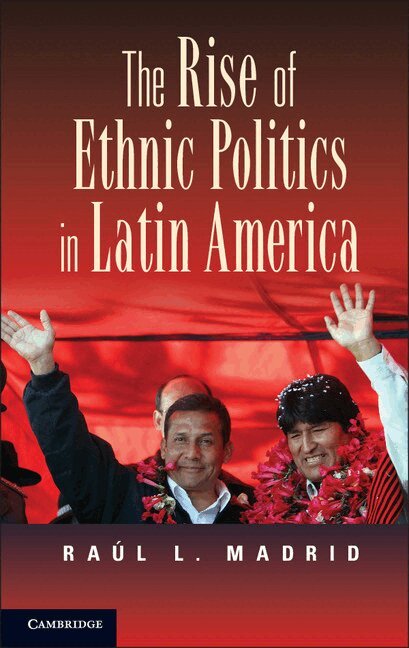
The Rise of Ethnic Politics in Latin America explores why indigenous movements have recently won elections for the first time in the history of the region. Raúl L. Madrid argues that some indigenous parties have won by using inclusive populist appeals to reach out to whites and mestizos. Indigenous parties have managed to win support across ethnic lines because the long history of racial mixing in Latin America blurred ethnic boundaries and reduced ethnic polarization. The appeals of the indigenous parties have especially resonated in the Andean countries because of widespread disenchantment with the region's traditional parties. The book contains up-to-date qualitative and quantitative analyses of parties in seven countries, including detailed case studies of Bolivia, Ecuador and Peru.
995 kr
Skickas inom 7-10 vardagar
Can Latin America's 'new left' stimulate economic development, enhance social equity, and deepen democracy in spite of the economic and political constraints it faces? This is the first book to systematically examine the policies and performance of the left-wing governments that have risen to power in Latin America during the last decade. Featuring thorough studies of Bolivia, Brazil, Chile, and Venezuela by renowned experts, the volume argues that moderate leftist governments have attained greater, more sustainable success than their more radical, contestatory counterparts. Moderate governments in Brazil and Chile have generated solid economic growth, reduced poverty and inequality, and created innovative and fiscally sound social programs, while respecting the fundamental principles of market economics and liberal democracy. By contrast, more radical governments, exemplified by Hugo Chávez in Venezuela, have expanded state intervention and popular participation and attained some short-term economic and social successes.
357 kr
Skickas inom 7-10 vardagar
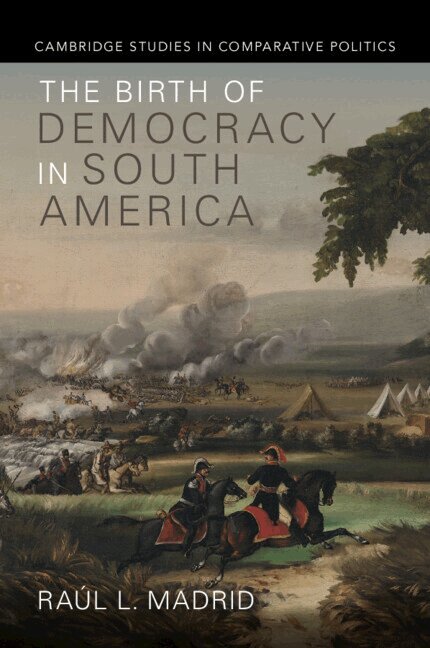
South America contains some of the oldest democracies in the world, yet we still know relatively little about how and why democracy arose in the region. Raúl L. Madrid argues that three main developments - the professionalization of the military, the growth of parties, and splits within the ruling party - led to democratization in the early twentieth century. Military professionalization increased the incentives for the opposition to abandon the armed struggle and focus on the electoral path to power. The growth of parties boosted the capacity of the opposition to enact and enforce democratic reforms that would level the electoral playing field. And ruling party splits created the opportunity for the opposition and ruling party dissidents to ally and push through reforms. This persuasive and original book offers important implications for the study of democracy. This title is also available as Open Access on Cambridge Core.
1 160 kr
Skickas inom 7-10 vardagar
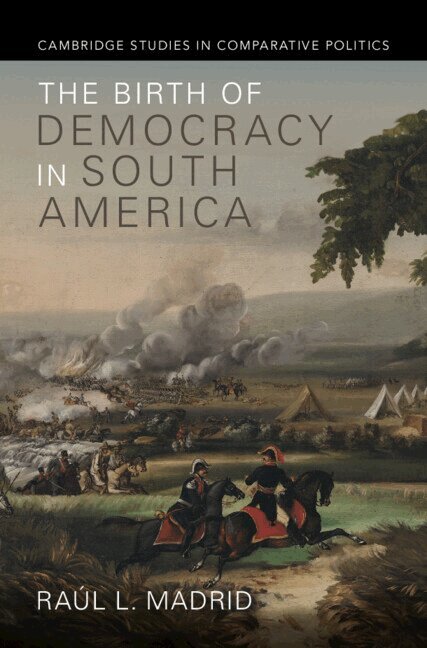
South America contains some of the oldest democracies in the world, yet we still know relatively little about how and why democracy arose in the region. Raúl L. Madrid argues that three main developments - the professionalization of the military, the growth of parties, and splits within the ruling party - led to democratization in the early twentieth century. Military professionalization increased the incentives for the opposition to abandon the armed struggle and focus on the electoral path to power. The growth of parties boosted the capacity of the opposition to enact and enforce democratic reforms that would level the electoral playing field. And ruling party splits created the opportunity for the opposition and ruling party dissidents to ally and push through reforms. This persuasive and original book offers important implications for the study of democracy. This title is also available as Open Access on Cambridge Core.
When Democracy Trumps Populism
European and Latin American Lessons for the United States
Inbunden, Engelska, 2019
1 113 kr
Skickas inom 7-10 vardagar
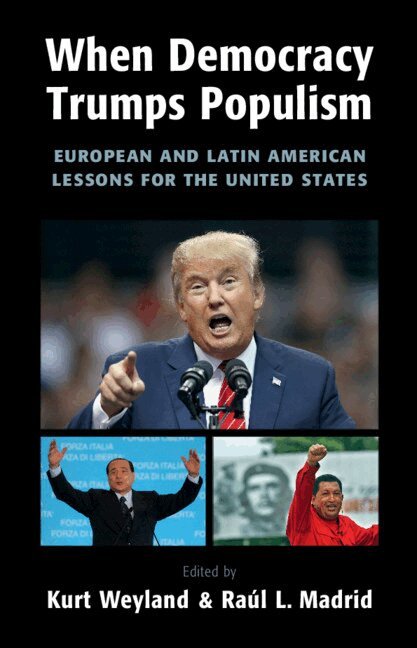
The victory of Donald Trump in the 2016 election left specialists of American politics perplexed and concerned about the future of US democracy. Because no populist leader had occupied the White House in 150 years, there were many questions about what to expect. Marshaling the long-standing expertise of leading specialists of populism elsewhere in the world, this book provides the first systematic, comparative analysis of the prospects for US democracy under Trump, considering the two regions - Europe and Latin America - that have had the most ample recent experiences with populist chief executives. Chapters analyze the conditions under which populism slides into illiberal or authoritarian rule and in so doing derive well-grounded insights and scenarios for the US case, as well as a more general cross-national framework. The book makes an original argument about the likely resilience of US democracy and its institutions.
When Democracy Trumps Populism
European and Latin American Lessons for the United States
Häftad, Engelska, 2019
309 kr
Skickas inom 7-10 vardagar
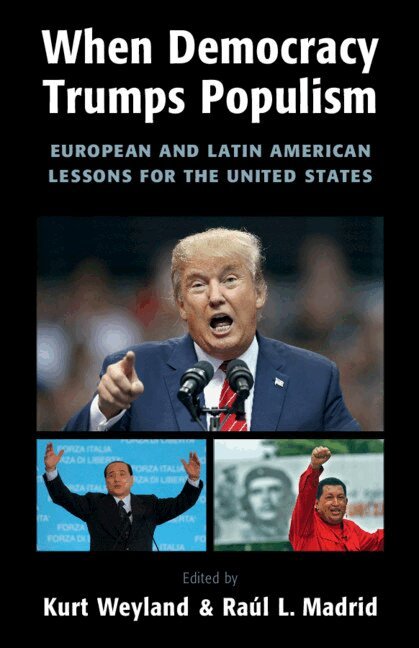
The victory of Donald Trump in the 2016 election left specialists of American politics perplexed and concerned about the future of US democracy. Because no populist leader had occupied the White House in 150 years, there were many questions about what to expect. Marshaling the long-standing expertise of leading specialists of populism elsewhere in the world, this book provides the first systematic, comparative analysis of the prospects for US democracy under Trump, considering the two regions - Europe and Latin America - that have had the most ample recent experiences with populist chief executives. Chapters analyze the conditions under which populism slides into illiberal or authoritarian rule and in so doing derive well-grounded insights and scenarios for the US case, as well as a more general cross-national framework. The book makes an original argument about the likely resilience of US democracy and its institutions.