Radoslaw Katarzyniak - Böcker
Visar alla böcker från författaren Radoslaw Katarzyniak. Handla med fri frakt och snabb leverans.
8 produkter
8 produkter
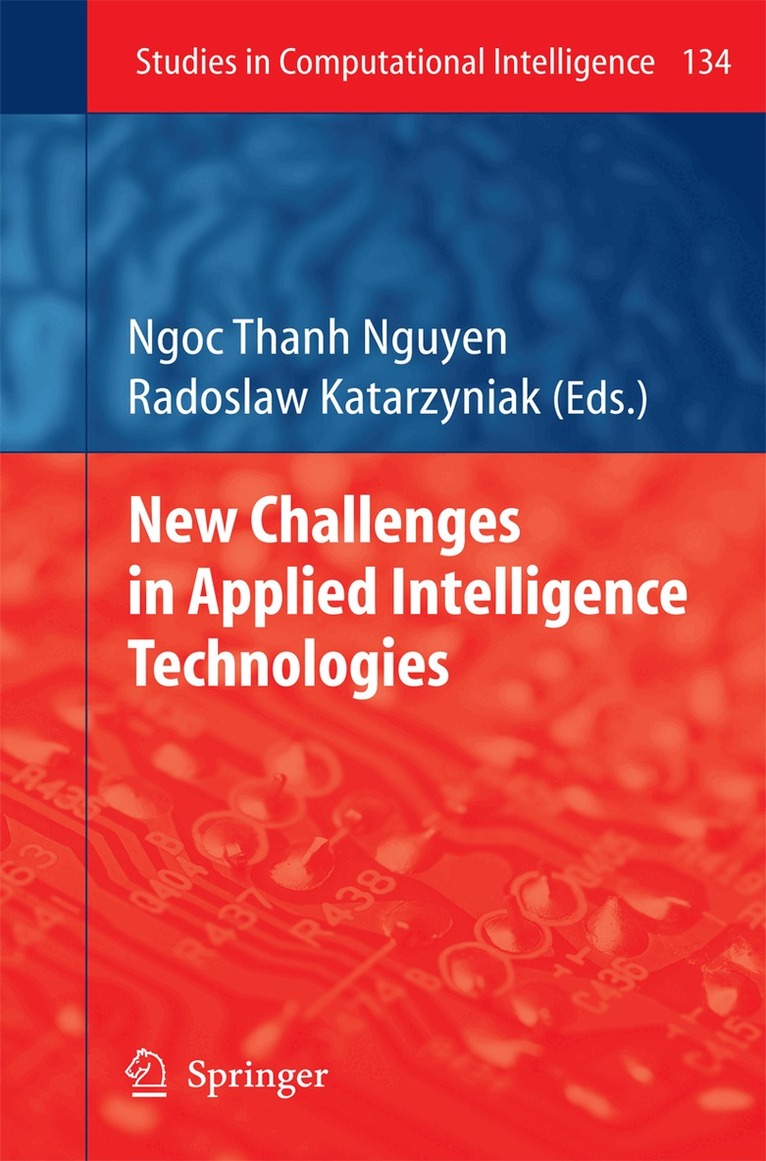
Del 134 - Studies in Computational Intelligence
New Challenges in Applied Intelligence Technologies
Inbunden, Engelska, 2008
1 636 kr
Skickas inom 10-15 vardagar
To built intelligent systems that can cope with real world problems we need to - velop computational mechanisms able to deal with very large amounts of data, gen- ate complex plans, schedules, and resource allocation strategies, re-plan their actions in real time, provide user friendly communication for human-device interactions, and perform complex optimization problems. In each of these tasks intelligence techno- gies play an important role, providing designers and creators with effective and adequate computational models. The field of intelligence technologies covers a variety of computational approaches that are often suggested and inspired by biological systems, exhibiting functional richness and flexibility of their natural behavior. This class of technologies consists of such important approaches as data mining algorithms, neural networks, genetic al- rithms, fuzzy and multi-valued logics, rough sets, agent-oriented computation, often integrated into complex hybrid solutions. Intelligence technologies are used to built machines that can act and think like living systems, solve problems in an autonomous way, develop rich private knowledge bases and produce results not foreseen and programmed in a direct way by designers and creators.
1 636 kr
Skickas inom 10-15 vardagar
Collective intelligence has become one of major research issues studied by today’s and future computer science. Computational collective intelligence is understood as this form of group intellectual activity that emerges from collaboration and compe- tion of many artificial individuals. Robotics, artificial intelligence, artificial cognition and group working try to create efficient models for collective intelligence in which it emerges from sets of actions carried out by more or less intelligent individuals. The major methodological, theoretical and practical aspects underlying computational collective intelligence are group decision making, collective action coordination, collective competition and knowledge description, transfer and integration. Obviously, the application of multiple computational technologies such as fuzzy systems, evo- tionary computation, neural systems, consensus theory, knowledge representation etc. is necessary to create new forms of computational collective intelligence and support existing ones. Three subfields of application of computational technologies to support forms of collective intelligence are of special attention to us. The first one is semantic web treated as an advanced tool that increases the collective intelligence in networking environments. The second one covers social networks modeling and analysis, where social networks are this area of in which various forms of computational collective intelligence emerges in a natural way. The third subfield relates us to agent and mul- agent systems understood as this computational and modeling paradigm which is especially tailored to capture the nature of computational collective intelligence in populations of autonomous individuals.
Del 134 - Studies in Computational Intelligence
New Challenges in Applied Intelligence Technologies
Häftad, Engelska, 2010
1 589 kr
Skickas inom 10-15 vardagar
To built intelligent systems that can cope with real world problems we need to - velop computational mechanisms able to deal with very large amounts of data, gen- ate complex plans, schedules, and resource allocation strategies, re-plan their actions in real time, provide user friendly communication for human-device interactions, and perform complex optimization problems. In each of these tasks intelligence techno- gies play an important role, providing designers and creators with effective and adequate computational models. The field of intelligence technologies covers a variety of computational approaches that are often suggested and inspired by biological systems, exhibiting functional richness and flexibility of their natural behavior. This class of technologies consists of such important approaches as data mining algorithms, neural networks, genetic al- rithms, fuzzy and multi-valued logics, rough sets, agent-oriented computation, often integrated into complex hybrid solutions. Intelligence technologies are used to built machines that can act and think like living systems, solve problems in an autonomous way, develop rich private knowledge bases and produce results not foreseen and programmed in a direct way by designers and creators.
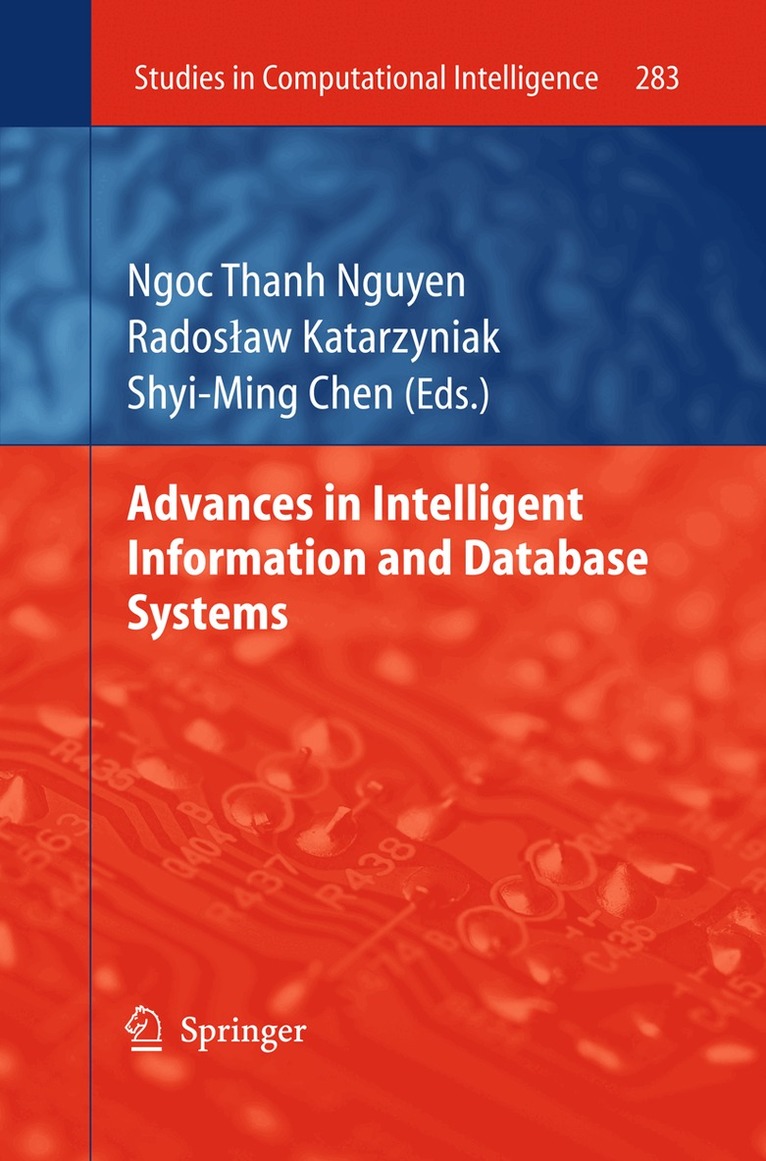
Del 283 - Studies in Computational Intelligence
Advances in Intelligent Information and Database Systems
Inbunden, Engelska, 2010
1 636 kr
Skickas inom 10-15 vardagar
Intelligent information and database systems are two closely related and we- established subfields of modern computer science. They focus on the integration of artificial intelligence and classic database technologies in order to create the class of next generation information systems. The major target of this new gene- tion of systems is to provide end-users with intelligent behavior: simple and/or advanced learning, problem solving, uncertain and certain reasoning, se- organization, cooperation, etc. Such intelligent abilities are implemented in classic information systems to make them autonomous and user oriented, in particular when advanced problems of multimedia information and knowledge discovery, access, retrieval and manipulation are to be solved in the context of large, distr- uted and heterogeneous environments. It means that intelligent knowledge-based information and database systems are used to solve basic problems of large coll- tions management, carry out knowledge discovery from large data collections, reason about information under uncertain conditions, support users in their for- lation of complex queries etc. Topics discussed in this volume include but are not limited to the foundations and principles of data, information, and knowledge models, methodologies for intelligent information and database systems analysis, design, implementation, validation, maintenance and evolution.
Del 283 - Studies in Computational Intelligence
Advances in Intelligent Information and Database Systems
Häftad, Engelska, 2012
1 636 kr
Skickas inom 10-15 vardagar
Intelligent information and database systems are two closely related and we- established subfields of modern computer science. They focus on the integration of artificial intelligence and classic database technologies in order to create the class of next generation information systems. The major target of this new gene- tion of systems is to provide end-users with intelligent behavior: simple and/or advanced learning, problem solving, uncertain and certain reasoning, se- organization, cooperation, etc. Such intelligent abilities are implemented in classic information systems to make them autonomous and user oriented, in particular when advanced problems of multimedia information and knowledge discovery, access, retrieval and manipulation are to be solved in the context of large, distr- uted and heterogeneous environments. It means that intelligent knowledge-based information and database systems are used to solve basic problems of large coll- tions management, carry out knowledge discovery from large data collections, reason about information under uncertain conditions, support users in their for- lation of complex queries etc. Topics discussed in this volume include but are not limited to the foundations and principles of data, information, and knowledge models, methodologies for intelligent information and database systems analysis, design, implementation, validation, maintenance and evolution.
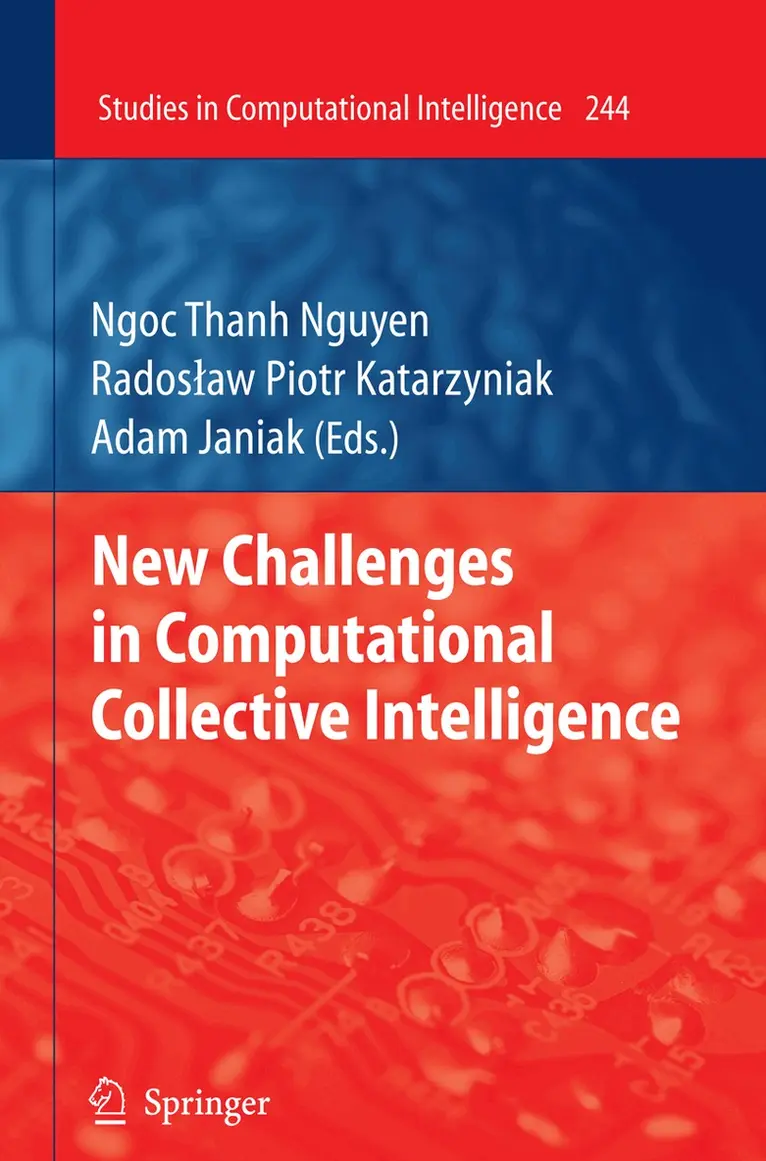
Del 244 - Studies in Computational Intelligence
New Challenges in Computational Collective Intelligence
Häftad, Engelska, 2012
1 636 kr
Skickas inom 10-15 vardagar
Collective intelligence has become one of major research issues studied by today’s and future computer science. Computational collective intelligence is understood as this form of group intellectual activity that emerges from collaboration and compe- tion of many artificial individuals. Robotics, artificial intelligence, artificial cognition and group working try to create efficient models for collective intelligence in which it emerges from sets of actions carried out by more or less intelligent individuals. The major methodological, theoretical and practical aspects underlying computational collective intelligence are group decision making, collective action coordination, collective competition and knowledge description, transfer and integration. Obviously, the application of multiple computational technologies such as fuzzy systems, evo- tionary computation, neural systems, consensus theory, knowledge representation etc. is necessary to create new forms of computational collective intelligence and support existing ones. Three subfields of application of computational technologies to support forms of collective intelligence are of special attention to us. The first one is semantic web treated as an advanced tool that increases the collective intelligence in networking environments. The second one covers social networks modeling and analysis, where social networks are this area of in which various forms of computational collective intelligence emerges in a natural way. The third subfield relates us to agent and mul- agent systems understood as this computational and modeling paradigm which is especially tailored to capture the nature of computational collective intelligence in populations of autonomous individuals.
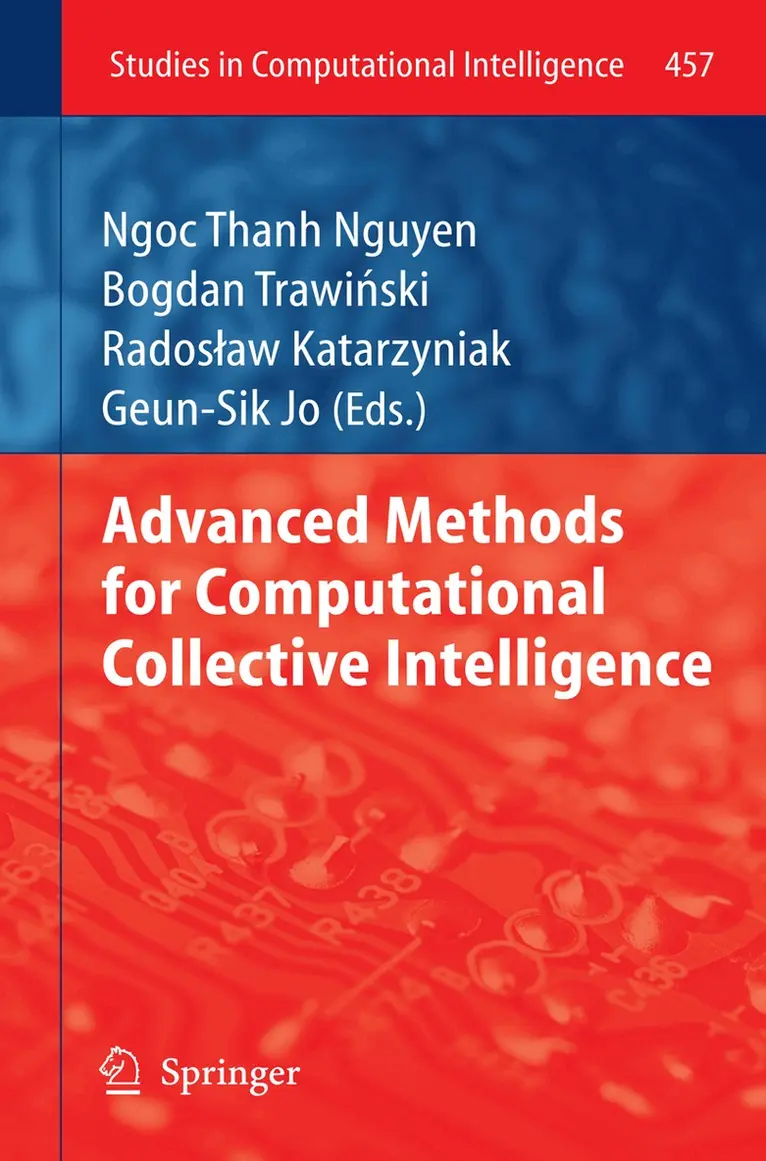
Del 457 - Studies in Computational Intelligence
Advanced Methods for Computational Collective Intelligence
Inbunden, Engelska, 2012
1 636 kr
Skickas inom 10-15 vardagar
The book consists of 35 extended chapters which have been selected and invited from the submissions to the 4th International Conference on Computational Collective Intelligence Technologies and Applications (ICCCI 2012) held on November 28-30, 2012 in Ho Chi Minh City, Vietnam. The book is organized into six parts, which are semantic web and ontologies, social networks and e-learning, agent and multiagent systems, data mining methods and applications, soft computing, and optimization and control, respectively. All chapters in the book discuss theoretical and practical issues connected with computational collective intelligence and related technologies. The editors hope that the book can be useful for graduate and Ph.D. students in Computer Science, in particular participants in courses on Soft Computing, Multiagent Systems, and Data Mining. This book can be also useful for researchers working on the concept of computational collective intelligence in artificial populations. It is the hope of the editors that readers of this volume can find many inspiring ideas and use them to create new cases of intelligent collectives. Many such challenges are suggested by particular approaches and models presented in individual chapters of this book. The editors hope that readers of this volume can find many inspiring ideas and influential practical examples and use them in their future work.
Del 457 - Studies in Computational Intelligence
Advanced Methods for Computational Collective Intelligence
Häftad, Engelska, 2014
1 636 kr
Skickas inom 10-15 vardagar
The book consists of 35 extended chapters which have been selected and invited from the submissions to the 4th International Conference on Computational Collective Intelligence Technologies and Applications (ICCCI 2012) held on November 28-30, 2012 in Ho Chi Minh City, Vietnam. The book is organized into six parts, which are semantic web and ontologies, social networks and e-learning, agent and multiagent systems, data mining methods and applications, soft computing, and optimization and control, respectively. All chapters in the book discuss theoretical and practical issues connected with computational collective intelligence and related technologies. The editors hope that the book can be useful for graduate and Ph.D. students in Computer Science, in particular participants in courses on Soft Computing, Multiagent Systems, and Data Mining. This book can be also useful for researchers working on the concept of computational collective intelligence in artificial populations. It is the hope of the editors that readers of this volume can find many inspiring ideas and use them to create new cases of intelligent collectives. Many such challenges are suggested by particular approaches and models presented in individual chapters of this book. The editors hope that readers of this volume can find many inspiring ideas and influential practical examples and use them in their future work.