Radu Popescu-Zeletin – författare
Visar alla böcker från författaren Radu Popescu-Zeletin. Handla med fri frakt och snabb leverans.
8 produkter
Mobile Agents
First International Workshop, MA '97, Berlin, Germany, April, 7-8, 1997, Proceedings
Av Kurt Rothermel, Radu Popescu-Zeletin
Häftad, 1997
567 kr
Lägg i varukorg
This book presents the refereed proceedings of the First International Conference on Mobile Agents, MA '97, held in Berlin, Germany, in April 1997.Mobile Agents offer unique opportunities for structuring and implementing distributed systems. A wide range of applications has been identified for …
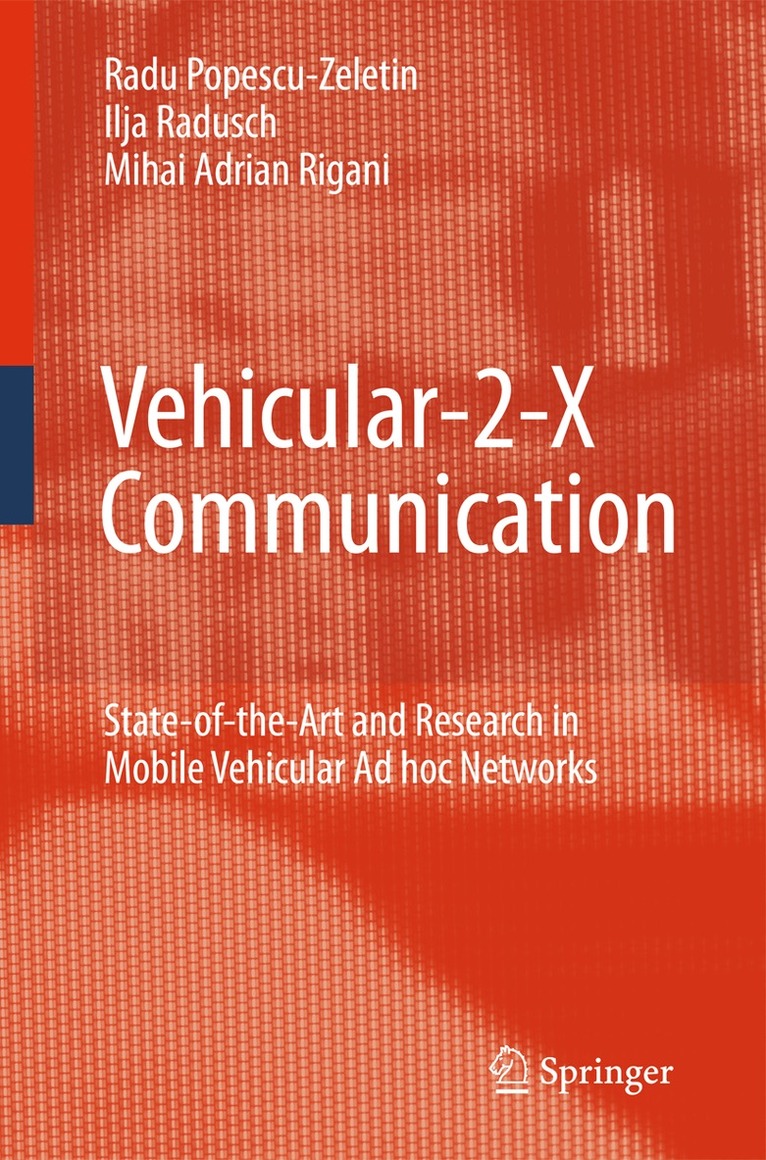
Vehicular-2-X Communication
State-of-the-Art and Research in Mobile Vehicular Ad hoc Networks
Av Radu Popescu-Zeletin, Ilja Radusch m. fl.
Inbunden, 2010
1095 kr
Lägg i varukorg
Universal vehicular communication promises many improvements in terms of ac- dent avoidance and mitigation, better utilization of roads and resources such as time and fuel, and new opportunities for infotainment applications. However, before widespread acceptance, vehicular communication must meet …
Vehicular-2-X Communication
State-of-the-Art and Research in Mobile Vehicular Ad hoc Networks
Av Mihai Adrian Rigani, Ilja Radusch m. fl.
E-bok, 2010
1427 kr
Lägg i varukorg
Universal vehicular communication promises many improvements in terms of ac- dent avoidance and mitigation, better utilization of roads and resources such as time and fuel, and new opportunities for infotainment applications. However, before widespread acceptance, vehicular communication must meet …
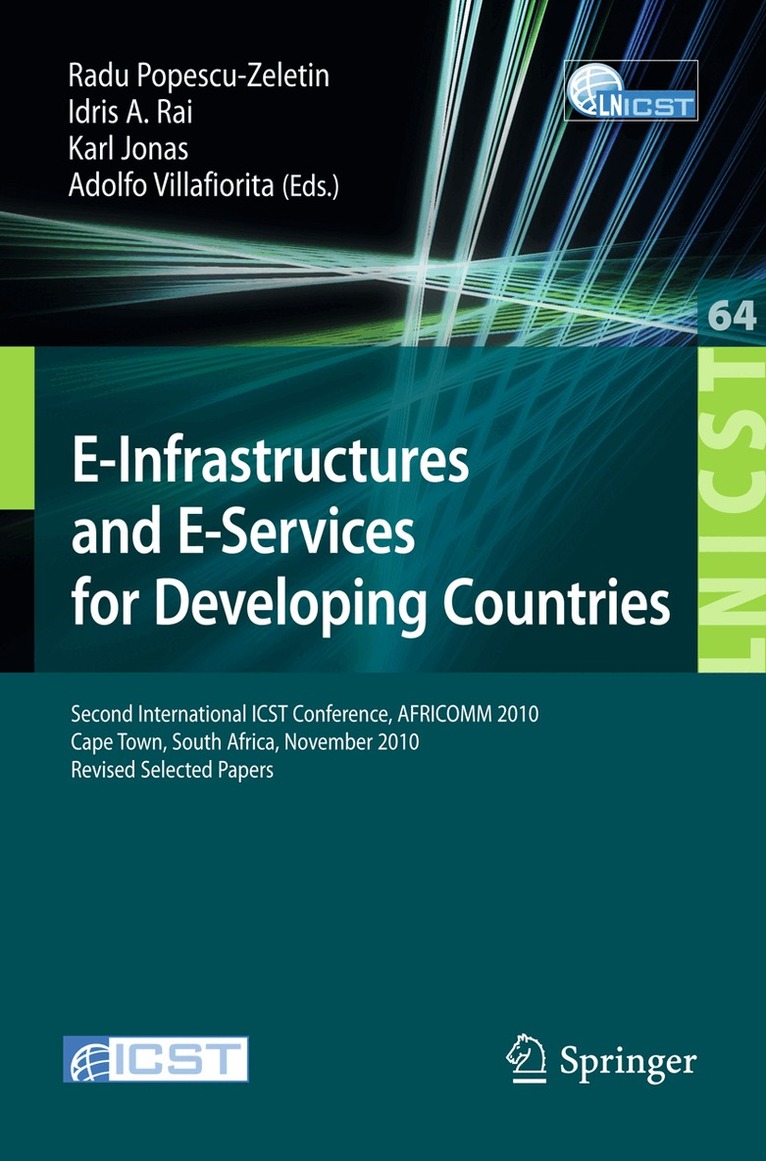
E-Infrastructure and E-Services for Developing Countries
Second International ICST Conference, AFRICOM 2010, Cape Town, South Africa, November 25-26, 2010, Revised Selected Papers
Av Radu Popescu-Zeletin, Idris A. Rai m. fl.
Häftad, 2011
551 kr
Lägg i varukorg
This book constitutes the thoroughly refereed post-conference proceedings of the Second International ICST Conference on e-Infrastructure and e-Services for Developing Countries, AFRICOM 2010, held in Cape Town, South Africa, in November 2010. The 13 revised full papers presented were carefully …
E-Infrastructure and E-Services for Developing Countries
Second International ICST Conference, AFRICOM 2010, Cape Town, South Africa, November 25-26, 2010, Revised Selected Papers
Av Adolfo Villafiorita, Karl Jonas m. fl.
E-bok, 2011
713 kr
Lägg i varukorg
This book constitutes the thoroughly refereed post-conference proceedings of the Second International ICST Conference on e-Infrastructure and e-Services for Developing Countries, AFRICOM 2010, held in Cape Town, South Africa, in November 2010. The 13 revised full papers presented were carefully …
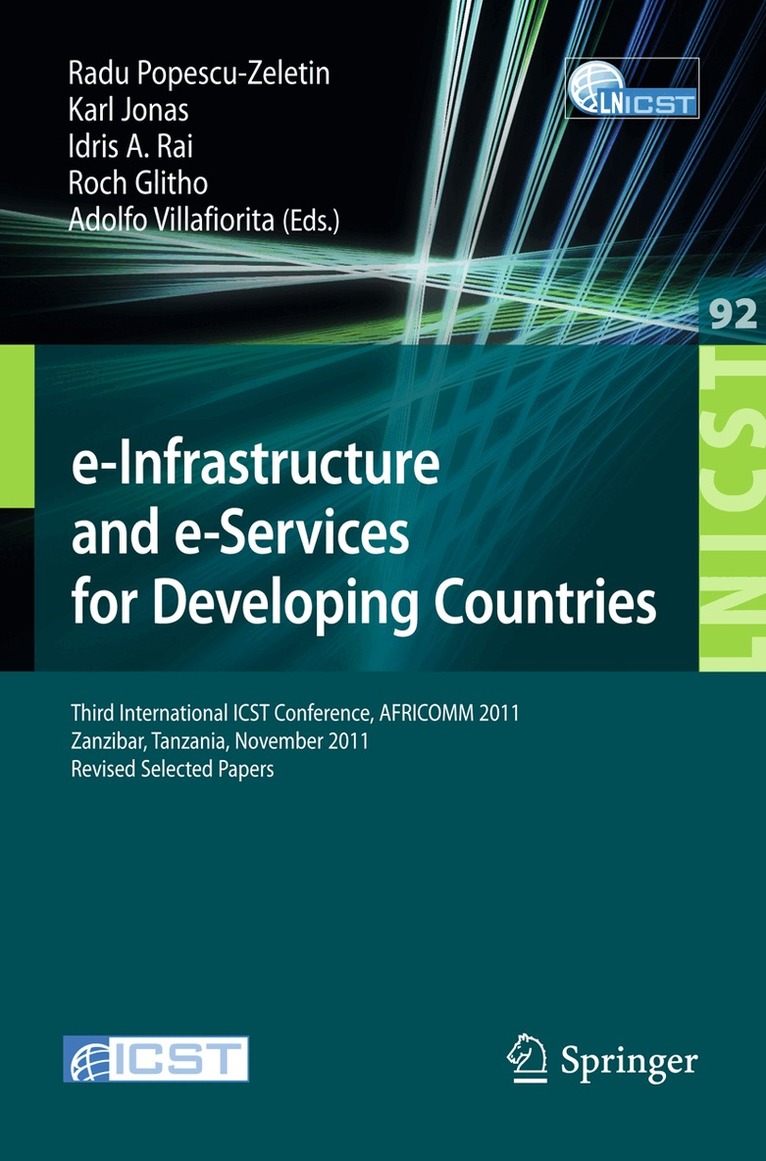
e-Infrastructure and e-Services for Developing Countries
Third International ICST Conference, AFRICOMM 2011, Zanzibar, Tansania, November 23-24, 2011, Revised Selected Papers
Av Radu Popescu-Zeletin, Karl Jonas m. fl.
Häftad, 2012
551 kr
Lägg i varukorg
This book constitutes the thoroughly refereed post-conference proceedings of the Third International ICST Conference on e-Infrastructure and e-Services for Developing Countries, AFRICOMM 2011, held in Zanzibar, Tansania, in November 2011. The 24 revised full papers presented together with 2 poster …
e-Infrastructure and e-Services for Developing Countries
Third International ICST Conference, AFRICOMM 2011, Zanzibar, Tansania, November 23-24, 2011, Revised Selected Papers
Av Adolfo Villafiorita, Roch Glitho m. fl.
E-bok, 2012
713 kr
Lägg i varukorg
This book constitutes the thoroughly refereed post-conference proceedings of the Third International ICST Conference on e-Infrastructure and e-Services for Developing Countries, AFRICOMM 2011, held in Zanzibar, Tansania, in November 2011. The 24 revised full papers presented together with 2 poster …
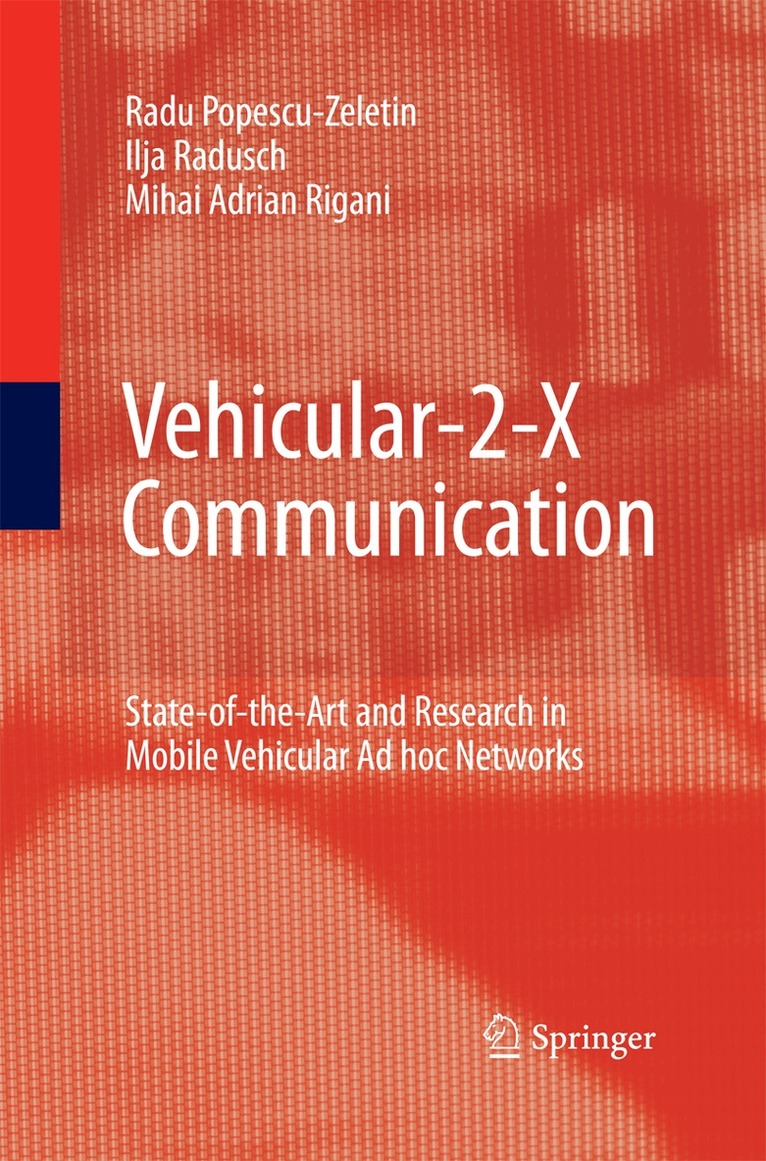
Vehicular-2-X Communication
State-of-the-Art and Research in Mobile Vehicular Ad hoc Networks
Av Radu Popescu-Zeletin, Ilja Radusch m. fl.
Häftad, 2014
1095 kr
Lägg i varukorg
Universal vehicular communication promises many improvements in terms of ac- dent avoidance and mitigation, better utilization of roads and resources such as time and fuel, and new opportunities for infotainment applications. However, before widespread acceptance, vehicular communication must meet …