Rafael Luna - Böcker
Visar alla böcker från författaren Rafael Luna. Handla med fri frakt och snabb leverans.
5 produkter
5 produkter
552 kr
Skickas inom 10-15 vardagar
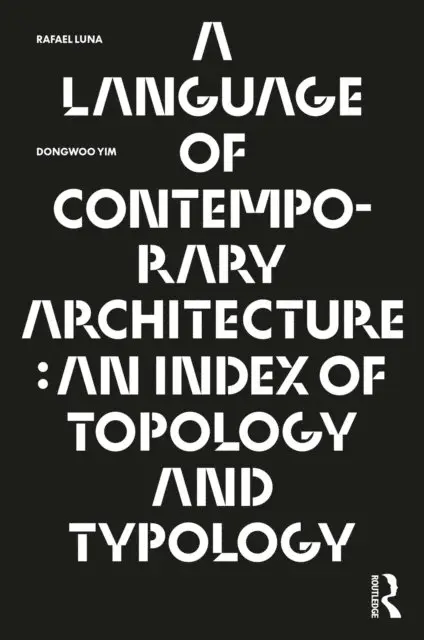
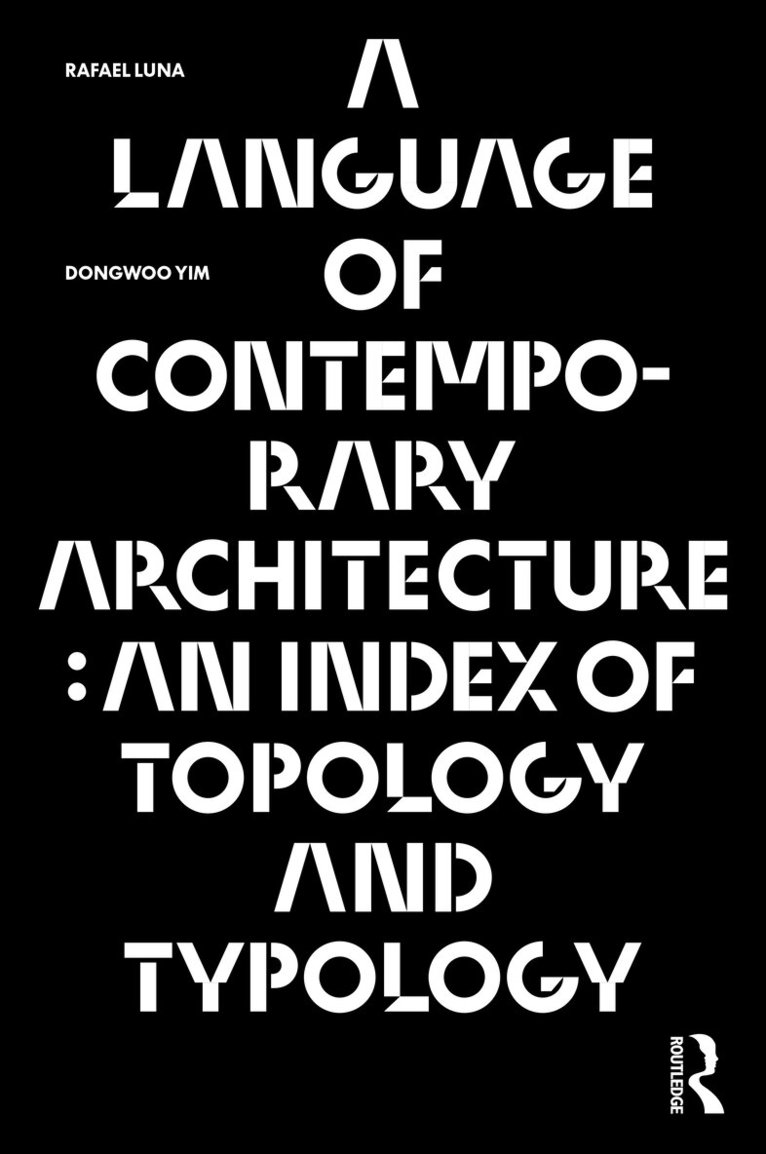
As a way to understand the contemporary project in architecture, this book provides an index of ideas, theories, projects, and definitions that string into a methodology for evaluating the contemporary language of architecture described as “contemporism” through a review of topology (form) and typology (system and elements).The contemporary project has been trying to answer the postmodern question of how to move beyond modernism through a thread of architectural styles that tried to respond to deficiencies from the modern promise and contextual changes. Yet, the question remains, should this ongoing struggle to move beyond modernism be a stylistic battle? Has the present architectural practice ever left the modernist tendencies, and is there a structure for a contemporary language in architecture? This book presents a collection of highly illustrated projects that have worked under these parameters to break away from modernism in order to present a holistic integration of topology and typology as a language for “contemporism.” The index is illustrated with individual spreads, which can be read sequentially or independently, and encourages the reader to make their own connections. It also includes interviews and contributions from Toyo Ito, Anthony Vidler, Ben van Berkel, Christian Kerez, and Greg Lynn.This book is essential reading for undergraduate and graduate students in architecture.
2 012 kr
Skickas inom 10-15 vardagar
As a way to understand the contemporary project in architecture, this book provides an index of ideas, theories, projects, and definitions that string into a methodology for evaluating the contemporary language of architecture described as “contemporism” through a review of topology (form) and typology (system and elements).The contemporary project has been trying to answer the postmodern question of how to move beyond modernism through a thread of architectural styles that tried to respond to deficiencies from the modern promise and contextual changes. Yet, the question remains, should this ongoing struggle to move beyond modernism be a stylistic battle? Has the present architectural practice ever left the modernist tendencies, and is there a structure for a contemporary language in architecture? This book presents a collection of highly illustrated projects that have worked under these parameters to break away from modernism in order to present a holistic integration of topology and typology as a language for “contemporism.” The index is illustrated with individual spreads, which can be read sequentially or independently, and encourages the reader to make their own connections. It also includes interviews and contributions from Toyo Ito, Anthony Vidler, Ben van Berkel, Christian Kerez, and Greg Lynn.This book is essential reading for undergraduate and graduate students in architecture.
803 kr
Skickas inom 10-15 vardagar
This book focuses on understanding how a megacity like Seoul can be read as a formal architectural composition and not an endless urban sprawl.In a broader sense, the book discusses the dichotomy between city and urbanization: “city” being an architectural problem of bounded forms, while “urbanism” is an infrastructural project of expansion. It is an uncontested reality that urbanization is a continuous global process that has produced nebulous conurbations labeled as megacities. These expand beyond the virtual administrative boundary of any said “city,” producing a discrepancy between an area of administrative control and the real physical condition of human settlement. If there were a better formal understanding of megacities through their typological architectural conditions, then there could be a better assessment of the qualitative state of urbanization. Avant-garde groups from the 1950s, 1960s, and 1970s such as Team X, the Situationist, the Structuralist, and the Metabolist worked with ideas of megaforms and megastructures to address this issue. Although most of these proposals remained as paper architecture, this book reevaluates some of these ideas for the 21st-century megacity, using Seoul as a case study due to its clear typological formations produced over its diff erent periods of governance. The aim is to present the concept for an infra-architectural hybrid model of typological islands and subterranean megastructure that organizes Seoul as a flexible multi-linear city.This book will be of interest to academics and students of architecture, urban geography and Asian studies.
342 kr
Skickas inom 10-15 vardagar
This book focuses on understanding how a megacity like Seoul can be read as a formal architectural composition and not an endless urban sprawl.In a broader sense, the book discusses the dichotomy between city and urbanization: “city” being an architectural problem of bounded forms, while “urbanism” is an infrastructural project of expansion. It is an uncontested reality that urbanization is a continuous global process that has produced nebulous conurbations labeled as megacities. These expand beyond the virtual administrative boundary of any said “city,” producing a discrepancy between an area of administrative control and the real physical condition of human settlement. If there were a better formal understanding of megacities through their typological architectural conditions, then there could be a better assessment of the qualitative state of urbanization. Avant-garde groups from the 1950s, 1960s, and 1970s such as Team X, the Situationist, the Structuralist, and the Metabolist worked with ideas of megaforms and megastructures to address this issue. Although most of these proposals remained as paper architecture, this book reevaluates some of these ideas for the 21st-century megacity, using Seoul as a case study due to its clear typological formations produced over its diff erent periods of governance. The aim is to present the concept for an infra-architectural hybrid model of typological islands and subterranean megastructure that organizes Seoul as a flexible multi-linear city.This book will be of interest to academics and students of architecture, urban geography and Asian studies.
366 kr
Skickas
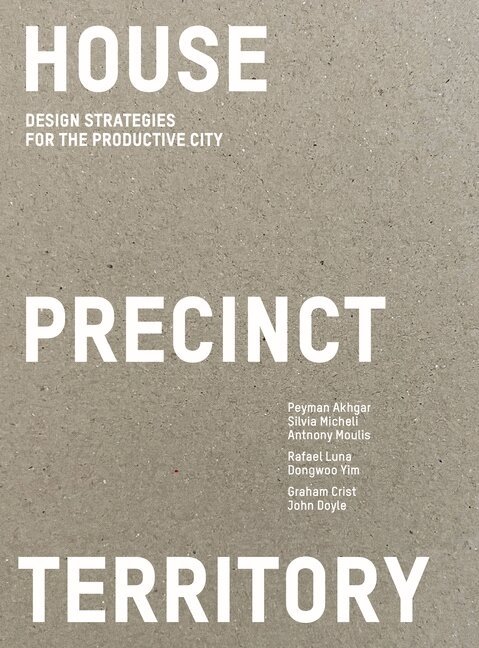
The book departs from a reflection on contemporary issues of environmental and social sustainability. With buildings and cities being one of the primary accelerators of climate change, the tightening of urban environments is one of the mechanisms by which architects and urban planners can affect change. To date, models of urban densification and compact cities have been focused on sites of urban consumption — residential, commercial, civic and social spaces. Little thought has been given to the vast productive hinterlands around the world that support cities, through the growing of food, generation of power, production of goods and disposal of waste.Working through three scales of analysis, across three cities in the Asia Pacific Region, and deploying varying design research techniques ranging from critical observation to speculative scenario modelling, the book presents a series of projects that seek to retro-fit an existing urban environment with a productive program.The purpose of this project is to describe a series of models for the folding of production into our cities, with ambition of consolidating all components of human inhabitation within a smaller overall physical and environmental footprint.