• Fri frakt över 249 kr
  • •
  • Snabba leveranser
  • •
  • Billiga böcker
Kundservice

Du är på sajten för privatpersoner.

Företag, bibliotek eller offentlig verksamhet?

Du handlar på classic.bokus.com, där alla dina funktioner finns intakta.
Till classic.bokus.com
Bokus logotyp. Gå till startsidan.
  • Erbjudanden
  • Student
  • Topplistor
  • Barn & ungdom
  • Bokus Play
  • E-böcker
  • Ljudböcker
  • Pocketböcker
  • Spel & pussel

Upp till 25% på utvalda nyheter →

Sidfot

Mina sidor

    Hjälp

    • Kundservice
    • Vanliga frågor och svar
    • Frakt och leverans
    • Retur vid ångerrätt
    • Reklamera vara
    • Betalning
    • Köpvillkor
    • Allmänna villkor
    • Information om webbplatsens tillgänglighet

    Om Bokus

    • Om oss
    • Pressrum
    • För studenter
    • För företag
    • För bibliotek och offentlig verksamhet
    • För leverantörer
    • Hållbarhet

    Populärt

    • Aktuella erbjudanden
    • Presentkort
    • Studentlitteratur
    • Nya böcker
    • Topplistor
    • Signerade böcker
    • Engelska böcker

    Inspiration

    • Boktips
    • BookTok
    • Populära bokserier
    • Barnbokskaraktärer
    • Populära författare
    Logotyp för Bokus
    Följ oss på Facebook (extern länk)Följ oss på Instagram (extern länk)Följ oss på YouTube (extern länk)Följ oss på TikTok (extern länk)
    bokus @ CookiesAnpassa cookiesIntegritetspolicyKöpvillkor
    Till Citymail hemsida (extern länk)Till Budbee hemsida (extern länk)Till Postnord hemsida (extern länk)Till Schenker hemsida (extern länk)Till Early Bird hemsida (extern länk)Till Walleys hemsida (extern länk)
    1. Kultur
    2. Arkitektur

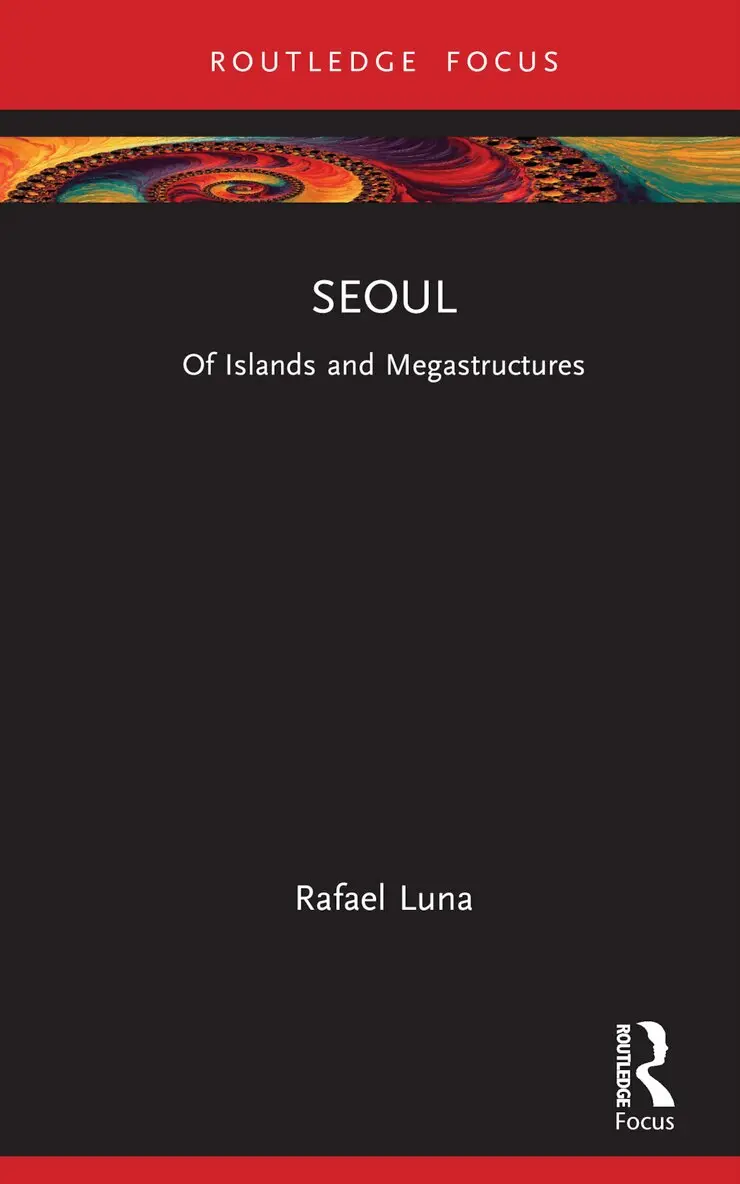
    Seoul

    Of Islands and Megastructures

    AvRafael Luna

    Inbunden, Engelska, 2024

    Del i serien Built Environment City Studies

    990 kr

    Beställningsvara. Skickas inom 10-15 vardagar. Fri frakt över 249 kr.

    Fler format och utgåvor

    Häftad

    369 kr

    E-bok

    432 kr

    E-bok

    432 kr

    Beskrivning

    This book focuses on understanding how a megacity like Seoul can be read as a formal architectural composition and not an endless urban sprawl.In a broader sense, the book discusses the dichotomy between city and urbanization: “city” being an architectural problem of bounded forms, while “urbanism” is an infrastructural project of expansion. It is an uncontested reality that urbanization is a continuous global process that has produced nebulous conurbations labeled as megacities. These expand beyond the virtual administrative boundary of any said “city,” producing a discrepancy between an area of administrative control and the real physical condition of human settlement. If there were a better formal understanding of megacities through their typological architectural conditions, then there could be a better assessment of the qualitative state of urbanization. Avant-garde groups from the 1950s, 1960s, and 1970s such as Team X, the Situationist, the Structuralist, and the Metabolist worked with ideas of megaforms and megastructures to address this issue. Although most of these proposals remained as paper architecture, this book reevaluates some of these ideas for the 21st-century megacity, using Seoul as a case study due to its clear typological formations produced over its diff erent periods of governance. The aim is to present the concept for an infra-architectural hybrid model of typological islands and subterranean megastructure that organizes Seoul as a flexible multi-linear city.This book will be of interest to academics and students of architecture, urban geography and Asian studies.

    Produktinformation

    • Utgivningsdatum:2024-04-30
    • Mått:138 x 216 x 16 mm
    • Vikt:540 g
    • Format:Inbunden
    • Språk:Engelska
    • Serie:Built Environment City Studies
    • Antal sidor:132
    • Förlag:Taylor & Francis Ltd
    • ISBN:9781032684949

    Utforska kategorier

    • Arkitektur inom Kultur
    • Arkitekturhistoria inom Kultur
    • Regional planering inom Naturvetenskap och teknik

    Mer om författaren

    Rafael Luna is the co-founder of the architecture firm PRAUD, a senior lecturer at the University of Technology Sydney, and the director of the Infra-Architecture Lab. He received a master of architecture from the Massachusetts Institute of Technology (2010) and his Ph.D. in architecture focused on infra-architectural typologies as urban models from L’Accademia di architettura dell’Università della Svizzera italiana, Mendrisio, Switzerland (2022). Luna is the award winner of the Architectural League Prize 2013, and his work has been exhibited at the MoMA, Venice Biennale and Seoul Biennale. Luna was a co-curator of the Cities Exhibition for the 2019 Seoul Biennale, awarded by the Mayor of Seoul. He has professional experience from the offices of Toyo Ito and Associates, KPF, Ateliers Jean Nouvel, Martha Schwartz Partners, dECOI, Sasaki Associates, and Machado and Silvetti. He served as an assistant professor at Hanyang University from 2018 to 2022, previously teaching at the Rhode Island School of Design. His writings have been published in journals such as G+L, Topos, MONU, SPACE, and IntAR Journal, and he was a guest editor for AD magazine’s September 2021 issue Production Urbanism: The Meta-Industrial City . He is the co-author of I Want to Be Metropolitan , the North Korean Atlas (received the DAM award), and A Language of Contemporary Architecture: An Index of Topology and Typology .

    Innehållsförteckning

    • List of figuresAcknowledgmentsChapter 1Introduction: Understanding Seoul in the Context of Urbanization-A Brief Introduction to Seoul-The State of Urbanization-Urbanism And an Architectural ReactionChapter 2A History of Infra-Architecture-Industry and Mobility-Decentralization-Megastructure as Urban Scaffolding:-Metabolism-Performative Landscapes-A Recap for SeoulChapter 3Nine Typological Islands-Joseon Dynasty Period (1394–1896)-Daehan Empire Period (1897–1910)-Japanese Occupation Period (1910–1945)-Park Chung Hee Period (1963–1979)-Globalization Period (1980–2002)-Cultural Industry Period (2002–present)-Application of Architectural Typological IslandsChapter 4The Infra-Architectural Typology-Description and Brief History of Seoul’s Underground System-Paradigm Shift Toward a Metro-Centric City-Programming the Megastructure-System as a MegastructureChapter 5Toward an Infra-Architectural Urbanism-Theorizing an Infra-Architectural Urbanism and Interior UrbanismBibliographyIndex