Rajiv Kaushik – författare
Visar alla böcker från författaren Rajiv Kaushik. Handla med fri frakt och snabb leverans.
15 produkter
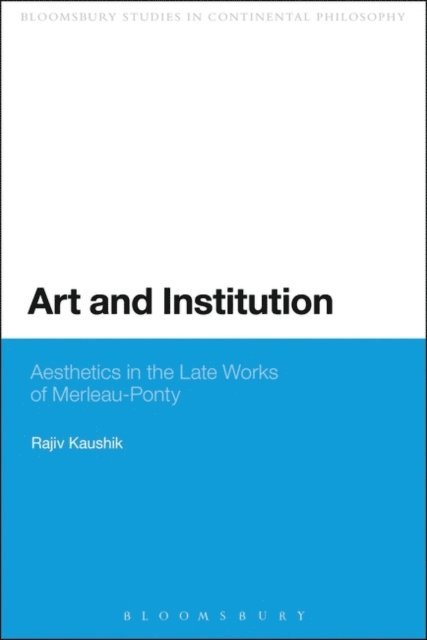
Art and Institution
Aesthetics in the Late Works of Merleau-Ponty
Häftad, 2013
558 kr
Lägg i varukorg
Art and Institution examines how for Merleau-Ponty the work of art opens up, without conceptualizing, the event of being. Rajiv Kaushik treats Merleau-Ponty's renderings of the artwork - specifically in his later writings during the period ranging from 1952-1961 - as a path into the being that …
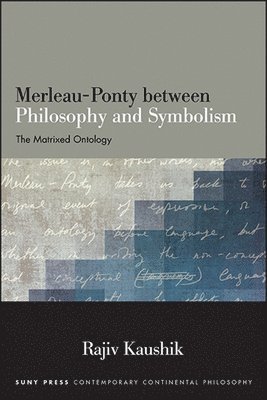
Merleau-Ponty between Philosophy and Symbolism
The Matrixed Ontology
Häftad, 2020
399 kr
Lägg i varukorg
Argues that symbolism is an important and unique element of Merleau-Ponty's phenomenology.Merleau-Ponty says in his Institution and Passivity lectures that he wants to "consider criticism itself as a symbolic form" instead of doing "a philosophy of symbolic form." This invites the possibility of an …
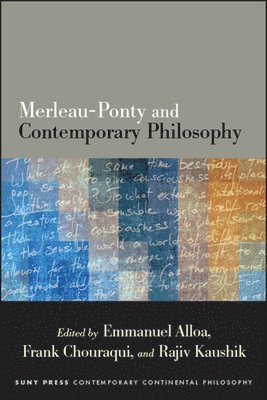
Merleau-Ponty and Contemporary Philosophy
Av Emmanuel Alloa, Frank Chouraqui m. fl.
Häftad, 2020
477 kr
Lägg i varukorg
Assesses the importance of Merleau-Ponty to current and ongoing concerns in contemporary philosophy.Maurice Merleau-Ponty is widely recognized as one of the major figures of twentieth-century philosophy. The recent publication of his lecture courses and posthumous working notes has opened new …
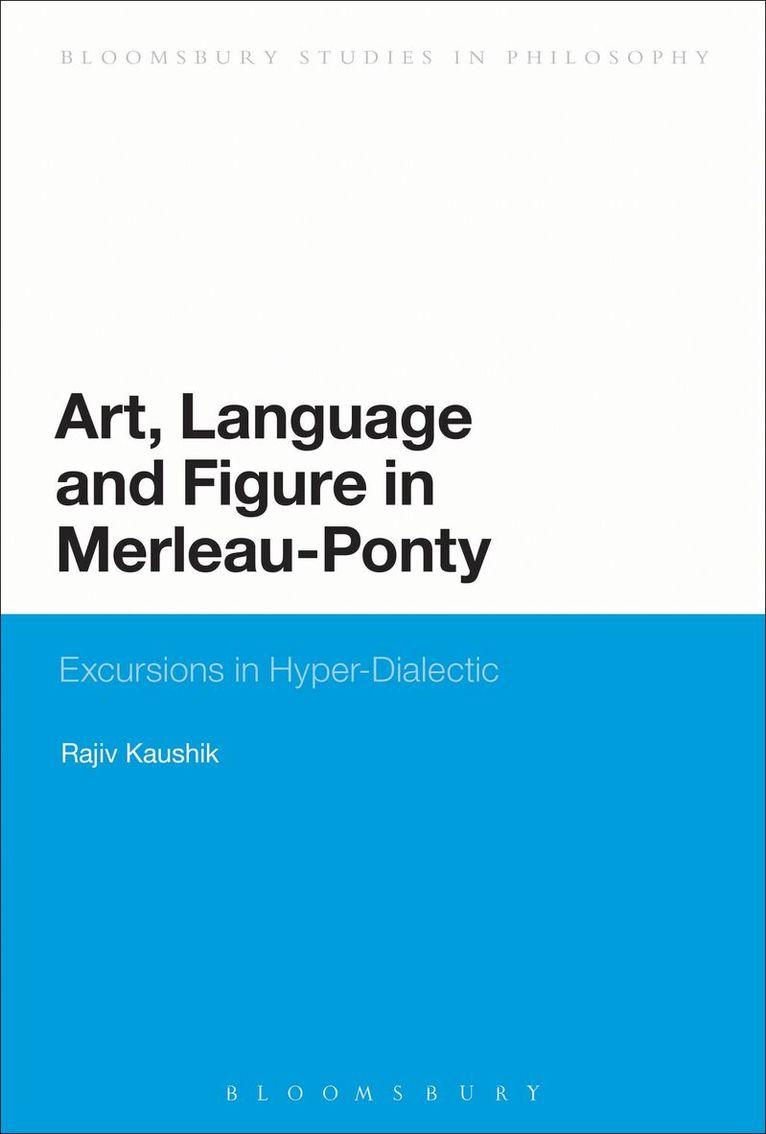
Art, Language and Figure in Merleau-Ponty
Excursions in Hyper-Dialectic
E-bok, 2013
608 kr
Lägg i varukorg
Art, Language and Figure in Merleau-Ponty: Excursions in Hyper-Dialectic considers Merleau-Ponty's later ontology of language in the light of his “figured philosophy,” which places the work of art at the centre of its investigation. Kaushik argues that, since for Merleau-Ponty the work of art …
Art, Language and Figure in Merleau-Ponty
Excursions in Hyper-Dialectic
Inbunden, 2013
1991 kr
Lägg i varukorg
Art, Language and Figure in Merleau-Ponty: Excursions in Hyper-Dialectic considers Merleau-Ponty’s later ontology of language in the light of his “figured philosophy,” which places the work of art at the centre of its investigation. Kaushik argues that, since for Merleau-Ponty the work of art …
Art and Institution
Aesthetics in the Late Works of Merleau-Ponty
Inbunden, 2011
2133 kr
Lägg i varukorg
Art and Institution examines how for Merleau-Ponty the work of art opens up, without conceptualizing, the event of being. Rajiv Kaushik treats Merleau-Ponty's renderings of the artwork - specifically in his later writings during the period ranging from 1952-1961 - as a path into the being that …
Art and Institution
Aesthetics in the Late Works of Merleau-Ponty
E-bok, 2011
595 kr
Lägg i varukorg
Art and Institution examines how for Merleau-Ponty the work of art opens up, without conceptualizing, the event of being. Rajiv Kaushik treats Merleau-Ponty's renderings of the artwork - specifically in his later writings during the period ranging from 1952-1961 - as a path into the being that …
Art, Language and Figure in Merleau-Ponty
Excursions in Hyper-Dialectic
E-bok, 2013
608 kr
Lägg i varukorg
Art, Language and Figure in Merleau-Ponty: Excursions in Hyper-Dialectic considers Merleau-Ponty's later ontology of language in the light of his “figured philosophy,” which places the work of art at the centre of its investigation. Kaushik argues that, since for Merleau-Ponty the work of art …
Art and Institution
Aesthetics in the Late Works of Merleau-Ponty
E-bok, 2011
608 kr
Lägg i varukorg
Art and Institution examines how for Merleau-Ponty the work of art opens up, without conceptualizing, the event of being. Rajiv Kaushik treats Merleau-Ponty''s renderings of the artwork - specifically in his later writings during the period ranging from 1952-1961 - as a path into the being that …
Art, Language and Figure in Merleau-Ponty
Excursions in Hyper-Dialectic
Häftad, 2015
560 kr
Lägg i varukorg
Art, Language and Figure in Merleau-Ponty: Excursions in Hyper-Dialectic considers Merleau-Ponty’s later ontology of language in the light of his “figured philosophy,” which places the work of art at the centre of its investigation. Kaushik argues that, since for Merleau-Ponty the work of art …
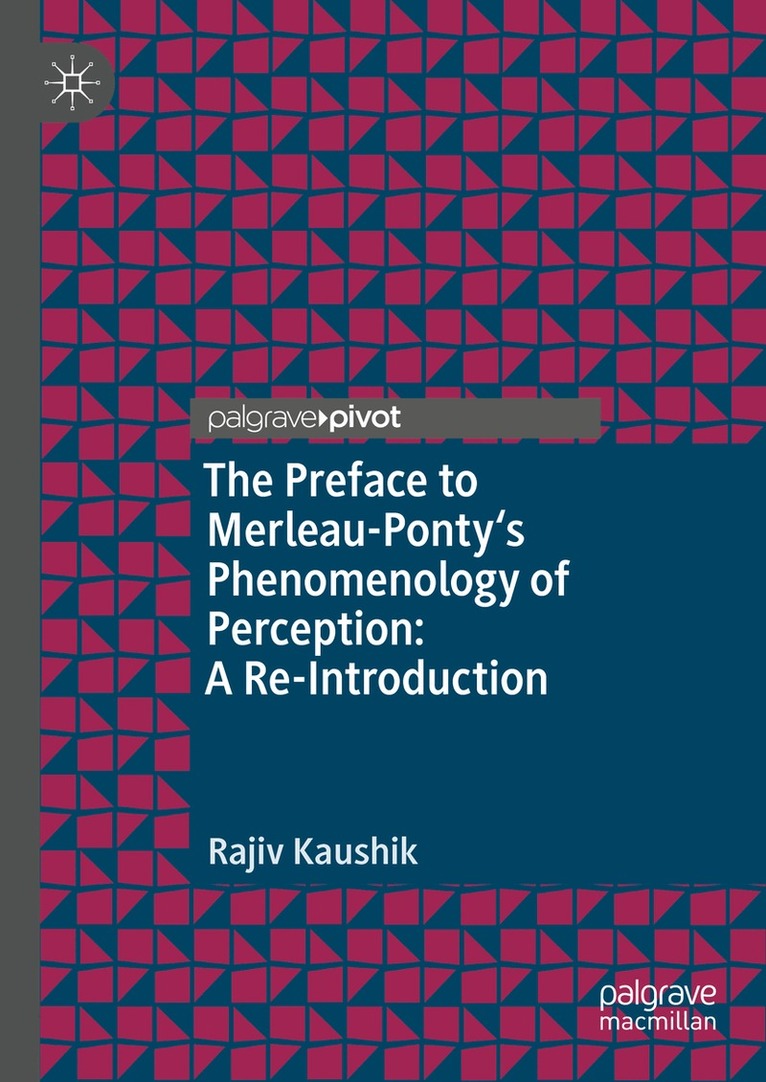
Preface to Merleau-Ponty's Phenomenology of Perception: A Re-Introduction
Inbunden, 2024
514 kr
Lägg i varukorg
This book offers a critical re-appraisal of what is perhaps Merleau-Ponty’s most widely read text, the Preface to his Phenomenology of Perception. Although open and enigmatic text, the Preface is still often used to introduce phenomenology in general and Merleau-Ponty’s work specifically to …
Preface to Merleau-Ponty's Phenomenology of Perception: A Re-Introduction
E-bok, 2024
734 kr
Lägg i varukorg
This book offers a critical re-appraisal of what is perhaps Merleau-Ponty’s most widely read text, the Preface to his Phenomenology of Perception . Although open and enigmatic text, the Preface is still often used to introduce phenomenology in general and Merleau-Ponty’s work specifically to …
Merleau-Ponty between Philosophy and Symbolism
The Matrixed Ontology
Inbunden, 2019
1111 kr
Tillfälligt slut
Argues that symbolism is an important and unique element of Merleau-Ponty's phenomenology.Merleau-Ponty says in his Institution and Passivity lectures that he wants to "consider criticism itself as a symbolic form" instead of doing "a philosophy of symbolic form." This invites the possibility of an …
Merleau-Ponty and Contemporary Philosophy
Av Emmanuel Alloa, Frank Chouraqui m. fl.
Inbunden, 2019
1111 kr
Tillfälligt slut
Assesses the importance of Merleau-Ponty to current and ongoing concerns in contemporary philosophy.Maurice Merleau-Ponty is widely recognized as one of the major figures of twentieth-century philosophy. The recent publication of his lecture courses and posthumous working notes has opened new …
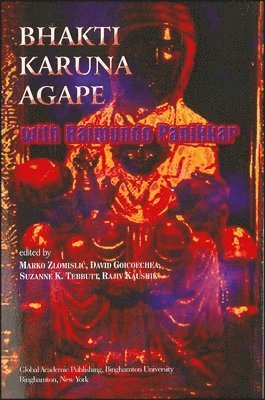
Bhakti Karuna Agepe with Raimundo Panikkar
Av Marko Zliomislic, David Goicoechea m. fl.
Häftad, 2003
373 kr
Tillfälligt slut
A collection of essays on the nature of love in religious tradition and theory, inspired by Raimundo Panikkar's ecumenical embrace of Christianity, Hinduism, and Buddhism.