Rakesh Sengupta – författare
Visar alla böcker från författaren Rakesh Sengupta. Handla med fri frakt och snabb leverans.
8 produkter
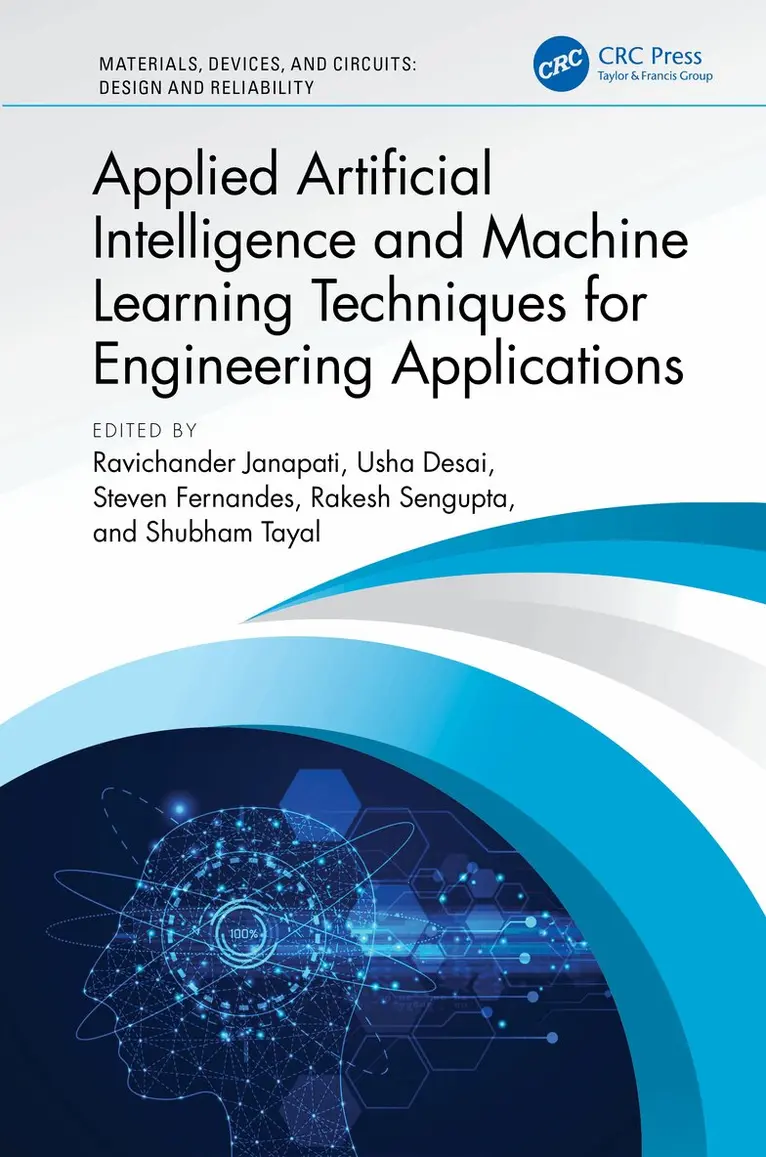
Applied Artificial Intelligence and Machine Learning Techniques for Engineering Applications
Av Ravichander Janapati, Usha Desai m. fl.
Inbunden, 2025
1832 kr
Lägg i varukorg
This book presents various machine learning applications in the field of engineering with a focus on deep learning-based machine learning approaches. It examines the relationship between three different multidisciplinary engineering branches: biomedical engineering, signal processing, and computer …
Applied Artificial Intelligence and Machine Learning Techniques for Engineering Applications
Av Shubham Tayal, Rakesh Sengupta m. fl.
E-bok, 2025
1022 kr
Lägg i varukorg
This book presents various machine learning applications in the field of engineering with a focus on deep learning-based machine learning approaches. It examines the relationship between three different multidisciplinary engineering branches: biomedical engineering, signal processing, and computer …
Applied Artificial Intelligence and Machine Learning Techniques for Engineering Applications
Av Shubham Tayal, Rakesh Sengupta m. fl.
E-bok, 2025
992 kr
Lägg i varukorg
This book presents various machine learning applications in the field of engineering with a focus on deep learning-based machine learning approaches. It examines the relationship between three different multidisciplinary engineering branches: biomedical engineering, signal processing, and computer …
Green Chemistry in Nanotechnology for Sustainable Synthesis, Characterization, and Applications of Nanoparticles
Av B. S. Maddodi, Rakesh Sengupta m. fl.
E-bok, 2026
2033 kr
Lägg i varukorg
Nanotechnology has become one of the most revolutionary scientific domains of the 21st century, providing answers for healthcare, renewable energy, environmental cleanup, and industrial advancements. Nonetheless, the swift expansion of this technology necessitates a comparable dedication to …
Green Chemistry in Nanotechnology for Sustainable Synthesis, Characterization, and Applications of Nanoparticles
Av B. S. Maddodi, Rakesh Sengupta m. fl.
E-bok, 2026
2078 kr
Lägg i varukorg
Nanotechnology has become one of the most revolutionary scientific domains of the 21st century, providing answers for healthcare, renewable energy, environmental cleanup, and industrial advancements. Nonetheless, the swift expansion of this technology necessitates a comparable dedication to …
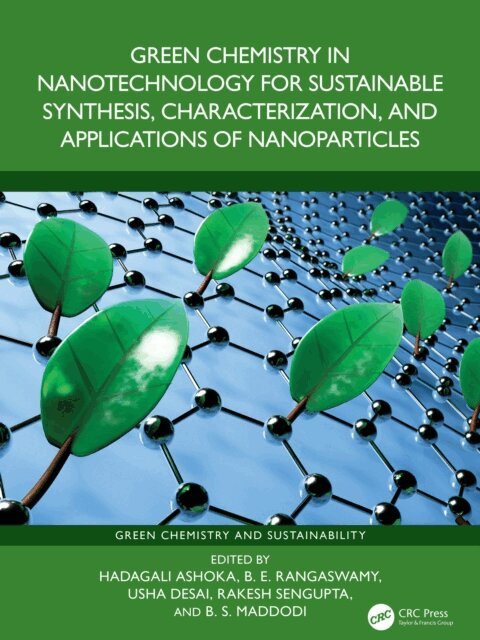
Green Chemistry in Nanotechnology for Sustainable Synthesis, Characterization, and Applications of Nanoparticles
Av Hadagali Ashoka, B. E. Rangaswamy m. fl.
Inbunden, 2026
1832 kr
Lägg i varukorg
Nanotechnology has become one of the most revolutionary scientific domains of the 21st century, providing answers for healthcare, renewable energy, environmental cleanup, and industrial advancements. Nonetheless, the swift expansion of this technology necessitates a comparable dedication to …
Introduction to Psychophysics with Python
Av Rakesh Sengupta, Maganti Madhavilatha
Häftad, 2026
1000 kr
Lägg i varukorg
Introduction to Psychophysics with Python is a hands-on guide to exploring how we sense and perceive the world—powered by modern Python programming. Bridging classical theory with today’s computational tools, it equips students and researchers to design, run, and analyze psychophysical experiments …
Mind, Model and Complexity
Häftad, 2026
1238 kr
Kommande
Mind, Model and Complexity is a compelling and accessible exploration of how complexity science is transforming our understanding of the human mind. Bridging cognitive science, philosophy, and computation, this book invites readers to rethink intelligence, consciousness, and language through the …