Ralph L. Rosnow – författare
Visar alla böcker från författaren Ralph L. Rosnow. Handla med fri frakt och snabb leverans.
6 produkter
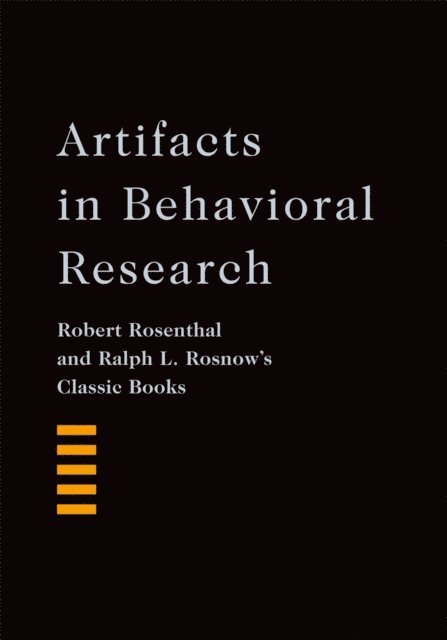
Artifacts in Behavioral Research
Robert Rosenthal and Ralph L. Rosnow's Classic Books
Av Ralph L. Rosnow, Robert Rosenthal
E-bok, 2009
1443 kr
Lägg i varukorg
This new combination volume of three-books-in-one, dealing with the topic of artifacts in behavioral research, was designed as both introduction and reminder. It was designed as an introduction to the topic for graduate students, advanced undergraduates, and younger researchers. It was designed as …
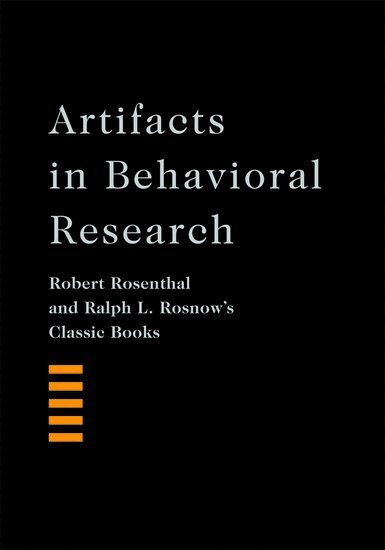
Artifacts in Behavioral Research
Robert Rosenthal and Ralph L. Rosnow's Classic Books
Av Robert Rosenthal, Ralph L Rosnow m. fl.
Inbunden, 2009
2642 kr
Lägg i varukorg
This new combination volume of three-books-in-one, dealing with the topic of artifacts in behavioral research, was designed as both introduction and reminder. It was designed as an introduction to the topic for graduate students, advanced undergraduates, and younger researchers. It was designed as …
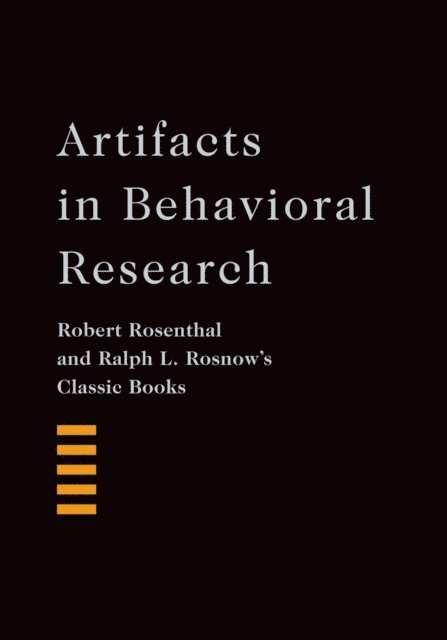
Artifacts in Behavioral Research
Robert Rosenthal and Ralph L. Rosnow's Classic Books
Av Ralph L. Rosnow, Robert Rosenthal
E-bok, 2009
1443 kr
Lägg i varukorg
This new combination volume of three-books-in-one, dealing with the topic of artifacts in behavioral research, was designed as both introduction and reminder. It was designed as an introduction to the topic for graduate students, advanced undergraduates, and younger researchers. It was designed as …
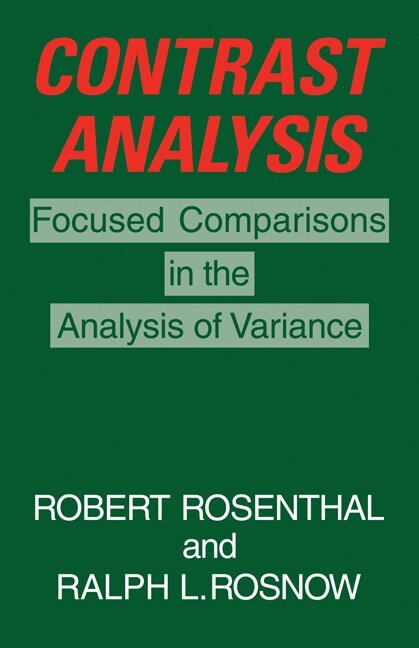
Contrast Analysis
Focused Comparisons in the Analysis of Variance
Av Robert Rosenthal, Ralph L. Rosnow
Häftad, 1985
455 kr
Lägg i varukorg
This book, first published in 1985, is for those seeking appropriate statistical approaches to research data that is devoted entirely to the topic of contrasts. Contrast analysis permits us to ask more focused questions of our data. In return for a small amount of simple computation, we get greater …
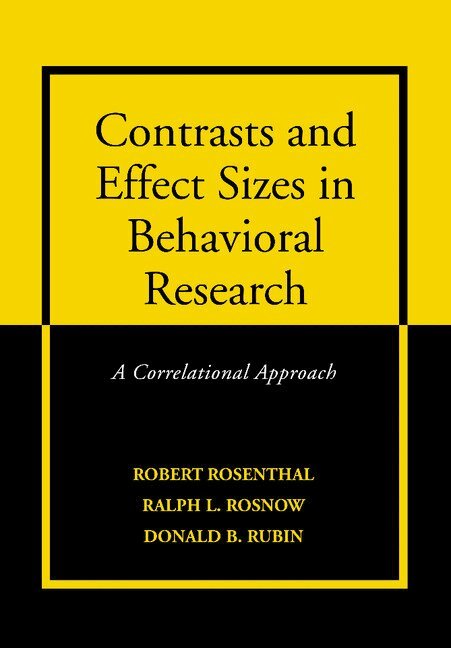
Contrasts and Effect Sizes in Behavioral Research
A Correlational Approach
Av Robert Rosenthal, Ralph L. Rosnow m. fl.
Inbunden, 1999
1202 kr
Lägg i varukorg
Contrasts are statistical procedures for asking focused questions of data. Compared to diffuse or omnibus questions, focused questions are characterized by greater conceptual clarity and greater statistical power when examining those focused questions. If an effect truly exists, we are more likely …
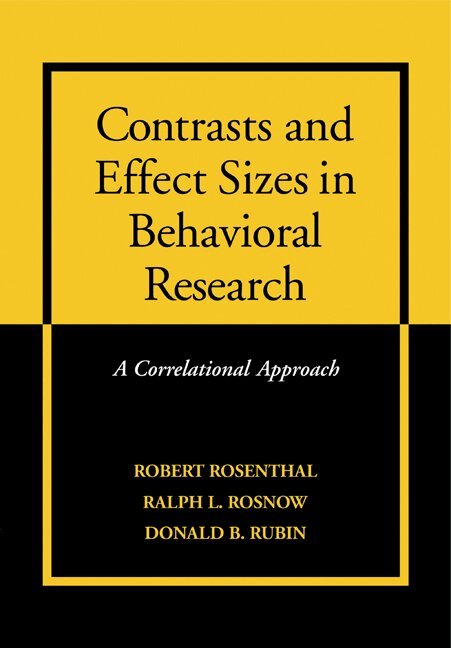
Contrasts and Effect Sizes in Behavioral Research
A Correlational Approach
Av Robert Rosenthal, Ralph L. Rosnow m. fl.
Häftad, 1999
695 kr
Lägg i varukorg
Contrasts are statistical procedures for asking focused questions of data. Compared to diffuse or omnibus questions, focused questions are characterized by greater conceptual clarity and greater statistical power when examining those focused questions. If an effect truly exists, we are more likely …