Ranjeet Kumar Rout – författare
872 kr
Läs direkt efter köp
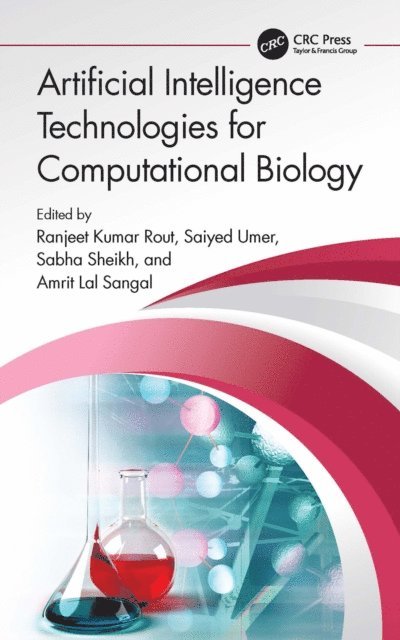
This text emphasizes the importance of artificial intelligence techniques in the field of biological computation. It also discusses fundamental principles that can be applied beyond bio-inspired computing.
It comprehensively covers important topics including data integration, data mining, machine learning, genetic algorithms, evolutionary computation, evolved neural networks, nature-inspired algorithms, and protein structure alignment. The text covers the application of evolutionary computations for fractal visualization of sequence data, artificial intelligence, and automatic image interpretation in modern biological systems.
The text is primarily written for graduate students and academic researchers in areas of electrical engineering, electronics engineering, computer engineering, and computational biology.
This book:
• Covers algorithms in the fields of artificial intelligence, and machine learning useful in biological data analysis.
• Discusses comprehensively artificial intelligence and automatic image interpretation in modern biological systems.
• Presents the application of evolutionary computations for fractal visualization of sequence data.
• Explores the use of genetic algorithms for pair-wise and multiple sequence alignments.
• Examines the roles of efficient computational techniques in biology.
872 kr
Läs direkt efter köp
This text emphasizes the importance of artificial intelligence techniques in the field of biological computation. It also discusses fundamental principles that can be applied beyond bio-inspired computing.
It comprehensively covers important topics including data integration, data mining, machine learning, genetic algorithms, evolutionary computation, evolved neural networks, nature-inspired algorithms, and protein structure alignment. The text covers the application of evolutionary computations for fractal visualization of sequence data, artificial intelligence, and automatic image interpretation in modern biological systems.
The text is primarily written for graduate students and academic researchers in areas of electrical engineering, electronics engineering, computer engineering, and computational biology.
This book:
• Covers algorithms in the fields of artificial intelligence, and machine learning useful in biological data analysis.
• Discusses comprehensively artificial intelligence and automatic image interpretation in modern biological systems.
• Presents the application of evolutionary computations for fractal visualization of sequence data.
• Explores the use of genetic algorithms for pair-wise and multiple sequence alignments.
• Examines the roles of efficient computational techniques in biology.
1 761 kr
Läs direkt efter köp
Object detection is a basic visual identification problem in computer vision that has been explored extensively over the years. Visual object detection seeks to discover objects of specific target classes in a given image with pinpoint accuracy and apply a class label to each object instance. Object recognition strategies based on deep learning have been intensively investigated in recent years as a result of the remarkable success of deep learning-based image categorization.
In this book, we go through in detail detector architectures, feature learning, proposal generation, sampling strategies, and other issues that affect detection performance.
The book describes every newly proposed novel solution but skips through the fundamentals so that readers can see the field''s cutting edge more rapidly. Moreover, unlike prior object detection publications, this project analyses deep learning-based object identification methods systematically and exhaustively, and also gives the most recent detection solutions and a collection of noteworthy research trends.
The book focuses primarily on step-by-step discussion, an extensive literature review, detailed analysis and discussion, and rigorous experimentation results. Furthermore, a practical approach is displayed and encouraged.
1 761 kr
Läs direkt efter köp
Object detection is a basic visual identification problem in computer vision that has been explored extensively over the years. Visual object detection seeks to discover objects of specific target classes in a given image with pinpoint accuracy and apply a class label to each object instance. Object recognition strategies based on deep learning have been intensively investigated in recent years as a result of the remarkable success of deep learning-based image categorization.
In this book, we go through in detail detector architectures, feature learning, proposal generation, sampling strategies, and other issues that affect detection performance.
The book describes every newly proposed novel solution but skips through the fundamentals so that readers can see the field''s cutting edge more rapidly. Moreover, unlike prior object detection publications, this project analyses deep learning-based object identification methods systematically and exhaustively, and also gives the most recent detection solutions and a collection of noteworthy research trends.
The book focuses primarily on step-by-step discussion, an extensive literature review, detailed analysis and discussion, and rigorous experimentation results. Furthermore, a practical approach is displayed and encouraged.
2 051 kr
Skickas inom 10-15 vardagar
757 kr
Skickas inom 10-15 vardagar
1 757 kr
Skickas inom 10-15 vardagar
942 kr
Läs direkt efter köp
This book provides an overview of basic and advanced computational techniques for analyzing and understanding protein, RNA, and DNA sequences. It covers effective computing techniques for DNA and protein classifications, evolutionary and sequence information analysis, evolutionary algorithms, and ensemble algorithms. Furthermore, the book reviews the role of machine learning techniques, artificial intelligence, ensemble learning, and sequence-based features in predicting post-translational modifications in proteins, DNA methylation, and mRNA methylation, along with their functional implications. The book also discusses the prediction of protein–protein and protein–DNA interactions, protein structure, and function using computational methods. It also presents techniques for quantitative analysis of protein–DNA interactions and protein methylation and their involvement in gene regulation. Additionally, the use of nature-inspired algorithms to gain insights into gene regulatory mechanisms and metabolic pathways in human diseases is explored. This book acts as a useful reference for bioinformaticians and computational biologists working in the fields of molecular biology, genomics, and bioinformatics.
Key Features:
Reviews machine learning techniques for DNA sequence classification and protein structure prediction Discusses genetic algorithms for analyzing multiple sequence alignments and predicting protein–protein interaction sites Explores computational methods for quantitative analysis of protein–DNA interactions Examine the role of nature-inspired algorithms in understanding the gene regulation and metabolic pathways Covers evolutionary algorithms and sequence-based features in predicting post-translational modifications989 kr
Läs direkt efter köp
This book provides an overview of basic and advanced computational techniques for analyzing and understanding protein, RNA, and DNA sequences. It covers effective computing techniques for DNA and protein classifications, evolutionary and sequence information analysis, evolutionary algorithms, and ensemble algorithms. Furthermore, the book reviews the role of machine learning techniques, artificial intelligence, ensemble learning, and sequence-based features in predicting post-translational modifications in proteins, DNA methylation, and mRNA methylation, along with their functional implications. The book also discusses the prediction of protein–protein and protein–DNA interactions, protein structure, and function using computational methods. It also presents techniques for quantitative analysis of protein–DNA interactions and protein methylation and their involvement in gene regulation. Additionally, the use of nature-inspired algorithms to gain insights into gene regulatory mechanisms and metabolic pathways in human diseases is explored. This book acts as a useful reference for bioinformaticians and computational biologists working in the fields of molecular biology, genomics, and bioinformatics.
Key Features:
Reviews machine learning techniques for DNA sequence classification and protein structure prediction Discusses genetic algorithms for analyzing multiple sequence alignments and predicting protein–protein interaction sites Explores computational methods for quantitative analysis of protein–DNA interactions Examine the role of nature-inspired algorithms in understanding the gene regulation and metabolic pathways Covers evolutionary algorithms and sequence-based features in predicting post-translational modifications2 788 kr
Kommande
1 114 kr
Skickas inom 10-15 vardagar
1 455 kr
Läs direkt efter köp
Computer Vision, Pattern Recognition, Image Processing, and Graphics
10th National Conference, NCVPRIPG 2025, Jammu, India, July 16–18, 2025, Revised Selected Papers, Part II
1 003 kr
Skickas inom 10-15 vardagar
1 292 kr
Läs direkt efter köp
1 477 kr
Skickas inom 10-15 vardagar
Machine Intelligence for Research and Innovations
Proceedings of MAiTRI 2024, Volume 2
2 774 kr
Skickas inom 5-8 vardagar
3 567 kr
Läs direkt efter köp
Machine Intelligence for Research and Innovations
Proceedings of MAiTRI 2024, Volume 1
2 774 kr
Skickas inom 10-15 vardagar
3 577 kr
Läs direkt efter köp