Raphael Chijioke Njoku - Böcker
Visar alla böcker från författaren Raphael Chijioke Njoku. Handla med fri frakt och snabb leverans.
9 produkter
9 produkter
820 kr
Skickas inom 7-10 vardagar
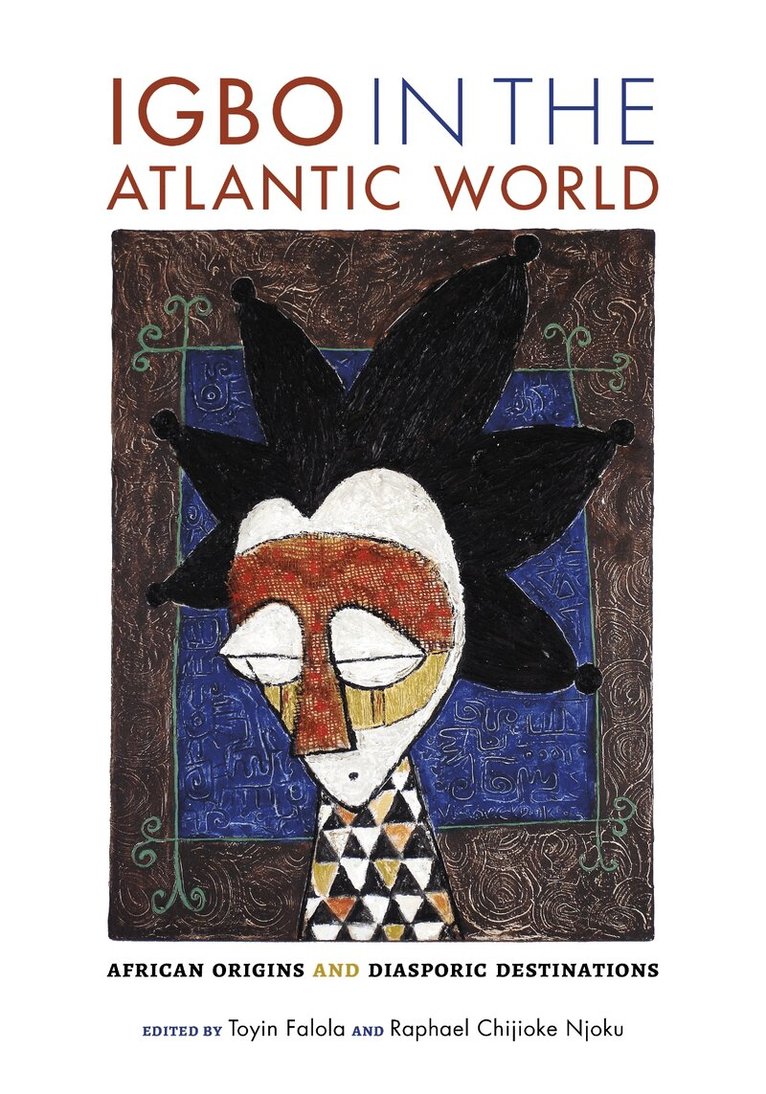
The Igbo are one of the most populous ethnic groups in Nigeria and are perhaps best known and celebrated in the work of Chinua Achebe. In this landmark collection on Igbo society and arts, Toyin Falola and Raphael Chijioke Njoku have compiled a detailed and innovative examination of the Igbo experience in Africa and in the diaspora. Focusing on institutions and cultural practices, the volume covers the enslavement, middle passage, and American experience of the Igbo as well as their return to Africa and aspects of Igbo language, society, and cultural arts. By employing a variety of disciplinary perspectives, this volume presents a comprehensive view of how the Igbo were integrated into the Atlantic world through the slave trade and slavery, the transformations of Igbo identities and culture, and the strategies for resistance employed by the Igbo in the New World. Moving beyond descriptions of generic African experiences, this collection includes 21 essays by prominent scholars throughout the world.
675 kr
Skickas inom 10-15 vardagar
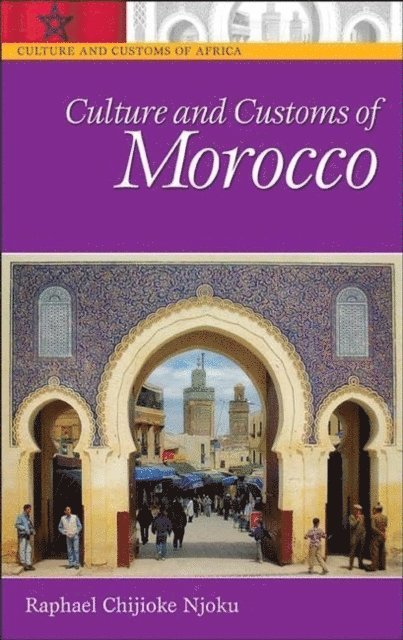
Moroccan culture today is a blend of Berber, African, Arab, Jewish, and European influences in an Islamic state. Morocco's strategic position at the tip of North Africa just below Spain has brought these cultures together through the centuries. The parallels with African and Middle Eastern countries and other Muslim cultures are drawn as the major topics are discussed, yet the uniqueness of Moroccan traditions, particularly those of the indigenous Berbers, stand out. The narrative emphasizes the evolving nature of the storied subcultures. With more exposure to Western-style education and pop culture, the younger generations are gradually turning away from the strict religious observances of their elders.General readers finally have a substantive resource for information on a country most known in the United States for the Humphrey Bogart classic Casablanca, images of the souks (markets), hashish, and Berber rugs. The strong introduction surveys the people, land, government, economy, educational system, and history. Most weight is given to modern history, with French colonial rule ending in 1956 and a succession of monarchs since then. The discussion of religion and worldview illuminates the Islamic base and Jewish communities but is also notable for the discussion of Berber beliefs in spirits. In the Literature and Media chapter, the oral culture of the Berbers and the new preference for Western-style education and use of French and even English are highlights. The Moroccans are renowned as skilled artisans, and their products are enumerated in the Art and Architecture/Housing chapter, along with the intriguing descriptions of casbahs and old quarters in the major cities. Moroccans are hospitable and family oriented, which is reflected in descriptions of their cuisine and social customs. Moroccan women seem to be somewhat freer than others in Muslim countries but the chapter on Gender Roles, Marriage, and Family shows that much progress is still needed. Ceremonies and celebrations are important cultural markers that bring communities together, and a wealth of religious, national, and family rites of passage, with accompanying music and dance, round out the cultural coverage.
764 kr
Skickas inom 10-15 vardagar
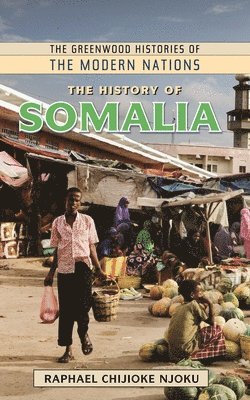
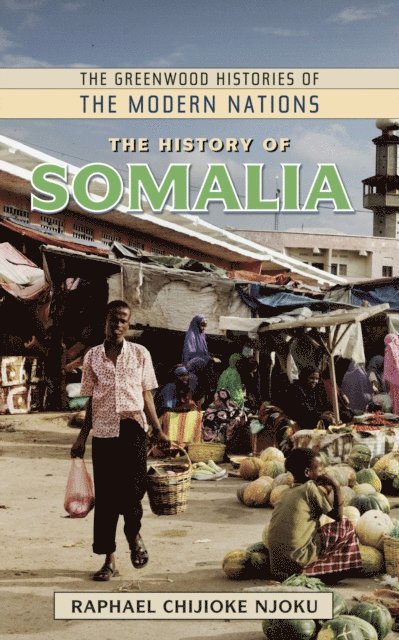
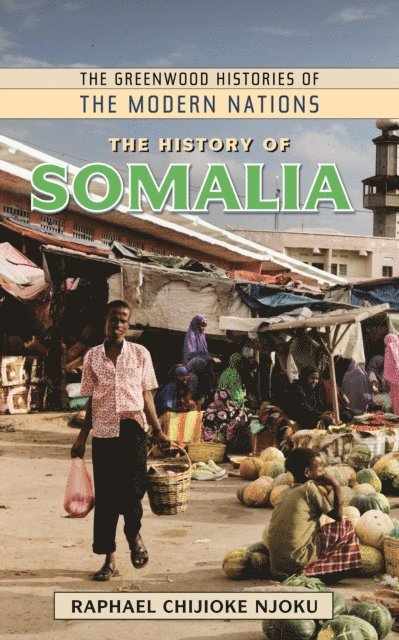
This book vividly depicts Somalia from its pre-colonial period to the present day, documenting the tumultuous history of a nation that has faced many challenges.Somalia is a nation with a history that stretches back more than ten millennia to the beginnings of human civilization. This book provides sweeping coverage of Somalia's history ranging from the earliest times to its modern-day status as a country of ten million inhabitants, providing a unique social-scientific treatment of the nation's key issues across ethnic and regional boundaries.The book addresses not only Somali sociocultural and political history but also covers Somalia's administration and economy, secessionist movements, civil and regional wars, and examines the dynamics of state collapse, democratization, terrorism, and piracy in contemporary times. The author details the extremely rich history of the Somali people and their customs while documenting past history, enabling readers to make meaning out of the country's ongoing crisis.
929 kr
Skickas inom 10-15 vardagar
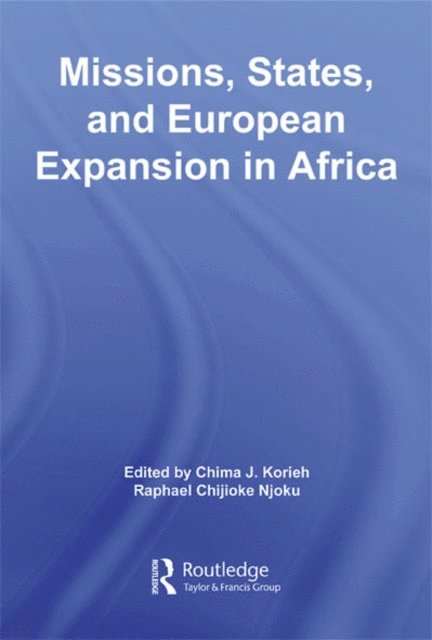
Missions, States, and European Expansion in Africa aims to explore the ways Christianity and colonialism acted as hegemonic or counter hegemonic forces in the making of African societies. As Western interventionist forces, Christianity and colonialism were crucial in establishing and maintaining political, cultural, and economic domination. Indeed, both elements of Africa’s encounter with the West played pivotal roles in shaping African societies during the nineteenth and twentieth centuries. This volume uses a wide range of perspectives to address the intersection between missions, evangelism, and colonial expansion across Africa. The contributors address several issues, including missionary collaboration with the colonizing effort of European powers; disagreements between missionaries and colonizing agents; the ways in which missionaries and colonial officials used language, imagery, and European epistemology to legitimize relations of inequality with Africans; and the ways in which both groups collaborated to transform African societies. Thus, Missions, States, and European Expansion in Africa transcends the narrow boundaries that often separate the role of these two elements of European encounter to argue that missionary endeavours and official colonial actions could all be conceptualized as hegemonic institutions, in which both pursued the same civilizing mission, even if they adopted different strategies in their encounter with African societies.
2 151 kr
Skickas inom 10-15 vardagar
Missions, States, and European Expansion in Africa aims to explore the ways Christianity and colonialism acted as hegemonic or counter hegemonic forces in the making of African societies. As Western interventionist forces, Christianity and colonialism were crucial in establishing and maintaining political, cultural, and economic domination. Indeed, both elements of Africa’s encounter with the West played pivotal roles in shaping African societies during the nineteenth and twentieth centuries. This volume uses a wide range of perspectives to address the intersection between missions, evangelism, and colonial expansion across Africa. The contributors address several issues, including missionary collaboration with the colonizing effort of European powers; disagreements between missionaries and colonizing agents; the ways in which missionaries and colonial officials used language, imagery, and European epistemology to legitimize relations of inequality with Africans; and the ways in which both groups collaborated to transform African societies. Thus, Missions, States, and European Expansion in Africa transcends the narrow boundaries that often separate the role of these two elements of European encounter to argue that missionary endeavours and official colonial actions could all be conceptualized as hegemonic institutions, in which both pursued the same civilizing mission, even if they adopted different strategies in their encounter with African societies.
Del 88 - Rochester Studies in African History and the Diaspora
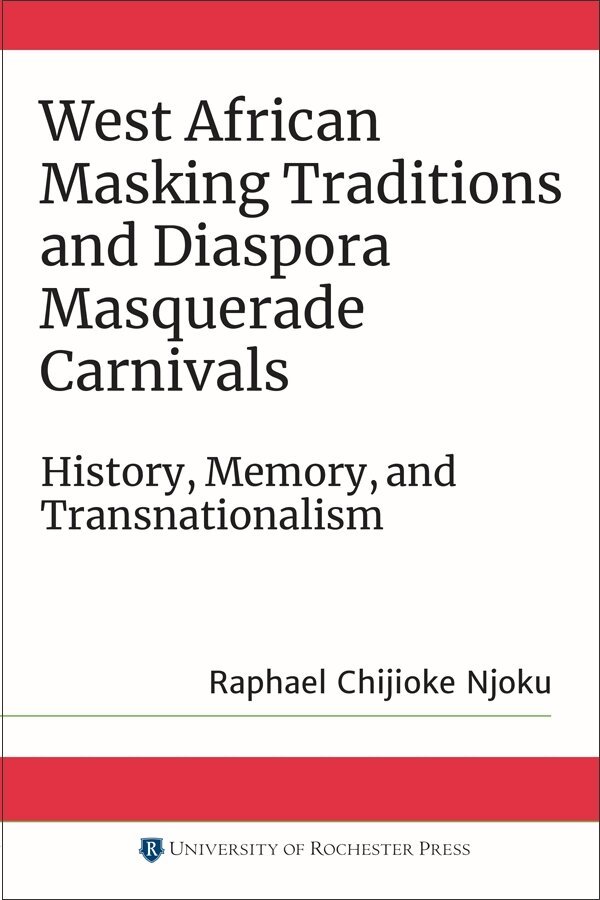
West African Masking Traditions and Diaspora Masquerade Carnivals
History, Memory, and Transnationalism
Häftad, Engelska, 2020
345 kr
Skickas inom 7-10 vardagar
A revisionist account of African masquerade carnivals in transnational context that offers readers a unique perspective on the connecting threads between African cultural trends and African American cultural artifactsIn recent decades, there has been an explosion of scholarly interest in African-styled traditions and the influence of these traditions upon the African diaspora. In this important new analysis, author Raphael Njoku explores the transnational connections between masquerade narratives and memory over the past four centuries to show how enslaved Africans became culture carriers of inherited African traditions. In doing so, he questions the scholarly predisposition toward ethnicization of African cultural artifacts in the Americas. As Njoku's research shows, the practices reenacted by the Igbo and Bight of Biafra modelers in the Americas were not exact replicas of the African prototypes. Cultural modeling is dynamic, and the inheritors of West African traditions often adapted their customs to their circumstances--altering and transforming the meaning and purpose of the customs they initially represented.With the Bantu migrations serving as a catalyst for ethnic mixing and change prior to the trans-Atlantic slave trade, African-themed cultural activities in the New World became dilutions of practices from several ethnic African and European nations. African cultures were already experiencing changes through Bantuization; in this well-researched and engagingly written scholarly work, the author explores the extension of this process beyond the African continent.This book is openly available in digital formats thanks to a generous grant from the Andrew W. Mellon Foundation.
2 771 kr
Skickas inom 3-6 vardagar
432 kr
Skickas inom 3-6 vardagar
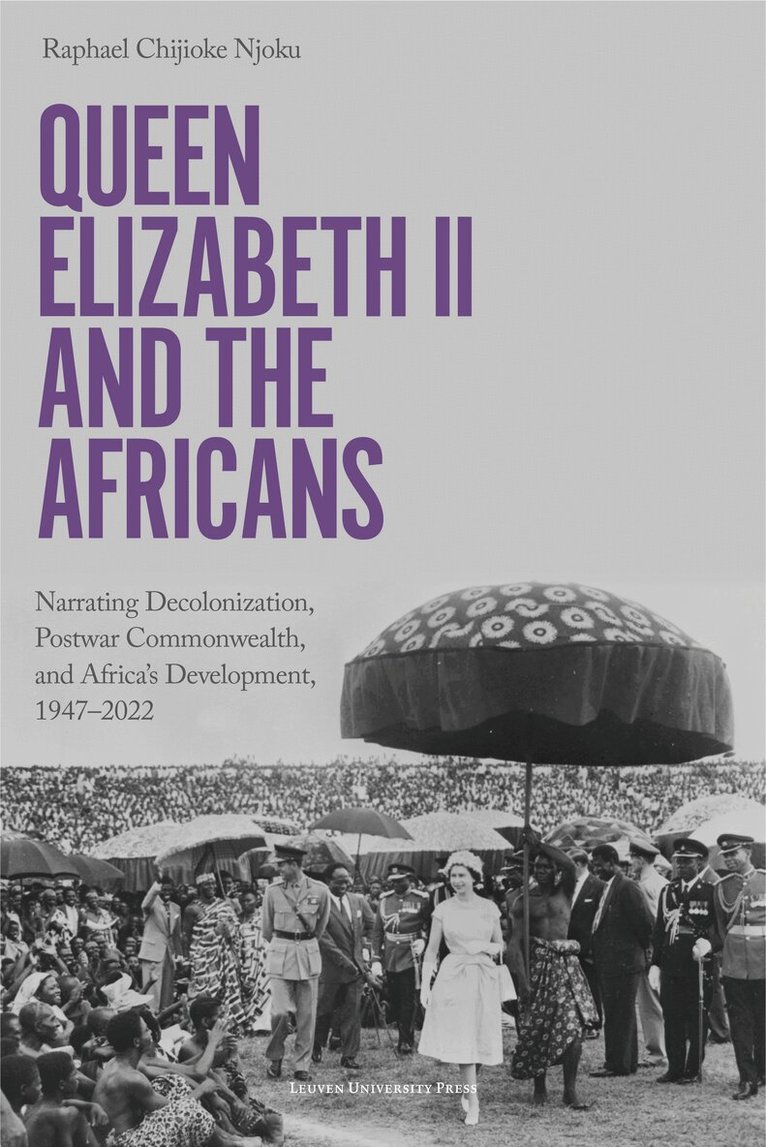
Queen Elizabeth II and the Africans
Narrating Decolonization, Postwar Commonwealth, and Africa's Development, 1947–2022
Häftad, Engelska, 2024
345 kr
Skickas inom 3-6 vardagar
First book-length study by an African writer that incorporates the trials and triumphs of Queen Elizabeth II, tracing her contributions to African affairsThe road to Queen Elizabeth II’s implementation of African reforms was rough, especially in the first two decades following her ascension to the throne. In this book, Raphael Chijioke Njoku examines Queen Elizabeth II's role in the African decolonization trajectories and the postcolonial state's quest for genuine political and economic liberation since 1947. By locating Elizabeth at the center of Anglophone Africa's independence agitations, the account harnesses the African interests to tease out the monarch's dilemma of complying with Whitehall's decolonization schemes while building an inclusive and unified Commonwealth in which Africans could play a vital role. Njoku argues that to gratify British lawmakers in her complex and marginal place within the British parliamentary system of conservative versus reformist, Elizabeth’s contribution fell short of African nationalists’ expectations on account of her silence and inaction during the African decolonization raptures. Yet ultimately, the author concludes, she helped build an inclusive and unified organization in which Africans could assert and appropriate political and economic autarky.This publication is GPRC-labeled (Guaranteed Peer-Reviewed Content).This book will be made open access within three years of publication thanks to Path to Open, a program developed in partnership between JSTOR, the American Council of Learned Societies (ACLS), University of Michigan Press, and The University of North Carolina Press to bring about equitable access and impact for the entire scholarly community, including authors, researchers, libraries, and university presses around the world. Learn more at https://about.jstor.org/path-to-open/Listen to an interview with Raphael Chijioke Njoku at New Books Network: https://newbooksnetwork.com/queen-elizabeth-ii-and-the-africans