Raphael Jospe - Böcker
Visar alla böcker från författaren Raphael Jospe. Handla med fri frakt och snabb leverans.
10 produkter
10 produkter
742 kr
Skickas inom 10-15 vardagar
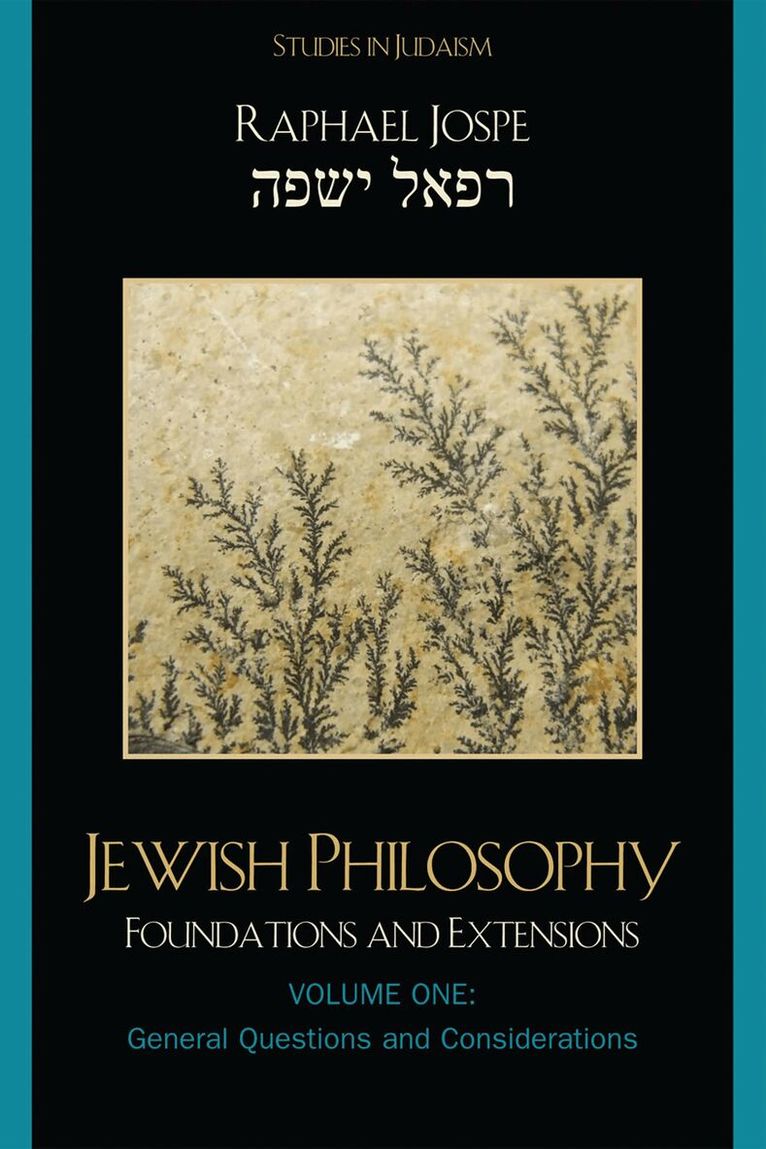
Volume One of Jewish Philosophy: Foundations and Extensions is divided thematically. "Foundations of Jewish Philosophy" analyzes how Jewish philosophy is defined, the controversy over faith and reason, and how Sa' adiah Ga'on pioneered the medieval, and Moses Mendelssohn, the modern traditions of Jewish philosophy. "Philosophy and Scripture" explores the relationship of the two major sources of religious thought, reason and revelation. "Non-Philosophical Sources and Their Implications" discusses the existence of the boundaries of philosophical thought.
808 kr
Skickas inom 10-15 vardagar
Volume Two of Jewish Philosophy: Foundations and Extensions deals with major thinkers. "Interpreting Judah Ha-Levi" discusses misunderstandings of his idea, and his impact on Jewish thought, especially his theories of Jewish uniqueness and the superiority of oral communication. "Interpreting Maimonides" examines the problematic structure of his Guide of the Perplexed, tensions in his ethical and political theory, and his radical approach to the book of Job." Philosophy, Mysticism and Astrology" explores the fluid boundaries among these fields, and how rationalist philosophers were interested in non-philosophical questions. "From Medieval to Modern Jewish Thought: Moses Mendelssohn" demonstrates how this transitional figure, though indebted to medieval thought, also formulated a radical and pluralistic modern political philosophy.
Del 11 - Monographs of the Hebrew Union College
Torah and Sophia
The life and thought of Shem Tov Ibn Falaquera
Inbunden, Engelska, 1988
876 kr
Tillfälligt slut
The century following the death of Maimonides (1204) witnessed widespread upheaval and turmoil as anti-rationalist Jews attempted to ban the study of philosophy. For such rationalist philosophers as Shem Tov ibn Falaquera (c. 1225-1291), however, Judaism could not be restricted to the confines of the spiritual and intellectual ghetto; the free minds of Jews could not be shackled in the name of Judaism. In many respects, Falaquera epitomizes the way in which philosophy succeeded in finding a home in Judaism in the Middle Ages. The pioneering philosophical efforts of earlier luminaries made an enduring impact on the course of Jewish history and the religious and intellectual life of the Jewish people through their Hebrew translation and cultural consolidation at the hands of Jewish philosophers like Falaquera. As a prolific Hebrew poet, translator, popularize of science and philosophy, encyclopedist, defender of Maimonides, Bible commentator, historian of philosophy, and philosopher in his own right, Falaquera manifested a loving commitment to both Torah and secular wisdom (hokhmah, Sophia) and the conviction that both Torah and Sophia ultimately must be in harmony, if not identical. Raphael Jospe's exhaustive study of the life and thought of Shem Tov ibn Falaquera provides students of medieval Jewish and Islamic philosophy for the first time with a systematic and comprehensive presentation of Falaquera's philosophy. Reflecting Falaquera's own philosophic and curricular priorities, the book focuses in particular depth on his psychology, in light of and in comparison to his Arabic sources. In the tradition of scholarly text analysis, the book also offers a critical Hebrew edition and annotated English translation of Falaquera's systematic psychological study, Sefer Ha-Nefesh (Book of the Soul), as well as a critical and annotated edition of his previously unpublished ethical work, Shelemut Ha-Ma'asim (Perfection of Actions), and - also for the first time - the surviving fragments, with English translation, of Falaquera'a Bible commentary.
1 440 kr
Skickas inom 5-8 vardagar
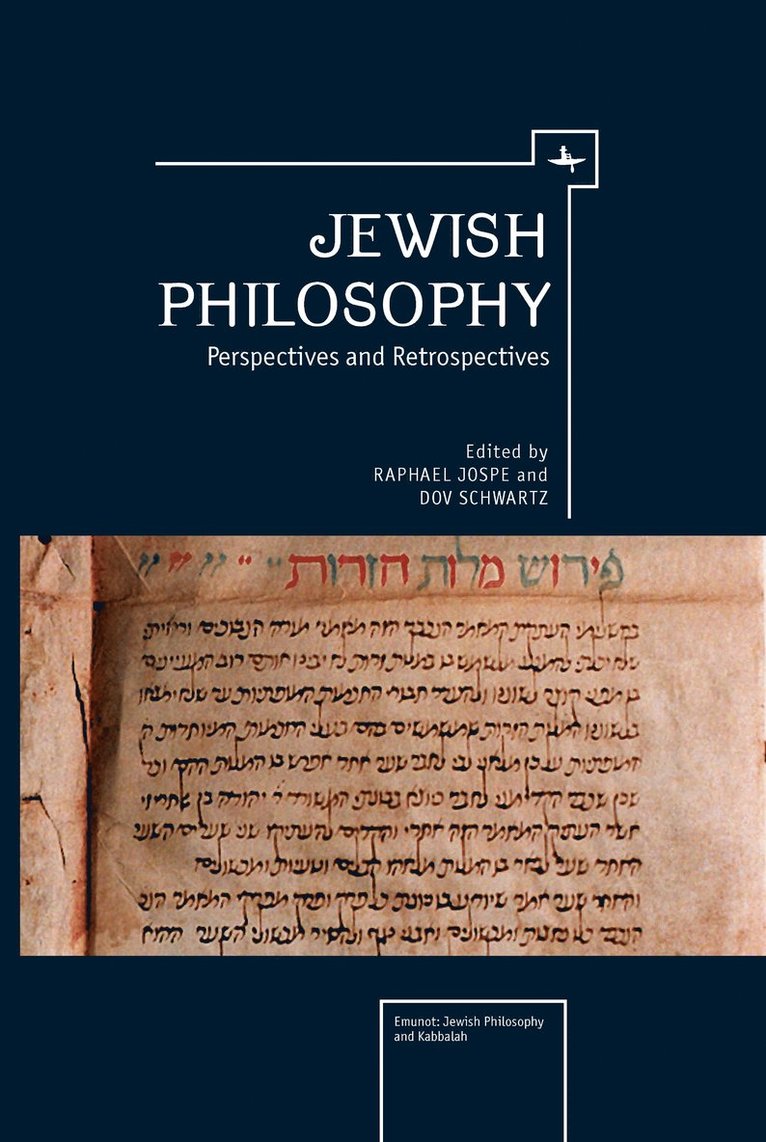
In a lecture title “Jewish Philosophy: An Obituary,” Paul Mendes-Flohr observed that “Jewish philosophers seem to be a dying breed.” However tongue in cheek the statement may have been at the close of the twentieth century by a scholar of modern Jewish thought, a similar pessimistic observation was made quite seriously at the beginning of the twentieth century by Isaac Husik in his History of Medieval Jewish Philosophy (1916), which he sadly concludes with the words, “There are Jews now and there are philosophers, but there are no Jewish philosophers and there is no Jewish philosophy.”This volume, as one more modest contribution to the exponentially increasing publications, in Hebrew and in other languages, of original thought and of scholarly analysis, proves that obituaries for Jewish philosophy and thought are exaggerated, premature, and ultimately far off the mark. Husik’s own work helped start the revival of a field for which he – like nineteenth century scholars of Wissenschaft des Judentums – mistakenly thought he was writing an epitaph. This collection includes two symposia, on “The Renaissance of Jewish Philosophy in America” and on “Maimonides on the Eternity of the World,” as well as other studies in medieval Jewish philosophy and modern Jewish thought. Contributors include: Leora Batnitzky, Ottfried Fraisse, William A. Galston, Lenn E. Goodman , Raphael Jospe, Steven Kepnes, Haim Howard Kreisel, Charles Bezalel Manekin, Haggai Mazuz, Paul Mendes-Flohr, Alan Mittleman, Michael Morgan, David Novak, James T. Robinson, Norbert M. Samuelson, Dov Schwartz, Yossef Schwartz, Kenneth Seeskin, Roslyn Weiss, and Martin Yaffe.
Encounters in Modern Jewish Thought
The Works of Eva Jospe (Volume One: Martin Buber)
Inbunden, Engelska, 2013
1 375 kr
Skickas inom 3-6 vardagar
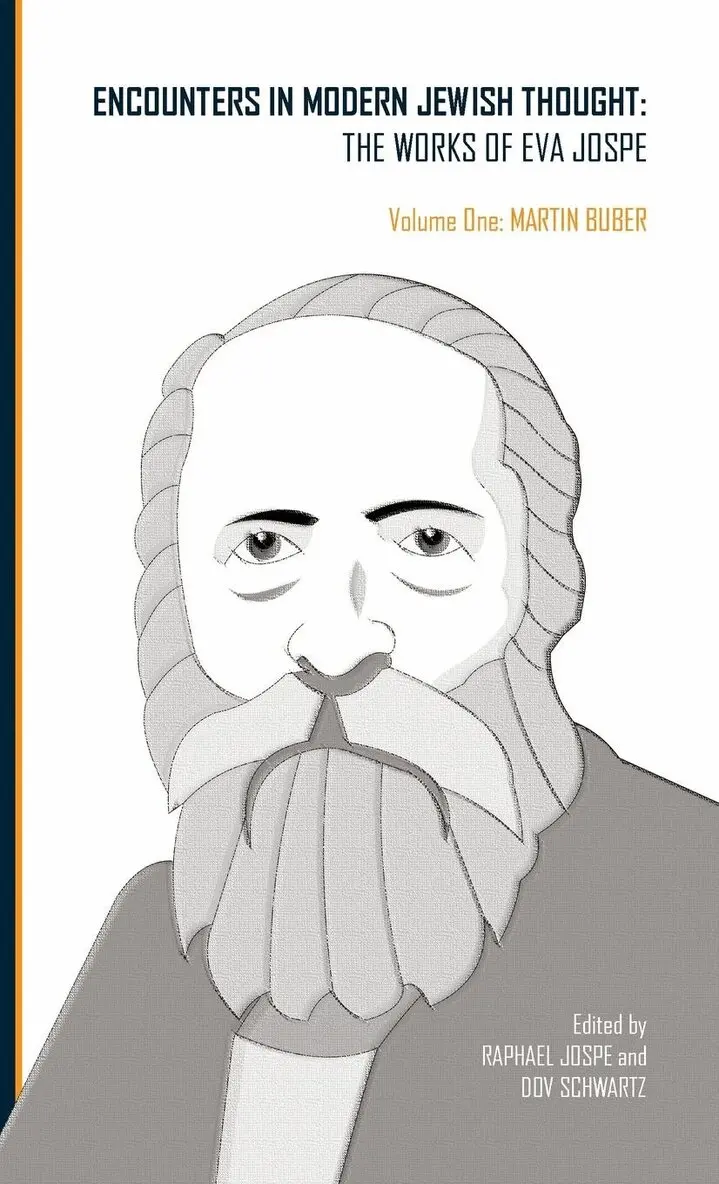
The first of a three-volume series, this book offers access to a rich selection of Eva Jospe’s most distinguished works on Jewish Philosophy. The editors unveil Jospe’s previously unpublished study “The Concept of Encounter in the Philosophy of Martin Buber,” presented alongside several of her published articles on the life and work of Buber, and on Modern Jewish thought. The second volume of this series contains Jospe’s translations of Moses Mendelssohn, and Volume Three is comprised of her Reason and Hope: Selections from the Jewish Writings of Hermann Cohen. Together, these volumes offer a multidimensional view of Jospe’s work and thoughts, including a heightened awareness of the paradox noted by Ephraim Meir in his introduction—Jospe’s appreciation and admiration of Martin Buber, reflected in her clear presentation and analysis of his dialogical philosophy, simultaneously coupled with her pointed criticisms of the standpoint of her one-time teacher.
Encounters in Modern Jewish Thought
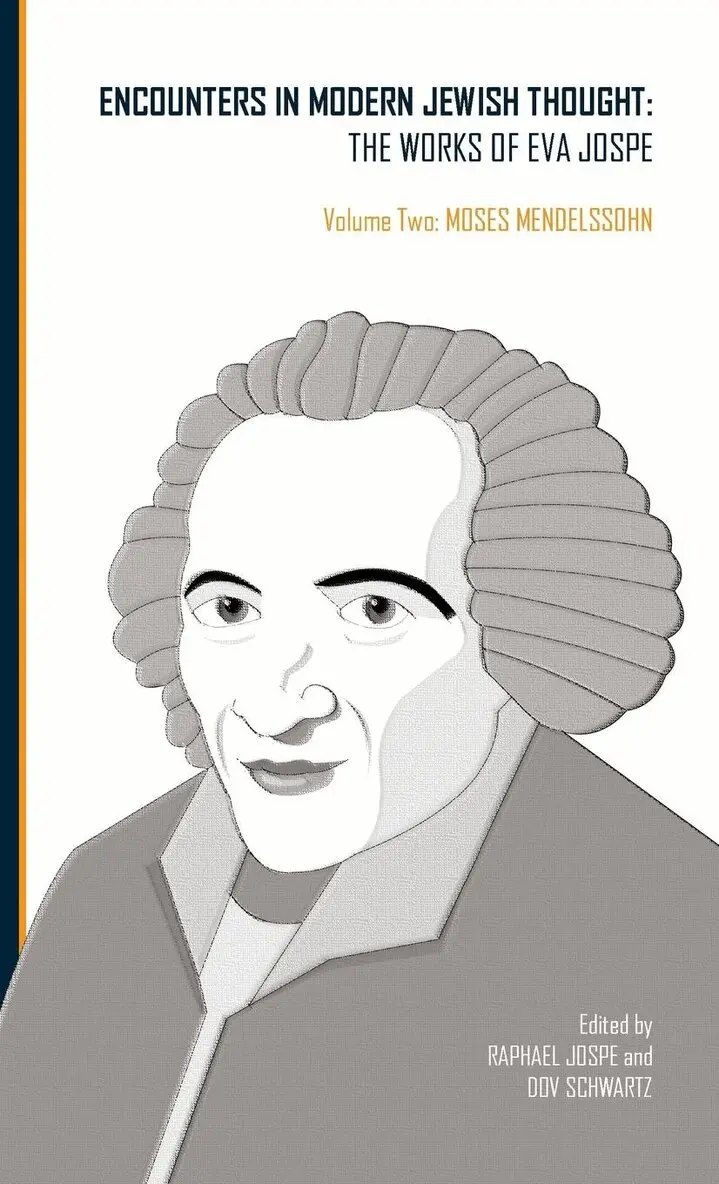
The Works of Eva Jospe (Volume Two: Moses Mendelssohn)
Inbunden, Engelska, 2013
1 007 kr
Skickas inom 5-8 vardagar
The second of a three-volume series, this book contains Eva Jospe’s Moses Mendelssohn: Selections from His Writings, together with an article dealing with Mendelssohn’s enduring significance. As Raphael Jospe observes in his introduction to the volume, despite the welcome growth in recent years in the availability of English translations of Mendelssohn’s works, Eva Jospe’s Selections (including some of Mendelssohn’s private letters) remain valuable for their clarity, for the logic of their organization, and for the important insight they provide into Mendelssohn’s personality and convictions.Volume One of this series contains Eva Jospe’s study of the Concept of Encounter in the Philosophy of Martin Buber , and Volume Three her Reason and Hope: Selections from the Jewish Writings of Hermann Cohen. Together, these volumes offer a multidimensional view of Jospe’s work and thoughts.
Encounters in Modern Jewish Thought
The Works of Eva Jospe (Volume III: Hermann Cohen)
Inbunden, Engelska, 2013
876 kr
Skickas inom 5-8 vardagar
The third of a three-volume series, this book contains Eva Jospe’s Reason and Hope: Selections from the Jewish Writings of Hermann Cohen, together with two essays examining Cohen’s continuing importance and relevance. As Dov Schwartz suggests in his introduction to the volume, Jospe believed that Cohen’s Jewish Writings had the potential for influence and impact on the American Jewish intellectual, and would enrich the ethical and religious life of the Jewish community in America. Her selection of passages to translate, as well as her decisions regarding what to omit, served these purposes. Volume One of this series contains Jospe’s study of the Concept of Encounter in the Philosophy of Martin Buber and Volume Two her translations of Moses Mendelssohn. Together, these volumes offer a multidimensional view of Jospe’s work and thoughts.
1 656 kr
Skickas inom 5-8 vardagar
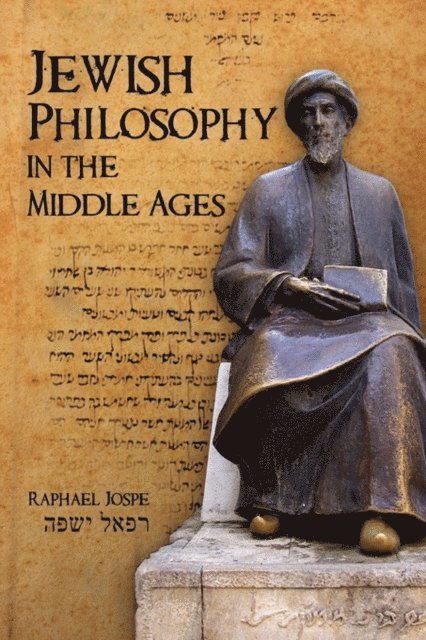
"Jewish Philosophy in the Middle Ages" presents an overview of the formative period of medieval Jewish philosophy, from its beginnings with Saadiah Gaon to its apex in Maimonides, when Jews living in Islamic countries and writing in Arabic were the first to develop a conscious and continuous tradition of philosophy. The book includes a dictionary of selected philosophic terms, and discusses the Greek and Arabic schools of thought that influenced the Jewish thinkers and to which they responded. The discussion covers: the nature of Jewish philosophy, Saadiah Gaon and the Kalam, Jewish Neo-Platonism, Bahya ibn Paqudah, Abraham ibn Ezra's philosophical Bible exegesis, Judah Ha-Levi's critique of philosophy, Abraham ibn Daud and the transition to Aristotelianism, Maimonides, and the controversy over Maimonides and philosophy.
557 kr
Skickas inom 5-8 vardagar
Jewish Philosophy in the Middle Ages presents an overview of the formative period of medieval Jewish philosophy, from its beginnings with Saadiah Gaon to its apex in Maimonides, when Jews living in Islamic countries and writing in Arabic were the first to develop a conscious and continuous tradition of philosophy.The book includes a dictionary of selected philosophic terms, and discusses the Greek and Arabic schools of thought that influenced the Jewish thinkers and to which they responded. The discussion covers: the nature of Jewish philosophy, Saadiah Gaon and the Kalam, Jewish Neo-Platonism, Bahya ibn Paqudah, Abraham ibn Ezra's philosophical Bible exegesis, Judah Ha-Levi's critique of philosophy, Abraham ibn Daud and the transition to Aristotelianism, Maimonides, and the controversy over Maimonides and philosophy.
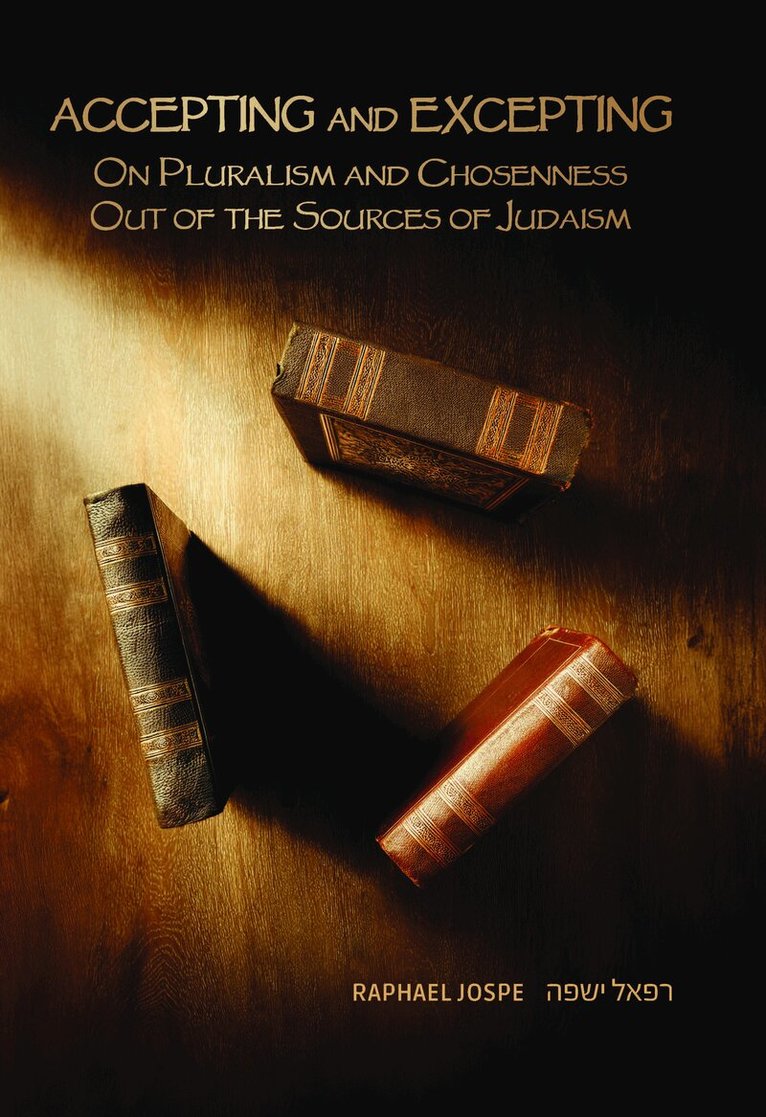
Accepting and Excepting
On Pluralism and Chosenness out of the Sources of Judaism
Inbunden, Engelska, 2025
926 kr
Skickas
Accepting and Excepting: On Pluralism and Chosenness Out of the Sources of Judaism is a collection of essays examining the need for inter-religious pluralism. So long as religions compete with each other by exclusive claims to absolute truth and salvation, how can they cooperate as forces for peace in an era of the global village and weapons of mass destruction? Our cognition of reality is necessarily colored and shaped by language, culture, religion, and gender. Given inevitable epistemological (not moral) relativism, exclusive and absolute truth claims are meaningless. By a process of revaluation, Jews can affirm the concept of the Chosen People as internally directed with no claims of superiority, and observe traditional sancta without traditional theism.