Refik Culpan – författare
Visar alla böcker från författaren . Handla med fri frakt och snabb leverans.
3 produkter
3 produkter
E-bok
PDF, Engelska, 20021 169 kr
Läs direkt efter köp
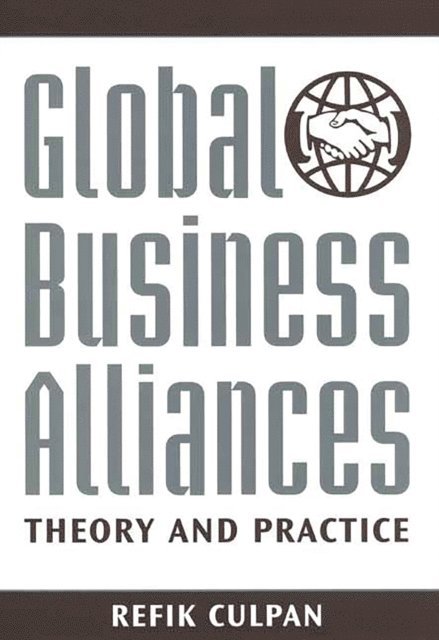
Forging business alliances can vitalize corporate strategies. This book is a road map to the concepts and theories underlying successful business alliances in four critical industries: automobile manufacturing, pharmaceuticals, airlines, and telecommunications. Dr. Culpan offers the essentials of global partnering as seen from a strategic management viewpoint. He examines joint ventures, non-equity alliances, and business options designed to give a competitive edge over other allied firms. New conceptual models help to clarify various strategies and collaborative processes.By comparing the four major industries—and specific companies in each—this study explores not only the uniqueness of its subjects, but also the common grounds of various multinationals. Through key insights and ideas, the possibilities and realities of corporate alliances begin to emerge. Attention is also paid to the decision-making process as it relates cooperative ventures, as well as to the inevitable managerial challenges of forming, and managing, strategic alliances. The result is an astute analysis ideal for teachers, students, and strategists seeking fresh insights into the workings and benefits of corporate alliance.
Transformation Management in Postcommunist Countries
Organizational Requirements for a Market Economy
Inbunden, Engelska, 1995
1 084 kr
Skickas inom 10-15 vardagar
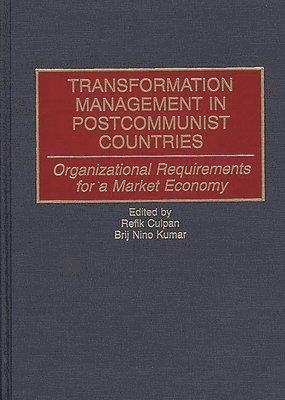
The book addresses the management of privatization in post-communist countries and is aimed at defining and analyzing contextual and organizational characteristics of privatization in these transitional economies to build effective business concerns that behave competitively. While privatization has recently become popular and widely used in former socialist countries, its organizational requirements have often been overlooked. The book demonstrates salient features as well as dynamic relationships among various organizational properties of privatized firms. The volume includes both conceptual foundations and practical suggestions for transformation from a command economy to a market economy from a managerial and organizational perspectives. Additionally, it includes examples of privatization in Eastern and Central Europe. It will appeal to students, policy makers, and managers of privatization in post-communist countries.This book presents an outstanding body of research on theoretical and practical aspects of the various applications of privatization in post-communist countries. A thorough analysis of strategy, structure, behavior, and process of transformation from a command to a market economy is discussed. The volume presents illustrative cases from Eastern Europe and provides a wide range of critical issues including planning, restructuring industrial organization, technology management, and human resource management based on personal experience of the authors or extensive studies on privatization in former socialist countries. It is an excellent source for further understanding the reasons for successes or failures of a variety of privatization applications.
Inbunden, Engelska, 2002
1 084 kr
Skickas inom 10-15 vardagar
Forging business alliances can vitalize corporate strategies. This book is a road map to the concepts and theories underlying successful business alliances in four critical industries: automobile manufacturing, pharmaceuticals, airlines, and telecommunications. Dr. Culpan offers the essentials of global partnering as seen from a strategic management viewpoint. He examines joint ventures, non-equity alliances, and business options designed to give a competitive edge over other allied firms. New conceptual models help to clarify various strategies and collaborative processes.By comparing the four major industries—and specific companies in each—this study explores not only the uniqueness of its subjects, but also the common grounds of various multinationals. Through key insights and ideas, the possibilities and realities of corporate alliances begin to emerge. Attention is also paid to the decision-making process as it relates cooperative ventures, as well as to the inevitable managerial challenges of forming, and managing, strategic alliances. The result is an astute analysis ideal for teachers, students, and strategists seeking fresh insights into the workings and benefits of corporate alliance.