
Regina T. Riphahn – författare
Visar alla böcker från författaren Regina T. Riphahn. Handla med fri frakt och snabb leverans.
3 produkter
3 produkter
Inbunden, Engelska, 2000
1 080 kr
Skickas inom 10-15 vardagar
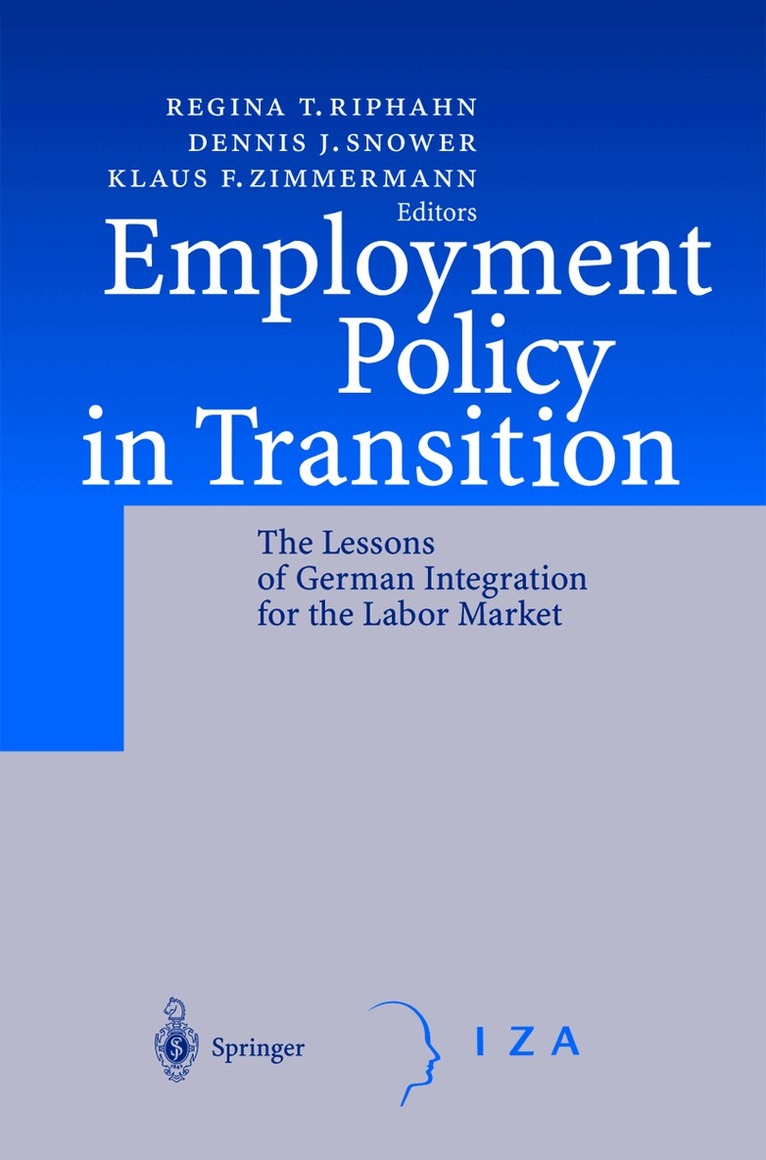
A historically unique experiment is about to enter its second decade - German unification. Early hopes for a rapid and smooth economic transformation soon turned out to be overly optimistic. Despite massive financial transfers, the political promise of a "blooming landscape" remains a vision. Actual developments have left deep scars on the labor market, and the effects will be felt for decades to come. Was this outcome to be expected, perhaps even inevitable? What went wrong, and what were the available options? Or is the current state of Eastern German labor market in fact better than is commonly assumed?

E-bok
PDF, Engelska, 20121 367 kr
Läs direkt efter köp
A historically unique experiment is about to enter its second decade - German unification. Early hopes for a rapid and smooth economic transformation soon turned out to be overly optimistic. Despite massive financial transfers, the political promise of a "blooming landscape" remains a vision. Actual developments have left deep scars on the labor market, and the effects will be felt for decades to come. Was this outcome to be expected, perhaps even inevitable? What went wrong, and what were the available options? Or is the current state of Eastern German labor market in fact better than is commonly assumed?
Häftad, Engelska, 2013
1 092 kr
Skickas inom 10-15 vardagar
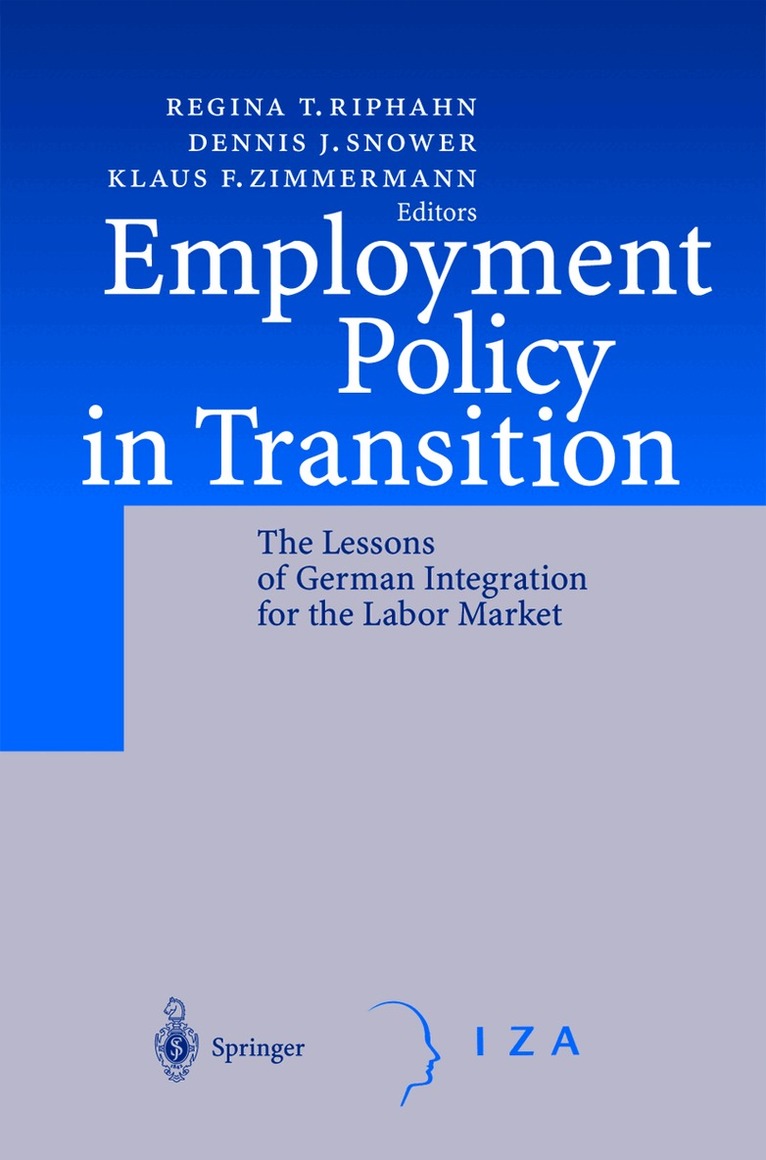
A historically unique experiment is about to enter its second decade - German unification. Early hopes for a rapid and smooth economic transformation soon turned out to be overly optimistic. Despite massive financial transfers, the political promise of a "blooming landscape" remains a vision. Actual developments have left deep scars on the labor market, and the effects will be felt for decades to come. Was this outcome to be expected, perhaps even inevitable? What went wrong, and what were the available options? Or is the current state of Eastern German labor market in fact better than is commonly assumed?