Reiner R. Dumke – författare
Visar alla böcker från författaren Reiner R. Dumke. Handla med fri frakt och snabb leverans.
10 produkter
10 produkter
Häftad, Engelska, 2024
815 kr
Skickas inom 10-15 vardagar
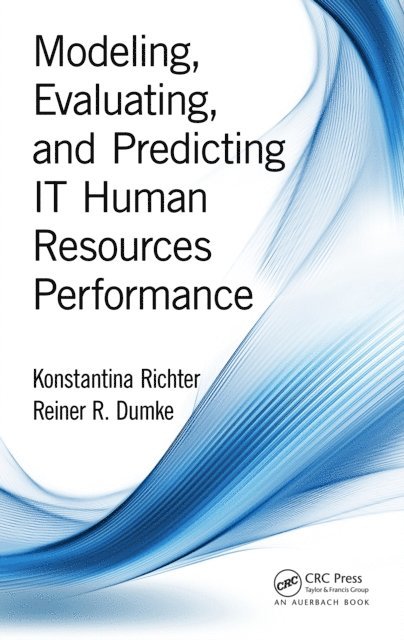
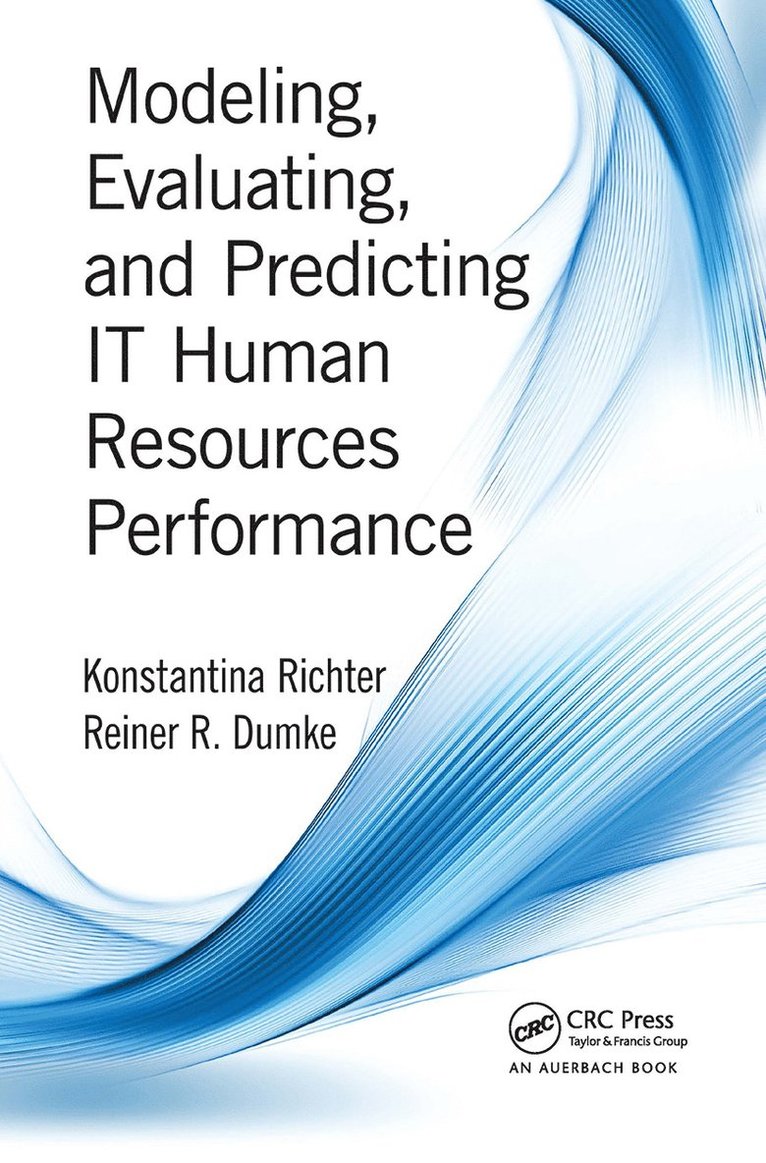
Numerous methods exist to model and analyze the different roles, responsibilities, and process levels of information technology (IT) personnel. However, most methods neglect to account for the rigorous application and evaluation of human errors and their associated risks. This book fills that need. Modeling, Evaluating, and Predicting IT Human Resources Performance explains why it is essential to account for the human factor when determining the various risks in the software engineering process. The book presents an IT human resources evaluation approach that is rooted in existing research and describes how to enhance existing approaches through strict use of software measurement and statistical principles and criteria. Discussing IT human factors from a risk assessment point of view, the book identifies, analyzes, and evaluates the basics of IT human performance. It details the IT human factors required to achieve desired levels of human performance prediction. It also provides a rigorous investigation of existing human factors evaluation methods, including IT expertise and Big Five, in combination with powerful statistical methods, such as failure mode and effect analysis (FMEA) and design of experiment (DoE).Supplies an overview of existing methods of human risk evaluationProvides a detailed analysis of IT role-based human factors using the well-known Big Five method for software engineeringModels the human factor as a risk factor in the software engineering processSummarizes emerging trends and future directions In addition to applying well-known human factors methods to software engineering, the book presents three models for analyzing psychological characteristics. It supplies profound analysis of human resources within the various software processes, including development, maintenance, and application under consideration of the Capability Maturity Model Integration (CMMI) process level five.
E-bok
Engelska, 2015936 kr
Läs direkt efter köp
Numerous methods exist to model and analyze the different roles, responsibilities, and process levels of information technology (IT) personnel. However, most methods neglect to account for the rigorous application and evaluation of human errors and their associated risks. This book fills that need. Modeling, Evaluating, and Predicting IT Human Resources Performance explains why it is essential to account for the human factor when determining the various risks in the software engineering process. The book presents an IT human resources evaluation approach that is rooted in existing research and describes how to enhance existing approaches through strict use of software measurement and statistical principles and criteria. Discussing IT human factors from a risk assessment point of view, the book identifies, analyzes, and evaluates the basics of IT human performance. It details the IT human factors required to achieve desired levels of human performance prediction. It also provides a rigorous investigation of existing human factors evaluation methods, including IT expertise and Big Five, in combination with powerful statistical methods, such as failure mode and effect analysis (FMEA) and design of experiment (DoE). Supplies an overview of existing methods of human risk evaluation Provides a detailed analysis of IT role-based human factors using the well-known Big Five method for software engineering Models the human factor as a risk factor in the software engineering process Summarizes emerging trends and future directions In addition to applying well-known human factors methods to software engineering, the book presents three models for analyzing psychological characteristics. It supplies profound analysis of human resources within the various software processes, including development, maintenance, and application under consideration of the Capability Maturity Model Integration (CMMI) process level five.
E-bok
PDF, Engelska, 2015936 kr
Läs direkt efter köp
Numerous methods exist to model and analyze the different roles, responsibilities, and process levels of information technology (IT) personnel. However, most methods neglect to account for the rigorous application and evaluation of human errors and their associated risks. This book fills that need. Modeling, Evaluating, and Predicting IT Human Resources Performance explains why it is essential to account for the human factor when determining the various risks in the software engineering process. The book presents an IT human resources evaluation approach that is rooted in existing research and describes how to enhance existing approaches through strict use of software measurement and statistical principles and criteria. Discussing IT human factors from a risk assessment point of view, the book identifies, analyzes, and evaluates the basics of IT human performance. It details the IT human factors required to achieve desired levels of human performance prediction. It also provides a rigorous investigation of existing human factors evaluation methods, including IT expertise and Big Five, in combination with powerful statistical methods, such as failure mode and effect analysis (FMEA) and design of experiment (DoE). Supplies an overview of existing methods of human risk evaluation Provides a detailed analysis of IT role-based human factors using the well-known Big Five method for software engineering Models the human factor as a risk factor in the software engineering process Summarizes emerging trends and future directions In addition to applying well-known human factors methods to software engineering, the book presents three models for analyzing psychological characteristics. It supplies profound analysis of human resources within the various software processes, including development, maintenance, and application under consideration of the Capability Maturity Model Integration (CMMI) process level five.
Häftad, Engelska, 2008
565 kr
Skickas inom 10-15 vardagar
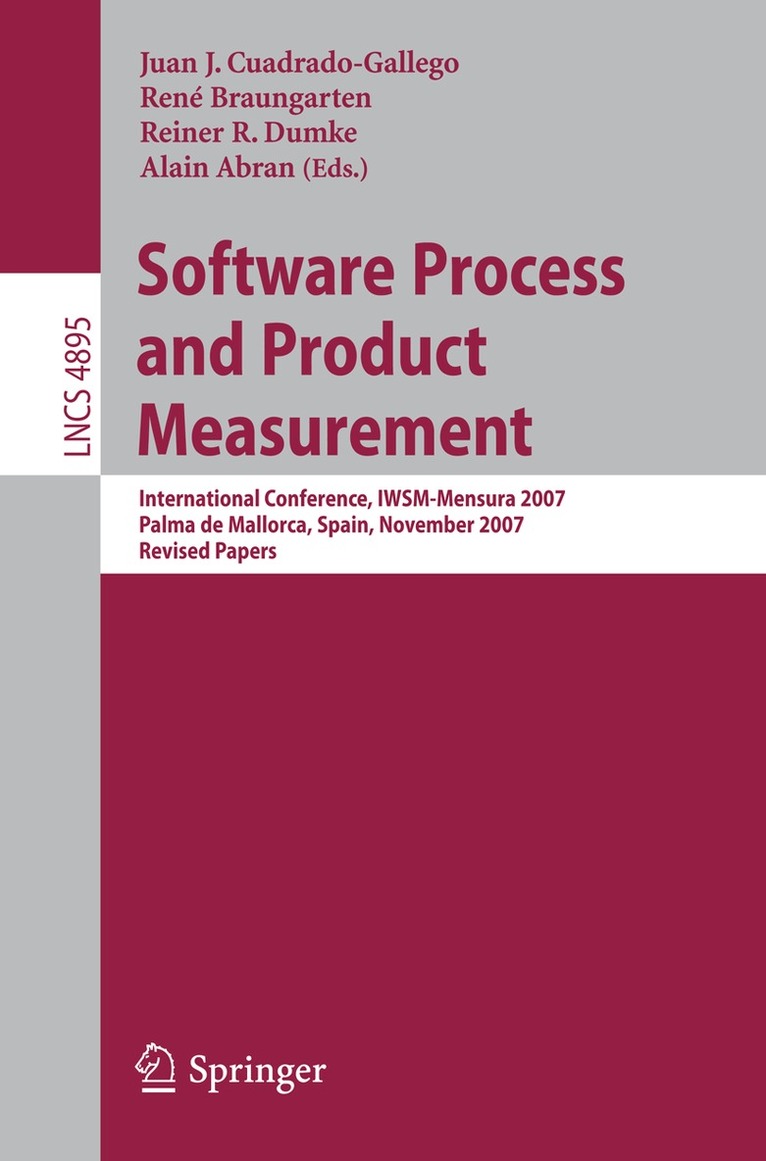
This book constitutes the thoroughly refereed post-proceedings of the International Workshop on Software Measurement, IWSM-Mensura 2007, held in Palma de Mallorca, Spain, in November 2007.The 16 revised full papers presented were carefully reviewed and selected for inclusion in the book. The papers deal with aspects of software measurement like function-points measurement, effort and cost estimates, prediction, industrial experiences in software measurement, planning and implementing measurement, measurement-based software process improvement, best practices in software measurement, usability and user interaction measurement, measurement of open source projects, teaching and learning software measurement as well as new trends and ontologies for software measurement.
E-bok
PDF, Engelska, 2008708 kr
Läs direkt efter köp
This book constitutes the thoroughly refereed post-proceedings of the International Workshop on Software Measurement, IWSM-Mensura 2007, held in Palma de Mallorca, Spain, in November 2007. The 16 revised full papers presented were carefully reviewed and selected for inclusion in the book. The papers deal with aspects of software measurement like function-points measurement, effort and cost estimates, prediction, industrial experiences in software measurement, planning and implementing measurement, measurement-based software process improvement, best practices in software measurement, usability and user interaction measurement, measurement of open source projects, teaching and learning software measurement as well as new trends and ontologies for software measurement.
Häftad, Engelska, 2008
533 kr
Skickas inom 10-15 vardagar
This book constitutes the refereed proceedings of three joint events - the International Workshop on Software Measurement, IWSM 2008, the DASMA Metrik Kongress, Metrikon 2008, and the International Conference on Software Process and Product Measurement, Mensura 2008, held in Munich, Germany, in November 2008. The 30 revised full papers presented were carefully reviewed and selected from over 50 submissions for inclusion in the book. The papers are organized in topical sections on estimation models, measurement methodology, effort estimation, measurement programs, new approaches, prozessbewertung, size measurement, education, measurement in software lifecycle, and product measurement.
E-bok
PDF, Engelska, 2008668 kr
Läs direkt efter köp
This book constitutes the refereed proceedings of three joint events - the International Workshop on Software Measurement, IWSM 2008, the DASMA Metrik Kongress, Metrikon 2008, and the International Conference on Software Process and Product Measurement, Mensura 2008, held in Munich, Germany, in November 2008. The 30 revised full papers presented were carefully reviewed and selected from over 50 submissions for inclusion in the book. The papers are organized in topical sections on estimation models, measurement methodology, effort estimation, measurement programs, new approaches, prozessbewertung, size measurement, education, measurement in software lifecycle, and product measurement.
Häftad, Engelska, 2009
565 kr
Skickas inom 10-15 vardagar
This book constitutes the refereed proceedings of two joint events - the International Workshop on Software Measurement, IWSM 2009 and the International Conference on Software Process and Product Measurement, Mensura 2009, held in Amsterdam, The Netherlands, in November 2009. The 24 revised full papers presented were carefully reviewed and selected from numerous submissions for inclusion in the book. This book considers issues such as the applicability of measures and metrics to software, the efficiency of measurement programs in industry and the theoretical foundations of software engineering.
E-bok
PDF, Engelska, 2009714 kr
Läs direkt efter köp
This book constitutes the refereed proceedings of two joint events - the International Workshop on Software Measurement, IWSM 2009 and the International Conference on Software Process and Product Measurement, Mensura 2009, held in Amsterdam, The Netherlands, in November 2009. The 24 revised full papers presented were carefully reviewed and selected from numerous submissions for inclusion in the book. This book considers issues such as the applicability of measures and metrics to software, the efficiency of measurement programs in industry and the theoretical foundations of software engineering.
Inbunden, Engelska, 2015
1 312 kr
Tillfälligt slut
Numerous methods exist to model and analyze the different roles, responsibilities, and process levels of information technology (IT) personnel. However, most methods neglect to account for the rigorous application and evaluation of human errors and their associated risks. This book fills that need. Modeling, Evaluating, and Predicting IT Human Resources Performance explains why it is essential to account for the human factor when determining the various risks in the software engineering process. The book presents an IT human resources evaluation approach that is rooted in existing research and describes how to enhance existing approaches through strict use of software measurement and statistical principles and criteria. Discussing IT human factors from a risk assessment point of view, the book identifies, analyzes, and evaluates the basics of IT human performance. It details the IT human factors required to achieve desired levels of human performance prediction. It also provides a rigorous investigation of existing human factors evaluation methods, including IT expertise and Big Five, in combination with powerful statistical methods, such as failure mode and effect analysis (FMEA) and design of experiment (DoE).Supplies an overview of existing methods of human risk evaluationProvides a detailed analysis of IT role-based human factors using the well-known Big Five method for software engineeringModels the human factor as a risk factor in the software engineering processSummarizes emerging trends and future directions In addition to applying well-known human factors methods to software engineering, the book presents three models for analyzing psychological characteristics. It supplies profound analysis of human resources within the various software processes, including development, maintenance, and application under consideration of the Capability Maturity Model Integration (CMMI) process level five.