Reva B. Siegel - Böcker
Visar alla böcker från författaren Reva B. Siegel. Handla med fri frakt och snabb leverans.
4 produkter
4 produkter
222 kr
Skickas inom 5-8 vardagar
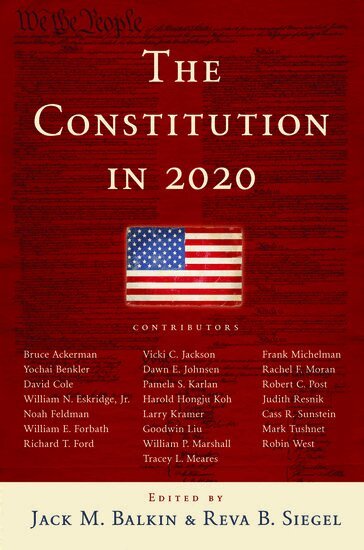
The Constitution in 2020 is a powerful blueprint for implementing a more progressive vision of constitutional law in the years ahead. Edited by two of America's leading constitutional scholars, the book provides a new framework for addressing the most important constitutional issues of the future in clear, accessible language. Featuring some of America's finest legal minds--Cass Sunstein, Bruce Ackerman, Robert Post, Harold Koh, Larry Kramer, Noah Feldman, Pam Karlan, William Eskridge, Mark Tushnet, Yochai Benkler and Richard Ford, among others--the book tackles a wide range of issues, including the challenge of new technologies, presidential power, international human rights, religious liberty, freedom of speech, voting, reproductive rights, and economic rights. The Constitution in 2020 calls on liberals to articulate their constitutional vision in a way that can command the confidence of ordinary Americans.
1 152 kr
Skickas inom 5-8 vardagar
The Constitution in 2020 is a powerful blueprint for implementing a more progressive vision of constitutional law in the years ahead. Edited by two of America's leading constitutional scholars, the book provides a new framework for addressing the most important constitutional issues of the future in clear, accessible language. Featuring some of America's finest legal minds--Cass Sunstein, Bruce Ackerman, Robert Post, Harold Koh, Larry Kramer, Noah Feldman, Pam Karlan, William Eskridge, Mark Tushnet, Yochai Benkler and Richard Ford, among others--the book tackles a wide range of issues, including the challenge of new technologies, presidential power, international human rights, religious liberty, freedom of speech, voting, reproductive rights, and economic rights. The Constitution in 2020 calls on liberals to articulate their constitutional vision in a way that can command the confidence of ordinary Americans.
879 kr
Skickas inom 5-8 vardagar
When it was published twenty-five years ago, Catharine MacKinnon’s pathbreaking work Sexual Harassment of Working Women had a major impact on the development of sexual harassment law. The U.S. Supreme Court accepted her theory of sexual harassment in 1986. Here MacKinnon collaborates with eminent authorities to appraise what has been accomplished in the field and what still needs to be done.An introductory essay by Reva Siegel considers how sexual harassment came to be regulated as sex discrimination. Contributors discuss how law can best address sexual harassment; the importance and definition of consent and unwelcomeness; issues of same-sex harassment; questions of institutional responsibility for sexual harassment in both employment and education settings; considerations of freedom of speech; effects of sexual harassment doctrine on gender and racial justice; and transnational approaches to the problem. An afterword by MacKinnon assesses the changes wrought by sexual harassment law in the past quarter century.
449 kr
Skickas inom 3-6 vardagar
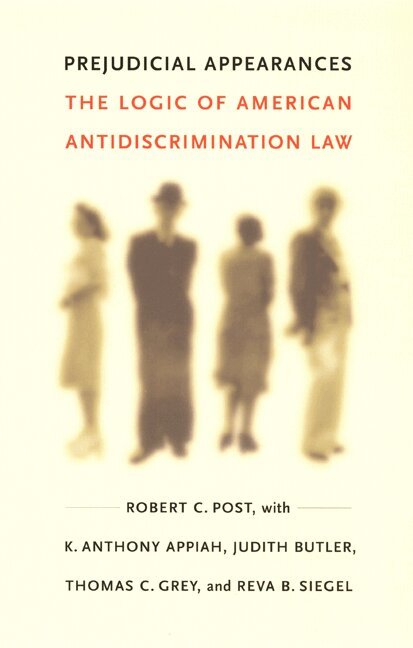
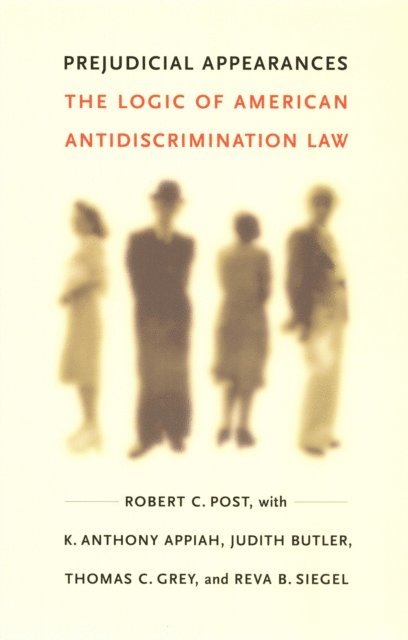
In Prejudicial Appearances noted legal scholar Robert C. Post argues modern American antidiscrimination law should not be conceived as protecting the transcendental dignity of individual persons but instead as transforming social practices that define and sustain potentially oppressive categories like race or gender. Arguing that the prevailing logic of American antidiscrimination law is misleading, Post lobbies for deploying sociological understandings to reevaluate the antidiscrimination project in ways that would render the law more effective and just.Four distinguished commentators respond to Post’s provocative essay. Each adopts a distinctive perspective. K. Anthony Appiah investigates the philosophical logic of stereotyping and of equality. Questioning whether the law ought to endorse any social practices that define persons, Judith Butler explores the tension between sociological and postmodern approaches to antidiscrimination law. Thomas C. Grey examines whether Post’s proposal can be reconciled with the values of the rule of law. And Reva B. Siegel applies critical race theory to query whether antidiscrimination law’s reshaping of race and gender should best be understood in terms of practices of subordination and stratification.By illuminating the consequential rhetorical maneuvers at the heart of contemporary U.S. antidiscrimination law, Prejudical Appearances forces readers to reappraise the relationship between courts of law and social behavior. As such, it will enrich scholars interested in the relationships between law, rhetoric, postmodernism, race, and gender.