Ricardo Hausmann – författare
Visar alla böcker från författaren Ricardo Hausmann. Handla med fri frakt och snabb leverans.
4 produkter
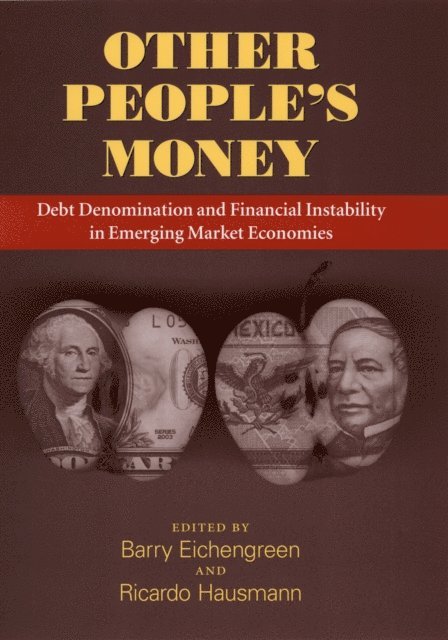
Other People's Money
Debt Denomination and Financial Instability in Emerging Market Economies
Av Ricardo Hausmann, Barry Eichengreen
E-bok, 2010
1619 kr
Lägg i varukorg
Recent crises in emerging markets have been heavily driven by balance-sheet or net-worth effects. Episodes in countries as far-flung as Indonesia and Argentina have shown that exchange rate adjustments that would normally help to restore balance can be destabilizing, even catastrophic, for …
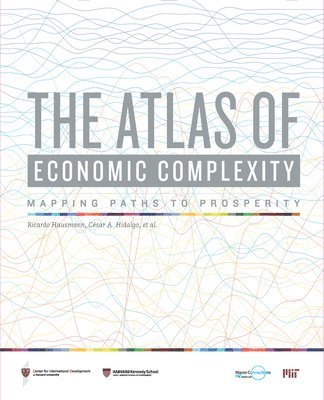
Atlas of Economic Complexity
Mapping Paths to Prosperity
Av Ricardo Hausmann, César A. Hidalgo m. fl.
Häftad, 2014
1034 kr
Lägg i varukorg
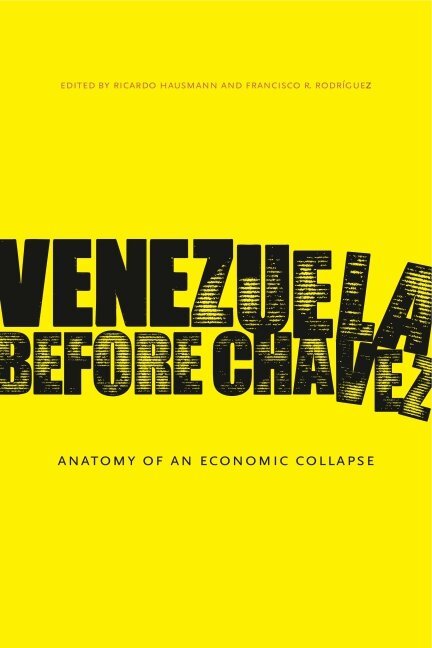
Venezuela Before Chávez
Anatomy of an Economic Collapse
Av Ricardo Hausmann, Francisco R. Rodríguez
Häftad, 2015
488 kr
Lägg i varukorg
At the beginning of the twentieth century, Venezuela had one of the poorest economies in Latin America, but by 1970 it had become the richest country in the region and one of the twenty richest countries in the world, ahead of countries such as Greece, Israel, and Spain. Between 1978 and 2001, …
Venezuela Before Chávez
Anatomy of an Economic Collapse
Av Ricardo Hausmann, Francisco R. Rodríguez
Inbunden, 2014
1521 kr
Tillfälligt slut
At the beginning of the twentieth century, Venezuela had one of the poorest economies in Latin America, but by 1970 it had become the richest country in the region and one of the twenty richest countries in the world, ahead of countries such as Greece, Israel, and Spain. Between 1978 and 2001, …