Riccardo Panattoni – författare
Visar alla böcker från författaren Riccardo Panattoni. Handla med fri frakt och snabb leverans.
6 produkter
6 produkter
Inbunden, Engelska, 2023
1 259 kr
Skickas inom 10-15 vardagar
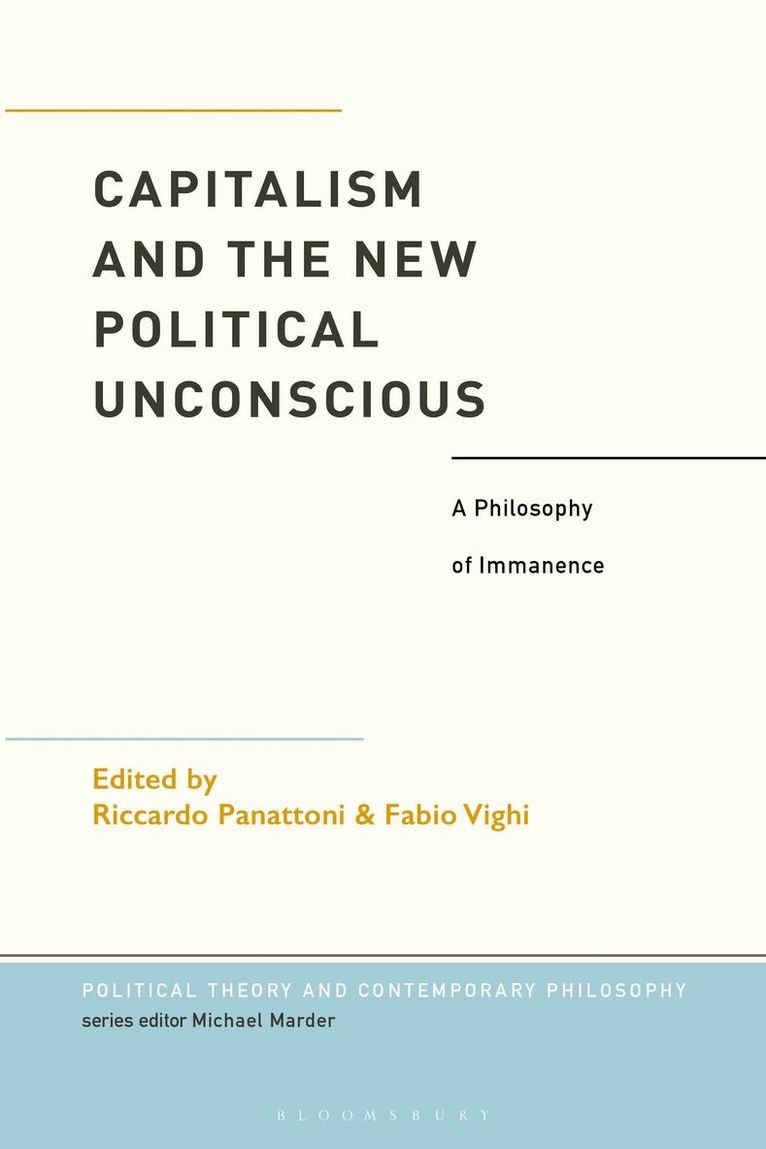
Taking seriously Jacques Lacan’s claim that ‘the unconscious is politics’, this volume proposes a new understanding of political power, interrogating the assumption that contemporary capitalism functions by tapping into forms of unconscious enjoyment, rather than providing transcendental conditions for the articulation of political meanings and desires.Whether we’re aware of it or not, political communication today targets the audience’s libidinal response through political and institutional language: in policies, speeches, tweets, social media appearances, gestures and images. Yet does this mean that current power structures no longer need symbolic or ideological frameworks? The authors in this volume think not. Far from demonstrating a shift to a post-ideological age, they argue instead that such methods inaugurate an altogether novel approach to political power.Written by leading scholars from around the world, including Roberto Esposito and Slavoj Žižek, each chapter reflects on contemporary power and inspires consideration of new political potentialities, which our focus on politics in transcendental rather than immanent terms has thus far obscured. In so doing, Capitalism and the New Political Unconscious provides an original and forceful exploration of the centrality of both psychoanalytic theory and the philosophy of immanence to an alternative understanding of the political.
E-bok
PDF, Engelska, 2023454 kr
Läs direkt efter köp
Taking seriously Jacques Lacan''s claim that ''the unconscious is politics'', this volume proposes a new understanding of political power, interrogating the assumption that contemporary capitalism functions by tapping into forms of unconscious enjoyment, rather than providing transcendental conditions for the articulation of political meanings and desires. Whether we''re aware of it or not, political communication today targets the audience''s libidinal response through political and institutional language: in policies, speeches, tweets, social media appearances, gestures and images. Yet does this mean that current power structures no longer need symbolic or ideological frameworks? The authors in this volume think not. Far from demonstrating a shift to a post-ideological age, they argue instead that such methods inaugurate an altogether novel approach to political power. Written by leading scholars from around the world, including Roberto Esposito and Slavoj Žižek, each chapter reflects on contemporary power and inspires consideration of new political potentialities, which our focus on politics in transcendental rather than immanent terms has thus far obscured. In so doing, Capitalism and the New Political Unconscious provides an original and forceful exploration of the centrality of both psychoanalytic theory and the philosophy of immanence to an alternative understanding of the political.
E-bok
Engelska, 2023454 kr
Läs direkt efter köp
Taking seriously Jacques Lacan''s claim that ''the unconscious is politics'', this volume proposes a new understanding of political power, interrogating the assumption that contemporary capitalism functions by tapping into forms of unconscious enjoyment, rather than providing transcendental conditions for the articulation of political meanings and desires. Whether we''re aware of it or not, political communication today targets the audience''s libidinal response through political and institutional language: in policies, speeches, tweets, social media appearances, gestures and images. Yet does this mean that current power structures no longer need symbolic or ideological frameworks? The authors in this volume think not. Far from demonstrating a shift to a post-ideological age, they argue instead that such methods inaugurate an altogether novel approach to political power. Written by leading scholars from around the world, including Roberto Esposito and Slavoj Žižek, each chapter reflects on contemporary power and inspires consideration of new political potentialities, which our focus on politics in transcendental rather than immanent terms has thus far obscured. In so doing, Capitalism and the New Political Unconscious provides an original and forceful exploration of the centrality of both psychoanalytic theory and the philosophy of immanence to an alternative understanding of the political.
Häftad, Engelska, 2024
424 kr
Skickas inom 10-15 vardagar
Taking seriously Jacques Lacan’s claim that ‘the unconscious is politics’, this volume proposes a new understanding of political power, interrogating the assumption that contemporary capitalism functions by tapping into forms of unconscious enjoyment, rather than providing transcendental conditions for the articulation of political meanings and desires.Whether we’re aware of it or not, political communication today targets the audience’s libidinal response through political and institutional language: in policies, speeches, tweets, social media appearances, gestures and images. Yet does this mean that current power structures no longer need symbolic or ideological frameworks? The authors in this volume think not. Far from demonstrating a shift to a post-ideological age, they argue instead that such methods inaugurate an altogether novel approach to political power.Written by leading scholars from around the world, including Roberto Esposito and Slavoj Žižek, each chapter reflects on contemporary power and inspires consideration of new political potentialities, which our focus on politics in transcendental rather than immanent terms has thus far obscured. In so doing, Capitalism and the New Political Unconscious provides an original and forceful exploration of the centrality of both psychoanalytic theory and the philosophy of immanence to an alternative understanding of the political.
Inbunden, Engelska, 2026
1 730 kr
Skickas inom 10-15 vardagar
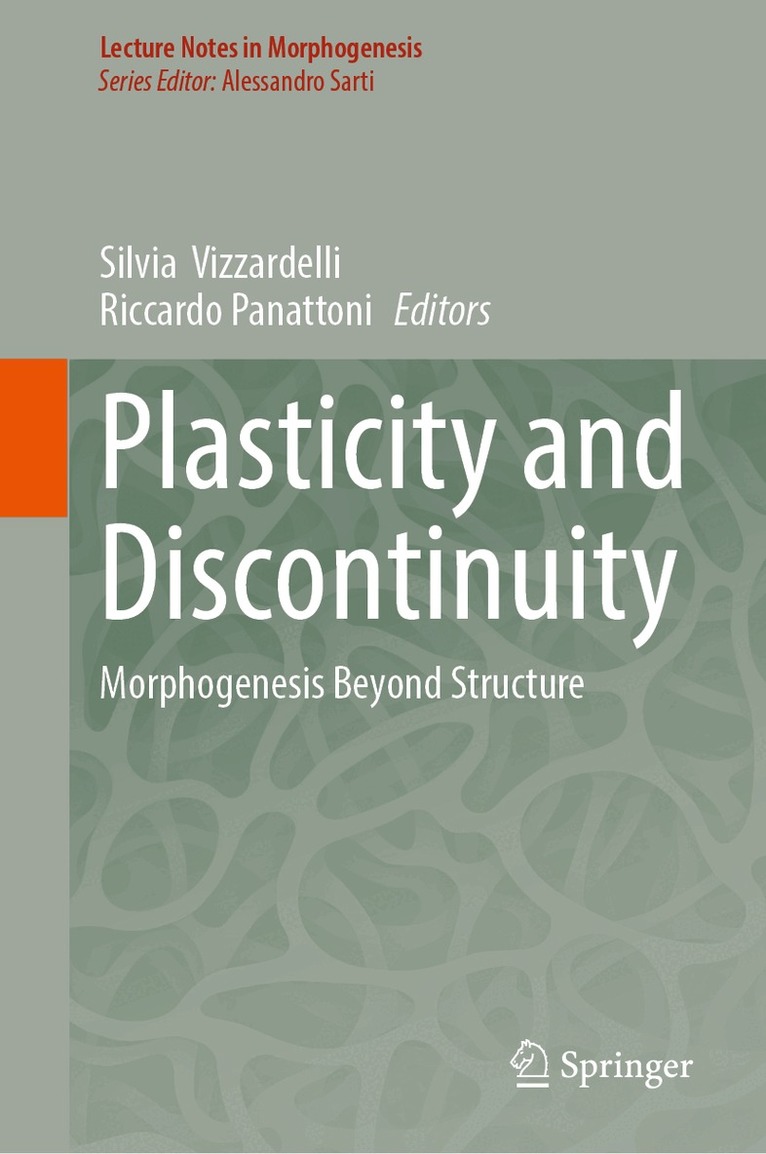
This book analyses the concept of creation from the perspective of philosophy, psychoanalysis, and Life sciences. What does it mean to think life beyond form? The essays gathered in this book enact a shared gesture: to interrogate the living, the subject, the body, and knowledge not from the standpoint of what is given, but from that which erupts, from that which emerges without guarantee, from that which occurs without having been foreseen. Situated at the intersections of ethics and science, biology and psychoanalysis, ontology and aesthetics, these texts compose a theoretical cartography of discontinuity. They traverse conceptual figures such as fulguratio, the ontological leap, generative regression, the infans, the infinitesimal, intensity, and modulation—not fixed categories, but vital tensions capable of opening the real to non-deductive, non-identitarian, non-evolutionary modes of thought. At the core of this inquiry, the germ cell emerges as a theoretical figure: not as a biological foundation, but as a symbolic locus of openness, a crossing point between writing and generation, where the living exposes itself to its own originary discontinuity. Here, the living is no longer the object of science, but a field of inscription, a surface traversed by forces, modulations, and drifts, every subject is an unstable trace, every beginning a rupture. Knowledge, in this perspective, does not describe the world; it accompanies its becoming, attending to the unforeseen of its emergence.
E-bok
Engelska, 20262 207 kr
Läs direkt efter köp
This book analyses the concept of creation from the perspective of philosophy, psychoanalysis, and Life sciences. What does it mean to think life beyond form? The essays gathered in this book enact a shared gesture: to interrogate the living, the subject, the body, and knowledge not from the standpoint of what is given, but from that which erupts, from that which emerges without guarantee, from that which occurs without having been foreseen. Situated at the intersections of ethics and science, biology and psychoanalysis, ontology and aesthetics, these texts compose a theoretical cartography of discontinuity. They traverse conceptual figures such as fulguratio, the ontological leap, generative regression, the infans, the infinitesimal, intensity, and modulation—not fixed categories, but vital tensions capable of opening the real to non-deductive, non-identitarian, non-evolutionary modes of thought. At the core of this inquiry, the germ cell emerges as a theoretical figure: not as a biological foundation, but as a symbolic locus of openness, a crossing point between writing and generation, where the living exposes itself to its own originary discontinuity. Here, the living is no longer the object of science, but a field of inscription, a surface traversed by forces, modulations, and drifts, every subject is an unstable trace, every beginning a rupture. Knowledge, in this perspective, does not describe the world; it accompanies its becoming, attending to the unforeseen of its emergence.