Rich Karlgaard – författare
151 kr
Läs direkt efter köp
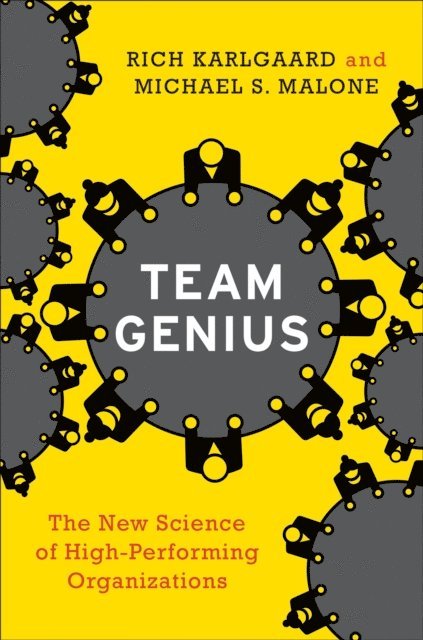
A groundbreaking book that sheds new light on the vital importance of teams as the fundamental unit of organization and competition in the global economy.
Teams—we depend on them for both our professional success and our personal happiness. But isn't it odd how little scrutiny we give them? The teams that make up our lives are created mostly by luck, happenstance, or circumstance—but rarely by design. In trivial matters—say, a bowling team, the leadership of a neighborhood group, or a holiday party committee—success by serendipity is already risky enough. But when it comes to actions by fast-moving start-ups, major corporations, nonprofit institutions, and governments, leaving things to chance can be downright dangerous.
Offering vivid reports of the latest scientific research, compelling case studies, and great storytelling, Team Genius shows managers and executives that the planning, design, and management of great teams no longer have to be a black art. It explores solutions to essential questions that could spell the difference between success and obsolescence. Do you know how to reorganize your subpar teams to turn them into top performers? Can you identify which of the top-performing teams in your company are reaching the end of their life span? Do you have the courage to shut them down? Do you know how to create a replacement team that will be just as effective—without losing time or damaging morale? And, most important, are your teams the right size for the job?
Throughout, Rich Karlgaard and Michael S. Malone share insights and real-life examples gleaned from their careers as journalists, analysts, investors, and globetrotting entrepreneurs, meeting successful teams and team leaders to reveal some "new truths":
The right team size is usually one fewer person than what managers think they need. The greatest question facing good teams is not how to succeed, but how to die. Good "chemistry" often makes for the least effective teams. Cognitive diversity yields the highest performance gains—but only if you understand what it is. How to find the "bliss point" in team intimacy—and become three times more productive. How to identify destructive team members before they do harm. Why small teams are 40 percent more likely to create a successful breakthrough than a solo genius is. Why groups of 7 (± 2), 150, and 1,500 are magic sizes for teams.Eye-opening, grounded, and essential, Team Genius is the next big idea to revolutionize business.
220 kr
Skickas inom 5-8 vardagar
260 kr
Läs direkt efter köp
What Does it Take to Get Ahead Now—And Stay There?
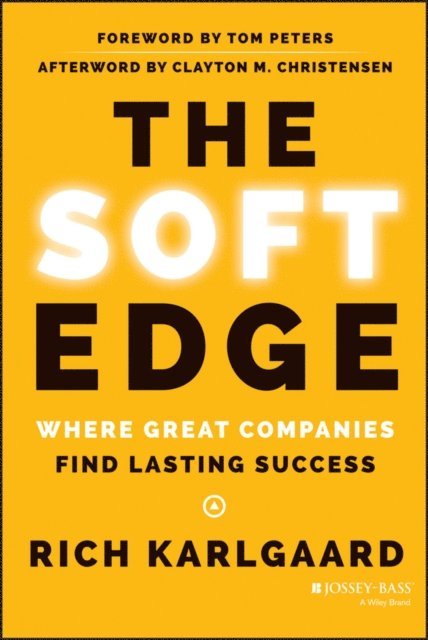
High performance has always required shrewd strategy and superb execution. These factors remain critical, especially given today’s unprecedented business climate. But Rich Karlgaard—Forbes publisher, entrepreneur, investor, and board director—takes a surprising turn and argues that there is now a third element that’s required for competitive advantage. It fosters innovation, it accelerates strategy and execution, and it cannot be copied or bought. It is found in a perhaps surprising place—your company’s values.
Karlgaard examined a variety of enduring companies and found that they have one thing in common; all have leveraged their deepest values alongside strategy and execution, allowing them to fuel growth as well as weather hard times. Karlgaard shares these stories and identifies the five key variables that make up every organization’s “soft edge”:
Trust: Northwestern Mutual has built a $25 million dollar revenue juggernaut on trust, the foundation of lasting success. Learn how to create an environment that engenders trust and propels high performance. Smarts: In most technical fields your formal education quickly becomes out of date. How do you keep up? Learn how the Mayo Clinic, Stanford University women’s basketball team, and others stay on top by relentlessly pursuing an advantage through smarts. Teamwork: Since collaboration and innovation are a must in the global economy, effective teamwork is vital. Learn how global giant FedEx stays focused and how nimble Nest Labs relies on lean teams with cognitive diversity. Taste: Clever product design and integration are proxies for intelligence because they make customers feel smart. But taste goes further into deep emotional engagement. Specialized Bicycles calls it “the elusive spot between data truth and human truth.” How can you consistently make products or services that trigger these emotional touch points? Story: Companies that achieve lasting success have an enduring and emotionally appealing story. What’s your company’s story? How do you tell it your way? Gain the ability to create a powerful narrative in a world where outsiders often exercise the louder voice.260 kr
Läs direkt efter köp
What Does it Take to Get Ahead Now—And Stay There?
High performance has always required shrewd strategy and superb execution. These factors remain critical, especially given today’s unprecedented business climate. But Rich Karlgaard—Forbes publisher, entrepreneur, investor, and board director—takes a surprising turn and argues that there is now a third element that’s required for competitive advantage. It fosters innovation, it accelerates strategy and execution, and it cannot be copied or bought. It is found in a perhaps surprising place—your company’s values.
Karlgaard examined a variety of enduring companies and found that they have one thing in common; all have leveraged their deepest values alongside strategy and execution, allowing them to fuel growth as well as weather hard times. Karlgaard shares these stories and identifies the five key variables that make up every organization’s “soft edge”:
Trust: Northwestern Mutual has built a $25 million dollar revenue juggernaut on trust, the foundation of lasting success. Learn how to create an environment that engenders trust and propels high performance. Smarts: In most technical fields your formal education quickly becomes out of date. How do you keep up? Learn how the Mayo Clinic, Stanford University women’s basketball team, and others stay on top by relentlessly pursuing an advantage through smarts. Teamwork: Since collaboration and innovation are a must in the global economy, effective teamwork is vital. Learn how global giant FedEx stays focused and how nimble Nest Labs relies on lean teams with cognitive diversity. Taste: Clever product design and integration are proxies for intelligence because they make customers feel smart. But taste goes further into deep emotional engagement. Specialized Bicycles calls it “the elusive spot between data truth and human truth.” How can you consistently make products or services that trigger these emotional touch points? Story: Companies that achieve lasting success have an enduring and emotionally appealing story. What’s your company’s story? How do you tell it your way? Gain the ability to create a powerful narrative in a world where outsiders often exercise the louder voice.214 kr
Läs direkt efter köp
159 kr
Läs direkt efter köp
151 kr
Skickas
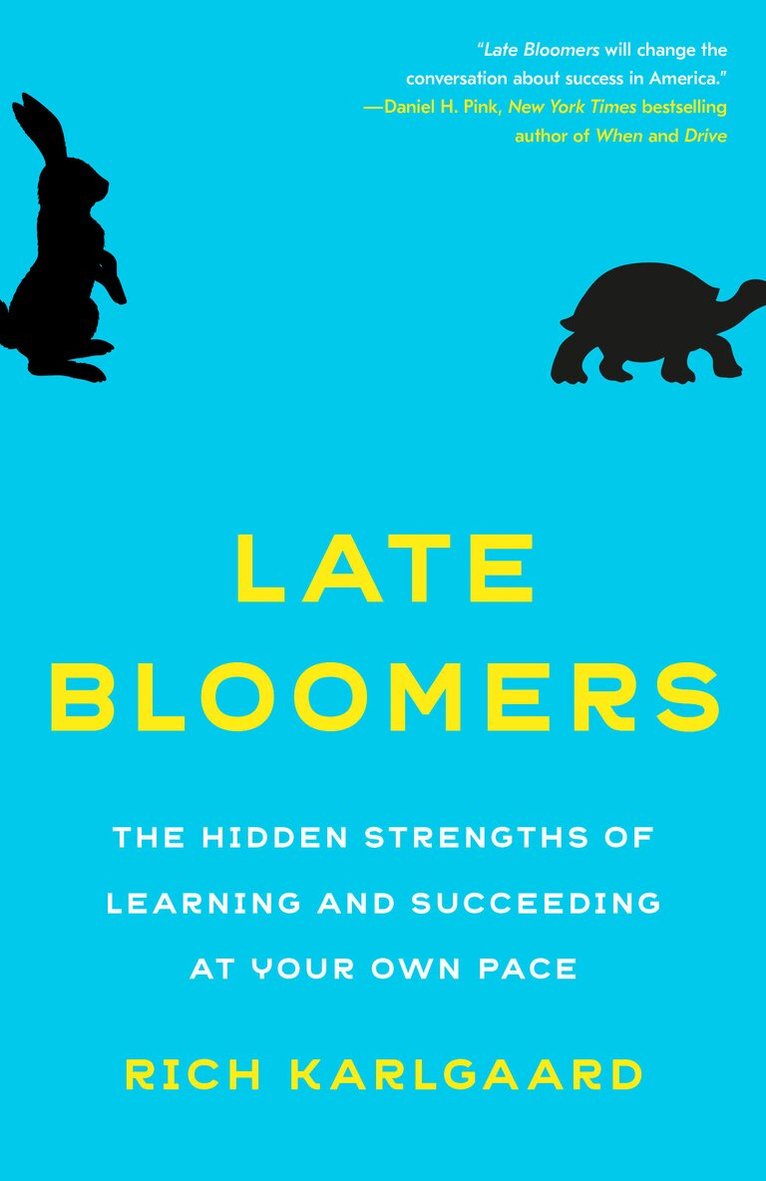
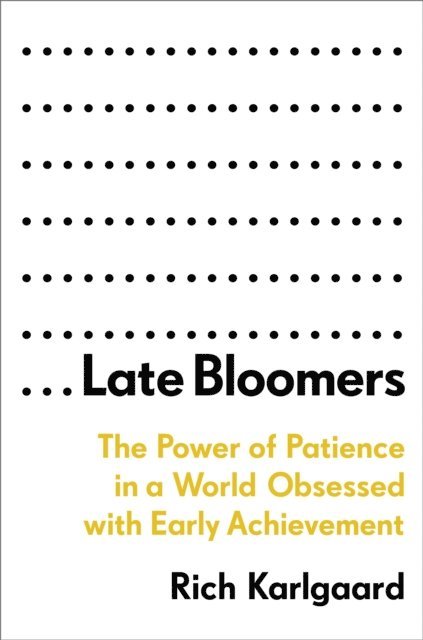
A groundbreaking exploration of what it means to be a late bloomer in a culture obsessed with SAT scores and early success, and how finding one's way later in life can be an advantage to long-term achievement and happiness. We live in a society where kids and parents are obsessed with early achievement, from getting perfect scores on SATs to getting into Ivy League colleges to landing an amazing job at Google or Facebook--or even better, creating a startup with the potential to be the next Google or Facebook or Uber. We see software coders becoming millionaires or even billionaires before age 30 and feel we are failing if we are not one of them. But there is good news. A lot of us--most of us--do not explode out of the gates in life. That was true for author Rich Karlgaard, who had a mediocre academic career at Stanford (which he got into by a fluke), and after graduating, worked as a dishwasher, nightwatchman, and typing temp before finally finding the inner motivation and drive that ultimately led him to start up a high-tech magazine in Silicon Valley, and eventually to become the publisher of Forbes magazine. There is a scientific explanation for why so many of us bloom later in life. The executive function of our brains doesn't mature until age 25--and later for some. In fact our brain's capabilities peak at different ages. We actually enjoy multiple periods of blooming in our lives. Based on several years of research, personal experience, and interviews with neuroscientists and psychologists, and countless people at different stages of their careers, Bloom reveals how and when we achieve full potential--and why an algorithmic acuity in math is such an anomaly in terms of career success.