Richard A. Berk – författare
Visar alla böcker från författaren Richard A. Berk. Handla med fri frakt och snabb leverans.
11 produkter
Statistical Learning from a Regression Perspective
E-bok, 2008
1470 kr
Lägg i varukorg
Statistical Learning from a Regression Perspective considers statistical learning applications when interest centers on the conditional distribution of the response variable, given a set of predictors, and when it is important to characterize how the predictors are related to the response. As a …
Thinking about Program Evaluation
Av Richard A. Berk, Peter H. Rossi
Inbunden, 1998
2371 kr
Lägg i varukorg
From the first edition . . . "There are a number of outstanding features to this book. First, introducing the key concepts in an easy-to-understand fashion. Second, using specific examples as concrete illustrations of the methods being utilized. Another positive feature is the in-depth appendix, …
Thinking about Program Evaluation
Av Richard A. Berk, Peter H. Rossi
Häftad, 1998
1471 kr
Lägg i varukorg
From the first edition . . . "There are a number of outstanding features to this book. First, introducing the key concepts in an easy-to-understand fashion. Second, using specific examples as concrete illustrations of the methods being utilized. Another positive feature is the in-depth appendix, …
Regression Analysis
A Constructive Critique
Inbunden, 2003
2257 kr
Lägg i varukorg
Berk has incisively identified the various strains of regression abuse and suggests practical steps for researchers who desire to do good social science while avoiding such errors." --Peter H. Rossi, University of Massachusetts, Amherst "I have been waiting for a book like this for some time. …
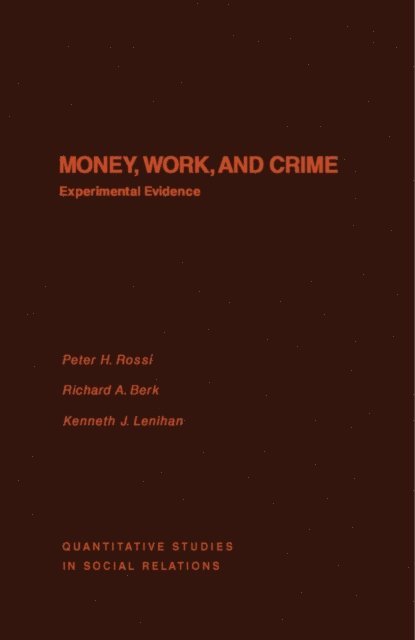
Money, Work, and Crime
Experimental Evidence
Av Kenneth J. Lenihan, Richard A. Berk m. fl.
E-bok, 2013
807 kr
Lägg i varukorg
Money, Work, and Crime: Experimental Evidence presents the complete details of the Department of Labor''s $3.4 million Transitional Aid Research Project (TARP), a large-scale field experiment which attempted to reduce recidivism on the part of ex-felons. Beginning in January 1976, some prisoners …
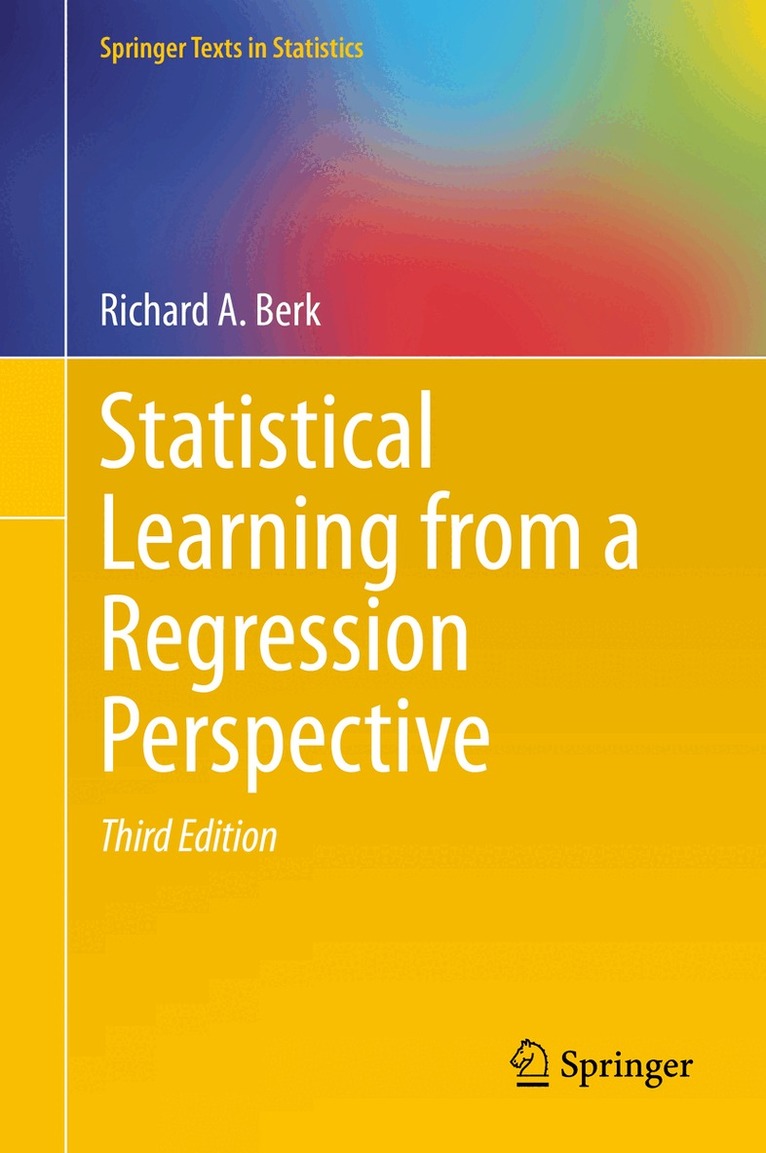
Statistical Learning from a Regression Perspective
Inbunden, 2020
1355 kr
Lägg i varukorg
This textbook considers statistical learning applications when interest centers on the conditional distribution of a response variable, given a set of predictors, and in the absence of a credible model that can be specified before the data analysis begins. Consistent with modern data analytics, it …
Statistical Learning from a Regression Perspective
E-bok, 2020
1251 kr
Lägg i varukorg
This textbook considers statistical learning applications when interest centers on the conditional distribution of a response variable, given a set of predictors, and in the absence of a credible model that can be specified before the data analysis begins. Consistent with modern data analytics, it …
Statistical Learning from a Regression Perspective
Häftad, 2021
938 kr
Lägg i varukorg
This textbook considers statistical learning applications when interest centers on the conditional distribution of a response variable, given a set of predictors, and in the absence of a credible model that can be specified before the data analysis begins. Consistent with modern data analytics, it …
Statistical Learning from a Regression Perspective
E-bok, 2016
839 kr
Lägg i varukorg
This textbook considers statistical learning applications when interest centers on the conditional distribution of the response variable, given a set of predictors, and when it is important to characterize how the predictors are related to the response. This fully revised new edition includes …
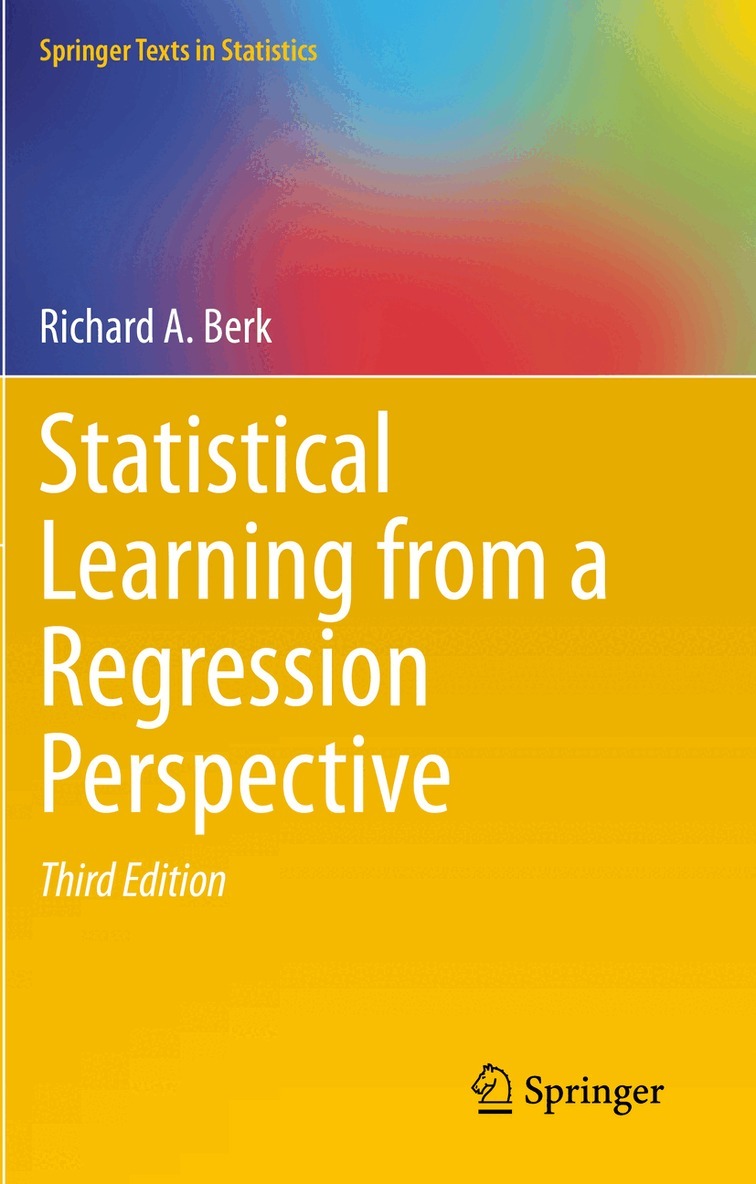
Statistical Learning from a Regression Perspective
Häftad, 2018
674 kr
Lägg i varukorg
This textbook considers statistical learning applications when interest centers on the conditional distribution of the response variable, given a set of predictors, and when it is important to characterize how the predictors are related to the response. This fully revised new edition includes …
Statistical Learning from a Regression Perspective
Inbunden, 2008
1450 kr
Tillfälligt slut
Statistical Learning from a Regression Perspective considers statistical learning applications when interest centers on the conditional distribution of the response variable, given a set of predictors, and when it is important to characterize how the predictors are related to the response. As a …