Richard A. Goodman – författare
Visar alla böcker från författaren Richard A. Goodman. Handla med fri frakt och snabb leverans.
8 produkter
8 produkter
Häftad, Engelska, 2019
998 kr
Skickas inom 5-8 vardagar
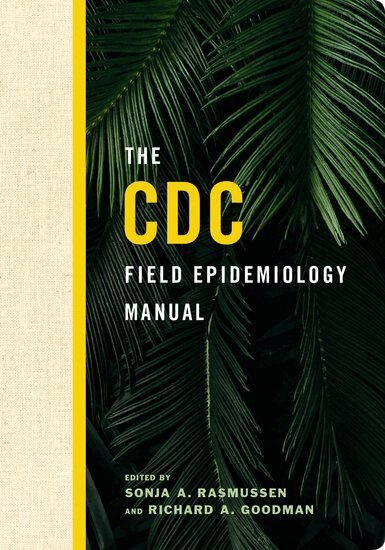
A NEW AND ESSENTIAL RESOURCE FOR THE PRACTICE OF EPIDEMIOLOGY AND PUBLIC HEALTHThe CDC Field Epidemiology Manual is a definitive guide to investigating acute public health events on the ground and in real time. Assembled and written by experts from the Centers for Disease Control and Prevention as well as other leading public health agencies, it offers current and field-tested guidance for every stage of an outbreak investigation -- from identification to intervention and other core considerations along the way. Modeled after Michael Gregg's seminal book Field Epidemiology, this CDC manual ushers investigators through the core elements of field work, including many of the challenges inherent to outbreaks: working with multiple state and federal agencies or multinational organizations; legal considerations; and effective utilization of an incident-management approach. Additional coverage includes:· Updated guidance for new tools in field investigations, including the latest technologies for data collection and incorporating data from geographic information systems (GIS)· Tips for investigations in unique settings, including healthcare and community-congregate sites· Advice for responding to different types of outbreaks, including acute enteric disease; suspected biologic or toxic agents; and outbreaks of violence, suicide, and other forms of injuryFor the ever-changing public health landscape, The CDC Field Epidemiology Manual offers a new, authoritative resource for effective outbreak response to acute and emerging threats. ***Oxford University Press will donate a portion of the proceeds from this book to the CDC Foundation, an independent nonprofit and the sole entity created by Congress to mobilize philanthropic and private-sector resources to support the Centers for Disease Control and Prevention's critical health protection work. To learn more about the CDC Foundation, visit www.cdcfoundation.org.
E-bok
PDF, Engelska, 2018584 kr
Läs direkt efter köp
A NEW AND ESSENTIAL RESOURCE FOR THE PRACTICE OF EPIDEMIOLOGY AND PUBLIC HEALTHThe CDC Field Epidemiology Manual is a definitive guide to investigating acute public health events on the ground and in real time. Assembled and written by experts from the Centers for Disease Control and Prevention as well as other leading public health agencies, it offers current and field-tested guidance for every stage of an outbreak investigation -- from identification to intervention and other core considerations along the way.Modeled after Michael Gregg''s seminal book Field Epidemiology, this CDC manual ushers investigators through the core elements of field work, including many of the challenges inherent to outbreaks: working with multiple state and federal agencies or multinational organizations; legal considerations; and effective utilization of an incident-management approach.Additional coverage includes:· Updated guidance for new tools in field investigations, including the latest technologies for data collection and incorporating data from geographic information systems (GIS)· Tips for investigations in unique settings, including healthcare and community-congregate sites· Advice for responding to different types of outbreaks, including acute enteric disease; suspected biologic or toxic agents; and outbreaks of violence, suicide, and other forms of injuryFor the ever-changing public health landscape, The CDC Field Epidemiology Manual offers a new, authoritative resource for effective outbreak response to acute and emerging threats.***Oxford University Press will donate a portion of the proceeds from this book to the CDC Foundation, an independent nonprofit and the sole entity created by Congress to mobilize philanthropic and private-sector resources to support the Centers for Disease Control and Prevention''s critical health protection work. To learn more about the CDC Foundation, visit www.cdcfoundation.org.
E-bok
Engelska, 2018584 kr
Läs direkt efter köp
A NEW AND ESSENTIAL RESOURCE FOR THE PRACTICE OF EPIDEMIOLOGY AND PUBLIC HEALTHThe CDC Field Epidemiology Manual is a definitive guide to investigating acute public health events on the ground and in real time. Assembled and written by experts from the Centers for Disease Control and Prevention as well as other leading public health agencies, it offers current and field-tested guidance for every stage of an outbreak investigation -- from identification to intervention and other core considerations along the way.Modeled after Michael Gregg''s seminal book Field Epidemiology, this CDC manual ushers investigators through the core elements of field work, including many of the challenges inherent to outbreaks: working with multiple state and federal agencies or multinational organizations; legal considerations; and effective utilization of an incident-management approach.Additional coverage includes:· Updated guidance for new tools in field investigations, including the latest technologies for data collection and incorporating data from geographic information systems (GIS)· Tips for investigations in unique settings, including healthcare and community-congregate sites· Advice for responding to different types of outbreaks, including acute enteric disease; suspected biologic or toxic agents; and outbreaks of violence, suicide, and other forms of injuryFor the ever-changing public health landscape, The CDC Field Epidemiology Manual offers a new, authoritative resource for effective outbreak response to acute and emerging threats.***Oxford University Press will donate a portion of the proceeds from this book to the CDC Foundation, an independent nonprofit and the sole entity created by Congress to mobilize philanthropic and private-sector resources to support the Centers for Disease Control and Prevention''s critical health protection work. To learn more about the CDC Foundation, visit www.cdcfoundation.org.
Inbunden, Engelska, 2019
1 342 kr
Skickas inom 5-8 vardagar
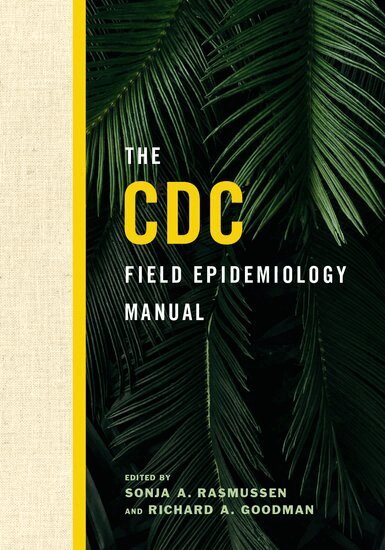
A NEW AND ESSENTIAL RESOURCE FOR THE PRACTICE OF EPIDEMIOLOGY AND PUBLIC HEALTHThe CDC Field Epidemiology Manual is a definitive guide to investigating acute public health events on the ground and in real time. Assembled and written by experts from the Centers for Disease Control and Prevention as well as other leading public health agencies, it offers current and field-tested guidance for every stage of an outbreak investigation -- from identification to intervention and other core considerations along the way. Modeled after Michael Gregg's seminal book Field Epidemiology, this CDC manual ushers investigators through the core elements of field work, including many of the challenges inherent to outbreaks: working with multiple state and federal agencies or multinational organizations; legal considerations; and effective utilization of an incident-management approach. Additional coverage includes:· Updated guidance for new tools in field investigations, including the latest technologies for data collection and incorporating data from geographic information systems (GIS)· Tips for investigations in unique settings, including healthcare and community-congregate sites· Advice for responding to different types of outbreaks, including acute enteric disease; suspected biologic or toxic agents; and outbreaks of violence, suicide, and other forms of injuryFor the ever-changing public health landscape, The CDC Field Epidemiology Manual offers a new, authoritative resource for effective outbreak response to acute and emerging threats. ***Oxford University Press will donate a portion of the proceeds from this book to the CDC Foundation, an independent nonprofit and the sole entity created by Congress to mobilize philanthropic and private-sector resources to support the Centers for Disease Control and Prevention's critical health protection work. To learn more about the CDC Foundation, visit www.cdcfoundation.org.
Inbunden, Engelska, 1994
2 376 kr
Skickas inom 5-8 vardagar
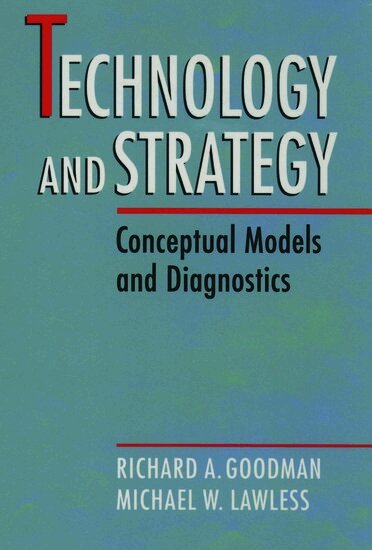
Technology and Strategy is a comprehensive guide to creating a strategic plan that incorporates technological growth. Using real-life examples from industries from electronics to bio-technology, the authors present the tools planners need to integrate a firm's technological capabilities with its strategic plan. Importantly, the book also addresses broader questions about the role of technology, clarifying when it aids innovation, when it is evolutionary, and when it is revolutionary. These questions are tested against trends such as Total Quality Management, the resource-based view of strategy, and the increase in external acquisition of technology. Offering clear guidance through an increasingly complex area, Technology and Strategy will be a valuable reference for practising executives, general managers, strategic planners, R&D executives, and manufacturers.
Inbunden, Engelska, 2007
1 041 kr
Skickas inom 5-8 vardagar
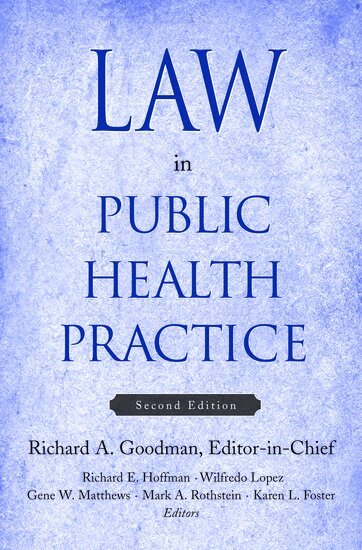
Continually changing health threats, technologies, science, and demographics require that public health professionals have an understanding of law sufficient to address complex new problems as they come into being. Law in Public Health Practice, Second Edition provides a thorough review of the legal basis and authorities for the core elements of public health practice and solid discussions of existing and emerging high-priority areas where law and public health intersect.As in the previous edition, each chapter is authored jointly by experts in law and public health. This new edition features three completely new chapters, with several others thoroughly revised and updated. New chapters address such topics as the statutory bases for US public health systems and practice, the judiciary role in public health, and chronic disease prevention and control. The chapter on public health emergencies has also been fully revised and rewritten to take into account both the SARS epidemic of 2003 and the events of the Autumn of 2001. The chapter discusses subsequent changes in federal and state laws involving consequence management of public health emergencies. Other fully revised chapters include those on genomics, injury prevention, identifiable health information, and ethics in the practice of public health.The book begins with a section on the legal basis for public health practice, including foundations and structure of the law, discussions of the judiciary, ethics and practice of public health, and criminal law and international considerations. The second section focuses on core public health applications and the law, and includes chapters on legal counsel for public health practitioners, legal authorities for interventions in public health emergencies, and considerations for special populations. The third section discusses the law in controlling and preventing diseases, injuries, and disabilities. This section includes chapters on genomics, vaccinations, foodborne illness, STDs, reproductive health, chronic disease control, tobacco use, and occupational and environmental health.All chapters take a practical approach and are written in an accessible, user-friendly fashion. This is an excellent resource for a wide readership of public health practitioners, lawyers, and healthcare providers, as well as for educators and students of law and public health.
E-bok
PDF, Engelska, 19942 044 kr
Läs direkt efter köp
In today''s complex, dynamic competitive landscape, management of technology can mean the difference between success and failure. Managers and researchers alike need effective ways to conceptualize and develop technology strategies. Richard Goodman and Michael Lawless provide tools needed to integrate firms'' technology capabilities with their competitive direction. Technology and Strategy presents models that help put technology and its market impacts into perspective. It addresses the broad questions of how technology and markets evolve, how technology can re-order the "rules" of competition, and how it can shift the balance of individual firms'' competitive advantage. It also blends topics currently capturing attention in business circles--such as Total Quality Management and the resource-based view of the firm--into a clear view of technology management programs. Technology and Strategy also describes methods to develop specific strategies to cope with challenges facing executives--like evaluating promising, but untried, new technologies. Using actual case studies from the electronics and bio-tech industries, Goodman and Lawless demonstrate the use of new techniques to formulate strategy, including Technology Mapping and the Innovation Audit. Both were created to help executives choose the approach to technology best suited to their firms'' particular capabilities. Offering clear, practical guidance through a complex, fast-changing world of competition, this new analysis of technology and strategy is a valuable guide for general managers, R&D and manufacturing managers, strategic planners, and academics.
E-bok
PDF, Engelska, 2006708 kr
Läs direkt efter köp
Continually changing health threats, technologies, science, and demographics require that public health professionals have an understanding of law sufficient to address complex new public health challenges as they come into being. Law in Public Health Practice, Second Edition provides a thorough review of the legal basis and authorities for the core elements of public health practice and solid discussions of existing and emerging high-priority areas where law and public health intersect. As in the previous edition, each chapter is authored jointly by experts in law and public health. This new edition features three completely new chapters, with several others thoroughly revised and updated. New chapters address such topics as the structure of law in US public health systems and practice, the role of the judiciary in public health, and law in chronic disease prevention and control. The chapter on public health emergencies has also been fully revised to take into account both the SARS epidemic of 2003 and the events of the Fall of 2001. The chapter now discusses topics such as the legal basis for declaring emergencies, the legal structure of mutual aid agreements, and the role of the military in emergencies. Other fully revised chapters include those on genomics, injury prevention, identifiable health information, and ethics in the practice of public health. The book begins with a section on the legal basis for public health practice, including foundations and structure of the law, discussions of the judiciary, ethics and practice of public health, and criminal law and international considerations. The second section focuses on core public health applications and the law, and includes chapters on legal counsel for public health practitioners, legal authorities for interventions in public health emergencies, and considerations for special populations. The third section discusses the law in controlling and preventing diseases, injuries, and disabilities. This section includes chapters on genomics, vaccinations, foodborne illness, STDs, reproductive health, chronic disease control, tobacco use, and occupational and environmental health. All chapters take a practical approach and are written in an accessible, user-friendly fashion. This is an excellent resource for a wide readership of public health practitioners, lawyers, and healthcare providers, as well as for educators and students of law and public health.