Richard Ansorge - Böcker
Visar alla böcker från författaren Richard Ansorge. Handla med fri frakt och snabb leverans.
7 produkter
7 produkter
1 179 kr
Skickas inom 5-8 vardagar
2 250 kr
Kommande
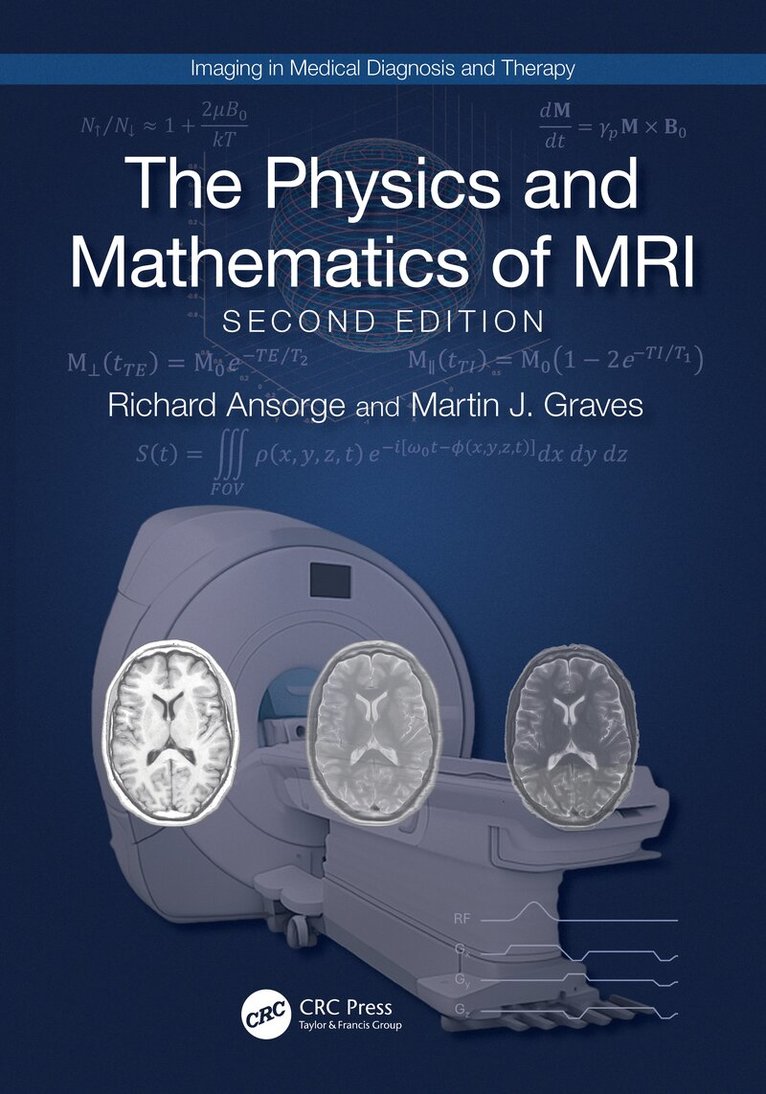
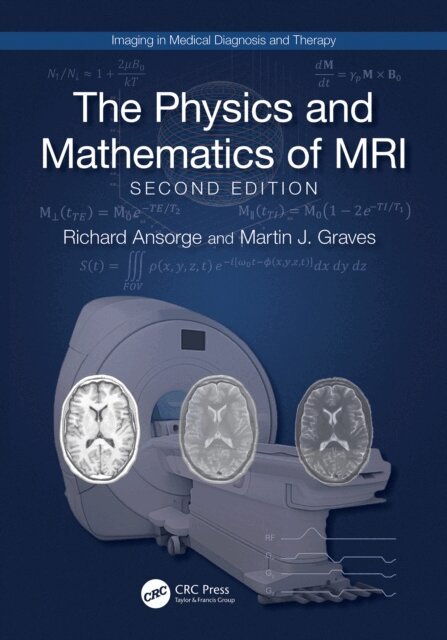
Magnetic resonance imaging (MRI) remains one of the most versatile and powerful diagnostic tools in modern medicine, yet its underlying physics and mathematics form a subtle and elegant synthesis of quantum mechanics, engineering principles and signal processing. The first edition of The Physics and Mathematics of MRI provided a clear, rigorous bridge between abstract theory and practical MRI applications, making it a trusted resource for physical science and engineering students entering medical physics programs.This second edition builds on that foundation with updated content and expanded coverage of recent advances in MRI hardware, pulse-sequence design, and clinical and research applications. New chapters introduce cutting-edge developments in hyperpolarisation, advanced functional imaging, cardiac MRI, deep-learning-based reconstruction methods and contemporary safety considerations – all while preserving the accessible, equation-driven exposition that defined the original text. A new section explains the mathematics of artificial intelligence (AI), and its application can enhance multiple aspects of MRI. Whether you are an undergraduate or a graduate student, a researcher, or a clinical physicist seeking deeper understanding, this revised edition offers a comprehensive, mathematically grounded exploration of how MRI works – from the behaviour of nuclear spins to the formation of high-quality clinical images. Open the book and discover the rich scientific complexity behind every scan.Key Features:· Presents a complete account of physical and mathematical principles used in MRI, including rigorous derivations of the key steps in signal generation and image formation.· Provides expanded and up-to-date coverage of modern MRI technologies, including advanced pulse-sequence design, hyperpolarisation, functional and cardiac MRI, deep-learning-based reconstruction and contemporary safety considerations.· Bridges theory, technology and clinical practice, making the book suitable as a core graduate-level text and as a reference for researchers and practising clinical MRI physicists.
800 kr
Kommande
Magnetic resonance imaging (MRI) remains one of the most versatile and powerful diagnostic tools in modern medicine, yet its underlying physics and mathematics form a subtle and elegant synthesis of quantum mechanics, engineering principles and signal processing. The first edition of The Physics and Mathematics of MRI provided a clear, rigorous bridge between abstract theory and practical MRI applications, making it a trusted resource for physical science and engineering students entering medical physics programs.This second edition builds on that foundation with updated content and expanded coverage of recent advances in MRI hardware, pulse-sequence design, and clinical and research applications. New chapters introduce cutting-edge developments in hyperpolarisation, advanced functional imaging, cardiac MRI, deep-learning-based reconstruction methods and contemporary safety considerations – all while preserving the accessible, equation-driven exposition that defined the original text. A new section explains the mathematics of artificial intelligence (AI), and its application can enhance multiple aspects of MRI. Whether you are an undergraduate or a graduate student, a researcher, or a clinical physicist seeking deeper understanding, this revised edition offers a comprehensive, mathematically grounded exploration of how MRI works – from the behaviour of nuclear spins to the formation of high-quality clinical images. Open the book and discover the rich scientific complexity behind every scan.Key Features:· Presents a complete account of physical and mathematical principles used in MRI, including rigorous derivations of the key steps in signal generation and image formation.· Provides expanded and up-to-date coverage of modern MRI technologies, including advanced pulse-sequence design, hyperpolarisation, functional and cardiac MRI, deep-learning-based reconstruction and contemporary safety considerations.· Bridges theory, technology and clinical practice, making the book suitable as a core graduate-level text and as a reference for researchers and practising clinical MRI physicists.
712 kr
Skickas inom 7-10 vardagar
CUDA is now the dominant language used for programming GPUs, one of the most exciting hardware developments of recent decades. With CUDA, you can use a desktop PC for work that would have previously required a large cluster of PCs or access to a HPC facility. As a result, CUDA is increasingly important in scientific and technical computing across the whole STEM community, from medical physics and financial modelling to big data applications and beyond. This unique book on CUDA draws on the author's passion for and long experience of developing and using computers to acquire and analyse scientific data. The result is an innovative text featuring a much richer set of examples than found in any other comparable book on GPU computing. Much attention has been paid to the C++ coding style, which is compact, elegant and efficient. A code base of examples and supporting material is available online, which readers can build on for their own projects.
1 031 kr
Skickas inom 3-6 vardagar
414 kr
Skickas inom 5-8 vardagar
1 303 kr
Skickas inom 3-6 vardagar