Richard Baines - Böcker
Visar alla böcker från författaren Richard Baines. Handla med fri frakt och snabb leverans.
5 produkter
5 produkter
307 kr
Skickas inom 7-10 vardagar
Anthologies of short, short stories. The New Paper Families features stories from all over the world - Australia, China, Great Britain, Greece, India, Iran, Italy, Japan, New Zealand, Somalia and the United States. Organised by genre, each section contains three stories written for the mainstream fiction market that are perfect for a range of student abilities in the Year 9 and 10 classroom.
307 kr
Skickas inom 7-10 vardagar
Anthologies of short, short stories. The New Paper Windows is a lively and provocative collection of 36 short short stories suitable for secondary students of English. These lesson-sized stories from Australian and international authors cover a range of themes, styles and genres. Focusing on genre stories, it features work from both well-known authors, such as Haruki Murakami, Margaret Atwood and Ursula le Guin, and authors just starting their literary careers.
724 kr
Skickas inom 10-15 vardagar
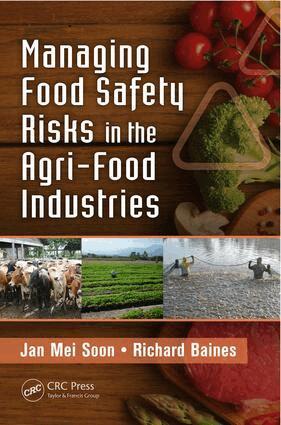
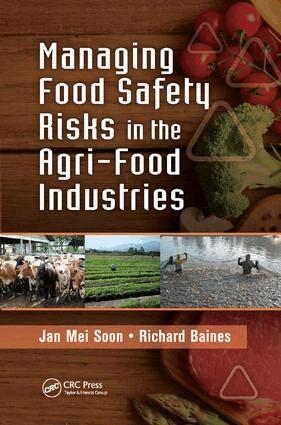
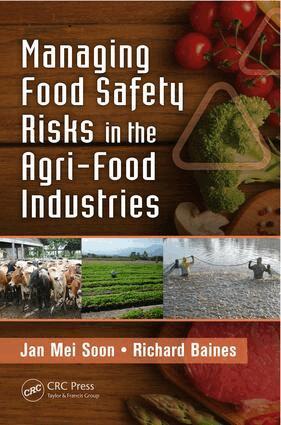
Modern farming practices involve more stakeholders in the supply chain, presenting issues of storage, transportation, and distribution prior to reaching the consumer. This increasing complexity in food production chains creates more points for introducing microorganism contamination of crops, livestock, and aquatic organisms. Managing Food Safety Risks in the Agri-Food Industries addresses existing and emerging risks in the primary agri-food sectors and discusses ways to manage, reduce, or prevent these risks from occurring.Following a short introduction, the authors examine the advantages and disadvantages of various food chain risk assessment tools. The book covers three primary production sectors—crops, terrestrial livestock, and aquaculture products—along with a chapter on game and wild fish catch. Under each sector, the book addresses the existing and emerging food safety risks, challenges, and intervention strategies. Each chapter focuses on microbiological and natural or man-made chemical hazards that occur at the farm level with potential to cross-contaminate or bioaccumulate.The book addresses horticulture crops and microbiological contaminants, food safety hazards and prevention strategies in beef, and milkborne outbreaks. It discusses Campylobacter and Salmonella risk in the broiler industry, and the prevalence of Salmonella in pig meat, risk factors, and intervention approaches. The book also covers potential parasites and diseases from game and exotic meat and microbiological and environmental contaminants in captured fish as well as in farmed fish and shellfish. The authors conclude with an exploration of how consumers and agri-food stakeholders perceive risk and the best means for communicating risk to the public.
2 306 kr
Skickas inom 10-15 vardagar
Modern farming practices involve more stakeholders in the supply chain, presenting issues of storage, transportation, and distribution prior to reaching the consumer. This increasing complexity in food production chains creates more points for introducing microorganism contamination of crops, livestock, and aquatic organisms. Managing Food Safety Risks in the Agri-Food Industries addresses existing and emerging risks in the primary agri-food sectors and discusses ways to manage, reduce, or prevent these risks from occurring.Following a short introduction, the authors examine the advantages and disadvantages of various food chain risk assessment tools. The book covers three primary production sectors—crops, terrestrial livestock, and aquaculture products—along with a chapter on game and wild fish catch. Under each sector, the book addresses the existing and emerging food safety risks, challenges, and intervention strategies. Each chapter focuses on microbiological and natural or man-made chemical hazards that occur at the farm level with potential to cross-contaminate or bioaccumulate.The book addresses horticulture crops and microbiological contaminants, food safety hazards and prevention strategies in beef, and milkborne outbreaks. It discusses Campylobacter and Salmonella risk in the broiler industry, and the prevalence of Salmonella in pig meat, risk factors, and intervention approaches. The book also covers potential parasites and diseases from game and exotic meat and microbiological and environmental contaminants in captured fish as well as in farmed fish and shellfish. The authors conclude with an exploration of how consumers and agri-food stakeholders perceive risk and the best means for communicating risk to the public.
Del 95 - Burleigh Dodds Series in Agricultural Science
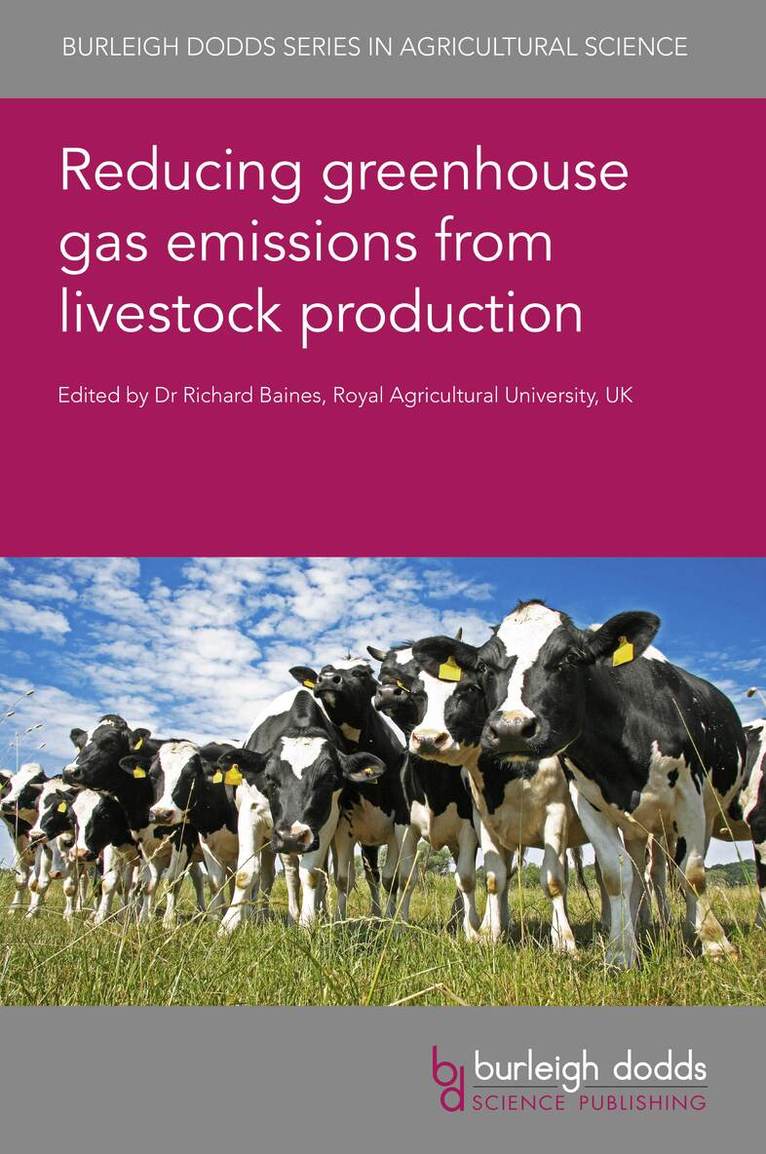
Reducing Greenhouse Gas Emissions from Livestock Production
Inbunden, Engelska, 2021
2 504 kr
Skickas inom 3-6 vardagar
Recent IPCC reports have highlighted the environmental impact of livestock production as a major source of non-CO2 emissions: methane (CH4), nitrous oxide (N2O) and ammonia (NH3). The livestock sector must react to these reports and develop or implement methods that can reduce greenhouse (GHG) emissions from livestock production.Reducing greenhouse gas emissions from livestock production provides authoritative reviews on measuring GHG emissions from livestock as well as the range of methods that can be applied to reduce emissions, ranging from breeding to animal health and manure management. The collection also reviews nutritional approaches such as improving forage quality and the use of plant bioactive compounds and other feed supplements to limit emissions by modifying the rumen environment. Drawing in an international range of expert authors, Reducing greenhouse gas emissions from livestock production summarises what we can do to make livestock production more sustainable and viable for the future. It will be a major reference for the livestock (particularly dairy) science research community, environmental scientists, government and other agencies tackling the challenge of climate change, as well as companies involved in livestock production and processing of dairy and meat products.