Richard E. Plant – författare
Visar alla böcker från författaren Richard E. Plant. Handla med fri frakt och snabb leverans.
7 produkter
7 produkter
Inbunden, Engelska, 2026
3 439 kr
Skickas inom 10-15 vardagar
Since the publication of the second edition of Richard Plant’s bestselling textbook Spatial Data Analysis in Ecology and Agriculture Using R, the methodology of spatial data analysis and the suite of R tools for carrying out this analysis have evolved dramatically. This third edition thus explores both the leading software tools for the analysis of vector and raster data; the first based on sf and associated libraries, the second based on the terra package as it has evolved out of the earlier raster package.Further, within the methodology of spatial data analysis, the set of methods available has significantly expanded. This book adds several of the most popular and useful, including machine learning methods in spatial data analysis, the use of simulation methods in spatial data analysis, and a new chapter on the analysis of remotely sensed data. These methods are critically compared in the context of addressing the particular goals of the research project.The book’s practical coverage of spatial statistics, real-world examples, and user-friendly approach make this an essential textbook for ecology and agriculture graduate students. Using data sets from cultivated and uncultivated ecosystems, the book guides the reader through the analysis, including setting research objectives, designing the sampling plan, data quality control, exploratory and confirmatory data analysis, and drawing scientific conclusions.Additional material to accompany the book, including a review of mathematical concepts, the full data sets, and a brief introduction to geographic coordinate systems, can be accessed via the Instructor Resources link on www.routledge.com.
Häftad, Engelska, 2026
1 268 kr
Skickas inom 10-15 vardagar
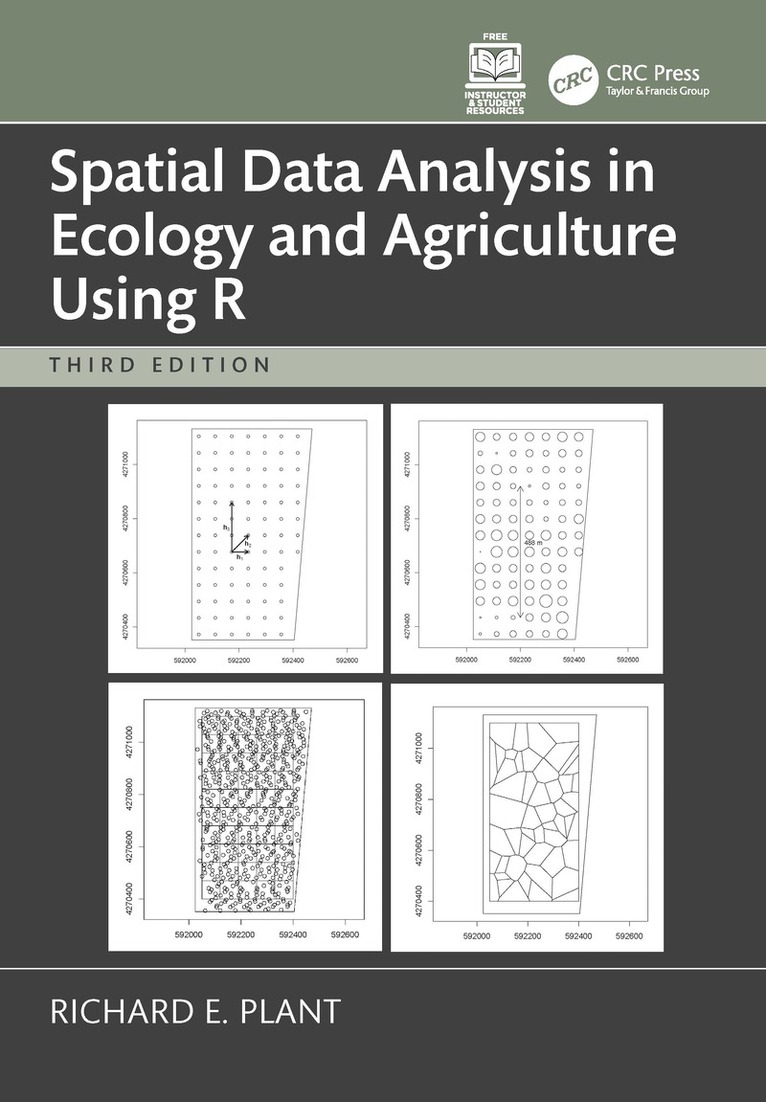
Since the publication of the second edition of Richard Plant’s bestselling textbook Spatial Data Analysis in Ecology and Agriculture Using R, the methodology of spatial data analysis and the suite of R tools for carrying out this analysis have evolved dramatically. This third edition thus explores both the leading software tools for the analysis of vector and raster data; the first based on sf and associated libraries, the second based on the terra package as it has evolved out of the earlier raster package.Further, within the methodology of spatial data analysis, the set of methods available has significantly expanded. This book adds several of the most popular and useful, including machine learning methods in spatial data analysis, the use of simulation methods in spatial data analysis, and a new chapter on the analysis of remotely sensed data. These methods are critically compared in the context of addressing the particular goals of the research project.The book’s practical coverage of spatial statistics, real-world examples, and user-friendly approach make this an essential textbook for ecology and agriculture graduate students. Using data sets from cultivated and uncultivated ecosystems, the book guides the reader through the analysis, including setting research objectives, designing the sampling plan, data quality control, exploratory and confirmatory data analysis, and drawing scientific conclusions.Additional material to accompany the book, including a review of mathematical concepts, the full data sets, and a brief introduction to geographic coordinate systems, can be accessed via the Instructor Resources link on www.routledge.com.
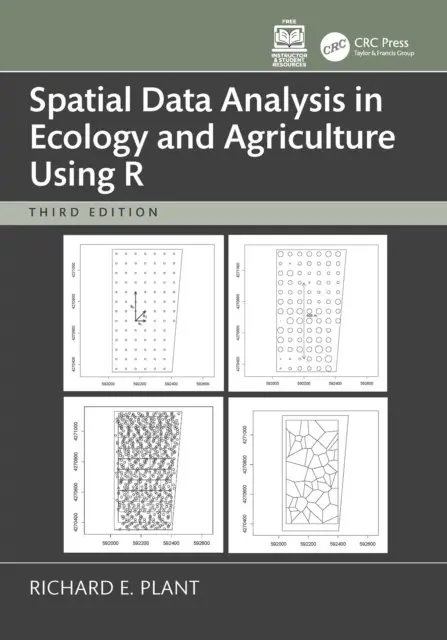
E-bok
PDF, Engelska, 20263 974 kr
Läs direkt efter köp
Since the publication of the second edition of Richard Plant's bestselling textbook Spatial Data Analysis in Ecology and Agriculture Using R, the methodology of spatial data analysis and the suite of R tools for carrying out this analysis have evolved dramatically. This third edition thus explores both the leading software tools for the analysis of vector and raster data; the first based on sf and associated libraries, the second based on the terra package as it has evolved out of the earlier raster package.Further, within the methodology of spatial data analysis, the set of methods available has significantly expanded. This book adds several of the most popular and useful, including machine learning methods in spatial data analysis, the use of simulation methods in spatial data analysis, and a new chapter on the analysis of remotely sensed data. These methods are critically compared in the context of addressing the particular goals of the research project.The book's practical coverage of spatial statistics, real-world examples, and user-friendly approach make this an essential textbook for ecology and agriculture graduate students. Using data sets from cultivated and uncultivated ecosystems, the book guides the reader through the analysis, including setting research objectives, designing the sampling plan, data quality control, exploratory and confirmatory data analysis, and drawing scientific conclusions.Additional material to accompany the book, including a review of mathematical concepts, the full data sets, and a brief introduction to geographic coordinate systems, can be accessed via the Instructor Resources link on www.routledge.com.
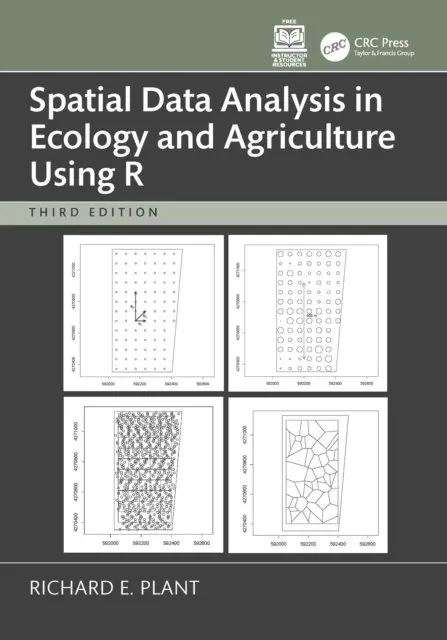
E-bok
Engelska, 20263 974 kr
Läs direkt efter köp
Since the publication of the second edition of Richard Plant's bestselling textbook Spatial Data Analysis in Ecology and Agriculture Using R, the methodology of spatial data analysis and the suite of R tools for carrying out this analysis have evolved dramatically. This third edition thus explores both the leading software tools for the analysis of vector and raster data; the first based on sf and associated libraries, the second based on the terra package as it has evolved out of the earlier raster package.Further, within the methodology of spatial data analysis, the set of methods available has significantly expanded. This book adds several of the most popular and useful, including machine learning methods in spatial data analysis, the use of simulation methods in spatial data analysis, and a new chapter on the analysis of remotely sensed data. These methods are critically compared in the context of addressing the particular goals of the research project.The book's practical coverage of spatial statistics, real-world examples, and user-friendly approach make this an essential textbook for ecology and agriculture graduate students. Using data sets from cultivated and uncultivated ecosystems, the book guides the reader through the analysis, including setting research objectives, designing the sampling plan, data quality control, exploratory and confirmatory data analysis, and drawing scientific conclusions.Additional material to accompany the book, including a review of mathematical concepts, the full data sets, and a brief introduction to geographic coordinate systems, can be accessed via the Instructor Resources link on www.routledge.com.
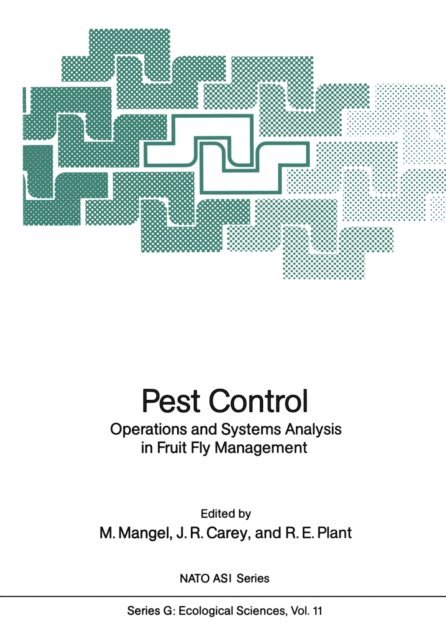
E-bok
PDF, Engelska, 20131 977 kr
Läs direkt efter köp
These are the proceedings of an Advanced Research Workshop (ARW), sponsored by the NATO Science Panel, entitled "Pest Control: Operations and Systems Analysis in Fruit Fly Management". The ARW was held in Bad Windsheim, Germany during the week of 5 August 1985. The purpose of the ARW was to bring together scientists who are interested in fruit fly problems, but who usually do not have an opportunity to speak with each other, for an intense week of interdisciplinary collaboration. In particular, the group present at the ARW contained a mix of biologists, field ecologists, mathematical modellers, operational program managers, economists and social scientists. Each group has its own professional meetings at which fruit fly problems are discussed, but the point of the ARW was to learn about the problem from the perspective of other fields, which are equally important for the ultimate management of the fruit fly problems. (A list of attendees follows this preface. ) It appears that the ARW successfully met its objective of bringing together a group for interdisciplinary considerations of the problems; I hope that the proceedings do as well. The ARW was structured with formal lectures in the mornings and workshops in the afternoons. For the morning lectures, four different topics were chosen: 1) basic biology and ecology, 2) trapping and detection, 3) control and eradication, and 4) policy issues. Each morning, one lecture from each area was presented.
Häftad, Engelska, 2011
1 633 kr
Skickas inom 10-15 vardagar
These are the proceedings of an Advanced Research Workshop (ARW), sponsored by the NATO Science Panel, entitled "Pest Control: Operations and Systems Analysis in Fruit Fly Management". The ARW was held in Bad Windsheim, Germany during the week of 5 August 1985. The purpose of the ARW was to bring together scientists who are interested in fruit fly problems, but who usually do not have an opportunity to speak with each other, for an intense week of interdisciplinary collaboration. In particular, the group present at the ARW contained a mix of biologists, field ecologists, mathematical modellers, operational program managers, economists and social scientists. Each group has its own professional meetings at which fruit fly problems are discussed, but the point of the ARW was to learn about the problem from the perspective of other fields, which are equally important for the ultimate management of the fruit fly problems. (A list of attendees follows this preface. ) It appears that the ARW successfully met its objective of bringing together a group for interdisciplinary considerations of the problems; I hope that the proceedings do as well. The ARW was structured with formal lectures in the mornings and workshops in the afternoons. For the morning lectures, four different topics were chosen: 1) basic biology and ecology, 2) trapping and detection, 3) control and eradication, and 4) policy issues. Each morning, one lecture from each area was presented.
Inbunden, Engelska, 2018
1 221 kr
Tillfälligt slut
Key features:Unique in its combination of serving as an introduction to spatial statistics and to modeling agricultural and ecological data using RProvides exercises in each chapter to facilitate the book's use as a course textbook or for self-studyAdds new material on generalized additive models, point pattern analysis, and new methods of Bayesian analysis of spatial data.Includes a completely revised chapter on the analysis of spatiotemporal data featuring recently introduced software and methodsUpdates its coverage of R software including newly introduced packages Spatial Data Analysis in Ecology and Agriculture Using R, 2nd Edition provides practical instruction on the use of the R programming language to analyze spatial data arising from research in ecology, agriculture, and environmental science. Readers have praised the book's practical coverage of spatial statistics, real-world examples, and user-friendly approach in presenting and explaining R code, aspects maintained in this update. Using data sets from cultivated and uncultivated ecosystems, the book guides the reader through the analysis of each data set, including setting research objectives, designing the sampling plan, data quality control, exploratory and confirmatory data analysis, and drawing scientific conclusions. Additional material to accompany the book, on both analyzing satellite data and on multivariate analysis, can be accessed at https://www.plantsciences.ucdavis.edu/plant/additionaltopics.htm.