This volume examines themes that complicate the conventional economist's view of the world and thereby provide for a notably more complex, and humane, subject of study than the traditional Homo economicus. Written by economists and philosophers, these essays attempt to place neoclassical economic theory, especially conventional textbook micro-economic theory, in the broader context of other social sciences and modern economics. In doing so, the book aims to find the boundaries of economics and to define more sharply its relationship to other kinds of inquiry. Though the widespread use of textbook microtheory in business, economic, and political analysis is a clear testament to its power, the restrictions and artificialities of neoclassical assumptions give cause for worry even to many economists. This book examines the extent to which the economist's paradigm - that man is characterized chiefly by self-interested goals and rational choice of means - is useful in studying traditional noneconomic fields such as philosophy, political theory, and rhetoric. It also looks at how insights from other disciplines are changing - and perhaps improving - the current practice of economics.
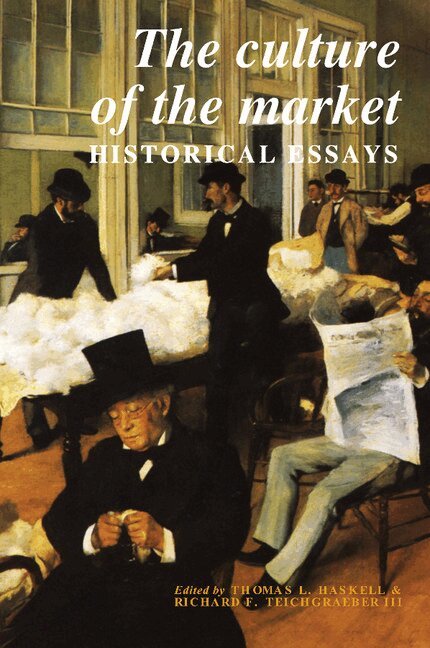
Scholars have only recently begun to appreciate the extent to which the norms and practices that foster market societies have been shifting. Not only has 'the market' been perceived and represented differently in different epochs; it has also been experienced differently, brought into being within dissimilar political and social settings, and has given rise to new and various forms of intellectual and imaginative activity. The thirteen essays collected in this volume belong to a new historical endeavour deriving from the recognition that the experiences and feelings engendered by the historical development of market societies have been, and still remain, open to a broad range of interpretations. They share, too, the characteristic accents of a new approach to cultural history, in which careful examination of actions, texts, and artifacts is accompanied by an open-mindedness about what their examination reveals.
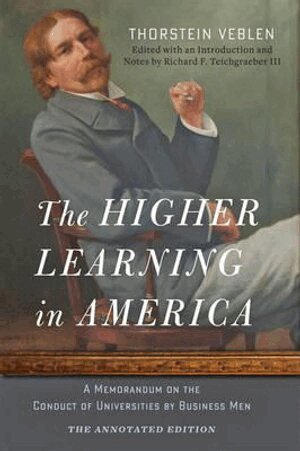
Since its publication in 1918, Thorstein Veblen's The Higher Learning in America has remained a text that every serious student of the American university must confront. Intellectual historian Richard Teichgraeber brings us the first scholarly edition of Veblen's classic, thoroughly edited, annotated, and indexed. An extensive introduction discusses the book's composition and publishing history, Veblen's debts to earlier critics of the American university, and the place of The Higher Learning in America in current debates about the American university. Veblen's insights into the American university system at the outset of the twentieth century are as provocative today as they were when first published. Insisting that institutions of higher learning should be dedicated solely to the disinterested pursuit of knowledge, he urged American universities to abandon commitments to extraneous pursuits such as athletics, community service, and vocational education.He also believed that the corporate model of governance-with university boards of trustees dominated by well-to-do businessmen and university presidents who functioned essentially as businessmen in academic dress-mandated unsavory techniques of salesmanship and self-promotion that threatened to reduce institutions of higher learning to the status of competitive business enterprises. With a detailed chronology, suggested readings, and comprehensive notes identifying events, individuals, and institutions to which Veblen alludes, this volume is sure to become the standard teaching text for Veblen's classic work and an invaluable resource for students of both the history and the current workings of the American university.