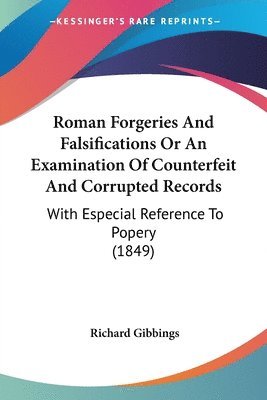
Richard Gibbings – författare
Visar alla böcker från författaren Richard Gibbings. Handla med fri frakt och snabb leverans.
9 produkter
9 produkter
Inbunden, Engelska, 2023
321 kr
Skickas inom 5-8 vardagar
345 kr
Skickas inom 5-8 vardagar
Inbunden, Engelska, 2023
348 kr
Skickas inom 5-8 vardagar
Häftad, Engelska, 2023
201 kr
Skickas inom 5-8 vardagar
Häftad, Engelska, 2008
335 kr
Skickas inom 3-6 vardagar
Häftad, Engelska, 2007
417 kr
Skickas inom 5-8 vardagar
Häftad, Engelska, 2009
363 kr
Skickas inom 5-8 vardagar
E-bok
PDF, Engelska, 2007723 kr
Läs direkt efter köp
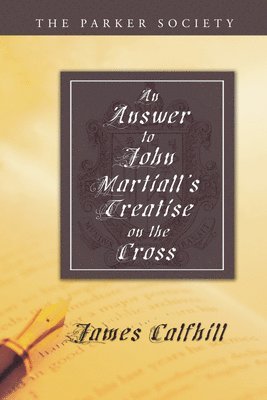
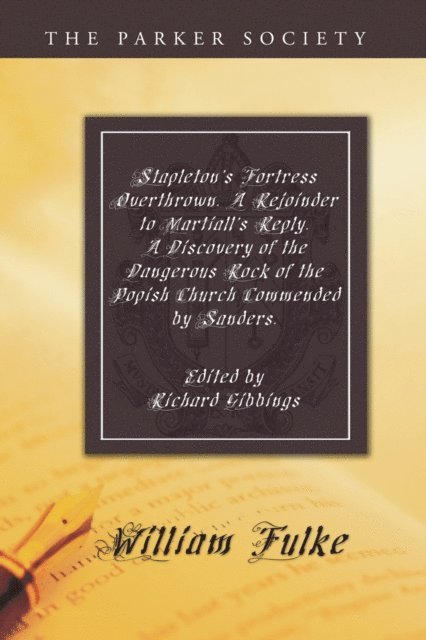
HistoryThe Parker Society, 'For the Publication of the Works of the Fathers and Early Writers of the Reformed English Church', was formed in 1840 and disbanded in 1855 when its work was completed. Its name is taken from that of Matthew Parker, the first Elizabethan Archbishop of Canterbury, who was known as a great collector and preserver of books. The stimulus for the foundation of the society was provided by the nineteenth-Century Tractarians. Some members of this movement, e.g., R.H. Froude in his Remains of 1838-9, spoke most disparagingly of the English Reformation: 'Really I hate the Reformation and the Reformers more and more'. Keble could add in 1838, 'Anything which separates the present Church from the Reformers I should hail as a great good'. Protestants within the Church of England therefore felt the urgent need to make available in an attractive and accessible form the works of the leaders of the English Reformation. To many it seemed that the Protestant foundations of the English Church were being challenged like never before.Thus the society represented a co-operation between traditional High Churchmen and evangelical churchmen, both of whom were committed to the Reformation teaching on justification by faith. Subscribers were also involved in the erection of the Martyrs' Memorial in Oxford, although this was as much anti-Roman Catholic as anti-Tractarian.The society had about seven thousand subscribers who paid one pound each year from 1841 to 1855; thus for fifteen pounds the subscribers received fifty- three volumes - the General Index and the Latin originals of the 1847 'Original Letters relative to the English Reformation' being special subscriptions. Twenty-four editors were used and the task of arriving at the best text was far from easy. The choice of publications was controversial and some authors and works were unfortunate not to be included in PS volumes. While some of the volumes have been superseded by more recent critical editions, today this collection remains one of the most valuable sources for the study of the English Reformation.
E-bok
PDF, Engelska, 2009601 kr
Läs direkt efter köp
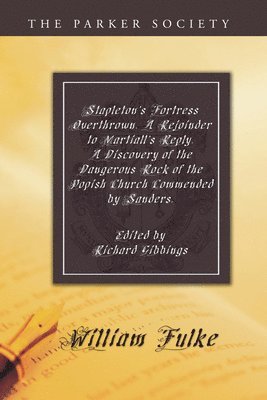
HistoryThe Parker Society, 'For the Publication of the Works of the Fathers and Early Writers of the Reformed English Church', was formed in 1840 and disbanded in 1855 when its work was completed. Its name is taken from that of Matthew Parker, the first Elizabethan Archbishop of Canterbury, who was known as a great collector and preserver of books. The stimulus for the foundation of the society was provided by the nineteenth-Century Tractarians. Some members of this movement, e.g., R.H. Froude in his Remains of 1838-9, spoke most disparagingly of the English Reformation: 'Really I hate the Reformation and the Reformers more and more'. Keble could add in 1838, 'Anything which separates the present Church from the Reformers I should hail as a great good'. Protestants within the Church of England therefore felt the urgent need to make available in an attractive and accessible form the works of the leaders of the English Reformation. To many it seemed that the Protestant foundations of the English Church were being challenged like never before.Thus the society represented a co-operation between traditional High Churchmen and evangelical churchmen, both of whom were committed to the Reformation teaching on justification by faith. Subscribers were also involved in the erection of the Martyrs' Memorial in Oxford, although this was as much anti-Roman Catholic as anti-Tractarian.The society had about seven thousand subscribers who paid one pound each year from 1841 to 1855; thus for fifteen pounds the subscribers received fifty- three volumes - the General Index and the Latin originals of the 1847 'Original Letters relative to the English Reformation' being special subscriptions. Twenty-four editors were used and the task of arriving at the best text was far from easy. The choice of publications was controversial and some authors and works were unfortunate not to be included in PS volumes. While some of the volumes have been superseded by more recent critical editions, today this collection remains one of the most valuable sources for the study of the English Reformation.