Richard Matthew - Böcker
Visar alla böcker från författaren Richard Matthew. Handla med fri frakt och snabb leverans.
8 produkter
8 produkter
Reframing the Agenda
The Impact of NGO and Middle Power Cooperation in International Security Policy
Inbunden, Engelska, 2003
675 kr
Skickas inom 10-15 vardagar
Collects new insights on current security problems, especially those related to arms control and disarmament. Contributors argue that the cooperative efforts of NGOs and middle powers have positively impacted the use of child soldiers, the employment of cluster bombs, landmines, nuclear weapons, and the proliferation of small arms and light weapons. In doing so, they conclusively show that global players other than superpowers can create alternative and effective solutions to enduring security problems.
2 300 kr
Skickas inom 10-15 vardagar
Economic development, population growth and poor resource management have combined to alter the planet’s natural environment in dramatic and alarming ways. For over twenty years, considerable research and debate have focused on clarifying or disputing linkages between various forms of environmental change and various understandings of security. At one extreme lie sceptics who contend that the linkages are weak or even non-existent; they are simply attempts to harness the resources of the security arena to an environmental agenda. At the other extreme lie those who believe that these linkages may be the most important drivers of security in the 21st century; indeed, the very future of humankind may be at stake. This book brings together contributions from a range of disciplines to present a critical and comprehensive overview of the research and debate linking environmental factors to security. It provides a framework for representing and understanding key areas of intellectual convergence and disagreement, clarifying achievements of the research as well as identifying its weaknesses and gaps. Part I explores the various ways environmental change and security have been linked, and provides principal critiques of this linkage. Part II explores the linkage through analysis of key issue areas such as climate change, energy, water, food, population, and development. Finally, the book concludes with a discussion of the value of this subfield of security studies, and with some ideas about the questions it might profitably address in the future.This volume is the first to provide a comprehensive overview of the field. With contributions from around the world, it combines established and emerging scholars to offer a platform for the next wave of research and policy activity. It is invaluable for both students and practitioners interested in international relations, environment studies and human geography.
810 kr
Skickas inom 10-15 vardagar
Economic development, population growth and poor resource management have combined to alter the planet’s natural environment in dramatic and alarming ways. For over twenty years, considerable research and debate have focused on clarifying or disputing linkages between various forms of environmental change and various understandings of security. At one extreme lie sceptics who contend that the linkages are weak or even non-existent; they are simply attempts to harness the resources of the security arena to an environmental agenda. At the other extreme lie those who believe that these linkages may be the most important drivers of security in the 21st century; indeed, the very future of humankind may be at stake. This book brings together contributions from a range of disciplines to present a critical and comprehensive overview of the research and debate linking environmental factors to security. It provides a framework for representing and understanding key areas of intellectual convergence and disagreement, clarifying achievements of the research as well as identifying its weaknesses and gaps. Part I explores the various ways environmental change and security have been linked, and provides principal critiques of this linkage. Part II explores the linkage through analysis of key issue areas such as climate change, energy, water, food, population, and development. Finally, the book concludes with a discussion of the value of this subfield of security studies, and with some ideas about the questions it might profitably address in the future.This volume is the first to provide a comprehensive overview of the field. With contributions from around the world, it combines established and emerging scholars to offer a platform for the next wave of research and policy activity. It is invaluable for both students and practitioners interested in international relations, environment studies and human geography.
Women's Perspectives on Human Security
Violence, Environment, and Sustainability
Inbunden, Engelska, 2020
853 kr
Skickas inom 7-10 vardagar
Violent conflict, climate change, and poverty present distinct threats to women worldwide. Importantly, women are leading the way creating and sharing sustainable solutions.Women's security is a valuable analytical tool as well as a political agenda insofar as it addresses the specific problems affecting women's ability to live dignified, free, and secure lives. First, this collection focuses on how conflict impacts women's lives and well-being, including rape and gendered constructions of ethnicity, race, and religion. The book's second section looks beyond the scope of large-scale violence to examine human security in terms of environmental policy, food, water, health, and economics.Multidisciplinary in scope, these essays from new and established contributors draw from gender studies, international relations, criminology, political science, economics, sociology, biological and ecological sciences, and planning.
579 kr
Skickas inom 10-15 vardagar
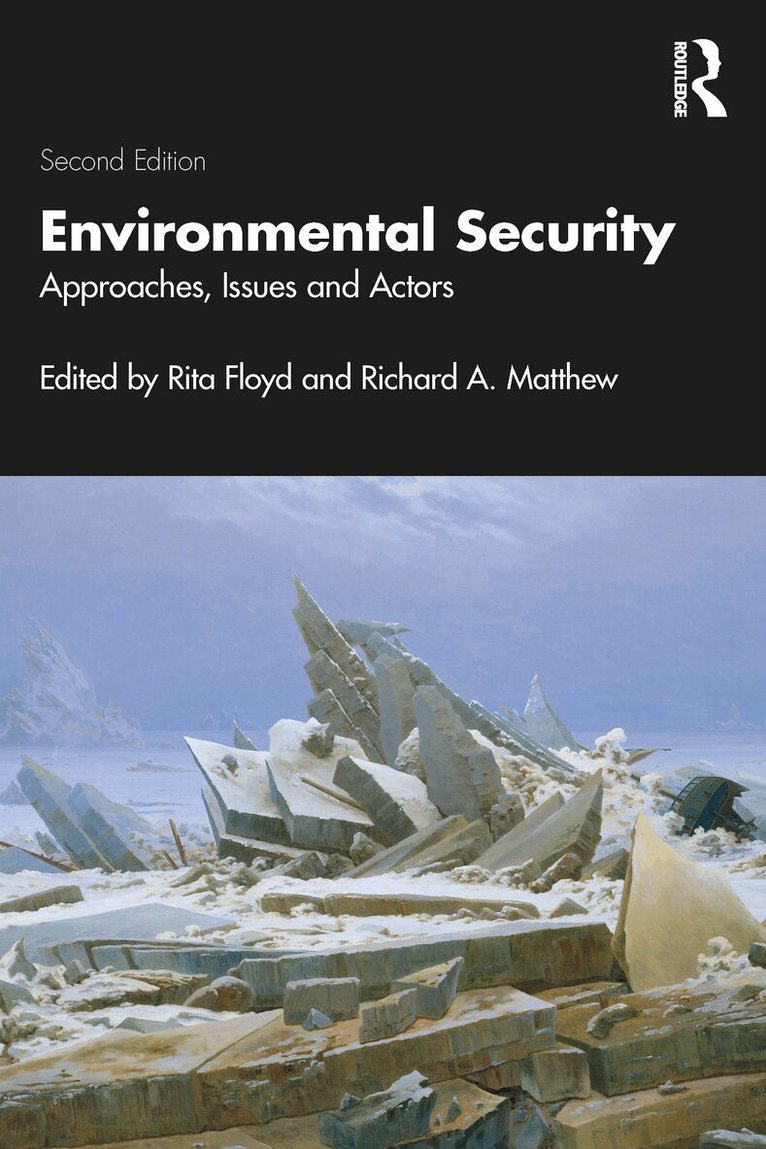
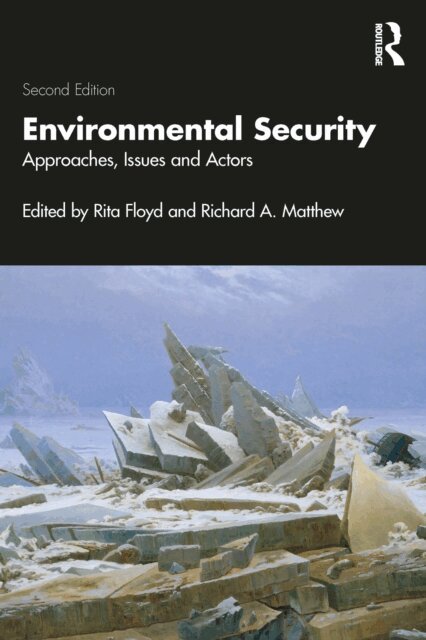
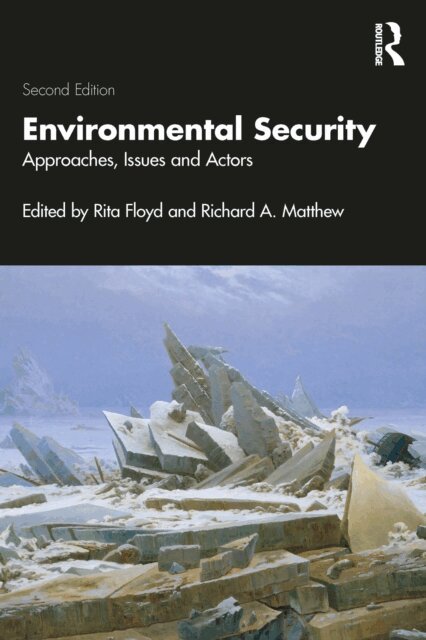
This book offers a comprehensive survey of the distinctive theoretical approaches, fundamental issues and key actors that are central to the contemporary field of environmental security studies.Through a series of chapters written by leading experts, this volume provides readers with an overview of environmental security studies, an arena of considerable policy and research attention that has evolved quickly over the past several decades. The relationships linking climate change, biodiversity loss and pollution to different ways of thinking about, and optimizing, security are broadly relevant, complex and intensifying. Contributors to this volume provide authoritative analyses of competing and complementary theoretical approaches; key issues including food, water and energy; and the actions and aspirations of multilateral, national and sub-national actors.This book has been carefully designed to benefit anyone interested in environmental and climate security. It is especially valuable as required reading for students at both undergraduate and postgraduate levels. Beyond that it serves as a reliable resource for established researchers in the field, as well as advocates, policymakers, security professionals, climate change and other environmentalists, and members of the public.
2 098 kr
Skickas inom 10-15 vardagar
This book offers a comprehensive survey of the distinctive theoretical approaches, fundamental issues and key actors that are central to the contemporary field of environmental security studies.Through a series of chapters written by leading experts, this volume provides readers with an overview of environmental security studies, an arena of considerable policy and research attention that has evolved quickly over the past several decades. The relationships linking climate change, biodiversity loss and pollution to different ways of thinking about, and optimizing, security are broadly relevant, complex and intensifying. Contributors to this volume provide authoritative analyses of competing and complementary theoretical approaches; key issues including food, water and energy; and the actions and aspirations of multilateral, national and sub-national actors.This book has been carefully designed to benefit anyone interested in environmental and climate security. It is especially valuable as required reading for students at both undergraduate and postgraduate levels. Beyond that it serves as a reliable resource for established researchers in the field, as well as advocates, policymakers, security professionals, climate change and other environmentalists, and members of the public.
568 kr
Kommande
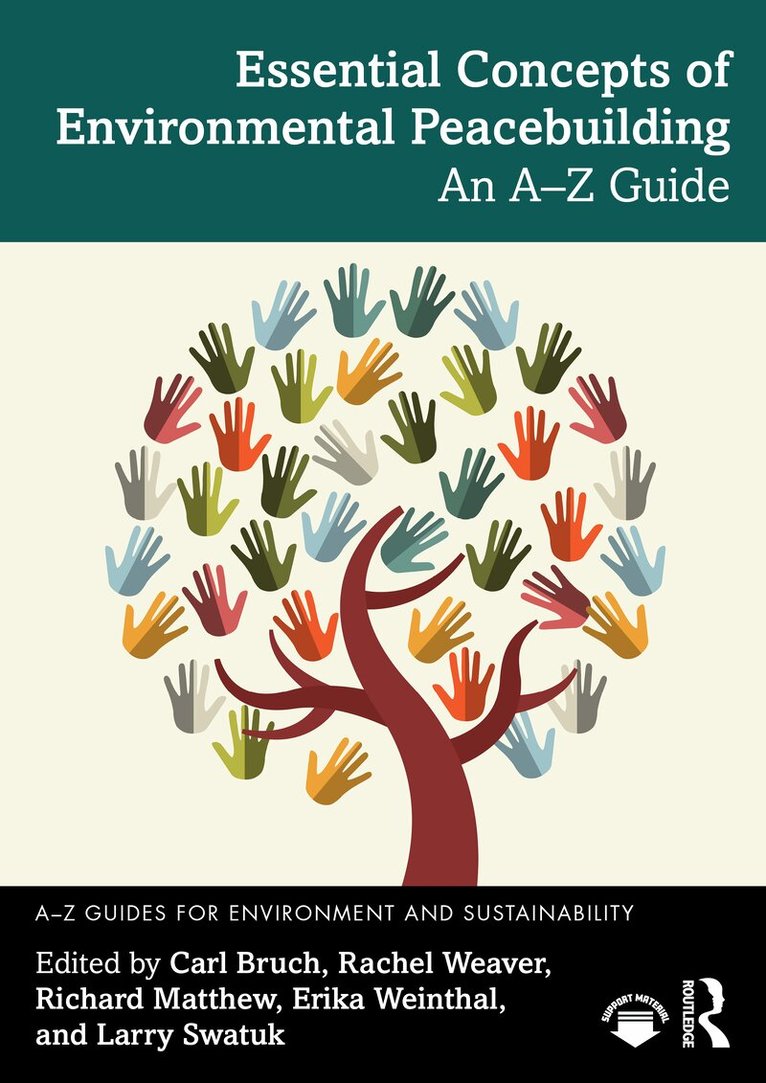
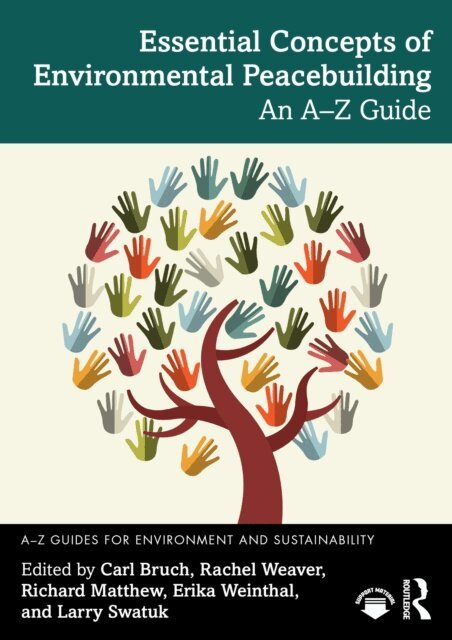
This book provides a comprehensive introduction to the essential concepts of environmental conflict and peacebuilding by compiling and explaining key terms in an easy-to-navigate A–Z format.Over the past 80 years, scholarly interest in war and peace has flourished, resulting in the institutionalization of disciplines such as international relations, security studies, and peace and conflict studies. Since at least the 1970s, research has also investigated the planetary effects of global environmental change. Environmental peacebuilding emerged at the intersection of environment, conflict, and peace, weaving together several related threads that address both environmental risks of conflict and environmental opportunities for peace. The language used to describe, explain, predict, teach, negotiate, and form policy in the arena of environmental peacebuilding is often nuanced, evolving, and contested. This book fills a gap in the literature by providing a consistent understanding and approach to key aspects of environmental peacebuilding. The book begins with a thematic introduction to contextualize the topic, written by a team of world-leading scholars. The book then follows an A–Z format, with over 150 entries from experts in the field describing and explaining key concepts and providing examples of how different terms are applied within this growing discipline.This comprehensive A–Z guide will be useful for students, academics, professionals, and policymakers seeking a wider understanding of environmental peacebuilding. The book will also be useful for those studying security studies, peace and conflict studies, environmental studies, and environmental law.
2 113 kr
Kommande
This book provides a comprehensive introduction to the essential concepts of environmental conflict and peacebuilding by compiling and explaining key terms in an easy-to-navigate A–Z format.Over the past 80 years, scholarly interest in war and peace has flourished, resulting in the institutionalization of disciplines such as international relations, security studies, and peace and conflict studies. Since at least the 1970s, research has also investigated the planetary effects of global environmental change. Environmental peacebuilding emerged at the intersection of environment, conflict, and peace, weaving together several related threads that address both environmental risks of conflict and environmental opportunities for peace. The language used to describe, explain, predict, teach, negotiate, and form policy in the arena of environmental peacebuilding is often nuanced, evolving, and contested. This book fills a gap in the literature by providing a consistent understanding and approach to key aspects of environmental peacebuilding. The book begins with a thematic introduction to contextualize the topic, written by a team of world-leading scholars. The book then follows an A–Z format, with over 150 entries from experts in the field describing and explaining key concepts and providing examples of how different terms are applied within this growing discipline.This comprehensive A–Z guide will be useful for students, academics, professionals, and policymakers seeking a wider understanding of environmental peacebuilding. The book will also be useful for those studying security studies, peace and conflict studies, environmental studies, and environmental law.