Richard N. Rosenthal - Böcker
Visar alla böcker från författaren Richard N. Rosenthal. Handla med fri frakt och snabb leverans.
3 produkter
3 produkter
635 kr
Skickas inom 10-15 vardagar
Dual Diagnosis , the second volume in the Key Readings in Addiction Psychiatry Series, broadly illuminates the nature, presentation, evaluation and treatment of persons with co-occurring mental and substance use disorders. Selected from high quality, peer-reviewed journals, the presented articles are authored by some of the most eminent researchers in their respective fields. The reader will come away with up-to-date, evidence-based information on identification and intervention regarding comorbidity of substance use and mood, anxiety, personality and severe mental disorders such as schizophrenia and bipolar disorder.
877 kr
Skickas inom 5-8 vardagar
The domain of supportive psychotherapy has expanded in recent years, reflecting changes in how psychotherapy is conducted and the role psychotherapy plays in caring for individuals facing difficult life experiences or living with diverse mental and physical disorders. This new, thoroughly revised and up-to-date edition of Learning Supportive Psychotherapy: An Illustrated Guide (first published as Introduction to Supportive Psychotherapy) instructs beginning psychotherapists in the fundamentals of this treatment modality, which focuses on patients' overall health and well-being and their ability to adapt constructively to their life circumstances. The linchpin of supportive psychotherapy -- and, indeed, all psychotherapy -- is the establishment of a true therapeutic alliance. Accordingly, the authors provide readers with skills aimed at instilling trust and establishing a productive therapeutic relationship, including techniques for alliance building, enhancing ego functioning, and reducing and preventing anxiety. In addition, the authors explore the general framework of supportive psychotherapy, including indications, phases of treatment, initiation and termination of sessions, and professional boundaries; explain how to perform a thorough patient evaluation and case formulation; and describe the process of setting realistic goals with the patient. The following features and areas of focus enhance the book's utility: Integral to the text's practical approach are the video case vignettes that accompany several of the chapters. These videos model effective psychotherapeutic techniques and strategies, which readers can incorporate into their skill sets. The chapter on crisis intervention has been thoroughly revised to integrate recent research findings on posttraumatic stress disorder, suicide, and critical incident stress management, and the illustrative multipart case vignette provides a therapeutic narrative that is compelling, relatable, and instructive. The material on the therapeutic alliance focuses on skill building, including how to anticipate and avoid disruption in treatment, how to discuss the therapeutic relationship with the patient, how to modify distorted perceptions using clarification and confrontation, how to deal with negative transference and therapeutic impasses, and how to reframe statements in a supportive manner. Outcome research receives its own chapter, in which the authors review the robust evidence base for the efficacy of supportive psychotherapy, including a number of outcome trials, bolstering the necessity of learning the techniques outlined in the book. The book concludes with 75 questions and answers to test the reader's comprehension and identify areas for further study. This new edition of Learning Supportive Psychotherapy: An Illustrated Guide builds on the well-earned reputation of previous editions. Beginning clinicians first learning the techniques of psychotherapy and veterans who must assess competence in the psychiatry residents they supervise will find the help they need in this down-to-earth, clinically rich guide.
2 677 kr
Skickas inom 7-10 vardagar
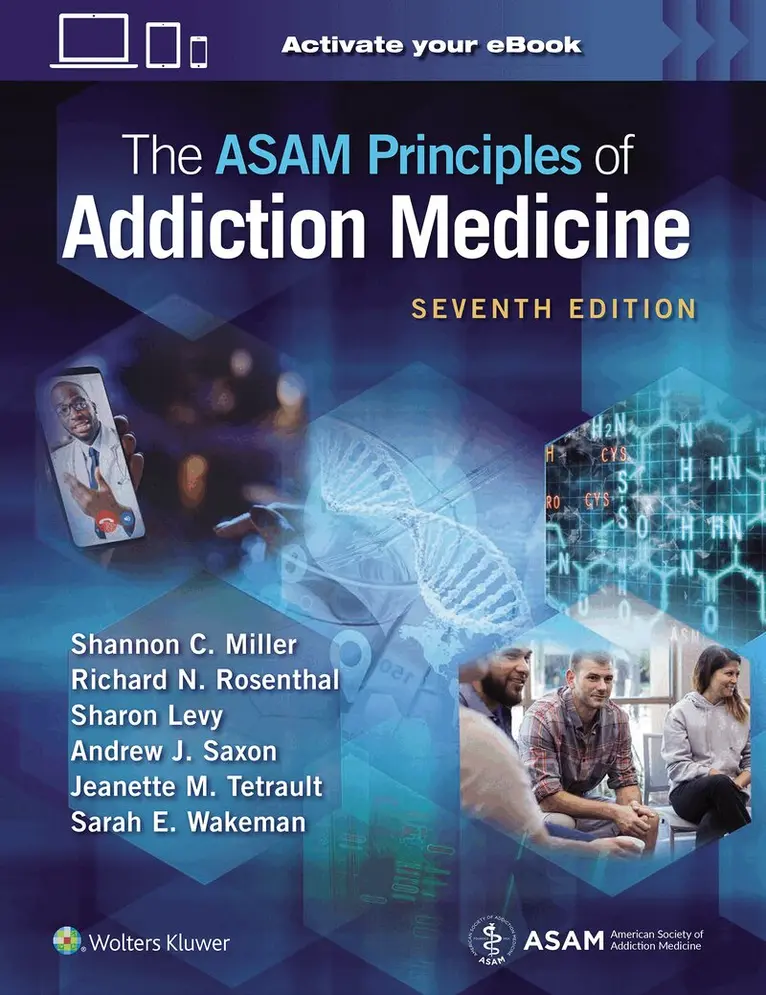
Principles of Addiction Medicine, 7th ed is a fully reimagined resource, integrating the latest advancements and research in addiction treatment. Prepared for physicians in internal medicine, psychiatry, and nearly every medical specialty, the 7th edition is the most comprehensive publication in addiction medicine. It offers detailed information to help physicians navigate addiction treatment for all patients, not just those seeking treatment for SUDs. Published by the American Society of Addiction Medicine and edited by Shannon C. Miller, MD, Richard N. Rosenthal, MD, Sharon Levy, MD, Andrew J. Saxon, MD, Jeanette M. Tetrault, MD, and Sarah E. Wakeman, MD, this edition is a testament to the collective experience and wisdom of 350 medical, research, and public health experts in the field. The exhaustive content, now in vibrant full color, bridges science and medicine and offers new insights and advancements for evidence-based treatment of SUDs. This foundational textbook for medical students, residents, and addiction medicine/addiction psychiatry fellows, medical libraires and institution, also serves as a comprehensive reference for everyday clinical practice and policymaking. Physicians, mental health practitioners, NP, PAs, or public officials who need reference material to recognize and treat substance use disorders will find this an invaluable addition to their professional libraries. Fifteen sections comprised of 128 fully updated or new chapters provide in-depth content on Basic Science and Core Principles of SUDs, Pharmacology, Diagnosis/Intervention, Non-Substance Addictions, Children and Adolescents, Withdrawal Management, Pharmacological Treatment, Psychological Treatment, Mutual Help, Co-Occurring Disorders, Pain and Addiction, and Ethical, Legal, and Liability Issues. Addresses SUDs and complications for cardiology, gastroenterology, hepatology, endocrinology, pulmonology, obstetrics, nephrology, emergency medicine, immunology, surgery.Includes all new content, including a full section on Epidemiology and Prevention, and chapters covering digital health interventions, all forms of psychologically-based interventions, collaborative care, cannabis used as treatment, electronic drug delivery devices, neuromodulation, emerging substances, climate change, industry influences on addiction, spirituality and mutual help, disorders associated with technology and social media, virtual care, reducing inequalities through changes in practice, OTP leadership, treatment considerations for LGBTQ patients, neurobiological determinants of addiction in children and adolescents, as well as race, ethnicity, and social determinants of health, disparities, and access to care. Eight (8) appendices in the VST ebook cover ASAM approved terminology, screening and assessment instruments, DSM-V criteria, ICD-10 coding, Federal schedules for controlled drugs, policies from the Federation of State Medical Boards