Richard Oliver - Böcker
Visar alla böcker från författaren Richard Oliver. Handla med fri frakt och snabb leverans.
9 produkter
9 produkter
1 278 kr
Skickas inom 7-10 vardagar
Agrios' Plant Pathology, Sixth Edition is the ultimate reference in the field. Here, Dr. Richard Oliver provides a fully updated table of contents with revised and new chapters and invited contributors from around the globe. Building on his legacy, this new edition is an essential read for students, faculty and researchers interested in plant pathology. Sections outline how to recognize, treat and prevent plant diseases and provide extensive coverage on abiotic, fungal, viral, bacterial, nematode and other plant diseases and their associated epidemiology. A large range of case studies take a deep dive into the genetics and modern management of several plant species. Updates with a new edition of Agrios' Plant Pathology, including information on molecular techniques and biological control in plant diseases Includes numerous excellent diagrams and photographs Provides a large variety of disease examples for instructors to choose for their course Edited by a renowned expert in plant pathology, Dr. Richard Oliver
321 kr
Skickas inom 7-10 vardagar
Understanding Hypermedia, first published in 1993, firmly established itself in the design and media community as the definitive introduction to this exciting new communications medium. Understanding Hypermedia 2.0 completely revises the original edition, bringing the story of hypermedia bang up to date with full coverage of the Internet and other new developments.The book examines all of the digital media, from Web sites and CD-ROMs to satellite communications. A history of hypermedia and its key players is followed by a survey of the controversial issues that surround it and an overview of the elements that can make up a hypermedia product, including sound, video, animation and hypertext. An extensive gallery of applications shows how the medium is now being used to inform, entertain, sell to and communicate with users worldwide. Practical information on design and production is also included, together with an extensive glossary of technical terms and a comprehensive bibliography. The book concludes with a look towards the digital future in the new millennium.
55 kr
Skickas inom 11-20 vardagar
321 kr
Skickas inom 7-10 vardagar
A major re-examination of the history of map-making in Exeter, following on from the recent discovery of a 'new' town map of the city in 1743This major re-examination of the history of map-making in Exeter, the historic county town of Devon, follows from the recent discovery of a 'new' Georgian town map of the city. That map, by William Birchynshaw (a man not known tohave produced any other), is reproduced in facsimile, along with nearly two dozen other maps from 1587 through to 1949. They are prefaced by an introduction which places the new discovery within the context of four centuries of map-making, demonstrating how Birchynshaw owed a debt both to John Hooker's map of 1587 and to that by Ichabod Fairlove of 1709; and provides an overview of Exeter in 1743, showing that, although was city was basking in economic prosperity due to its cloth trade, it was also still largely confined within its ancient walls. The volume as a whole represents a significant reassessment of Exeter's history.RICHARD OLIVER is a historian and has been a Research Fellow in the History of Cartography at the University of Exeter since 1989.ROGER KAIN CBE is a Fellow of the British Academy and its Vice-President (Research and Higher Education Policy). He is Professor of Humanities in the School of Advanced Study, University of London and was previously its Dean and Chief Executive, 2010-17.TODD GRAY MBE is an Honorary Research Fellow at the University of Exeter and the author of more thana dozen books on Exeter.
Del 19 - Burleigh Dodds Series in Agricultural Science
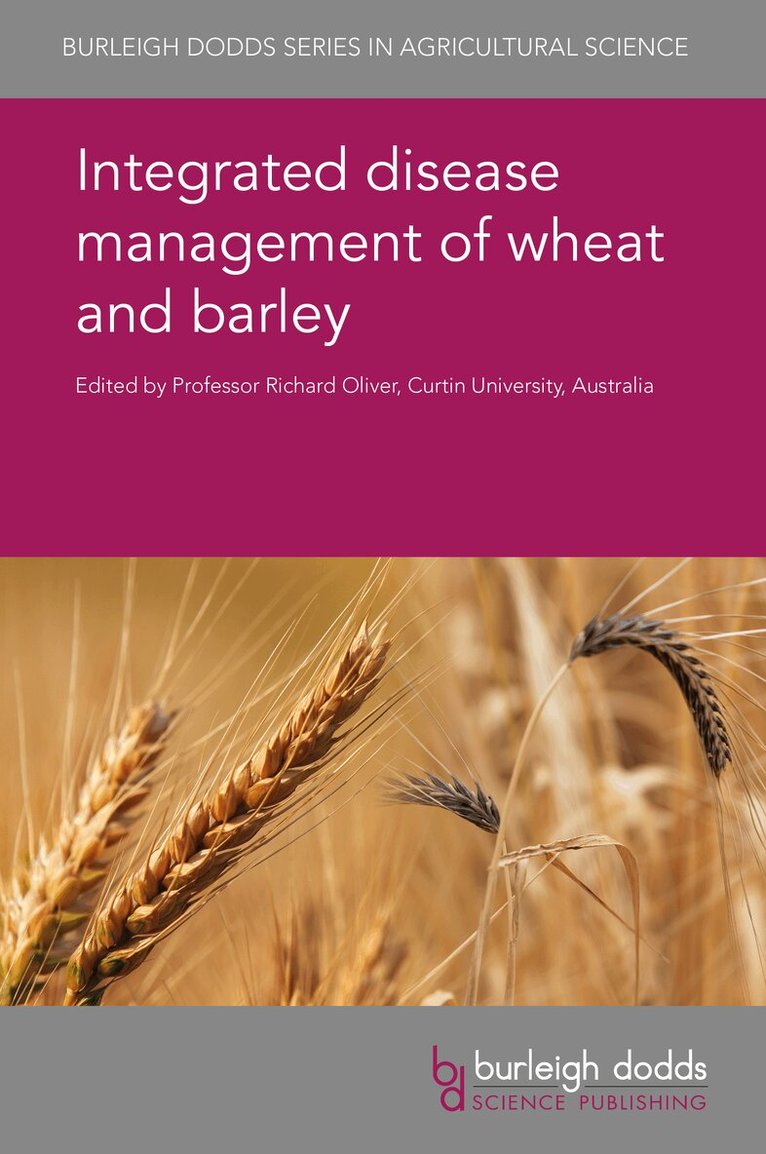
Integrated Disease Management of Wheat and Barley
Inbunden, Engelska, 2018
2 815 kr
Skickas inom 3-6 vardagar
Diseases remain a serious problem in wheat and barley cultivation. It has been estimated that around 20% of global crop production is lost to diseases. Leading fungal diseases affecting wheat and barley include rusts, Septoria blotches, powdery mildew, tan spot, spot blotch, net blotch, scald and Fusarium species. Conventional control using fungicides faces a number of challenges such as increasing regulation and the spread of fungicide resistance. This collection sums up the wealth of research addressing this challenge.Part 1 reviews the latest research on understanding the main fungal diseases of cereals. Part 2 discusses key challenges in integrated disease management of wheat and barley. These challenges include developing new fungicides, the problem of fungicide resistance, breeding disease-resistance varieties, improving disease identification and the use of natural antifungal compounds.With its distinguished editor and international team of expert authors, this will be a standard reference for cereal scientists in universities, government and other research centres and companies involved in wheat cultivation.
Del 106 - Burleigh Dodds Series in Agricultural Science
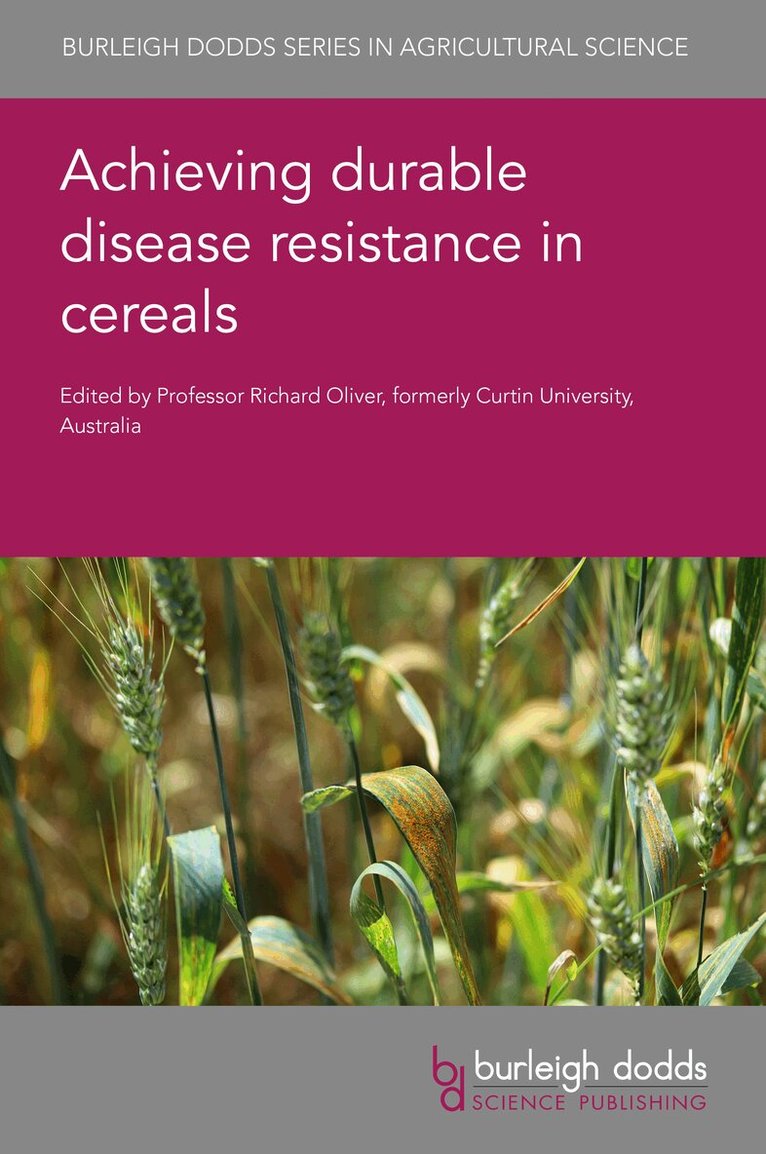
Achieving Durable Disease Resistance in Cereals
Inbunden, Engelska, 2021
3 001 kr
Skickas inom 3-6 vardagar
"This book is number 106 in the Burleigh Dodds Series in Agriculture Science and continues this excellent series of informative reviews in plant and animal agricultural production systems. This volume is a collection of chapters by experts in cereal diseases and disease management from around the world and contains some excellent detailed overviews on recent advances in our understanding of key cereal pathogens and advances in their management. It will be a valuable resource for wheat and barley focussed researchers, breeders and growers."(Professor Matt Dickinson, University of Nottingham, UK - Plant Pathology)It’s been estimated that up to 40% of crop yields are lost to pests and diseases worldwide, a problem exacerbated by increasing fungicide resistance. Given the continuous struggle between crops and the diseases which exploit them, achieving durable disease resistance remains a key challenge in ensuring global food security. A range of issues need to be addressed to meet this challenge for major diseases affecting cereal crops such as Fusarium, barley yellow dwarf virus (BYDV) and Septoria.Achieving durable disease resistance in cereals provides an authoritative review of key advances, from better understanding of pathogen biology/epidemiology and plant-pathogen interactions, to identifying sources of resistance and advances in techniques for breeding new varieties. This collection offers a comprehensive review of research on achieving durable resistance to diseases such as Fusarium head blight, Septoria tritici blotch, Septoria nodorum blotch, tan spot, blast, BYDV and Ramularia.Edited by Professor Richard Oliver, Curtin University, Australia, Achieving durable disease resistance in cereals will be an excellent reference for researchers in cereal science, arable farmers, government and private sector agencies supporting cereal production and companies supplying the cereals sector (e.g. seed companies). It complements Integrated disease management of wheat and barley, also edited by Professor Oliver, published by Burleigh Dodds Science in 2018.
Del 92 - Burleigh Dodds Science: Instant Insights
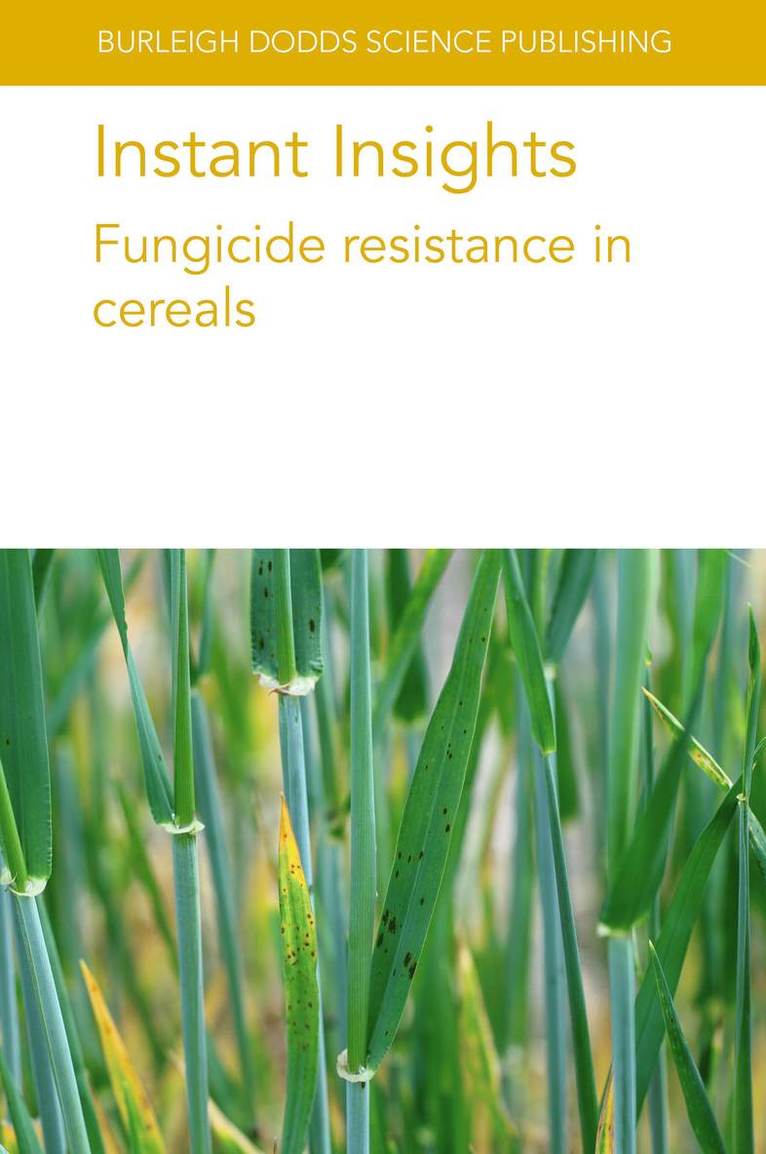
Instant Insights: Fungicide Resistance in Cereals
Häftad, Engelska, 2024
677 kr
Skickas inom 5-8 vardagar
This book features four peer-reviewed reviews on the development of fungicide resistance in agriculture.The first chapter examines how pathogens develop resistance to fungicides and reviews the ways to detect and measure resistance. The chapter also discusses mechanisms of resistance, such as target site mutation and oppression and multi-drug resistance.The second chapter builds on research covered in the first chapter and reviews the development of resistance in cereal pathogens, before presenting and evaluating a variety of anti-resistance strategies. Case studies of how data from field trials have helped illustrate the impact of different control strategies are also included.The third chapter provides a detailed overview of the use of fungicides as an effective and economic tool to control plant diseases. The chapter considers the successful development of fungicides, as well as the challenges facing future fungicide development within a more holistic and sustainable system of food production.The final chapter considers the current status of global wheat production, the impact of crop loss on food security and the emergence of the current regulatory environment surrounding pesticides. The current status of the global fungicide market and some of the major issues in its future longevity is also discussed.
Del 177 - Burleigh Dodds Series in Agricultural Science
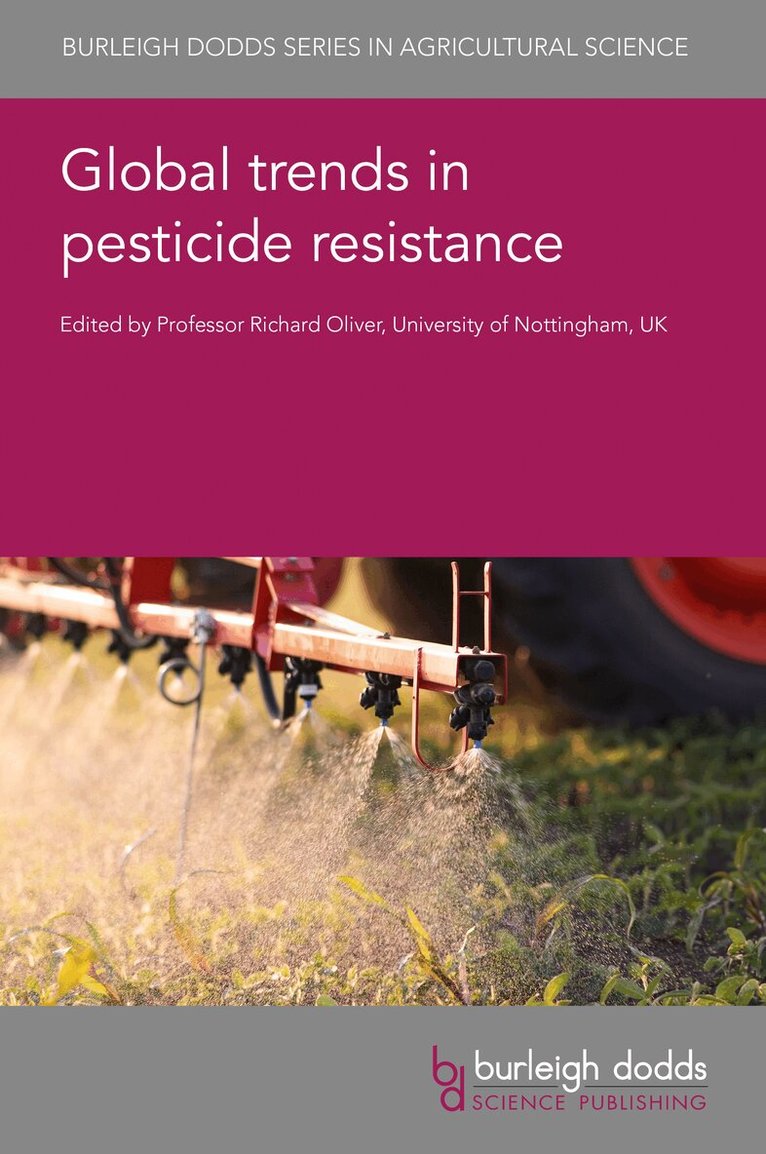
Global Trends in Pesticide Resistance
Inbunden, Engelska, 2026
2 939 kr
Skickas inom 3-6 vardagar
Pesticide resistance remains a growing problem in the agricultural sector worldwide, with reports suggesting that more than 600 species of pests have developed some level of resistance to the key groups of pesticides, including fungicides, insecticides and herbicides. A greater research effort is required to understand patterns of resistance and how they can be addressed to maintain crop protection.Global trends in pesticide resistance provides a comprehensive overview of pesticide use in particular regions around the world and the consequent development of resistance to the key groups of pesticides. The book reviews what we know about current patterns of resistance, gaps in knowledge, likely future trends in resistance and potential solutions such as integrated disease, pest and weed management.
381 kr
Skickas inom 5-8 vardagar
The history and culture of Madrid, the cluster of historical cities at an easy distance (Segovia, Avila and Toledo) and the heartlands of Castile - the core of Spanish civilisation.This book performs with great thoroughness all the usual functions of a guidebook. But it is much more than a mere inventory of buildings, paintings, sculpture, routes and views, supplemented by appendices packed with practical information. The authors - from their long experience and deep knowledge of the country - are exceptionally well-equipped to draw together into a coherent whole all the threads of history, art, culture and recent developments. Theysteer you in most rewarding directions, enlivening the hallowed hush of museum or sacristy with an original interpretation of some great painter - El Greco, Goya, Picasso - or an observation which suddenly illuminates the seemingly unexceptional. Madrid, rather than just a political capital at the geographical centre of the country, is revealed as a true metropolis, genuinely representative of all the aspects and regional variations of Spanish life. Its art collections are justly renowned as superb. Add in the cluster of historical cities at an easy distance (including Segovia, Avila and Toledo), to say nothing of the lesser-known treasures and delights secreted in the heartlands of Castile, and you have, within a manageable compass, the core of Spanish civilisation.