Richard W. Judd – författare
Visar alla böcker från författaren Richard W. Judd. Handla med fri frakt och snabb leverans.
12 produkter
12 produkter
366 kr
Tillfälligt slut
The Untilled Garden
Natural History and the Spirit of Conservation in America, 1740-1840
Inbunden, Engelska, 2009
1 113 kr
Skickas inom 7-10 vardagar
This study traces the origins of conservation thinking in America to the naturalists who explored the middle-western frontier between 1740 and 1840. Their inquiries yielded a comprehensive natural history of America and inspired much of the conservation and ecological thinking we associate with later environmental and ecological philosophy. These explorers witnessed one of the great environmental transformations in American history, as the vast forests lying between the Appalachian Mountains and the Mississippi gave way to a landscape of fields, meadows, and pastures. In debating these changes, naturalists translated classical ideas like the balance of nature and the spiritual unity of all species into an American idiom. This book highlights the contributions made by the generation of natural historians who pioneered the utilitarian, ecological, and aesthetic arguments for protecting or preserving nature in America.
The Untilled Garden
Natural History and the Spirit of Conservation in America, 1740-1840
Häftad, Engelska, 2009
355 kr
Skickas inom 7-10 vardagar
This study traces the origins of conservation thinking in America to the naturalists who explored the middle-western frontier between 1740 and 1840. Their inquiries yielded a comprehensive natural history of America and inspired much of the conservation and ecological thinking we associate with later environmental and ecological philosophy. These explorers witnessed one of the great environmental transformations in American history, as the vast forests lying between the Appalachian Mountains and the Mississippi gave way to a landscape of fields, meadows, and pastures. In debating these changes, naturalists translated classical ideas like the balance of nature and the spiritual unity of all species into an American idiom. This book highlights the contributions made by the generation of natural historians who pioneered the utilitarian, ecological, and aesthetic arguments for protecting or preserving nature in America.
Common Lands, Common People
The Origins of Conservation in Northern New England
Häftad, Engelska, 2000
408 kr
Skickas inom 10-15 vardagar
In this innovative study of the rise of the conservation ethic in northern New England, Richard Judd shows that the movement that eventually took hold throughout America had its roots among the communitarian ethic of countrypeople rather than among urban intellectuals or politicians. Drawing on agricultural journals and archival sources such as legislative petitions, Judd demonstrates that debates over access to and use of forests and water, though couched in utilitarian terms, drew their strength and conviction from deeply held popular notions of properly ordered landscapes and common rights to nature.Unlike earlier attempts to describe the conservation movement in its historical context, which have often assumed a crude dualism in attitudes toward nature--democracy versus monopoly, amateur versus professional, utilitarian versus aesthete--this study reveals a complex set of motives and inspirations behind the mid-nineteenth-century drive to conserve natural resources. Judd suggests that a more complex set of contending and complementary social forces was at work, including traditional folk values, an emerging science of resource management, and constantly shifting class interests.Common Lands, Common People tells us that ordinary people, struggling to define and redefine the morality of land and resource use, contributed immensely to America's conservation legacy.
Unfinished Worlds: Predictions of Technology and Nature in America's Future, 1930-1980
Inbunden, Engelska
1 844 kr
Kommande
Unfinished Worlds: Predictions of Technology and Nature in America's Future, 1930-1980
Häftad, Engelska, 2027
611 kr
Kommande
550 kr
Skickas inom 3-6 vardagar
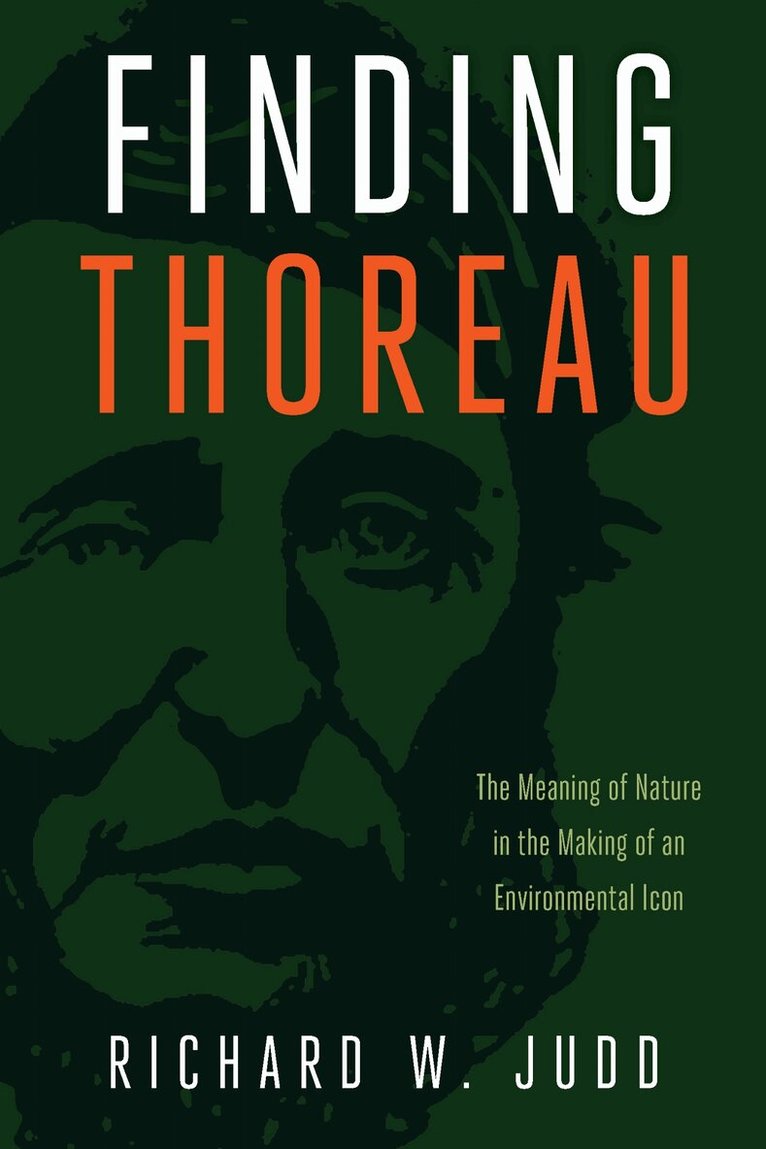
In his 1862 eulogy for Henry David Thoreau, Ralph Waldo Emerson reflected that his friend ""dedicated his genius with such entire love to the fields, hills, and waters of his native town, that he made them known and interesting to all reading Americans, and to people over the sea."" Finding Thoreau traces the reception of Thoreau's work from the time of his death to his ascendancy as an environmental icon in the 1970s, revealing insights into American culture's conception of the environment.Moving decade by decade through this period, Richard W. Judd unveils a cache of commentary from intellectuals, critics, and journalists to demonstrate the dynamism in the idea of nature, as Americans defined and redefined the organic world around them amidst shifting intellectual, creative, and political forces. This book tells the captivating story of one writer's rise from obscurity to fame through a cultural reappraisal of the work he left behind.
347 kr
Skickas inom 5-8 vardagar
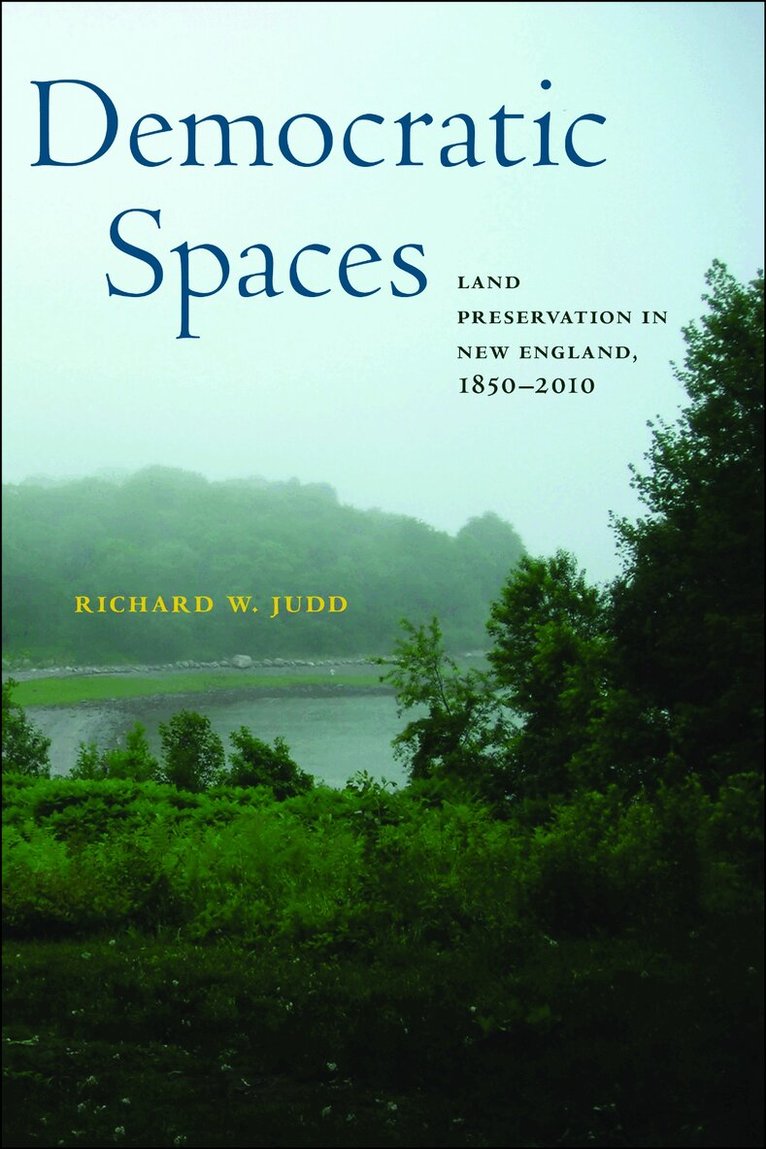
A contemporary map of New England, scaled to the township level, brings to light a dense pattern of protected areas ringing almost every town and city in the region. Big and small, rural and urban, these green spaces represent more than a century of preservation efforts on the part of philanthropic foundations, planning professionals, state agencies, and most importantly, community-based conservation organizations. Taken together, they highlight one of the most significant advances in land stewardship in US history. Democratic Spaces explains how these protected places came into being and what they represent for New Englanders and the nation at large. While early New Englanders worked to save local fish, timber, and game resources from outside exploitation, no land-stewardship organizations existed before the founding of the Trustees of Public Reservations in Boston in 1891. Across a century of dramatic change, New England preservationists through this and other, smaller community-based land trusts preserved open spaces for an ever-widening circle of citizens.
1 083 kr
Skickas inom 5-8 vardagar
A contemporary map of New England, scaled to the township level, brings to light a dense pattern of protected areas ringing almost every town and city in the region. Big and small, rural and urban, these green spaces represent more than a century of preservation efforts on the part of philanthropic foundations, planning professionals, state agencies, and most importantly, community-based conservation organizations. Taken together, they highlight one of the most significant advances in land stewardship in US history. Democratic Spaces explains how these protected places came into being and what they represent for New Englanders and the nation at large. While early New Englanders worked to save local fish, timber, and game resources from outside exploitation, no land-stewardship organizations existed before the founding of the Trustees of Public Reservations in Boston in 1891. Across a century of dramatic change, New England preservationists through this and other, smaller community-based land trusts preserved open spaces for an ever-widening circle of citizens.
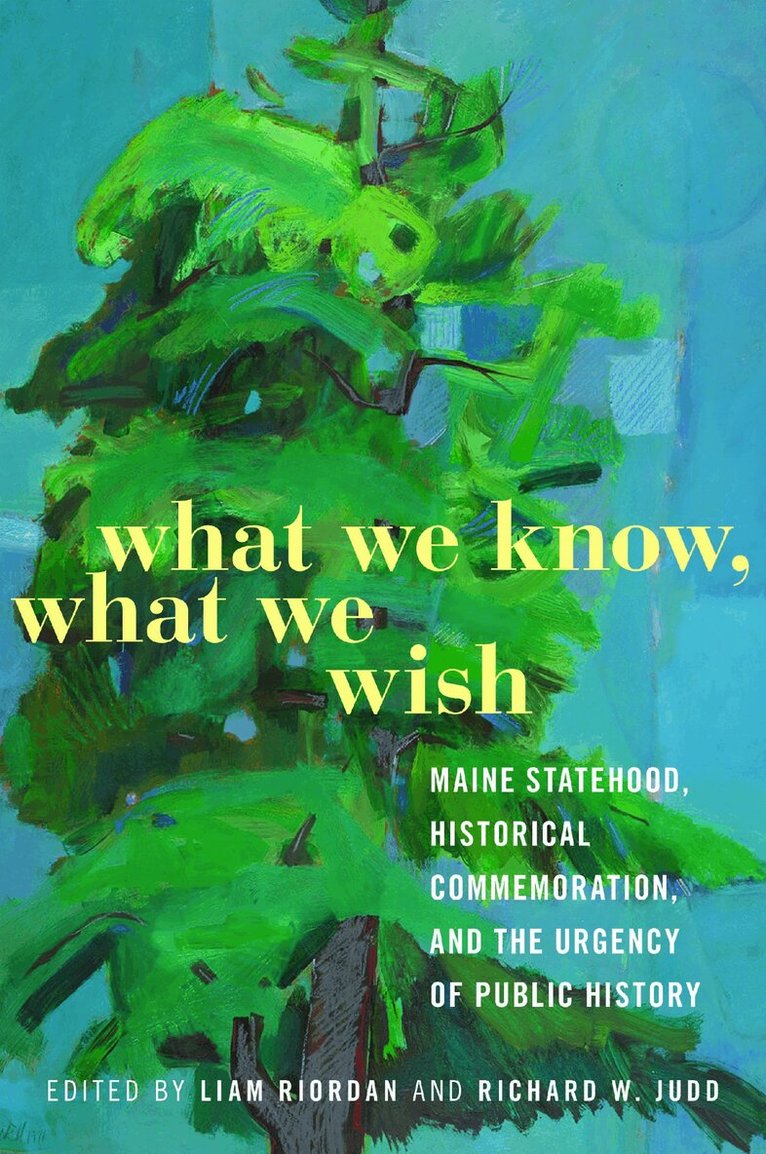
What We Know, What We Wish
Maine Statehood, Historical Commemoration, and the Urgency of Public History
Häftad, Engelska, 2025
375 kr
Skickas inom 5-8 vardagar
Cities, states, and nations are grappling with how best to commemorate historical events and anniversaries in ways that are fair, accurate, and open public dialogue about the often contested past. This volume springs from varied approaches to the historical commemoration of Maine’s state bicentennial in 2020 that involved academics, independent scholars, local and statewide cultural organizations, sovereign Wabanaki nations, and the state itself in the form of the Maine State Bicentennial Commission. While wide-ranging in their goals and values, all sought to take advantage of opportunities for collaboration to contribute to a dynamic and multi-faceted practice of public history. These new essays use Maine’s bicentennial as a focal point to put public history theory into action. Its diverse contributors share stories about the past that move beyond celebration to reflect crucial ways that the past shapes our understanding of the present and our aspirations for the future.This volume’s core argument is that academics need to collaborate more fully with independent scholars, history-based cultural institutions, and the general public in order for public history to thrive and to improve the quality of civic life. What We Know, What We Wish does this through wide ranging essays that discuss the long statehood era in Maine from the 1770s to 1820s as well as its legacies in the state centennial commemoration of 1920 and museum exhibits from the 2020 bicentennial. The occupational and cultural diversity of the collection’s contributors together with the content of their essays offer a model for how to put public history principles into practice to foreground meaningful historical reflection that is urgently needed in divided communities around the world.Contributors include the volume editors, as well as Maulian Bryant, Osihkiyol (Zeke) Crofton-Macdonald, Charles H. Lagerbom, Ryan LaRochelle, Stuart Kestenbaum, Michael McVaugh, Kevin D. Murphy, Micah A. Pawling, Jessica Skwire Routhier, Donald Soctomah, Laura Fecych Sprague, Alan Taylor, and Laurel Thatcher Ulrich.
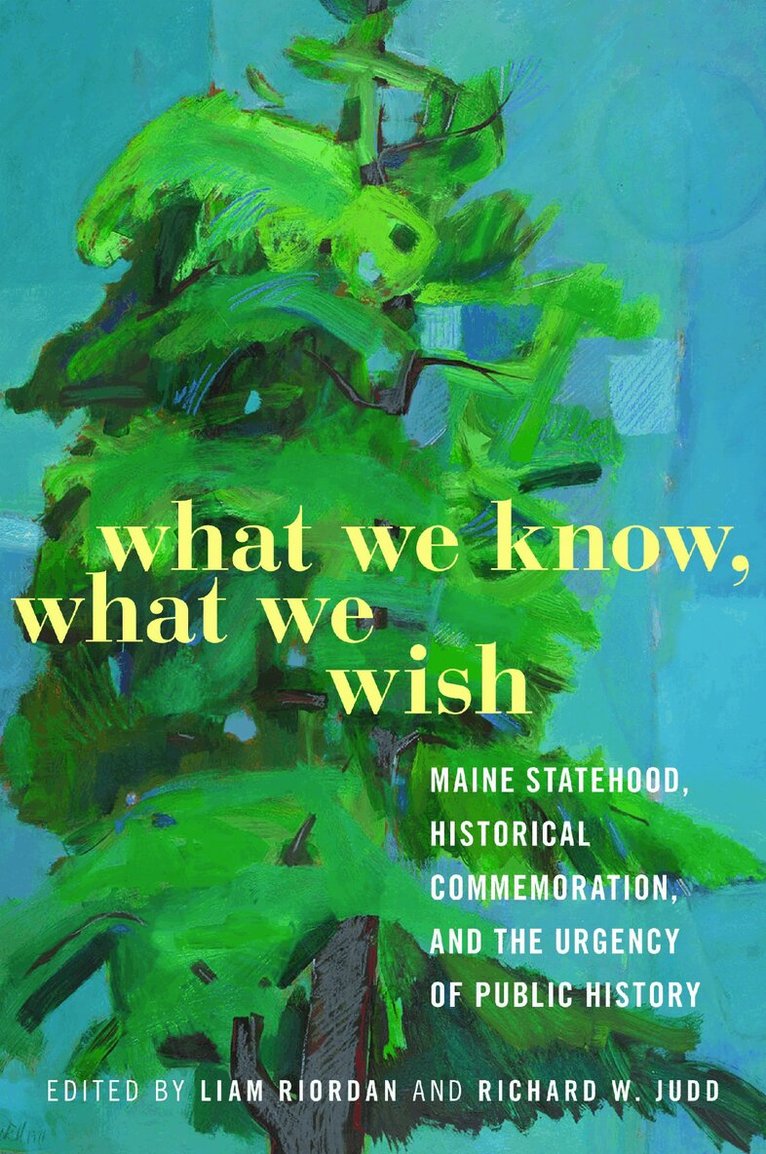
What We Know, What We Wish
Maine Statehood, Historical Commemoration, and the Urgency of Public History
Inbunden, Engelska, 2025
1 182 kr
Skickas inom 11-20 vardagar
Cities, states, and nations are grappling with how best to commemorate historical events and anniversaries in ways that are fair, accurate, and open public dialogue about the often contested past. This volume springs from varied approaches to the historical commemoration of Maine’s state bicentennial in 2020 that involved academics, independent scholars, local and statewide cultural organizations, sovereign Wabanaki nations, and the state itself in the form of the Maine State Bicentennial Commission. While wide-ranging in their goals and values, all sought to take advantage of opportunities for collaboration to contribute to a dynamic and multi-faceted practice of public history. These new essays use Maine’s bicentennial as a focal point to put public history theory into action. Its diverse contributors share stories about the past that move beyond celebration to reflect crucial ways that the past shapes our understanding of the present and our aspirations for the future.This volume’s core argument is that academics need to collaborate more fully with independent scholars, history-based cultural institutions, and the general public in order for public history to thrive and to improve the quality of civic life. What We Know, What We Wish does this through wide ranging essays that discuss the long statehood era in Maine from the 1770s to 1820s as well as its legacies in the state centennial commemoration of 1920 and museum exhibits from the 2020 bicentennial. The occupational and cultural diversity of the collection’s contributors together with the content of their essays offer a model for how to put public history principles into practice to foreground meaningful historical reflection that is urgently needed in divided communities around the world.Contributors include the volume editors, as well as Maulian Bryant, Osihkiyol (Zeke) Crofton-Macdonald, Charles H. Lagerbom, Ryan LaRochelle, Stuart Kestenbaum, Michael McVaugh, Kevin D. Murphy, Micah A. Pawling, Jessica Skwire Routhier, Donald Soctomah, Laura Fecych Sprague, Alan Taylor, and Laurel Thatcher Ulrich.
387 kr
Tillfälligt slut
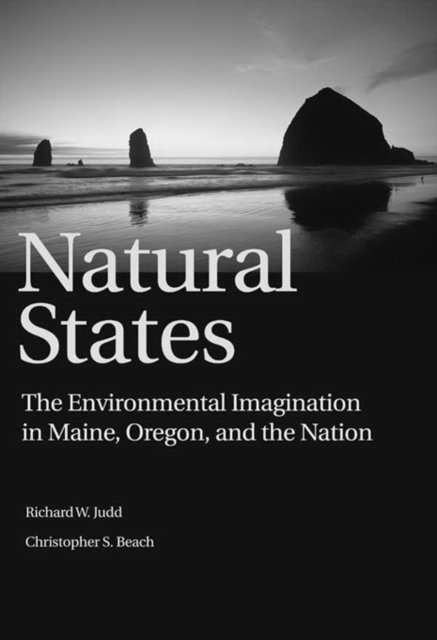
Richard Judd and Christopher Beach define the environmental imagination as the attempt to secure 'a sense of freedom, permanence, and authenticity through communion with nature.' The desire for this connection is based on ideals about nature, wilderness, and the livable landscape that are personal, variable, and often contradictory. Judd and Beach are interested in the public expression of these ideals in post-World War II environmental politics. Arguing that the best way to study the relationship between popular values and politics is through local and regional records, they focus on Maine and Oregon, states both rich in natural beauty and environmentalist traditions, but distinct in their postwar economic growth. Natural States reconstructs the environmental imagination from public commentary, legislative records, and other documents. Judd and Beach trace important divisions within the environmental movement, noting that they were balanced by a consistent, civic-minded vision of environmental goods shared by all. They demonstrate how tensions from competing ideals sustained the movement, contributed to its successes, but also limited its achievements. In the process, they offer insight into the character of the broader environmental movement as it emerged from the interplay of local, state, and national politics. The study ends in the 1970s when spectacular legislative achievements at the national level were masking a decline in mainstream civic engagement in state politics. The authors note the rise of the private ecotopia and the increasing complexity in the way Americans viewed their connections with the natural world. Yet, today, despite wide variations in beliefs and lifestyles, a majority of Americans still consider themselves to be environmentalists. In Natural States, environmental politics emerges less as a conflict between people who do and do not value nature, and more as a debate about the way people define and then chose to live with nature. In their attempt to place the passion for nature within a changing political and cultural context, Judd and Beach shed light on the ways that ideals unify and divide the environmental movement and act as the source of its enduring popularity.