Rita Abrahamsen - Böcker
Visar alla böcker från författaren Rita Abrahamsen. Handla med fri frakt och snabb leverans.
11 produkter
11 produkter
297 kr
Skickas inom 7-10 vardagar
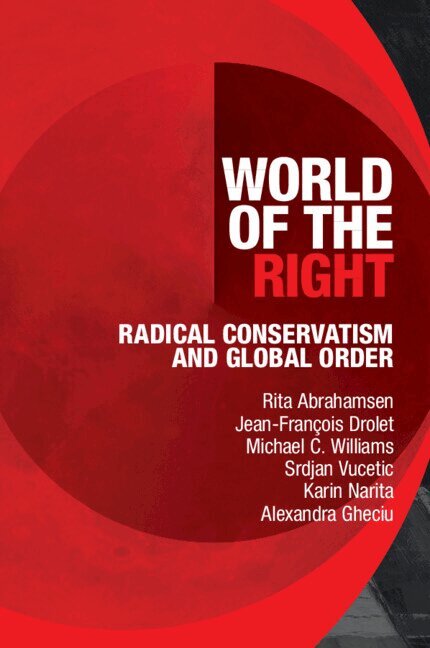
The contemporary radical Right is not merely a series of nationalist projects but a global phenomenon. This book shows how radical conservative thinkers have developed long-term counter-hegemonic strategies that challenge prevailing social and political orders both nationally and internationally. At the heart of this ideological project is a critique of liberal globalisation that seeks to mobilise transversal alliances against a common enemy: the 'New Class' of global managerial elites who are accused of undermining national sovereignty, traditional values, and cultures. 'World of the Right' argues that while the radical Right is far from a unified political movement, its calls for sovereignty, civilisational orders, and multipolarity enable complex, strategic convergences with illiberal states such as China and Russia, as well as states and people in the Global South. The potential consequences for the future of the liberal world order are profound and wide-ranging.
3 280 kr
Skickas inom 10-15 vardagar
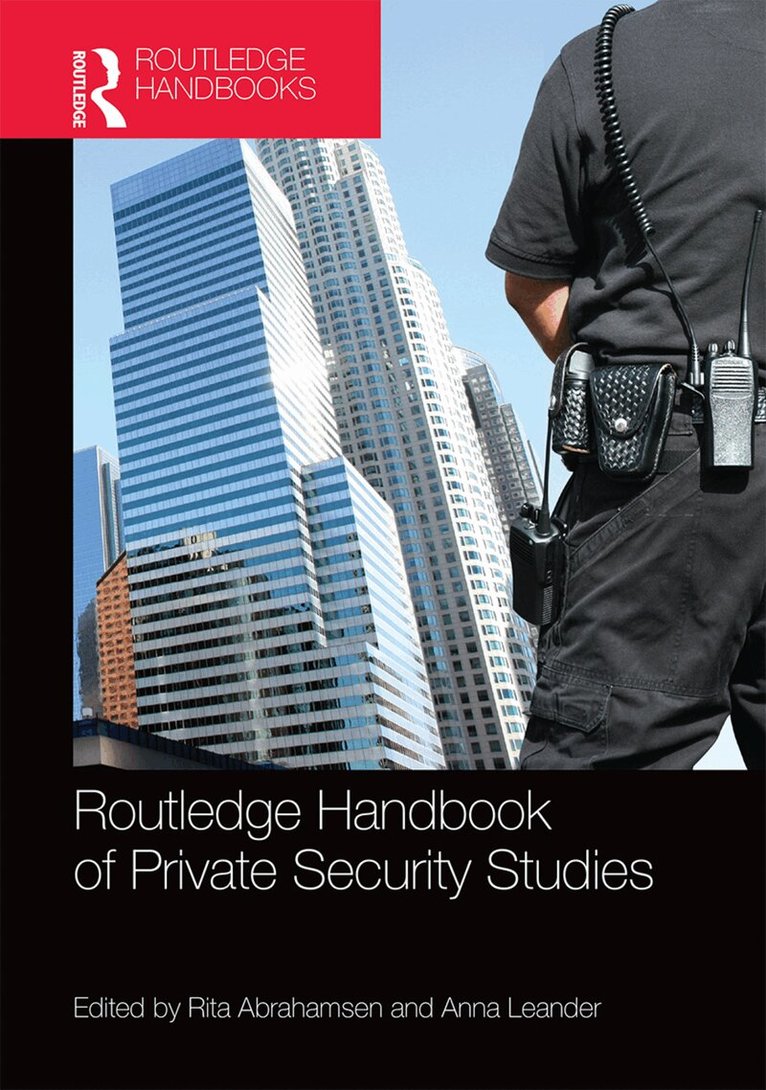
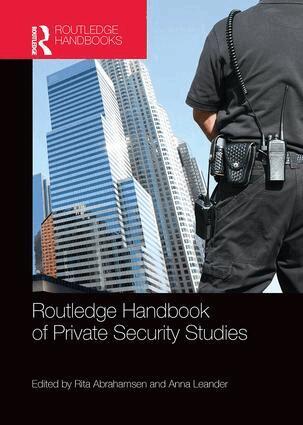
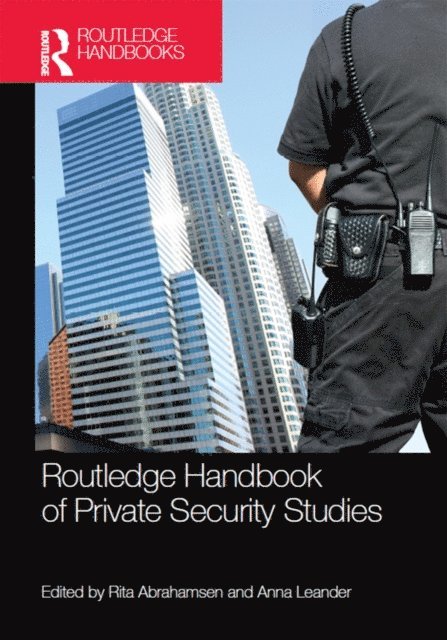
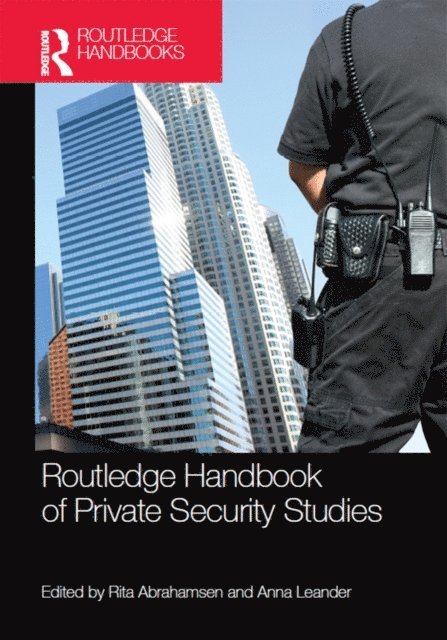
This new Handbook offers a comprehensive overview of current research on private security and military companies, comprising essays by leading scholars from around the world.The increasing privatization of security across the globe has been the subject of much debate and controversy, inciting fears of private warfare and even the collapse of the state. This volume provides the first comprehensive overview of the range of issues raised by contemporary security privatization, offering both a survey of the numerous roles performed by private actors and an analysis of their implications and effects. Ranging from the mundane to the spectacular, from secretive intelligence gathering and neighbourhood surveillance to piracy control and warfare, this Handbook shows how private actors are involved in both domestic and international security provision and governance. It places this involvement in historical perspective, and demonstrates how the impact of security privatization goes well beyond the security field to influence diverse social, economic and political relationships and institutions. Finally, this volume analyses the evolving regulation of the global private security sector. Seeking to overcome the disciplinary boundaries that have plagued the study of private security, the Handbook promotes an interdisciplinary approach and contains contributions from a range of disciplines, including international relations, politics, criminology, law, sociology, geography and anthropology.This book will be of much interest to students of private security companies, global governance, military studies, security studies and IR in general.
347 kr
Skickas inom 7-10 vardagar
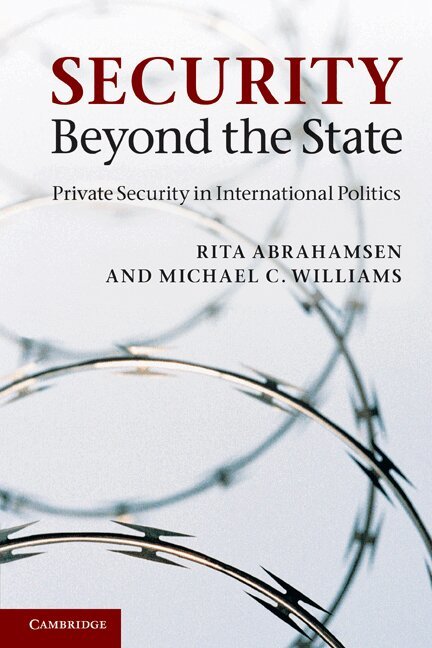
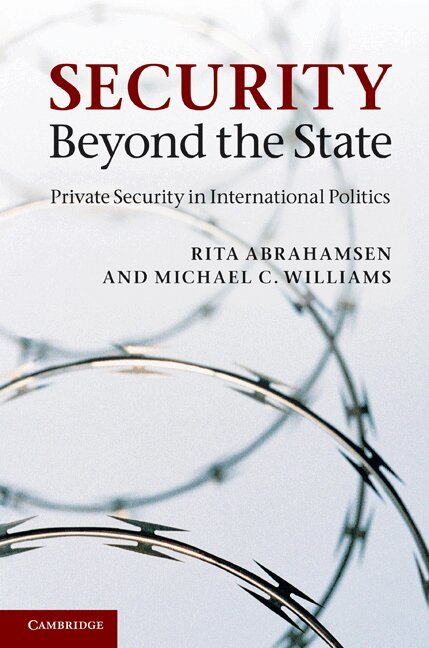
Across the globe, from mega-cities to isolated resource enclaves, the provision and governance of security takes place within assemblages that are de-territorialized in terms of actors, technologies, norms and discourses. They are embedded in a complex transnational architecture, defying conventional distinctions between public and private, global and local. Drawing on theories of globalization and late modernity, along with insights from criminology, political science and sociology, Security Beyond the State maps the emergence of the global private security sector and develops a novel analytical framework for understanding these global security assemblages. Through in-depth examinations of four African countries - Kenya, Nigeria, Sierra Leone and South Africa - it demonstrates how global security assemblages affect the distribution of social power, the dynamics of state stability, and the operations of the international political economy, with significant implications for who gets secured and how in a global era.
995 kr
Skickas inom 7-10 vardagar
Across the globe, from mega-cities to isolated resource enclaves, the provision and governance of security takes place within assemblages that are de-territorialized in terms of actors, technologies, norms and discourses. They are embedded in a complex transnational architecture, defying conventional distinctions between public and private, global and local. Drawing on theories of globalization and late modernity, along with insights from criminology, political science and sociology, Security Beyond the State maps the emergence of the global private security sector and develops a novel analytical framework for understanding these global security assemblages. Through in-depth examinations of four African countries - Kenya, Nigeria, Sierra Leone and South Africa - it demonstrates how global security assemblages affect the distribution of social power, the dynamics of state stability, and the operations of the international political economy, with significant implications for who gets secured and how in a global era.
780 kr
Skickas inom 10-15 vardagar
This new Handbook offers a comprehensive overview of current research on private security and military companies, comprising essays by leading scholars from around the world.The increasing privatization of security across the globe has been the subject of much debate and controversy, inciting fears of private warfare and even the collapse of the state. This volume provides the first comprehensive overview of the range of issues raised by contemporary security privatization, offering both a survey of the numerous roles performed by private actors and an analysis of their implications and effects. Ranging from the mundane to the spectacular, from secretive intelligence gathering and neighbourhood surveillance to piracy control and warfare, this Handbook shows how private actors are involved in both domestic and international security provision and governance. It places this involvement in historical perspective, and demonstrates how the impact of security privatization goes well beyond the security field to influence diverse social, economic and political relationships and institutions. Finally, this volume analyses the evolving regulation of the global private security sector. Seeking to overcome the disciplinary boundaries that have plagued the study of private security, the Handbook promotes an interdisciplinary approach and contains contributions from a range of disciplines, including international relations, politics, criminology, law, sociology, geography and anthropology.This book will be of much interest to students of private security companies, global governance, military studies, security studies and IR in general.
929 kr
Skickas inom 7-10 vardagar
The contemporary radical Right is not merely a series of nationalist projects but a global phenomenon. This book shows how radical conservative thinkers have developed long-term counter-hegemonic strategies that challenge prevailing social and political orders both nationally and internationally. At the heart of this ideological project is a critique of liberal globalisation that seeks to mobilise transversal alliances against a common enemy: the 'New Class' of global managerial elites who are accused of undermining national sovereignty, traditional values, and cultures. 'World of the Right' argues that while the radical Right is far from a unified political movement, its calls for sovereignty, civilisational orders, and multipolarity enable complex, strategic convergences with illiberal states such as China and Russia, as well as states and people in the Global South. The potential consequences for the future of the liberal world order are profound and wide-ranging.
1 091 kr
Kommande
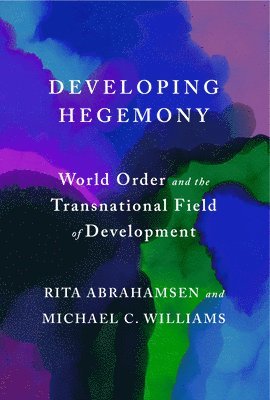
At a time of multiple challenges to the liberal international order, development has become one of the most contentious areas of world politics. Dominant powers have reduced their assistance and overtly fused development with national and security interests, while rising powers like China have become major donors promoting new models and norms. Advancing an innovative Bourdieusian-inspired analysis of global politics as interaction between transnational fields, this book places development in the context of contemporary transformations in world order. It traces the history of development as a field of struggle from 1945 to the present, and argues that development is central to the emergence, maintenance, and transformation of world order. The authors show how the global field of development is characterized by a specific form of interest – an interest in disinterest – that performs the social alchemy of converting economic and military power into the symbolic power that is crucial for international hegemony. In the current geopolitical context, the ability of development to produce this symbolic power is dissolving and transforming, making the field one of the crucial sites where attempts to build an alternative global order are emerging and will be historically tested.
246 kr
Kommande
At a time of multiple challenges to the liberal international order, development has become one of the most contentious areas of world politics. Dominant powers have reduced their assistance and overtly fused development with national and security interests, while rising powers like China have become major donors promoting new models and norms. Advancing an innovative Bourdieusian-inspired analysis of global politics as interaction between transnational fields, this book places development in the context of contemporary transformations in world order. It traces the history of development as a field of struggle from 1945 to the present, and argues that development is central to the emergence, maintenance, and transformation of world order. The authors show how the global field of development is characterized by a specific form of interest – an interest in disinterest – that performs the social alchemy of converting economic and military power into the symbolic power that is crucial for international hegemony. In the current geopolitical context, the ability of development to produce this symbolic power is dissolving and transforming, making the field one of the crucial sites where attempts to build an alternative global order are emerging and will be historically tested.
290 kr
Skickas inom 7-10 vardagar
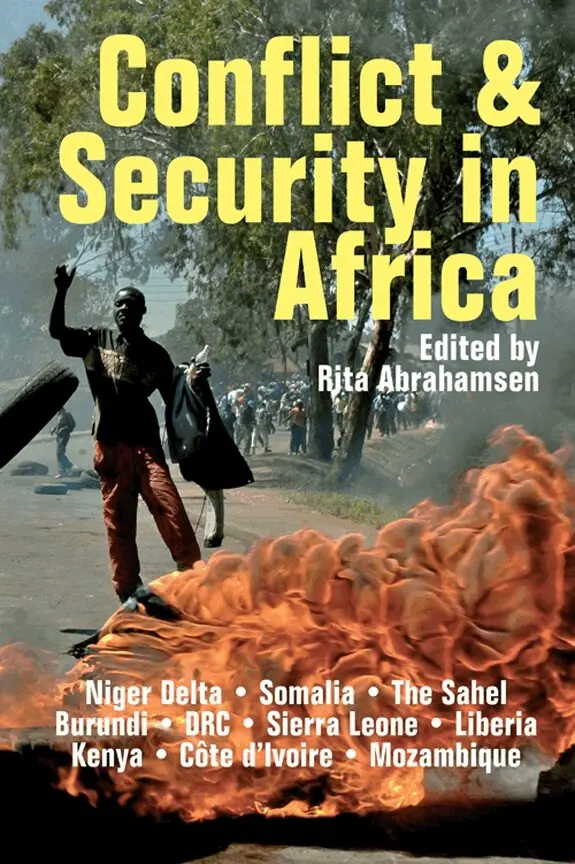
Spanning the period from the cold war to the 'war on terror', examines the political economy dynamics of security and insecurity on the continent, as well as its implications for political actions.More than any other part of the globe, Africa has become associated with conflict, insecurity and human rights atrocities. In the popular imagination and the media, overpopulation, environmental degradation and ethnic hatred dominate accounts of African violence, while in academic and policy-making circles, conflict and insecurity have also come to occupy centre stage, with resource-hungry warlords and notions of 'greed' and 'grievance' playing key explanatory roles. Since the attacks of 9/11, there has also been mounting concern that the continent's so-called 'ungoverned spaces' will provide safe havens for terrorists intent on destroying Western civilization. The Review of African Political Economy has engaged extensively with issues of conflict and security, both analysing on-going conflicts and often challenging predominant modes of explanation and interpretation. This Review of African Political Economy Reader provides a timely, comprehensive and critical contribution to contemporary debates about conflict and security on the continent. The first section, covers some of the continent's main post-Cold War conflicts and demonstrates their global connections. The articles also discuss the so-called 'resource curse', as well as the global arms trade, and reveal the complexities of the relationship between the economic and the political. The second section focuses on security as part of post-Cold War global governance, and discusses the effects of liberal peace-building as well as the link between development assistance and the 'war on terror'. The final section examines life as it continues in conditions of war and shows how insecurity reconfigures urban space, transforms social order, identities and authority.Rita Abrahamsen is Professor in the Graduate School of Publicand International Affairs, University of Ottawa, CanadaPublished in association with ROAPEROAPE African ReadersSeries Editors: Tunde Zack-Williams & Ray Bush
488 kr
Skickas inom 10-15 vardagar
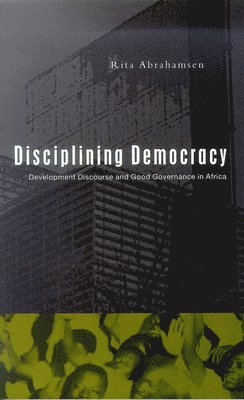
Not very long ago, authoritarian forms of government were widely regarded as necessary for rapid economic growth and development, and Western donors supported dictatorial regimes in every continent. Today the political mantra is democracy, and the World Bank and Western donors require it almost as a condition of assistance. This thought-provoking book argues not simply that the West's good governance agenda came into being with the demise of the Soviet Union. Much more importantly, it shows how this agenda comprises only very superficial democratic institutional forms that are compatible with continued structural adjustment. African governments, in particular, remain in a cleft stick - supposedly responsible to their electorates at home, in fact beholden to external creditors and donors. The result is the creation of fragile democracies unable to respond to the demands of the poor - who are in the great majority - for socio-economic improvements, and where the requirements of external actors frequently overrule the wishes of domestic constituencies.Using the example of the good governance discourse, Rita Abrahamsen contributes powerfully to our understanding of development, not as some universally valid set of goals or procedures, but as a historically contingent form of knowledge intimately connected to prevailing structures and relations of power. Her book argues that a key effect of contemporary development discourse, despite all its proclamations in favour of democracy, is to help reproduce a world order that is essentially undemocratic.
148 kr
Skickas inom 5-8 vardagar
Vad är utveckling? Samhällets syn på utveckling förändras. Under senare år har bistånds- och utvecklingspolitiken alltmer kommit att präglas av marknadslösningar. Samtidigt ifrågasätts den dominerande uppfattningen om vad utveckling syftar till. I skuggan av klimatkrisen menar många att den ständiga jakten på ekonomisk tillväxt är långsiktigt ohållbar. Den postkoloniala kritiken pekar på dominansförhållanden som fortfarande präglar förhållandet mellan den rika och den fattiga världen. I Fronesis nr 38–39 undersöks utvecklingstankens idéhistoriska bakgrund, dagspolitiska bärkraft och utsikter inför framtiden. Vad skapar utveckling? Vad beror skillnader i utvecklingsnivå på? Vilka kommer utvecklingen till del? Och vem bestämmer över dess former? Några av numrets texter belyser bistånds- och utvecklingspolitikens förändringar både i Sverige och i den rika världen överlag. I en text av utvecklingsforskaren Mark Duffield diskuteras hur den rika världens säkerhet inte bara kommit att bli det övergripande målet för handels- och migrationspolitiken, utan även för biståndspolitiken. Ekonomen Omar Dahi menar i sin text att »den arabiska våren« inte bara var en protest mot regionens diktatorer, utan även mot det marknadsinriktade utvecklingsparadigm som globala institutioner pådyvlat länderna. Nationalekonomen Serge Latouche diskuterar begreppet »nedväxt« (på franska décroissance, på engelska degrowth) och menar att vi måste överge ekonomisk tillväxt som självklar och legitim politisk målsättning för att i stället finna andra måttstockar för välfärd och välbefinnande. Innehåll i Fronesis nr 38-39 (244 sidor) Redaktionen: Den ifrågasatta utvecklingen Hans Abrahamsson och Ann-Marie Ekengren: Svensk politik för global utveckling Hans Abrahamsson: Utvecklingsbegreppet inför sin pånyttfödelse Sofie Tornhill: Tid och otid Walter D. Mignolo och Madina Tlostanova: Kolonialitetens logik och postkolonialitetens gränser Manuela Boatca: De många icke-väst Sara Kalm: Liberala utvecklingspraktiker Rita Abrahamsen: Partnerskap och makt i den globala styrningen Mark Duffield: Globalt inbördeskrig Christine Keating, Claire Rasmussen och Pooja Rishi: Egenmaktens rationalitet Roger Hildingsson och Rickard Andersson: En (annan) hållbar utveckling Serge Latouche: Nedväxt Arturo Escobar: Hållbarhet Sam Carlshamre: Utveckling och islamism Omar Dahi: Den arabiska vårens politiska ekonomi