Robert Boncardo - Böcker
Visar alla böcker från författaren Robert Boncardo. Handla med fri frakt och snabb leverans.
8 produkter
8 produkter
2 488 kr
Skickas inom 3-6 vardagar
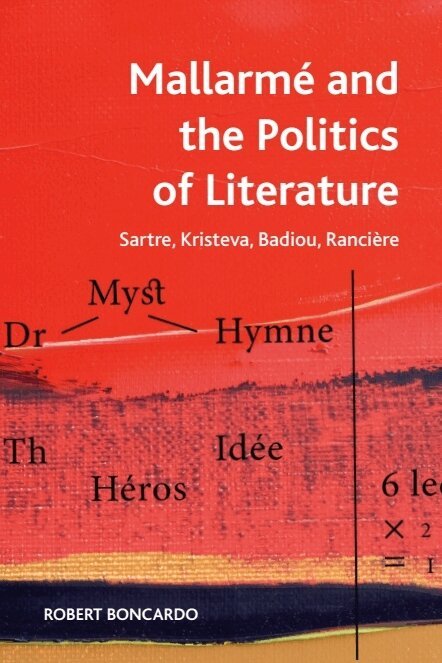
Recounts the radical readings of Mallarme's seminal poems by some of France's most important 20th century thinkersWhy is Stephane Mallarme, one of modernity's most ingenious yet obscure poets, so important to French philosophers? With in-depth studies of Jean-Paul Sartre, Julia Kristeva, Alain Badiou and Jacques Ranciere, along with shorter analyses of Jean-Claude Milner and Quentin Meillassoux, Boncardo situates Mallarme within these thinkers' philosophical and political projects.Key FeaturesExplains different thinkers' distinct approaches to Mallarme's poetry and prose, in particular to their political significanceReflects on the various ways literature has been conceived of politically by French thinkersThe first work of English-language scholarship on each of these thinker's reading of Mallarme and the first work to read each of these thinkers in tandem, locating their points of contact and difference
571 kr
Skickas inom 3-6 vardagar
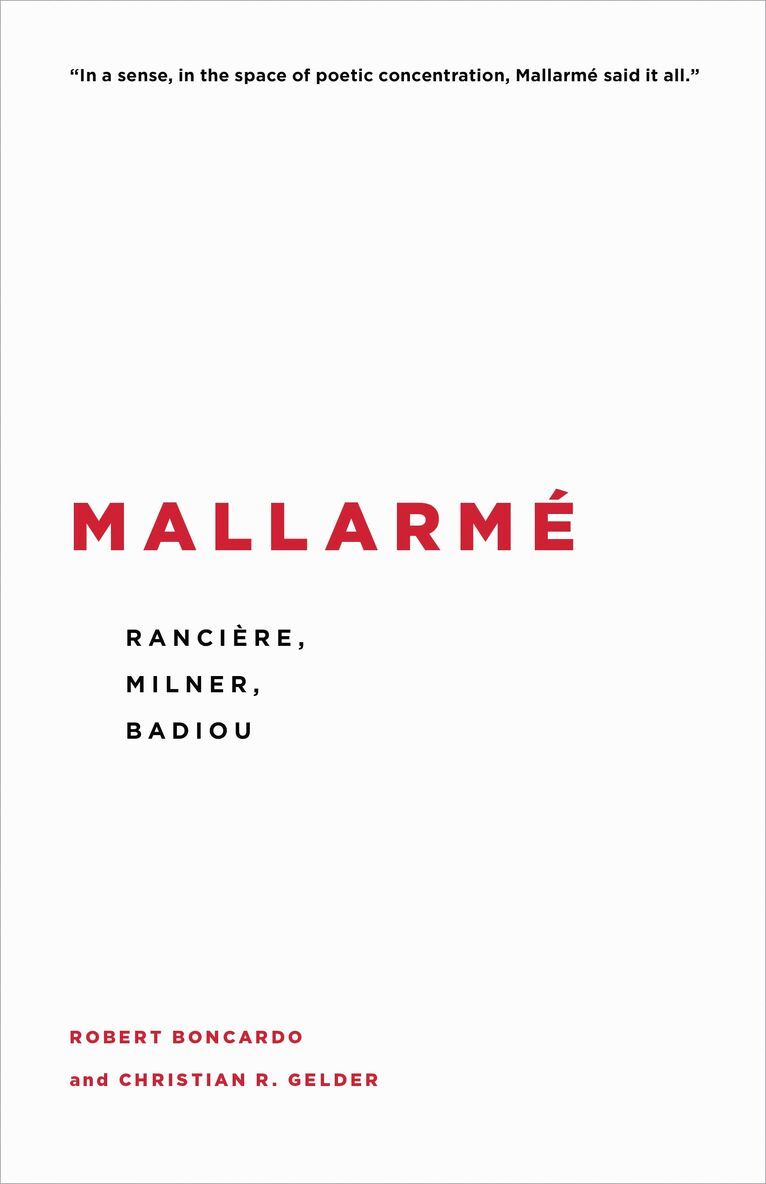
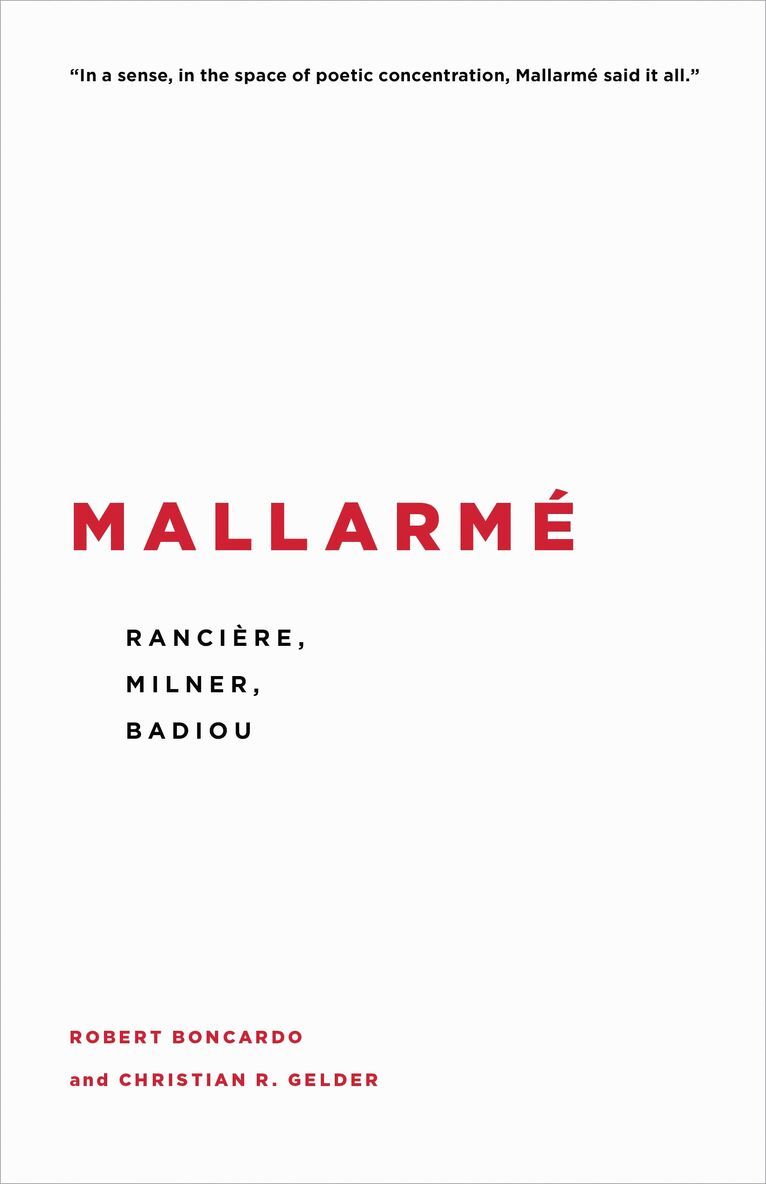
Robert Boncardo investigates how Stéphane Mallarmé, one of modernity’s most ingenious yet obscure poets, became an object of major political significance for French intellectuals. He asks how this most refined and seemingly aristocratic of poets became the writer of choice for leftist intellectuals and reflects on the ambivalent relation between literature and its political destiny in modernity. With in-depth studies of Jean-Paul Sartre, Julia Kristeva, Alain Badiou and Jacques Rancière, along with shorter analyses of Jean-Claude Milner and Quentin Meillassoux, he situates Mallarmé within the philosophical and political projects of some of France’s greatest thinkers.
3 553 kr
Skickas inom 3-6 vardagar
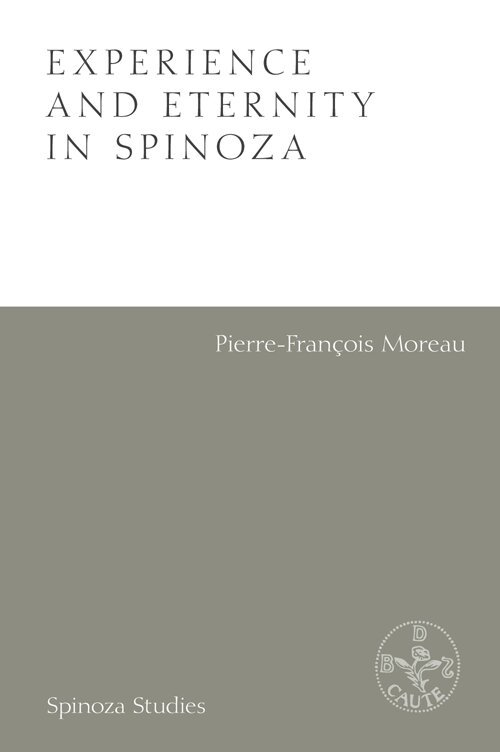
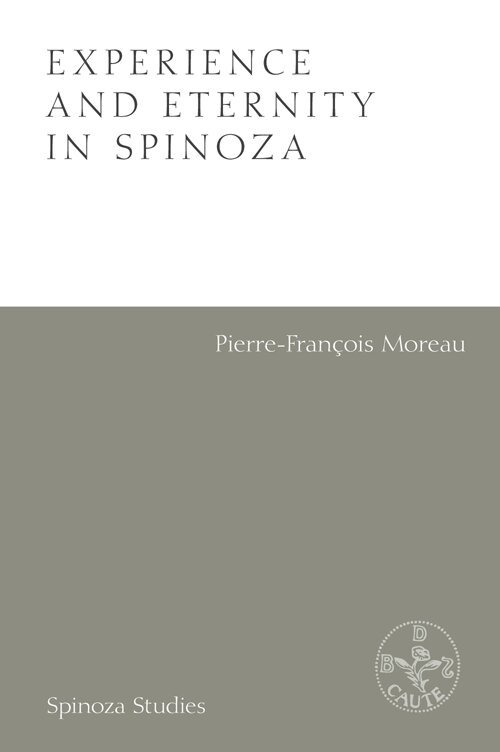
Through a detailed study of Spinoza’s concept of ‘experience’, Moreau shows how Spinoza extends the power of reason to domains frequently seen as irrational, from common life to history, language to the passions. Where previously Spinoza’s thought was identified exclusively with the geometrical method, Moreau demonstrates that by mobilising his unique account of ‘experience’, Spinoza is able to capture the singularity of individuals, their lives, languages, passions and societies. With readings of each of Spinoza’s most famous works, from the Treatise on the Emendation of the Intellect to the Ethics, and also minor writings such as the Hebrew Grammar, Moreau renews our understanding of Spinoza’s philosophy by showing us how his geometrical and experiential methods operate simultaneously. Finally, this new vision of Spinoza’s philosophy illuminates the enigmatic experience of eternity mentioned in Book V of Spinoza’s Ethics.
705 kr
Skickas inom 3-6 vardagar
The first English-language translation of Pierre-Fran ois Moreau's seminal study, which fundamentally transforms our inherited understanding of Spinoza's philosophyPresents a systematic reappraisal of Spinoza's philosophical system around the enigmatic concept of experienceDemonstrates how Spinoza's concept of experience is essential to an understanding of the Ethics, including such crucial concepts as necessity, infinitude and eternityBridges the divide in contemporary scholarship between Spinoza the affect theorist and Spinoza the hyper-rationalistWhat could it mean to feel eternal? Through a detailed study of Spinoza's concept of 'experience', Moreau shows how Spinoza extends the power of reason to domains frequently seen as irrational, from common life to history, language to the passions. Where previously Spinoza's thought was identified exclusively with the geometrical method, Moreau demonstrates that by mobilising his unique account of 'experience', Spinoza is able to capture the singularity of individuals, their lives, languages, passions and societies. With readings of each of Spinoza's most famous works, from the Treatise on the Emendation of the Intellect to the Ethics, but also unprecedented studies of minor writings such as the Hebrew Grammar, Moreau renews our understanding of Spinoza's philosophy by showing us how his geometrical and experiential methods operate simultaneously. Finally, this new vision of Spinoza's philosophy illuminates the enigmatic experience of eternity mentioned in Book V of Spinoza's Ethics.
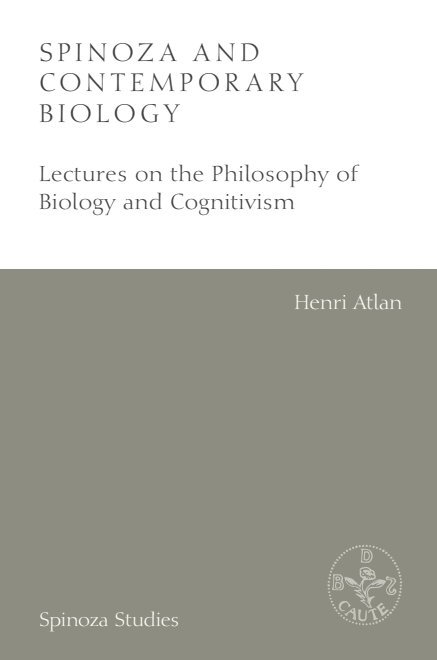
Spinoza and Contemporary Biology
Lectures on the Philosophy of Biology and Cognitivism
Inbunden, Engelska, 2024
2 858 kr
Skickas inom 3-6 vardagar
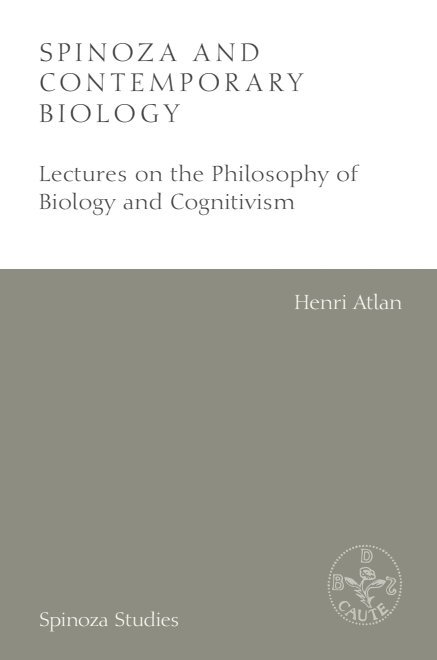
Published in France in 2018, Henri Atlan's book Cours de philosophie biologique et cognitiviste: Spinoza et la biologie actuelle (Odile Jacob, 2018) represents a turning point in Spinoza's interpretations of contemporary life sciences. Henri Atlan is the first in this field of research, of applied epistemology and ontology, to effectively address contemporary questions in biology and cognitive sciences. Atlan presents us with a genuine understanding of Spinoza's monism, which is neither materialistic nor idealistic, and with an expertise in contemporary life sciences that will open an entire new field of research in Spinoza scholarship as well as in philosophy of sciences. Readers will better understand the connection between Spinoza's Ethics, his ontology and epistemology, and modern life sciences, allowing us to rethink the relationship between ethics and modern sciences.
Spinoza and Contemporary Biology
Lectures on the Philosophy of Biology and Cognitivism
Häftad, Engelska, 2026
356 kr
Kommande
Published in France in 2018, Henri Atlan’s book Cours de philosophie biologique et cognitiviste: Spinoza et la biologie actuelle (Odile Jacob, 2018) represents a turning point in Spinoza’s interpretations of contemporary life sciences. Henri Atlan is the first in this field of research, of applied epistemology and ontology, to effectively address contemporary questions in biology and cognitive sciences. Atlan presents us with a genuine understanding of Spinoza’s monism, which is neither materialistic nor idealistic, and with an expertise in contemporary life sciences that will open an entire new field of research in Spinoza scholarship as well as in philosophy of sciences. Readers will better understand the connection between Spinoza’s Ethics, his ontology and epistemology, and modern life sciences, allowing us to rethink the relationship between ethics and modern sciences.
1 467 kr
Skickas inom 10-15 vardagar
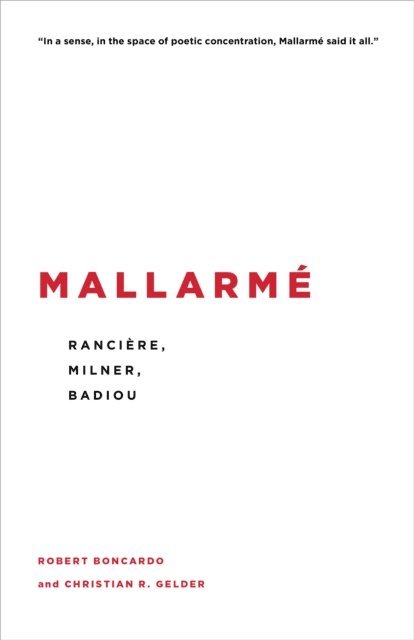
From the post-War writings of Sartre and Blanchot to the post-structuralism of Jacques Derrida and Julia Kristeva, French philosophers have consistently debated the poetry of Stéphane Mallarmé, almost as a rite of passage. Alain Badiou, Jean-Claude Milner and Jacques Rancière — three of the most important philosophers alive today — are no exception, having written extensively about the poet since the 1960’s and 70’s up until today. This book contains a series of interviews with these three figures on Mallarmé, as well as an extended introduction that places their thought on literature into dialogue. Speaking about their personal and philosophical relationships with each other, on methods of reading, on poetry and politics, and poetry and mathematics, each philosopher reflects on their life-long engagement with Mallarmé, as well as on the different, often incommensurable, images of the poet their philosophies have generated. As Rancière, Milner and Badiou point to the past importance and future directions Mallarmé gives to thought, these interviews lend credence to Barthes’ remark that “all we can do is repeat Mallarmé – and it is good that we do so”.
561 kr
Skickas inom 10-15 vardagar
From the post-War writings of Sartre and Blanchot to the post-structuralism of Jacques Derrida and Julia Kristeva, French philosophers have consistently debated the poetry of Stéphane Mallarmé, almost as a rite of passage. Alain Badiou, Jean-Claude Milner and Jacques Rancière — three of the most important philosophers alive today — are no exception, having written extensively about the poet since the 1960’s and 70’s up until today. This book contains a series of interviews with these three figures on Mallarmé, as well as an extended introduction that places their thought on literature into dialogue. Speaking about their personal and philosophical relationships with each other, on methods of reading, on poetry and politics, and poetry and mathematics, each philosopher reflects on their life-long engagement with Mallarmé, as well as on the different, often incommensurable, images of the poet their philosophies have generated. As Rancière, Milner and Badiou point to the past importance and future directions Mallarmé gives to thought, these interviews lend credence to Barthes’ remark that “all we can do is repeat Mallarmé – and it is good that we do so”.