Henri Atlan - Böcker
Visar alla böcker från författaren Henri Atlan. Handla med fri frakt och snabb leverans.
12 produkter
12 produkter
385 kr
Skickas inom 7-10 vardagar
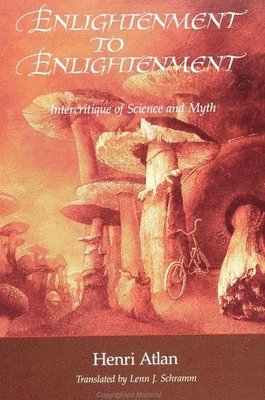
This book is a thorough and critical, comparative analysis of the logic of modern scientific thought and of traditional teachings generally referred to as mythological and mystical.Different rationalities with different domains of interest and legitimacy exist, which should not be confused and cannot be unified in any theory of "Ultimate Reality." Atlan suggests they must coexist in practice, although each of them presents itself as an exclusive and all-encompassing truth. The book introduces teachings from Jewish talmudic, midrashic, and kabbalist sources and text from Zen and Taoism to exemplify the kind of rationality or controlled irrationality at work in such traditional thinking.
323 kr
Skickas inom 7-10 vardagar
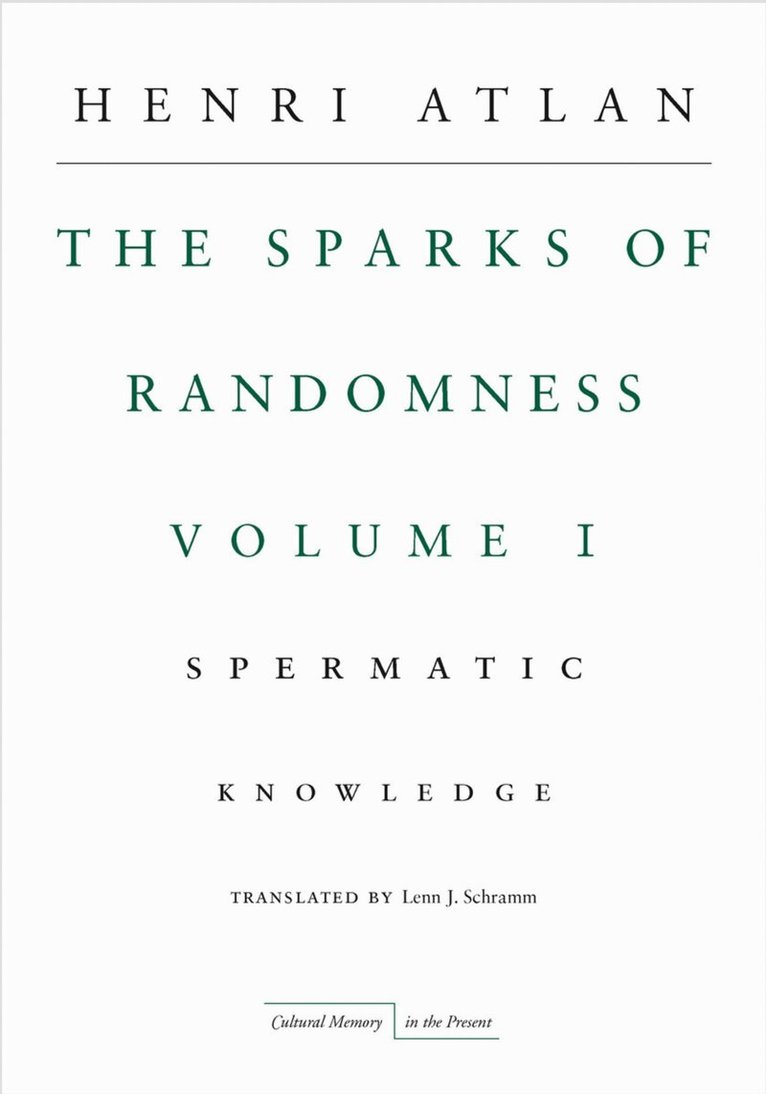
The Sparks of Randomness, Henri Atlan's magnum opus, develops his whole philosophy with a highly impressive display of knowledge, wisdom, depth, rigor, and intellectual and moral vigor. Atlan founds an ethics adapted to the new power over life that modern scientific knowledge has given us. He holds that the results of science cannot ground any ethical or political truth whatsoever, while human creative activity and the conquest of knowledge are a double-edged sword. This first volume, Spermatic Knowledge, begins with the Talmudic tale about the prophet Jeremiah's creation of a golem, or artificial man. Atlan shows that the Jewish tradition does not demonize man for creating and changing living things—a charge often leveled at promoters of advanced technologies, like biologists, who are accused of "playing God." To the contrary, man is depicted as being the co-creator of the world.Although Atlan believes that the fabrication of life "from scratch" will take place in the near future, he posits that this achievement will not really amount to creating life current biology and biotechnologies have demonstrated that there is no absolute distinction between life and non-life, no critical threshold whose crossing would be taboo. He also debunks and demystifies our belief in free will and our conviction, of theological origin, that there would be no possibility for ethics if free will were shown to be an illusion. Throughout, he combines science, religion, and ancient and modern philosophy in unexpected and inspired ways. His radical, uncompromising Spinozism allows him to propose a complete revision of cognitive science and philosophy of mind, while showing that their current impasses stem from remnants of traditional dualism. From his brilliant reflections on time, he also derives exciting considerations for medicine and epidemiology.
1 466 kr
Skickas inom 7-10 vardagar
In this second volume of The Sparks of Randomness, Henri Atlan pursues his investigation of human life, which he grounds in a distinctive intermingling of the biological and cognitive sciences and traditions of Jewish thought. The Atheism of Scripture offers up a paradox: its audacious thesis is that the Word or revealed scripture can be better understood without God. It must be decrypted or analyzed atheistically, that is, not as divine revelation, but in and of itself. The first part of the book addresses contemporary science. It puts the evolution of ideas about life and knowledge as conceived by today's biological and cognitive sciences into perspective and shows how the genealogy of ethics must be approached in a new way. The second part takes up this challenge by putting classical philosophy in dialogue with the Talmud and the Kabbalah to advance a non-dualistic anthropology of the body and the mind.
362 kr
Skickas inom 7-10 vardagar
In this second volume of The Sparks of Randomness, Henri Atlan pursues his investigation of human life, which he grounds in a distinctive intermingling of the biological and cognitive sciences and traditions of Jewish thought. The Atheism of Scripture offers up a paradox: its audacious thesis is that the Word or revealed scripture can be better understood without God. It must be decrypted or analyzed atheistically, that is, not as divine revelation, but in and of itself. The first part of the book addresses contemporary science. It puts the evolution of ideas about life and knowledge as conceived by today's biological and cognitive sciences into perspective and shows how the genealogy of ethics must be approached in a new way. The second part takes up this challenge by putting classical philosophy in dialogue with the Talmud and the Kabbalah to advance a non-dualistic anthropology of the body and the mind.
1 375 kr
Skickas inom 7-10 vardagar
The Sparks of Randomness, Henri Atlan's magnum opus, develops his whole philosophy with a highly impressive display of knowledge, wisdom, depth, rigor, and intellectual and moral vigor. Atlan founds an ethics adapted to the new power over life that modern scientific knowledge has given us. He holds that the results of science cannot ground any ethical or political truth whatsoever, while human creative activity and the conquest of knowledge are a double-edged sword. This first volume, Spermatic Knowledge, begins with the Talmudic tale about the prophet Jeremiah's creation of a golem, or artificial man. Atlan shows that the Jewish tradition does not demonize man for creating and changing living things—a charge often leveled at promoters of advanced technologies, like biologists, who are accused of "playing God." To the contrary, man is depicted as being the co-creator of the world.Although Atlan believes that the fabrication of life "from scratch" will take place in the near future, he posits that this achievement will not really amount to creating life current biology and biotechnologies have demonstrated that there is no absolute distinction between life and non-life, no critical threshold whose crossing would be taboo. He also debunks and demystifies our belief in free will and our conviction, of theological origin, that there would be no possibility for ethics if free will were shown to be an illusion. Throughout, he combines science, religion, and ancient and modern philosophy in unexpected and inspired ways. His radical, uncompromising Spinozism allows him to propose a complete revision of cognitive science and philosophy of mind, while showing that their current impasses stem from remnants of traditional dualism. From his brilliant reflections on time, he also derives exciting considerations for medicine and epidemiology.
1 466 kr
Skickas inom 7-10 vardagar
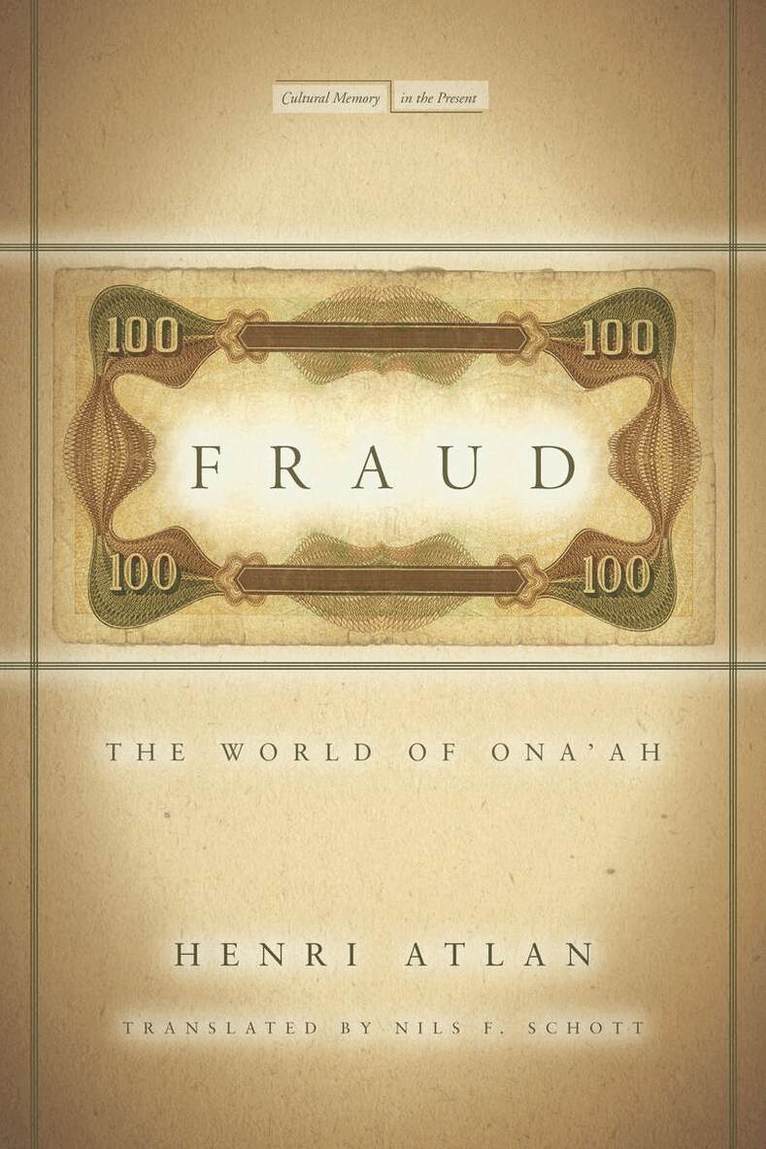
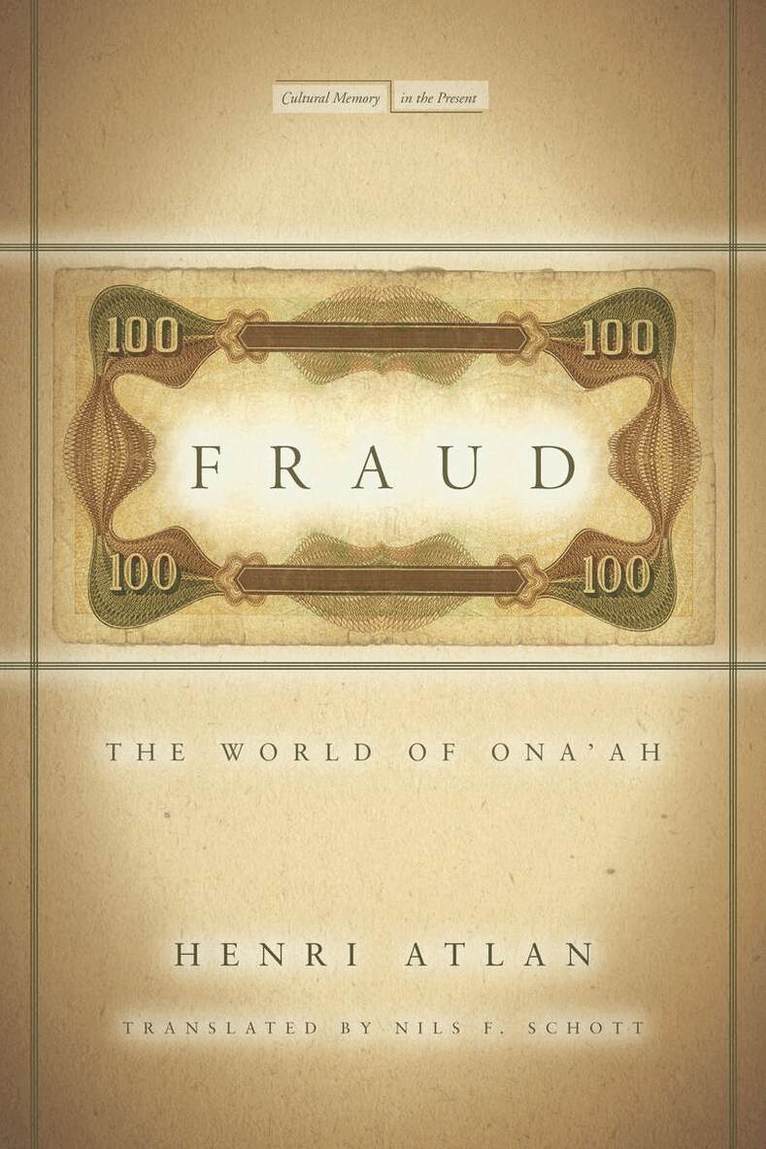
We can calculate financial fraud, but how do we measure bad faith? How can we evaluate the words of the pharmaceutical industry or of eco-scientific ideologies, or the subtle deception found in political scheming? Henri Atlan sheds light on these questions through the concept of ona'ah, which in Hebrew refers to both fraud in financial transactions and the verbal injury inflicted by speech. The world of ona'ah is a world of an "in-between," where the impossible purity of absolute Platonic truth gives way to a more relative notion—the near-theft, the quasi-lie. Today it seems that no discourse is safe from fraudulent excesses, be they intentional or no. As both philosopher and biologist, Atlan works on several registers. He forges links between the Talmud, the Kabbalah, and the big questions of our time, multiplying the bridges between science, philosophy, and current ethical dilemmas. In a context of financial and moral crises that appear to be weakening our democracies, Henri Atlan's work allows us to rethink the status of fraud in the contemporary world.
362 kr
Skickas inom 7-10 vardagar
We can calculate financial fraud, but how do we measure bad faith? How can we evaluate the words of the pharmaceutical industry or of eco-scientific ideologies, or the subtle deception found in political scheming? Henri Atlan sheds light on these questions through the concept of ona'ah, which in Hebrew refers to both fraud in financial transactions and the verbal injury inflicted by speech. The world of ona'ah is a world of an "in-between," where the impossible purity of absolute Platonic truth gives way to a more relative notion—the near-theft, the quasi-lie. Today it seems that no discourse is safe from fraudulent excesses, be they intentional or no. As both philosopher and biologist, Atlan works on several registers. He forges links between the Talmud, the Kabbalah, and the big questions of our time, multiplying the bridges between science, philosophy, and current ethical dilemmas. In a context of financial and moral crises that appear to be weakening our democracies, Henri Atlan's work allows us to rethink the status of fraud in the contemporary world.
509 kr
Skickas inom 7-10 vardagar
Best known for his pioneering work in theories of self-organization and complexity, the biophysicist and philosopher Henri Atlan has during the past thirty years been a major voice in contemporary European philosophical and bioethical debates. In a massive oeuvre that ranges from biology and neural network theory to Spinoza's thought and the history of philosophy, and from artificial intelligence and information theory to Jewish mysticism and contemporary medical ethics, Atlan has come to offer an exceptionally powerful philosophical argumentation that is as hostile to scientism as it is attentive to biology's conceptual and experimental rigor, as careful with concepts of rationality as it is committed to rethinking the human place in a radically determined yet forever changing world.This is the first volume to bring together the major strands of Atlan's work for an English-language audience. It is an indispensable compendium for those seeking to clarify the joint stakes and shared import of philosophy and science for questions of life and the living—today and tomorrow.
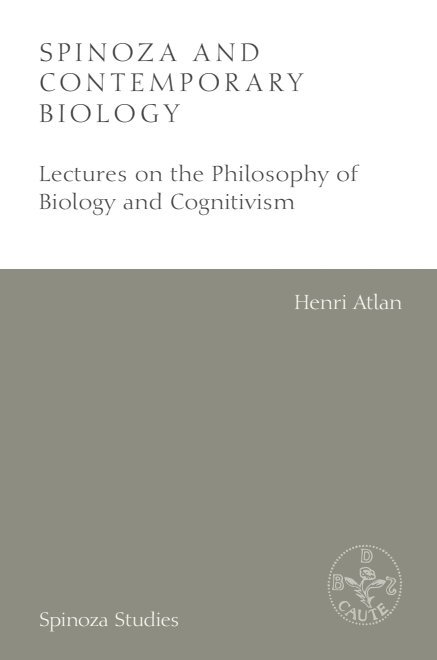
Spinoza and Contemporary Biology
Lectures on the Philosophy of Biology and Cognitivism
Inbunden, Engelska, 2024
2 858 kr
Skickas inom 3-6 vardagar
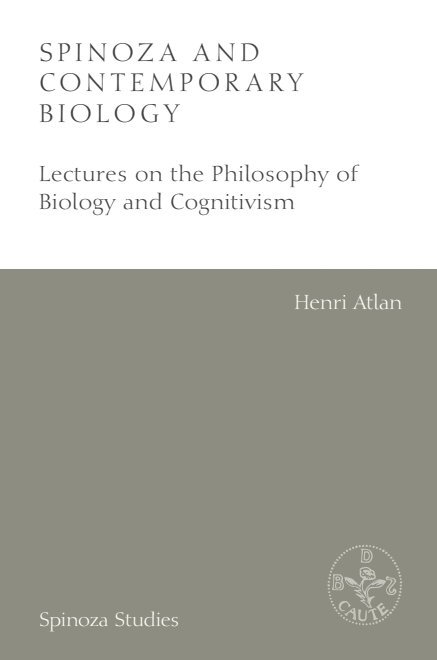
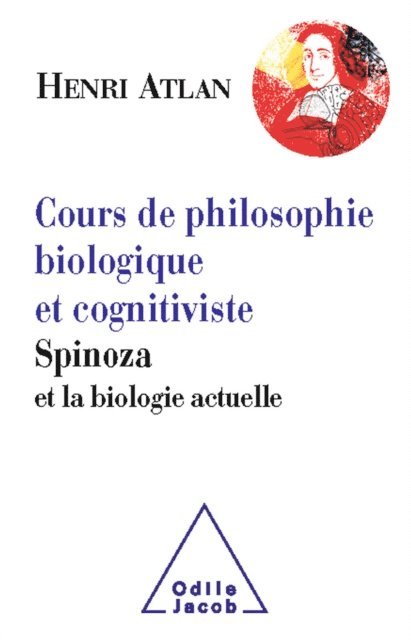
Published in France in 2018, Henri Atlan's book Cours de philosophie biologique et cognitiviste: Spinoza et la biologie actuelle (Odile Jacob, 2018) represents a turning point in Spinoza's interpretations of contemporary life sciences. Henri Atlan is the first in this field of research, of applied epistemology and ontology, to effectively address contemporary questions in biology and cognitive sciences. Atlan presents us with a genuine understanding of Spinoza's monism, which is neither materialistic nor idealistic, and with an expertise in contemporary life sciences that will open an entire new field of research in Spinoza scholarship as well as in philosophy of sciences. Readers will better understand the connection between Spinoza's Ethics, his ontology and epistemology, and modern life sciences, allowing us to rethink the relationship between ethics and modern sciences.
Spinoza and Contemporary Biology
Lectures on the Philosophy of Biology and Cognitivism
Häftad, Engelska, 2026
356 kr
Kommande
Published in France in 2018, Henri Atlan’s book Cours de philosophie biologique et cognitiviste: Spinoza et la biologie actuelle (Odile Jacob, 2018) represents a turning point in Spinoza’s interpretations of contemporary life sciences. Henri Atlan is the first in this field of research, of applied epistemology and ontology, to effectively address contemporary questions in biology and cognitive sciences. Atlan presents us with a genuine understanding of Spinoza’s monism, which is neither materialistic nor idealistic, and with an expertise in contemporary life sciences that will open an entire new field of research in Spinoza scholarship as well as in philosophy of sciences. Readers will better understand the connection between Spinoza’s Ethics, his ontology and epistemology, and modern life sciences, allowing us to rethink the relationship between ethics and modern sciences.
527 kr
Skickas inom 3-6 vardagar
1 095 kr
Skickas inom 10-15 vardagar
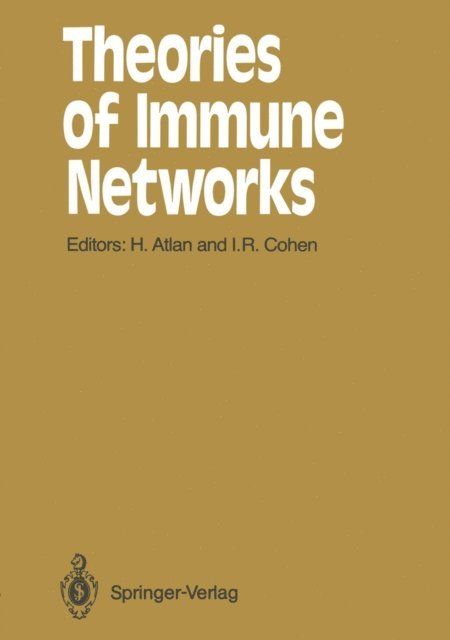
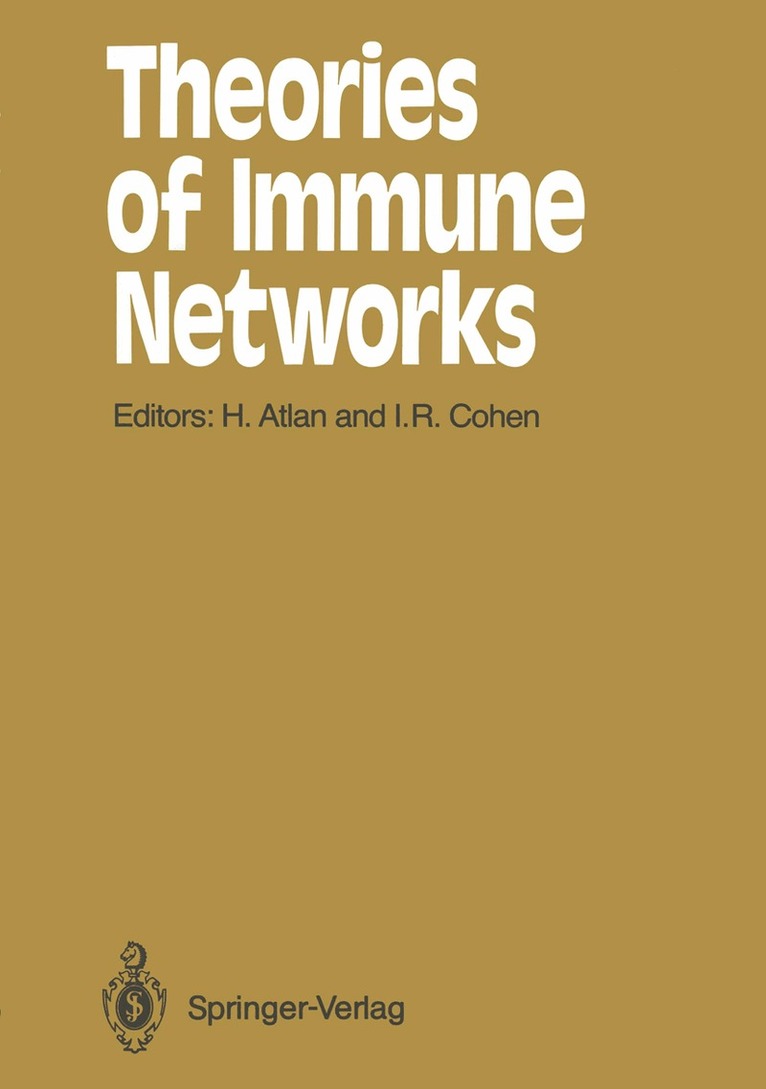
For a long time, immunology has been dominated by the idea of a simple linear cause-effect relationship between the exposure to an antigen and the production of specific antibodies against that antigen. Clonal selection was the name of the theory based on this idea and it has provided the main concepts to account for the known features of the immune response. More recently, immunologists have discovered a wealth of new facts, in the form of different regulatory cells (helpers, suppressors, antigen presenting cells), genetic determinations of immune responses such as those involved in graft re jections, different molecular structures responsible for intercellular interactions such as interleukins, cytokins, idiotype-antiidiotype recognition and others. While furthering our understanding of the local interactions (molecular and cellular) in volved in the immune response, these discoveries have led to a questioning of the simplicities of the classical clonal selection theory. It is clear today that every single immune response is a cooperative phenomenon involving several different molecular and cellular interactions taking place in a coupled manner. In addition, cross reactivity to different antigens has shown that responses of the whole im mune system to different antigens are not completely isolated from one another and that the history of encounters with different antigens plays a crucial role in the maturation of the whole system. Thus, problems of complexity, generation of di versity and self-organization have entered the field of immunology.