Robert Bork - Böcker
Visar alla böcker från författaren Robert Bork. Handla med fri frakt och snabb leverans.
8 produkter
8 produkter
2 150 kr
Skickas inom 10-15 vardagar
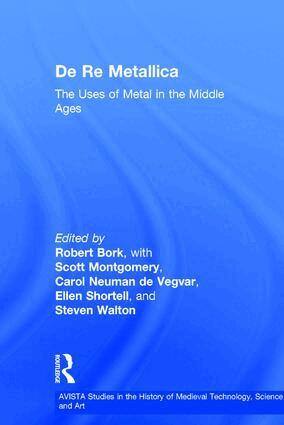
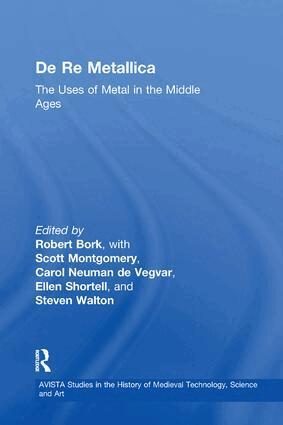
De Re Metallica brings together a wide variety of perspectives on metal use in the Middle Ages, a topic that has received less systematic scholarly attention than it deserves, given its central importance for medieval culture. Because of its strength, beauty, and prestige, metal figured prominently in many medieval contexts, from the military and utilitarian to the architectural and liturgical. Metal was a crucial ingredient in weapons and waterpipes, rose windows and reliquaries, coinage and jewelry. The 23 essays presented here, from an international team of scholars, explore the production and use of such objects, from the early Middle Ages to the sixteenth century, and from the British Isles, Iceland, and Scandinavia, to France, Germany, Spain and Italy. This thematic, chronological, and geographical scope will make this volume into a valuable resource for historians of art, technology, and culture.
2 219 kr
Skickas inom 10-15 vardagar
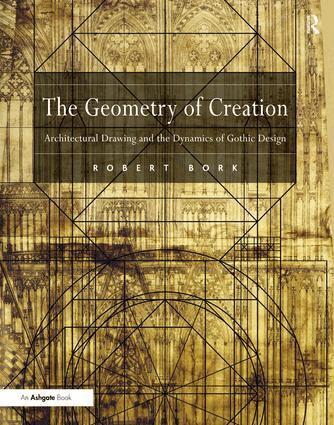
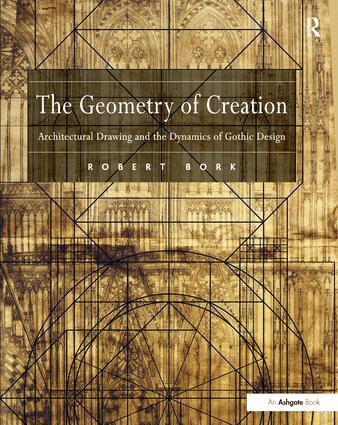
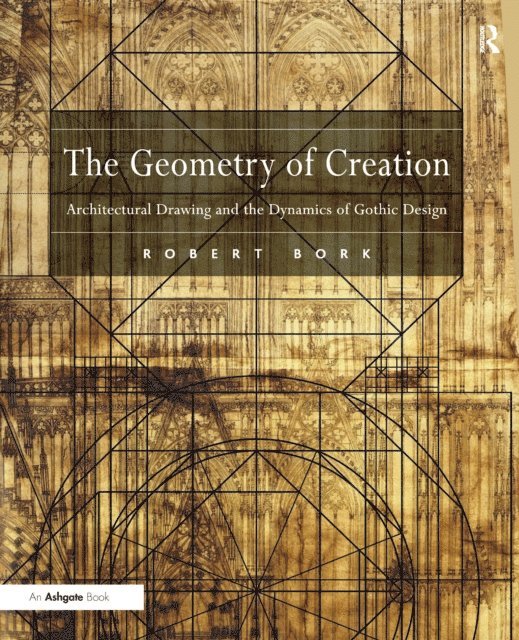
The flowering of Gothic architecture depended to a striking extent on the use of drawing as a tool of design. By drawing precise "blueprints" with simple tools such as the compass and straightedge, Gothic draftsmen were able to develop a linearized architecture of unprecedented complexity and sophistication. Examination of their surviving drawings can provide valuable and remarkably intimate information about the Gothic design process. Gothic drawings include compass pricks, uninked construction lines, and other telltale traces of the draftsman's geometrically based working method. The proportions of the drawings, moreover, are those actually intended by the designer, uncompromised by errors introduced in the construction process. All of these features make these drawings ideal subjects for the study of Gothic design practice, but their geometry has to date received little systematic attention. This book offers a new perspective on Gothic architectural creativity. It shows, in a series of rigorous geometrical case studies, how Gothic design evolved over time, in two senses: in the hours of the draftsman's labor, and across the centuries of the late Middle Ages. In each case study, a series of computer graphics show in unprecedented detail how a medieval designer could have developed his architectural concept step by step, using only basic geometrical operations. Taken together, these analyses demonstrate both remarkable methodological continuity across the Gothic era, and the progressive development of new and sophisticated permutations on venerable design themes. This rich tradition ultimately gave way in the Renaissance not because of any inherent problem with Gothic architecture, but because the visual language of Classicism appealed more directly to the pretensions of Humanist princes than the more abstract geometrical order of Gothic design, as the book's final chapter demonstrates.
2 219 kr
Skickas inom 10-15 vardagar
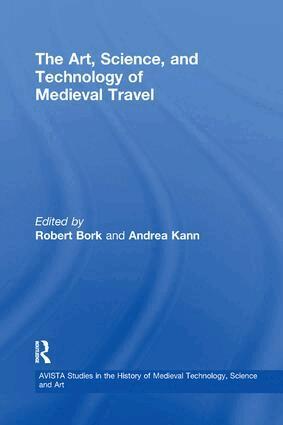
This sixth volume in the AVISTA series considers "The Art, Science, and Technology of Medieval Travel". In recent years, scholarship has increasingly emphasized the importance of travel and intercultural exchange in the Middle Ages. The notable medieval phenomena of pilgrimage and crusade obviously involved travel, while the growth of international commerce contributed decisively to the emergence of Europe as a major force in the world. Medievalists in all fields thus have good reason to consider this issue. The contributors here explore medieval travel from a variety of interdisciplinary perspectives, placing the physical practice of transportation into the larger context of medieval thought about the world and its meaning. The four sections move in focus from the practical to the theoretical, and back. The first section deals with medieval vehicles and logistics, considering Carolingian military planning, Venetian ship design, the origin of the coach, and trade-offs between land and water transport. In the second section, the authors look at ways in which medieval artists responded to travel in creating city gates, representations of earthly travel, and devotional images based on the idea of spiritual pilgrimage. The next papers deal with maps and their meanings, opening with an argument for the importance of Platonic symbolism for medieval mapmakers, followed by studies on the Hereford Mappa Mundi, the Gough Map, and Petrarch's travel guide to the Holy Land. The final section discusses the history of navigational instruments in the Middle Ages. Together, these papers constitute important explorations of how the practical and theoretical concerns of medieval travellers intersected, from the early Middle Ages to the dawn of the Renaissance.
858 kr
Skickas inom 10-15 vardagar
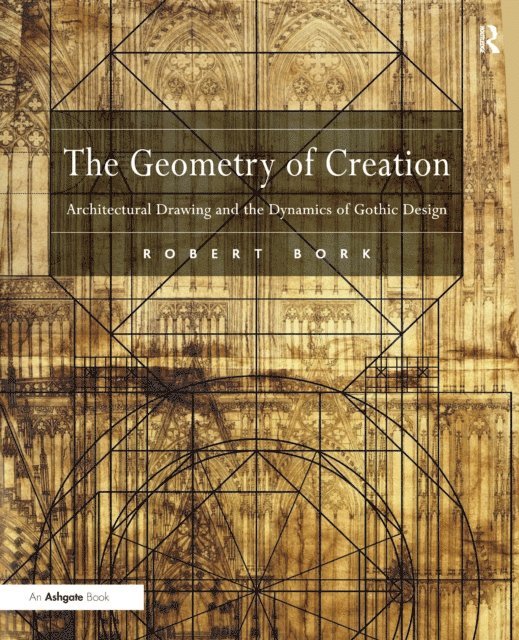
The flowering of Gothic architecture depended to a striking extent on the use of drawing as a tool of design. By drawing precise "blueprints" with simple tools such as the compass and straightedge, Gothic draftsmen were able to develop a linearized architecture of unprecedented complexity and sophistication. Examination of their surviving drawings can provide valuable and remarkably intimate information about the Gothic design process. Gothic drawings include compass pricks, uninked construction lines, and other telltale traces of the draftsman's geometrically based working method. The proportions of the drawings, moreover, are those actually intended by the designer, uncompromised by errors introduced in the construction process. All of these features make these drawings ideal subjects for the study of Gothic design practice, but their geometry has to date received little systematic attention. This book offers a new perspective on Gothic architectural creativity. It shows, in a series of rigorous geometrical case studies, how Gothic design evolved over time, in two senses: in the hours of the draftsman's labor, and across the centuries of the late Middle Ages. In each case study, a series of computer graphics show in unprecedented detail how a medieval designer could have developed his architectural concept step by step, using only basic geometrical operations. Taken together, these analyses demonstrate both remarkable methodological continuity across the Gothic era, and the progressive development of new and sophisticated permutations on venerable design themes. This rich tradition ultimately gave way in the Renaissance not because of any inherent problem with Gothic architecture, but because the visual language of Classicism appealed more directly to the pretensions of Humanist princes than the more abstract geometrical order of Gothic design, as the book's final chapter demonstrates.
845 kr
Skickas inom 10-15 vardagar
This sixth volume in the AVISTA series considers "The Art, Science, and Technology of Medieval Travel". In recent years, scholarship has increasingly emphasized the importance of travel and intercultural exchange in the Middle Ages. The notable medieval phenomena of pilgrimage and crusade obviously involved travel, while the growth of international commerce contributed decisively to the emergence of Europe as a major force in the world. Medievalists in all fields thus have good reason to consider this issue. The contributors here explore medieval travel from a variety of interdisciplinary perspectives, placing the physical practice of transportation into the larger context of medieval thought about the world and its meaning. The four sections move in focus from the practical to the theoretical, and back. The first section deals with medieval vehicles and logistics, considering Carolingian military planning, Venetian ship design, the origin of the coach, and trade-offs between land and water transport. In the second section, the authors look at ways in which medieval artists responded to travel in creating city gates, representations of earthly travel, and devotional images based on the idea of spiritual pilgrimage. The next papers deal with maps and their meanings, opening with an argument for the importance of Platonic symbolism for medieval mapmakers, followed by studies on the Hereford Mappa Mundi, the Gough Map, and Petrarch's travel guide to the Holy Land. The final section discusses the history of navigational instruments in the Middle Ages. Together, these papers constitute important explorations of how the practical and theoretical concerns of medieval travellers intersected, from the early Middle Ages to the dawn of the Renaissance.
789 kr
Skickas inom 10-15 vardagar
De Re Metallica brings together a wide variety of perspectives on metal use in the Middle Ages, a topic that has received less systematic scholarly attention than it deserves, given its central importance for medieval culture. Because of its strength, beauty, and prestige, metal figured prominently in many medieval contexts, from the military and utilitarian to the architectural and liturgical. Metal was a crucial ingredient in weapons and waterpipes, rose windows and reliquaries, coinage and jewelry. The 23 essays presented here, from an international team of scholars, explore the production and use of such objects, from the early Middle Ages to the sixteenth century, and from the British Isles, Iceland, and Scandinavia, to France, Germany, Spain and Italy. This thematic, chronological, and geographical scope will make this volume into a valuable resource for historians of art, technology, and culture.
2 357 kr
Skickas inom 10-15 vardagar
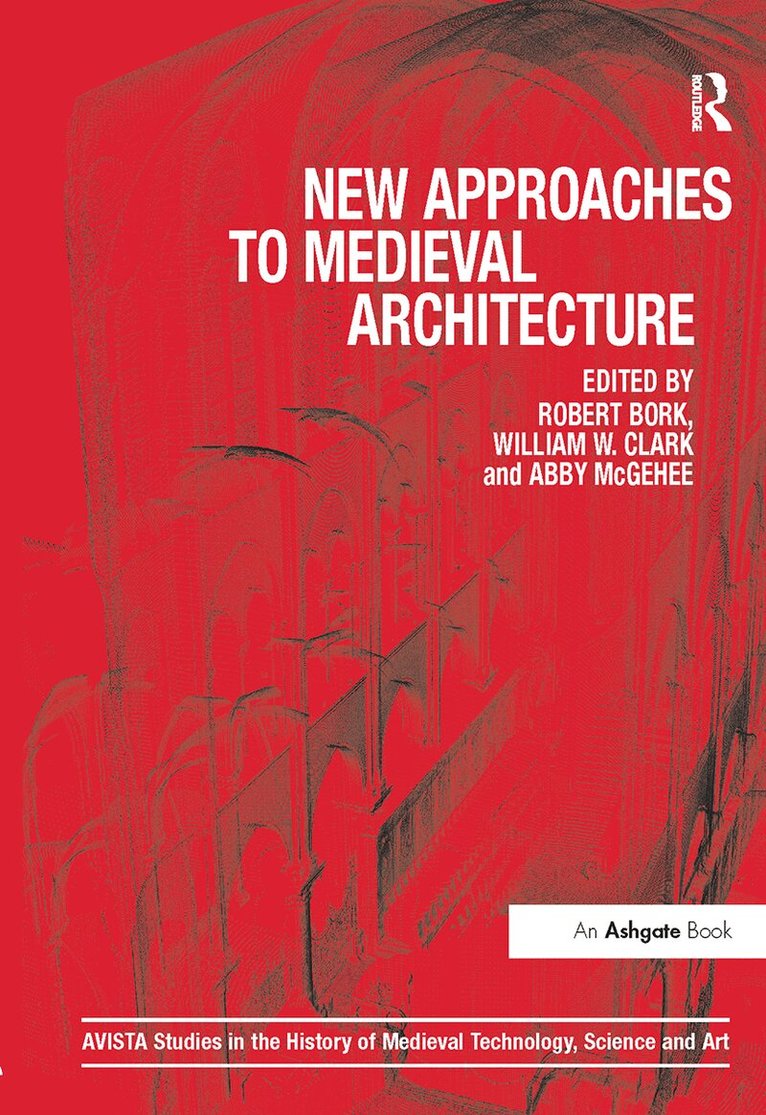
This collection of essays presents the exciting and innovative work being done in the field of medieval architectural history by scholars affiliated with AVISTA, one of the most active sponsors of such research in the Anglo-American scholarly community. These studies constitute a snapshot of the range of new interpretive strategies being deployed by researchers in the reassessment of previous scholarship and identification of new modes of inquiry. In recent years, the study of medieval architecture has been transformed by the emergence of new critical perspectives and new technologies. The contributors to this book are among those at the forefront of these developments. Several of the essays present dramatic reinterpretations of canonical monuments including the Abbey of Saint-Denis, Beauvais Cathedral and Notre-Dame in Paris. Others consider broader methodological issues such as the applications of geometry, workshop practice, and the shaping of historical narratives. Still others demonstrate how high-tech scanning and visualization methods can enhance our understanding of construction methods and the behavior of buildings. The publication of this collection of pioneering essays should foster further exploration by clarifying the state of research, by establishing specific historical arguments, and by providing models of inquiry to inspire emerging scholars.
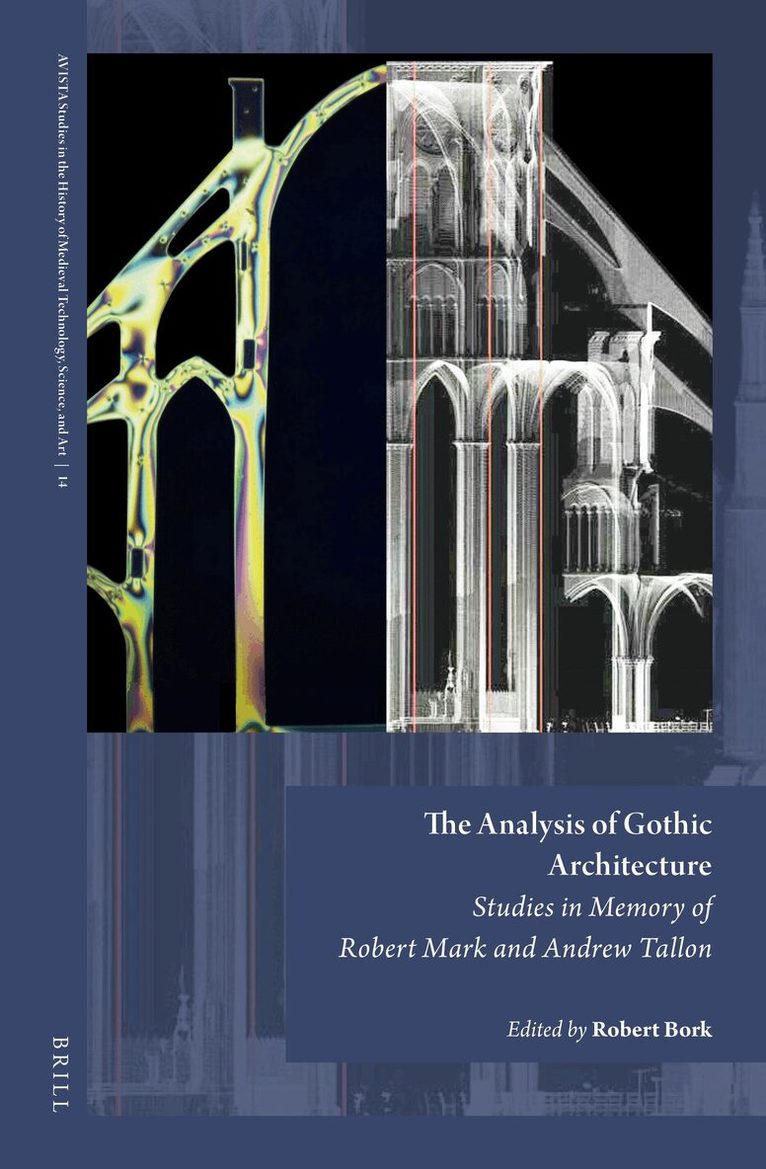
Del 14 - AVISTA Studies in the History of Medieval Technology, Science, and Art
Analysis of Gothic Architecture
Studies in Memory of Robert Mark and Andrew Tallon
Inbunden, Engelska, 2022
1 955 kr
Skickas inom 5-8 vardagar
The essays in this volume reflect on and build on the remarkable legacies of Robert Mark and Andrew Tallon, who pioneered the application of high-technology research methods to the study of Gothic architecture.Combining personal reminiscences and historiographical discussions with meticulous geometrical and structural analyses based on photogrammetric and laser-scanned building surveys, this book offers valuable new perspectives not only on Mark and Tallon themselves, but also on major churches including the abbeys of Saint-Denis and Alcobaça, Santa Maria Novella in Florence, Notre-Dame in Paris, and the cathedrals of Clermont, Reims and Wells. Contributors are: Sheila Bonde, Robert Bork, Lindsay S. Cook, Michael Davis, James Hillson, Kyle Killian, Peter Kurmann, Clark Maines, Ethan Mark, Stephen Murray, Sergio Sanabria, Dany Sandron, Ellen Shortell, Elizabeth B. Smith, Rebecca Smith, Arnaud Timbert, Stefaan Van Liefferinge, and Nancy Wu. See inside the book