Robert C. MacDougall - Böcker
Visar alla böcker från författaren Robert C. MacDougall. Handla med fri frakt och snabb leverans.
4 produkter
4 produkter
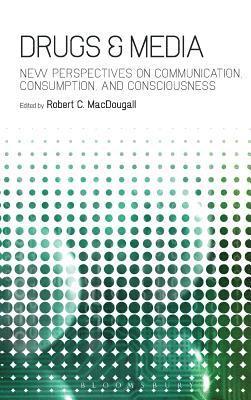
Drugs & Media
New Perspectives on Communication, Consumption, and Consciousness
Inbunden, Engelska, 2011
2 225 kr
Skickas inom 10-15 vardagar
This is a groundbreaking collection of essays highlighting the links between contemporary society's over-reliance on both media and drugs. We have developed into a culture that is over-reliant upon pharmaceutical and recreational drugs; where drugs are incessantly advertised and promoted to us via our mass media. Like drugs, communication media alter the way we interact with the world; they direct our attention in various ways, sometimes enabling certain behaviors and experiences, and prohibiting others. The contributors to this cutting-edge collection apply media ecological concepts to consider how drugs function as communication technologies; literally media in and for the human sensorium. In these essays, drugs are considered as communication media in a practical sense, not merely in the metaphorical way they tend to be discussed in the popular press. Media and drugs are thus conceived as communicative tools that enhance and/or inhibit physical, social and symbolic experience - our ways of seeing and being in the world."Drugs & Media: New Perspectives on Communication, Consumption and Consciousness" is the first book to examine this parallel, promoting a critical awareness of the significant impact of drugs and media on individuals, society and our wider human culture.
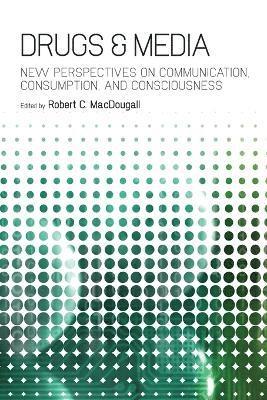
Drugs & Media
New Perspectives on Communication, Consumption, and Consciousness
Häftad, Engelska, 2011
541 kr
Skickas inom 10-15 vardagar
This is a groundbreaking collection of essays highlighting the links between contemporary society's over-reliance on both media and drugs. We have developed into a culture that is over-reliant upon pharmaceutical and recreational drugs; where drugs are incessantly advertised and promoted to us via our mass media. Like drugs, communication media alter the way we interact with the world; they direct our attention in various ways, sometimes enabling certain behaviors and experiences, and prohibiting others. The contributors to this cutting-edge collection apply media ecological concepts to consider how drugs function as communication technologies; literally media in and for the human sensorium. In these essays, drugs are considered as communication media in a practical sense, not merely in the metaphorical way they tend to be discussed in the popular press. Media and drugs are thus conceived as communicative tools that enhance and/or inhibit physical, social and symbolic experience - our ways of seeing and being in the world."Drugs & Media: New Perspectives on Communication, Consumption and Consciousness" is the first book to examine this parallel, promoting a critical awareness of the significant impact of drugs and media on individuals, society and our wider human culture.
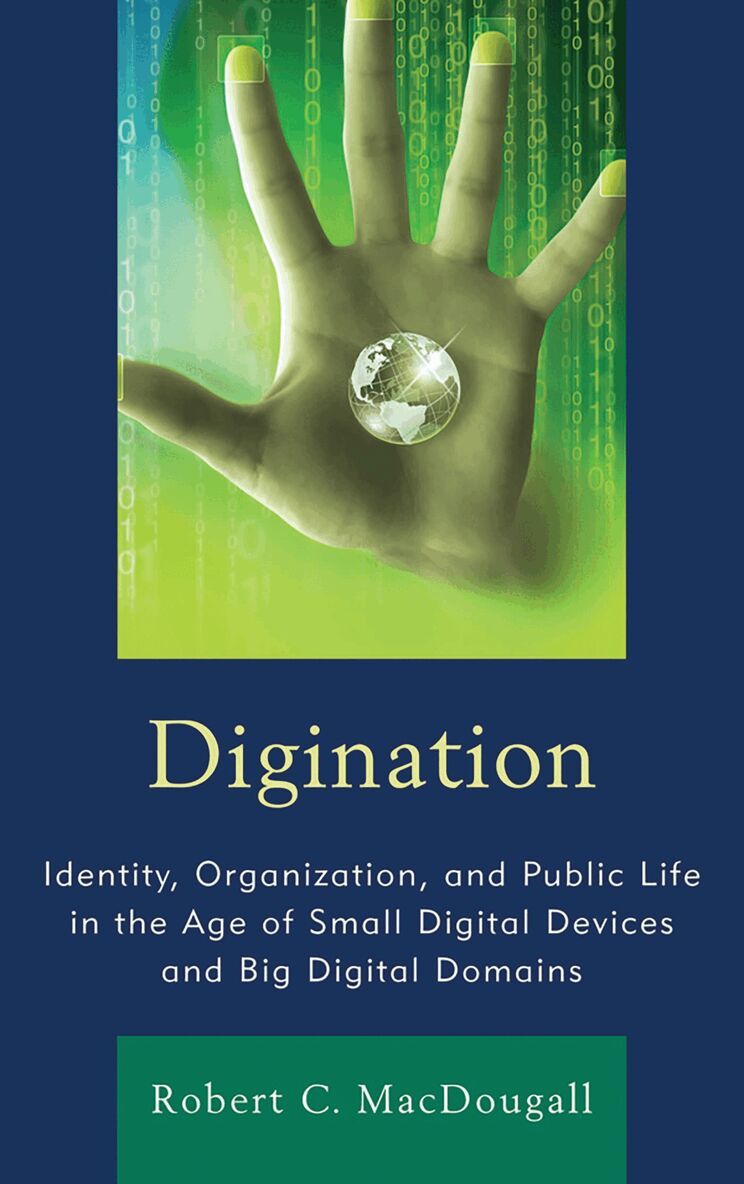
Digination
Identity, Organization, and Public Life in the Age of Small Digital Devices and Big Digital Domains
Inbunden, Engelska, 2011
1 343 kr
Skickas inom 10-15 vardagar
The shift from orality to literacy that began with the invention of the phonetic alphabet, and which went into high-gear with Gutenberg’s printing press more than 500 years ago, helped make the modern world. Some commentators have argued that this shift from orality to literacy marked a much broader, cultural shift of cataclysmic proportions. Today, with everything from e-mail to blogs, iPods and podcasts, through Google, Yahoo, eBay, and with cutting-edge smart phones, we find ourselves developing relationships with these newest communication tools that aren’t simply allowing us to communicate faster, farther and with more ease than ever before. We aren’t just moving around ideas, data, and information at unimaginable speed and scale. Our interminglings and fusions with digital communication technologies are also altering both individual and group consciousness in fundamental ways—how we form and sustain relationships, how we think and perceive, what it means to see and to feel. We are remaking human identity once more, and manufacturing a new kind of culture along the way. The processes bound up in our digination may well be consequential to the trajectory of human evolution. That time-honored trope: the notion that technology is not the problem, rather, it’s how people use technology that’s the problem is shown to be wanting. Highlighting Marshall McLuhan’s “tetrads” or laws of media as a primary tool of analysis, R.C. MacDougall argues in line with other media ecologists that it’s not so much how we use certain tools that matters, it’s that we use them. More than any other technological form perhaps, communication technologies play particularly powerful and systemic roles in our culture, or any culture for that matter. Late adopters and even abstainers are not exempt from the psychological, social and cultural effects (and side-effects) of modern digital communication technology. While there are certainly varying degrees of immersion—that is to say, while some of us live in the high-rise downtown district, some at the city limits, and still others out in the proverbial “woods"—we all live in Digination today.
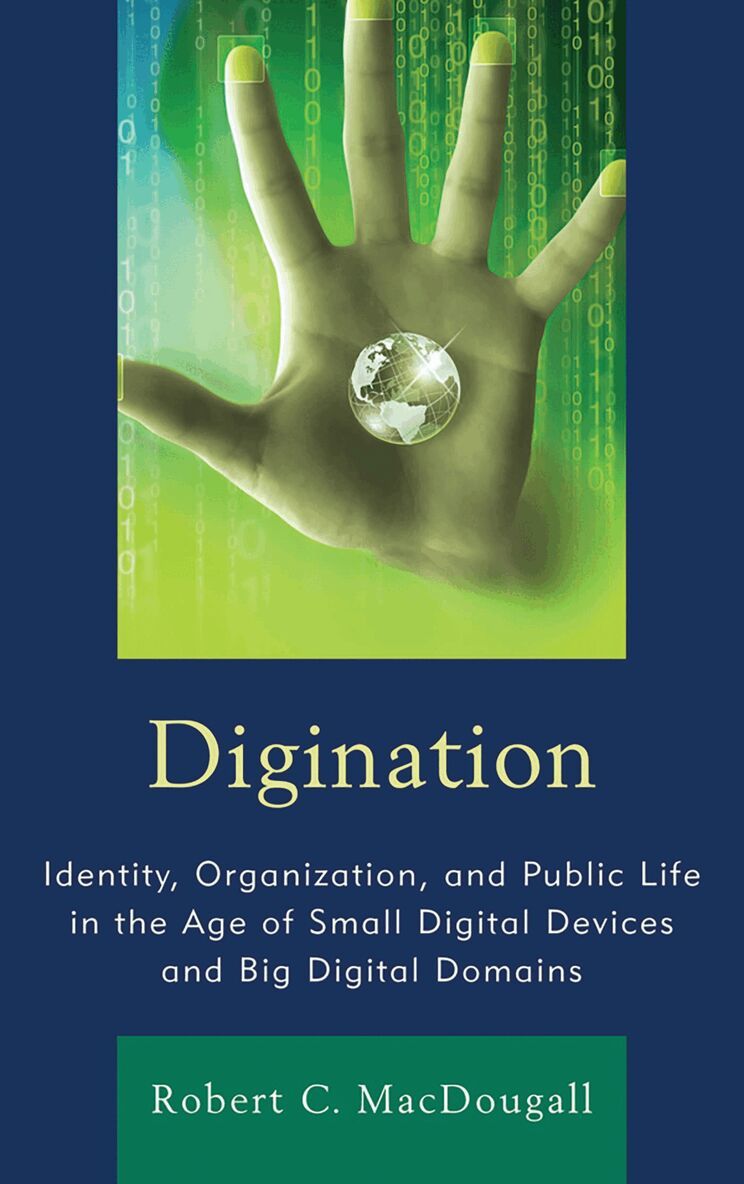
Digination
Identity, Organization, and Public Life in the Age of Small Digital Devices and Big Digital Domains
Häftad, Engelska, 2014
675 kr
Skickas inom 10-15 vardagar
The shift from orality to literacy that began with the invention of the phonetic alphabet, and which went into high-gear with Gutenberg’s printing press more than 500 years ago, helped make the modern world. Some commentators have argued that this shift from orality to literacy marked a much broader, cultural shift of cataclysmic proportions. Today, with everything from e-mail to blogs, iPods and podcasts, through Google, Yahoo, eBay, and with cutting-edge smart phones, we find ourselves developing relationships with these newest communication tools that aren’t simply allowing us to communicate faster, farther and with more ease than ever before. We aren’t just moving around ideas, data, and information at unimaginable speed and scale. Our interminglings and fusions with digital communication technologies are also altering both individual and group consciousness in fundamental ways—how we form and sustain relationships, how we think and perceive, what it means to see and to feel. We are remaking human identity once more, and manufacturing a new kind of culture along the way. The processes bound up in our digination may well be consequential to the trajectory of human evolution. That time-honored trope: the notion that technology is not the problem, rather, it’s how people use technology that’s the problem is shown to be wanting. Highlighting Marshall McLuhan’s “tetrads” or laws of media as a primary tool of analysis, R.C. MacDougall argues in line with other media ecologists that it’s not so much how we use certain tools that matters, it’s that we use them. More than any other technological form perhaps, communication technologies play particularly powerful and systemic roles in our culture, or any culture for that matter. Late adopters and even abstainers are not exempt from the psychological, social and cultural effects (and side-effects) of modern digital communication technology. While there are certainly varying degrees of immersion—that is to say, while some of us live in the high-rise downtown district, some at the city limits, and still others out in the proverbial “woods"—we all live in Digination today.