• Fri frakt över 249 kr
  • •
  • Snabba leveranser
  • •
  • Billiga böcker
Kundservice

Du är på sajten för privatpersoner.

Företag, bibliotek eller offentlig verksamhet?

Du handlar på classic.bokus.com, där alla dina funktioner finns intakta.
Till classic.bokus.com
Bokus logotyp. Gå till startsidan.
  • Erbjudanden
  • Nyheter
  • Student
  • Topplistor
  • Barn & ungdom
  • Bokus Play
  • E-böcker
  • Pocketböcker
  • Spel & pussel

10% rabatt på allt med kod: NYSTART10 →

Sidfot

Mina sidor

    Hjälp

    • Kundservice
    • Vanliga frågor och svar
    • Frakt och leverans
    • Retur vid ångerrätt
    • Reklamera vara
    • Betalning
    • Köpvillkor
    • Allmänna villkor
    • Information om webbplatsens tillgänglighet

    Om Bokus

    • Om oss
    • Pressrum
    • För studenter
    • För företag
    • För bibliotek och offentlig verksamhet
    • För leverantörer
    • Hållbarhet

    Populärt

    • Aktuella erbjudanden
    • Presentkort
    • Studentlitteratur
    • Nya böcker
    • Topplistor
    • Signerade böcker
    • Engelska böcker

    Inspiration

    • Boktips
    • BookTok
    • Populära bokserier
    • Barnbokskaraktärer
    • Populära författare
    Logotyp för Bokus
    Följ oss på Facebook (extern länk)Följ oss på Instagram (extern länk)Följ oss på YouTube (extern länk)Följ oss på TikTok (extern länk)
    bokus @ CookiesAnpassa cookiesIntegritetspolicyKöpvillkor
    Till Citymail hemsida (extern länk)Till Budbee hemsida (extern länk)Till Postnord hemsida (extern länk)Till Schenker hemsida (extern länk)Till Early Bird hemsida (extern länk)Till Walleys hemsida (extern länk)
    1. Samhälle och politik
    2. Samhälle och kultur
    3. Kultur och medier
    4. Kulturvetenskap

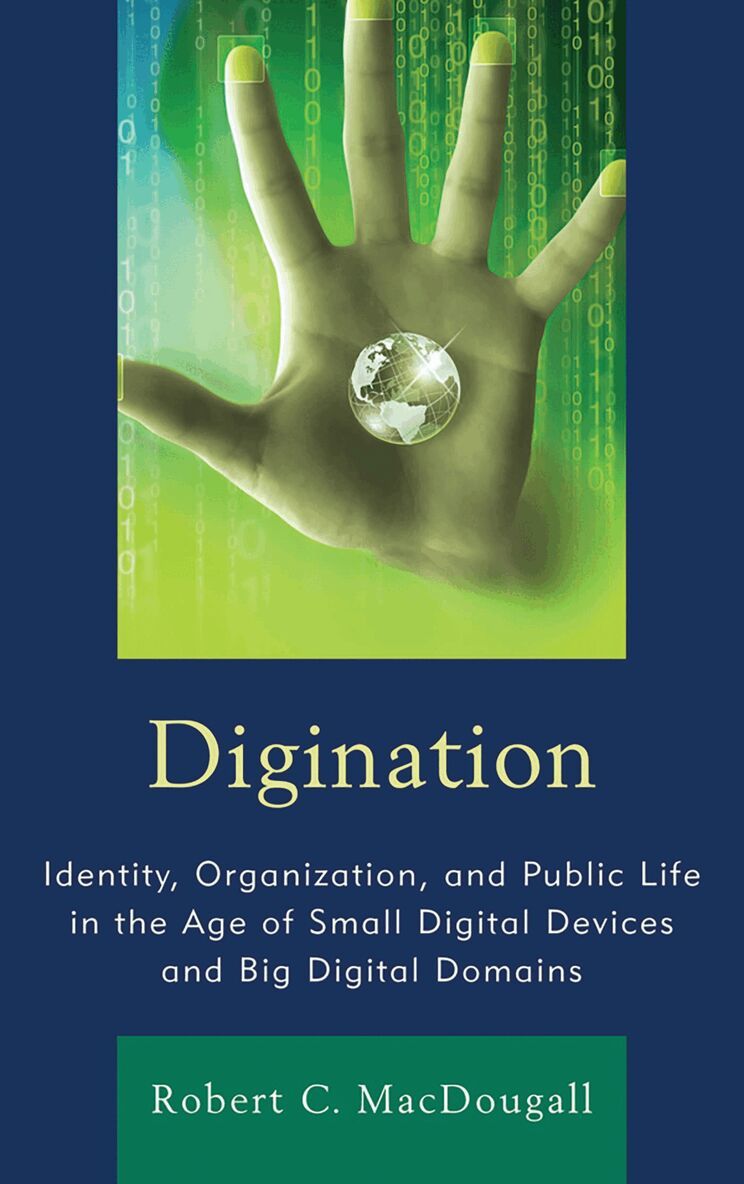
    Digination

    Identity, Organization, and Public Life in the Age of Small Digital Devices and Big Digital Domains

    AvRobert C. MacDougall

    Häftad, Engelska, 2014

    Del i serien Fairleigh Dickinson University Press Series in Communication Studies

    701 kr

    Beställningsvara. Skickas inom 10-15 vardagar. Fri frakt över 249 kr.

    Fler format och utgåvor

    Inbunden

    1 395 kr

    E-bok

    755 kr

    Beskrivning

    The shift from orality to literacy that began with the invention of the phonetic alphabet, and which went into high-gear with Gutenberg’s printing press more than 500 years ago, helped make the modern world. Some commentators have argued that this shift from orality to literacy marked a much broader, cultural shift of cataclysmic proportions. Today, with everything from e-mail to blogs, iPods and podcasts, through Google, Yahoo, eBay, and with cutting-edge smart phones, we find ourselves developing relationships with these newest communication tools that aren’t simply allowing us to communicate faster, farther and with more ease than ever before. We aren’t just moving around ideas, data, and information at unimaginable speed and scale. Our interminglings and fusions with digital communication technologies are also altering both individual and group consciousness in fundamental ways—how we form and sustain relationships, how we think and perceive, what it means to see and to feel. We are remaking human identity once more, and manufacturing a new kind of culture along the way. The processes bound up in our digination may well be consequential to the trajectory of human evolution. That time-honored trope: the notion that technology is not the problem, rather, it’s how people use technology that’s the problem is shown to be wanting. Highlighting Marshall McLuhan’s “tetrads” or laws of media as a primary tool of analysis, R.C. MacDougall argues in line with other media ecologists that it’s not so much how we use certain tools that matters, it’s that we use them. More than any other technological form perhaps, communication technologies play particularly powerful and systemic roles in our culture, or any culture for that matter. Late adopters and even abstainers are not exempt from the psychological, social and cultural effects (and side-effects) of modern digital communication technology. While there are certainly varying degrees of immersion—that is to say, while some of us live in the high-rise downtown district, some at the city limits, and still others out in the proverbial “woods"—we all live in Digination today.

    Produktinformation

    • Utgivningsdatum:2014-06-13
    • Mått:165 x 241 x 16 mm
    • Vikt:485 g
    • Format:Häftad
    • Språk:Engelska
    • Serie:Fairleigh Dickinson University Press Series in Communication Studies
    • Antal sidor:320
    • Förlag:Associated University Presses
    • ISBN:9781611476996

    Utforska kategorier

    • Kulturvetenskap inom Samhälle och politik
    • Teknik: allmänt inom Naturvetenskap och teknik
    • Naturvetenskap:allmänt inom Naturvetenskap och teknik

    Mer om författaren

    R.C. MacDougall is professor in the communication department at Curry College.

    Recensioner i media

    Digination's core premise is that technology impacts everyone in many ways—socially, culturally, politically, and psychologically. Life in a digital nation is not simply a reality where humans utilize technology. Conversely, technology is an agent that affects people both individually and collectively as a society. Through a media ecologist's lens, MacDougall (Curry College) weaves theory, empirical data, and his own perspective into an account of technology and its influence on humankind. The volume, part of the publisher's "Communication Studies" series, is divided into 11 chapters. The author begins with an examination of the contributions of media theorist Marshall McLuhan, whose influence is evident throughout the work. The core of the book consists of seven chapters, each focusing on an individual technology. E-mail, blogs, search engines, personal music devices, podcasts, laptops, and eBay take their turn as subjects in this examination. Finally, an appendix of McLuhan tetrads or charts that visually represent the societal effects of individual technologies closes the book. An interesting, timely analysis of the human relationship with the machine. Summing Up: Recommended.

    Innehållsförteckning

    • Chapter 1 Understanding our DiginationChapter 2 Lost Logos: Finding the Art and Argument in McLuhan's MessageChapter 3 Indigenous E-mail: Identity Construction and the Oral/Textual InterfaceChapter 4 Blogs:The News MediumChapter 5 Information, Interactivity, and the Denizen of DiginationChapter 6 Search Engineering and the Emerging Information EcologyChapter 7 Portable Digital Music Devices and the Sound-Tracked LifeworldChapter 8 Podcasting and Lifeworld:From Sound Track to Narractive TrackChapter 9 Knitting, Napping, and Notebook Computers (and other mnemotechnical systems)Chapter 10 eBay Ethics:Prefiguring the "Digital Democracy"Chapter 11 Media Ecology and a Biological Approach to Understanding Our DiginationChapter 12 Appendix: The TetradsChapter 13 ReferencesChapter 14 Index