Robert C. Mizzi - Böcker
Visar alla böcker från författaren Robert C. Mizzi. Handla med fri frakt och snabb leverans.
6 produkter
6 produkter
995 kr
Skickas inom 5-8 vardagar
Queer Studies and Education: An International Reader explores how the category queer, as a critical stance or set of perspectives, contributes to opportunities individually and collectively for advancing queer social justice within the context and concerns of schooling and education. The collection takes up this general goal by presenting a cross-section of international perspectives on queer studies in education to demonstrate commonalities, differences, uncertainties, or pluralities across a diverse range of national contexts and topics, drawing a heightened awareness of heterodominance and heteropatriarchy, and to conceptualize non-normative and non-essentialist imaginings for more inclusive educational environments.Collectively, the chapters critically engage with heteronormativity and normativity more generally as a political spectrum, over a broad range of formal and informal sites of education, and against a backdrop of critiques of liberalism and neoliberalism as the frameworks through which "achievable" social change and belonging are fostered, particularly within educational settings. Taken together, the chapters assembled in Queer Studies and Education invite researchers, scholars, educators, activists, and other cultural workers to examine the multiplicity of contemporary (international) work in queer studies and education with readers' interpretations of queer's deployment across the chapters forming the compass for which to arrive at fresh insights and forms of queer critical praxis.
630 kr
Skickas inom 10-15 vardagar
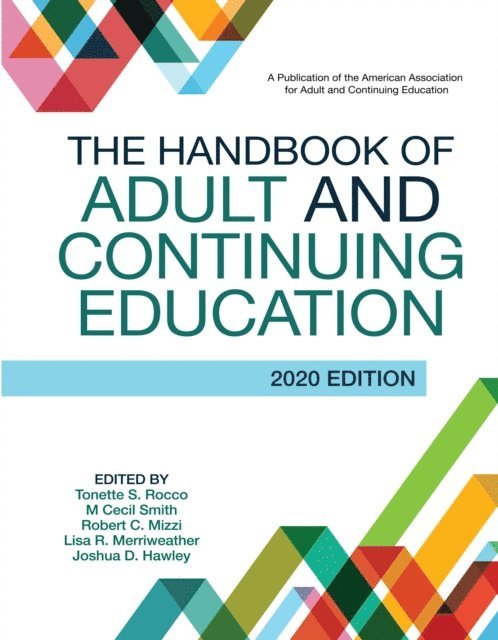
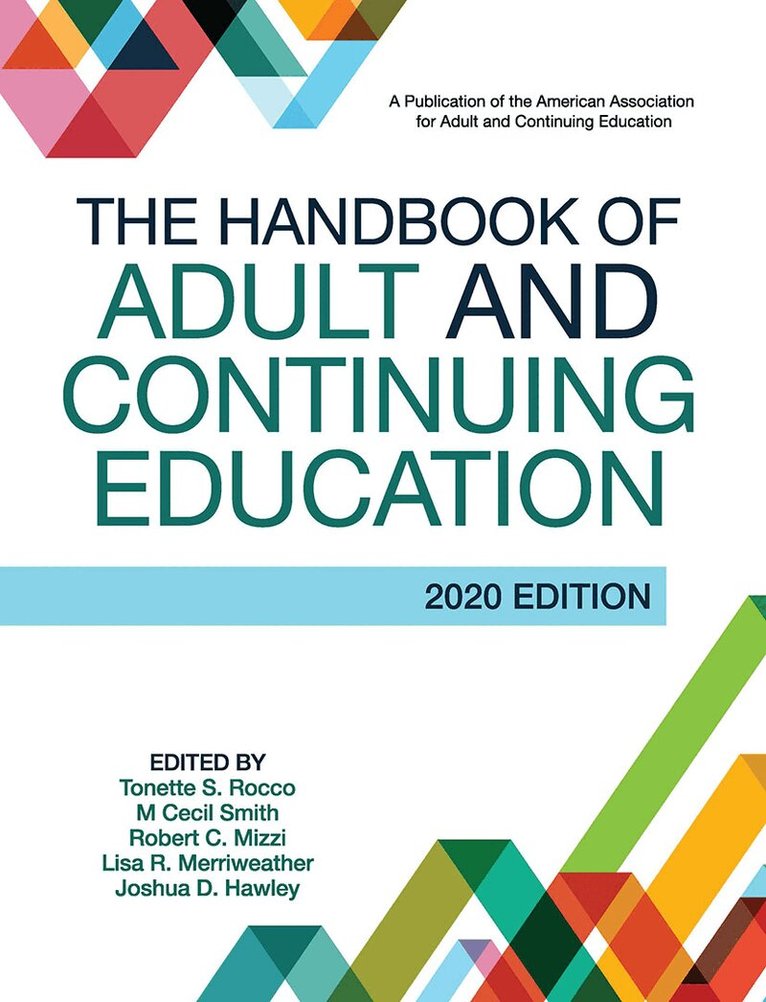
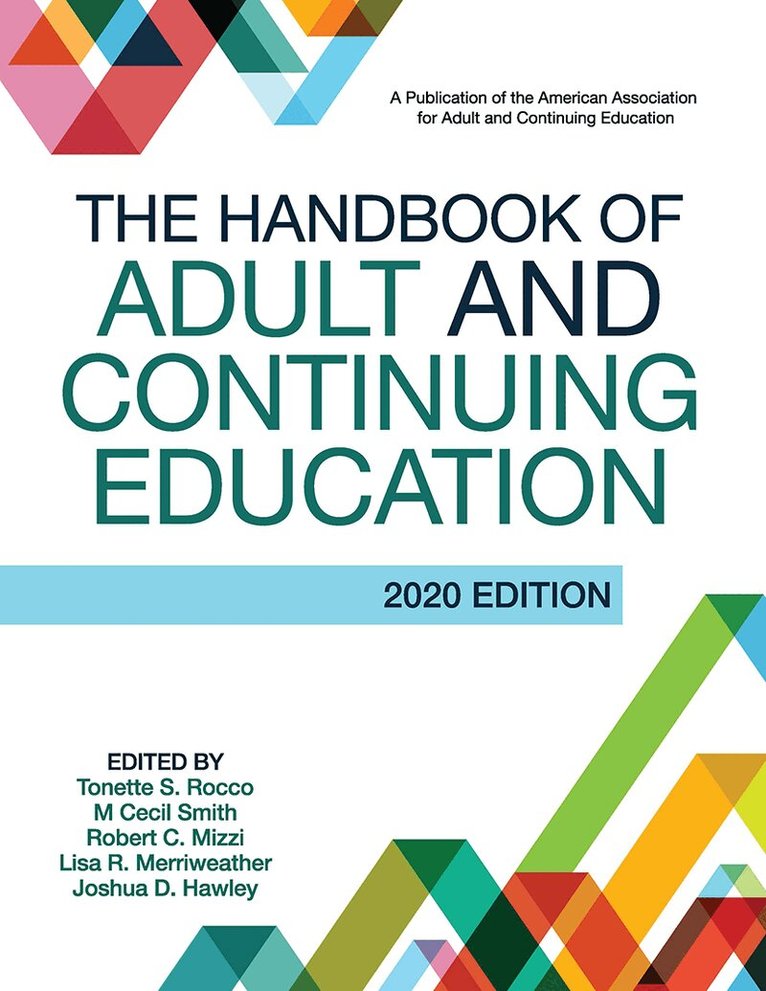
Co-published with Colleges and universities are increasingly becoming significant sites for adult education scholarship—in large part due to demographic shifts. With fewer U.S. high school graduates on the horizon, higher education institutions will need to attract “non-traditional” (i.e., older) adult learners to remain viable, both financially and politically. There is a need to develop a better corpus of scholarship on topics as diverse as, what learning theories are useful for understanding adult learning? How are higher education institutions changing in response to the surge of adult students? What academic programs are providing better learning and employment outcomes for adults in college? Adult education scholars can offer much to the policy debates taking place in higher education. A main premise of this handbook is that adult and continuing education should not simply respond to rapidly changing social, economic, technological, and political environments across the globe, but should lead the way in preparing adults to become informed, globally-connected, critical citizens who are knowledgeable, skilled, and open and adaptive to change and uncertainty.The Handbook of Adult and Continuing Education provides rich information on the contemporary issues and trends that are of concern to adult and continuing education, of the programs and resources available to adult learners, and of opportunities to challenge and critique the structures embedded in the field that perpetuate inequity and social injustice. Adult education is a discipline that foresees a better tomorrow, and The Handbook is designed to engage and inspire readers to assist the field to seek new paths in uncertain and complex times, ask questions, and to help the field flourish.The Handbook is divided into five sections. The first, Foundations situates the field by describing the developments, core debates, perspectives, and key principles that form the basis of the field.The second, Understanding Adult Learning, includes chapters on adult learning, adult development, motivation, access, participation, and support of adult learners, and mentoring.Teaching Practices and Administrative Leadership, the third section, offers chapters on organization and administration, program planning, assessment and evaluation, teaching perspectives, andragogy and pedagogy, public pedagogy, and digital technologies for teaching and learning.The fourth section is Formal and Informal Learning Contexts. Chapters cover adult basic, GED, and literacy education, English-as-a-Second Language Programs, family literacy, prison education, workforce development, military education, international development education, health professions education, continuing professional education, higher education, human resource development and workplace learning, union and labor education, religious and spiritual education, cultural institutions, environmental education, social and political movements, and peace and conflict education.The concluding Contemporary Issues section discusses decolonizing adult and continuing education, adult education and welfare, teaching social activism, lesbian, gay, bisexual, trans, queer and straight allies, gender and its multiple forms, disability, older adults and intergenerational identities, race and ethnicity, working class, whiteness and privilege, and migrants and migrant education.The editors culminate with consideration of next steps for adult and continuing education and priorities for the future.
Disrupting Adult and Community Education
Teaching, Learning, and Working in the Periphery
Inbunden, Engelska, 2016
1 027 kr
Tillfälligt slut
Reconceptualizes local, national, and transnational adult education practices in light of neoliberalism and globalization.Honorable Mention, 2017 Phillip E. Frandson Award for Literature in the Field of Professional, Continuing, and/or Online Education presented by the University Professional and Continuing Education Association This groundbreaking book critiques the boundaries of where adult education takes place through a candid examination of teaching, learning, and working practices in the social periphery. Lives in this context are diverse and made through complex practices that take place in the shadows of formal systems: on streetscapes and farms, in vehicles and homes, and through underground networks. Educators may be family members, friends, or colleagues, and the curriculum may be based on needs, interests, histories, and cultural practices. The case studies presented here analyze adult education in the lives of sex workers, LGBTQ activists, undocumented migrants, disabled workers, homeless youth, immigrants, inmates, and others. Focusing on learning at the social margins, this book challenges readers to reconceptualize local, national, and transnational adult education practices in light of neoliberalism and globalization.
Disrupting Adult and Community Education
Teaching, Learning, and Working in the Periphery
Häftad, Engelska, 2017
391 kr
Tillfälligt slut
Reconceptualizes local, national, and transnational adult education practices in light of neoliberalism and globalization.Honorable Mention, 2017 Phillip E. Frandson Award for Literature in the Field of Professional, Continuing, and/or Online Education presented by the University Professional and Continuing Education Association This groundbreaking book critiques the boundaries of where adult education takes place through a candid examination of teaching, learning, and working practices in the social periphery. Lives in this context are diverse and made through complex practices that take place in the shadows of formal systems: on streetscapes and farms, in vehicles and homes, and through underground networks. Educators may be family members, friends, or colleagues, and the curriculum may be based on needs, interests, histories, and cultural practices. The case studies presented here analyze adult education in the lives of sex workers, LGBTQ activists, undocumented migrants, disabled workers, homeless youth, immigrants, inmates, and others. Focusing on learning at the social margins, this book challenges readers to reconceptualize local, national, and transnational adult education practices in light of neoliberalism and globalization.
3 074 kr
Skickas inom 10-15 vardagar
Co-published with Colleges and universities are increasingly becoming significant sites for adult education scholarship—in large part due to demographic shifts. With fewer U.S. high school graduates on the horizon, higher education institutions will need to attract “non-traditional” (i.e., older) adult learners to remain viable, both financially and politically. There is a need to develop a better corpus of scholarship on topics as diverse as, what learning theories are useful for understanding adult learning? How are higher education institutions changing in response to the surge of adult students? What academic programs are providing better learning and employment outcomes for adults in college? Adult education scholars can offer much to the policy debates taking place in higher education. A main premise of this handbook is that adult and continuing education should not simply respond to rapidly changing social, economic, technological, and political environments across the globe, but should lead the way in preparing adults to become informed, globally-connected, critical citizens who are knowledgeable, skilled, and open and adaptive to change and uncertainty.The Handbook of Adult and Continuing Education provides rich information on the contemporary issues and trends that are of concern to adult and continuing education, of the programs and resources available to adult learners, and of opportunities to challenge and critique the structures embedded in the field that perpetuate inequity and social injustice. Adult education is a discipline that foresees a better tomorrow, and The Handbook is designed to engage and inspire readers to assist the field to seek new paths in uncertain and complex times, ask questions, and to help the field flourish.The Handbook is divided into five sections. The first, Foundations situates the field by describing the developments, core debates, perspectives, and key principles that form the basis of the field.The second, Understanding Adult Learning, includes chapters on adult learning, adult development, motivation, access, participation, and support of adult learners, and mentoring.Teaching Practices and Administrative Leadership, the third section, offers chapters on organization and administration, program planning, assessment and evaluation, teaching perspectives, andragogy and pedagogy, public pedagogy, and digital technologies for teaching and learning.The fourth section is Formal and Informal Learning Contexts. Chapters cover adult basic, GED, and literacy education, English-as-a-Second Language Programs, family literacy, prison education, workforce development, military education, international development education, health professions education, continuing professional education, higher education, human resource development and workplace learning, union and labor education, religious and spiritual education, cultural institutions, environmental education, social and political movements, and peace and conflict education.The concluding Contemporary Issues section discusses decolonizing adult and continuing education, adult education and welfare, teaching social activism, lesbian, gay, bisexual, trans, queer and straight allies, gender and its multiple forms, disability, older adults and intergenerational identities, race and ethnicity, working class, whiteness and privilege, and migrants and migrant education.The editors culminate with consideration of next steps for adult and continuing education and priorities for the future.
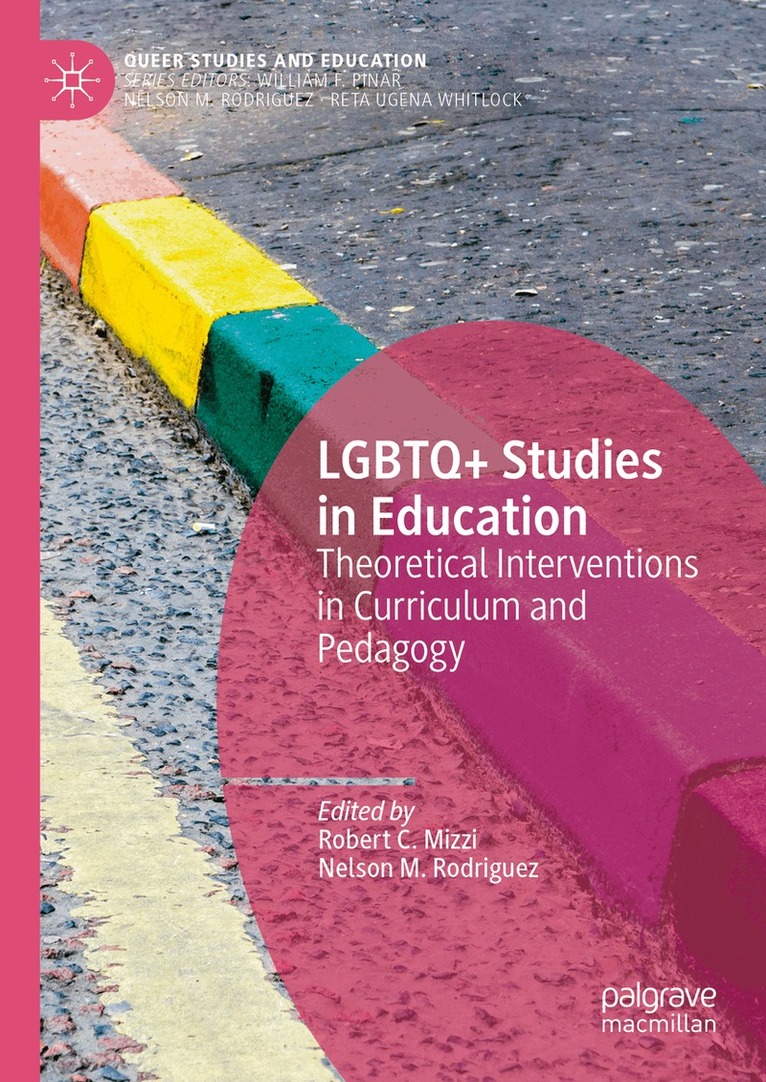
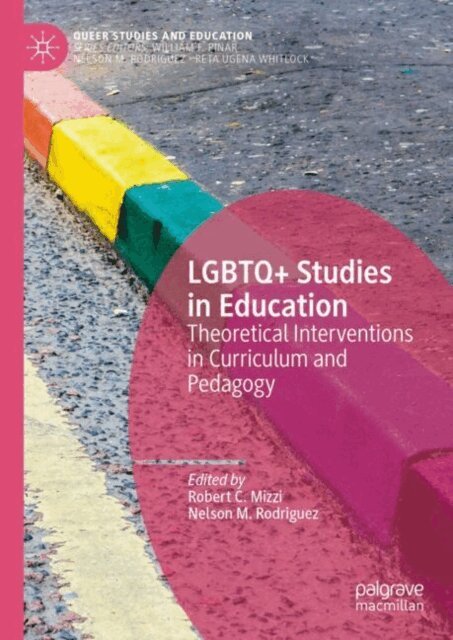
LGBTQ+ Studies in Education
Theoretical Interventions in Curriculum and Pedagogy
Inbunden, Engelska, 2025
1 736 kr
Skickas inom 10-15 vardagar
This edited volume utilizes critical perspectives other than/or in addition to LGBTQ+ studies to facilitate knowledge-building on pedagogical and curricular approaches to LGBTQ+ studies within the context and concerns of promoting LGBTQ+ inclusivity across various educational spaces.