Robert E. Kleck – författare
Visar alla böcker från författaren Robert E. Kleck. Handla med fri frakt och snabb leverans.
5 produkter
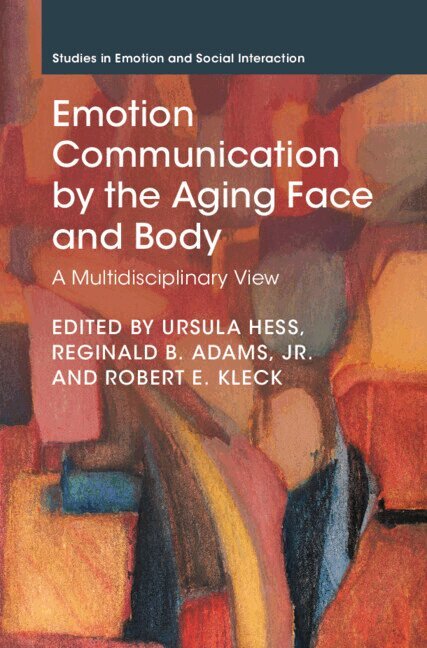
Emotion Communication by the Aging Face and Body
A Multidisciplinary View
Av Ursula Hess, Reginald B. Adams, Jr. m. fl.
Inbunden, 2023
1719 kr
Lägg i varukorg
As our society ages, questions concerning the relations between generations gain importance. The quality of human relations depends on the quality of emotion communication, which is a significant part of our daily interactions. Emotion expressions serve not only to communicate how the expresser …
Emotion Communication by the Aging Face and Body
A Multidisciplinary View
Av Robert E. Kleck, Jr. Reginald B. Adams m. fl.
E-bok, 2023
475 kr
Lägg i varukorg
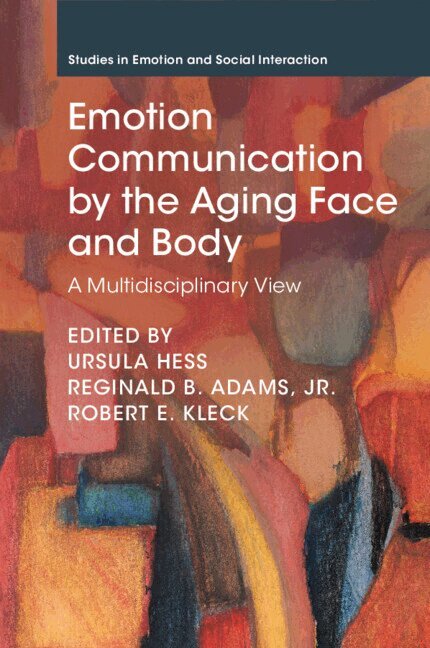
Emotion Communication by the Aging Face and Body
A Multidisciplinary View
Av Ursula Hess, Reginald B. Adams, Jr. m. fl.
Häftad, 2025
489 kr
Lägg i varukorg
As our society ages, questions concerning the relations between generations gain importance. The quality of human relations depends on the quality of emotion communication, which is a significant part of our daily interactions. Emotion expressions serve not only to communicate how the expresser …
Emotion Communication by the Aging Face and Body
A Multidisciplinary View
Av Robert E. Kleck, Jr. Reginald B. Adams m. fl.
E-bok, 2023
465 kr
Lägg i varukorg
Social Psychology of Stigma
Av Todd F. Heatherton, Robert E. Kleck m. fl.
Häftad, 2003
716 kr
Lägg i varukorg
The devaluation of those perceived as different has profound repercussions both for individuals and for society. This book brings together leading researchers to present groundbreaking findings on such topics as the dimensions of stigma, why people stigmatize others, how targeted individuals are …