365 kr
Robert Forczyk – författare
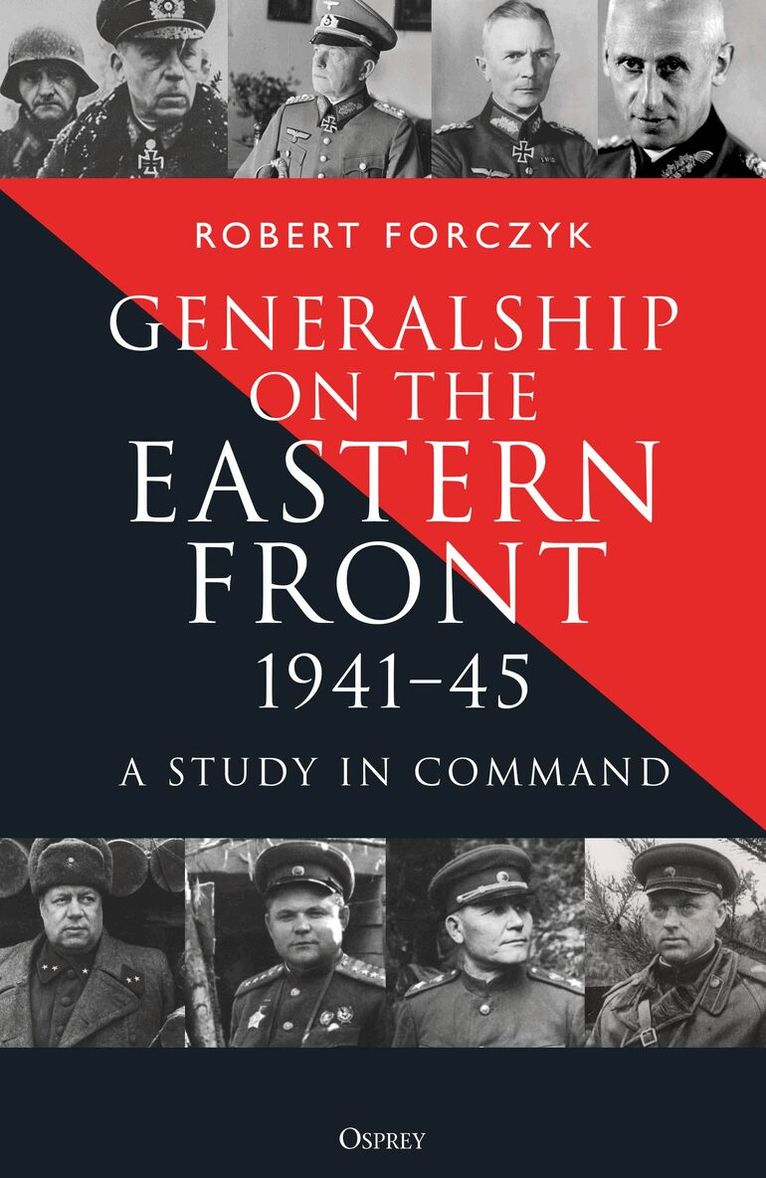
- Inbunden, Engelska, 2026A comprehensive evaluation of generalship on the most important front in World War II.The war on the Eastern Front from 1941 to 1945 was the largest sustained air-ground conflict in military history and played the decisive role in the defeat of the Third Reich. This new study seeks to analyse the command and generalship of the combatants.The scale of the conflict was immense. Lasting over 46 months it involved over 10 million combatants at its peak, and resulted in roughly 15 million military deaths, as well as about 20 million civilian deaths. More than 50 percent of all German military fatalities in 1941–45 occurred there, and by the time the Western Allies invaded France in June 1944, the Wehrmacht was already decimated.Who were the generals who led these campaigns on the Eastern Front? The standard historiography of World War II tends to focus on a few prominent leaders while ignoring the mass of commanders and operational-level military staffs who actually fought most of the war and this new study by renowned Eastern Front historian Robert Forczyk seeks to redress the balance.Generalship on the Eastern Front offers an objective analytic framework for assessing the senior German and Soviet commanders on the Eastern Front through the lens of generalship and battle command, examining a total of 54 German and 140 Soviet officers.
- Inbunden, Svenska, 2016
184 kr
Skickas
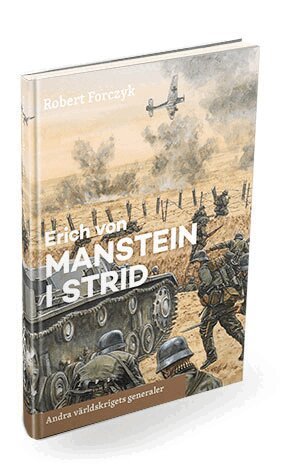
Erich von Manstein är mest känd för sina insatser på östfronten, men han var också en av de mest inflytelserika tyska generalerna under hela andra världskriget. För Manstein var den preussiska traditionen bakom manöverkrigföringen närmast en trosartikel och hans operativa snille låg i förmågan att snabbt hitta okomplicerade lösningar på komplexa militära problem. Under andra världskriget nyttjade Manstein sin talang för manöverkrigföring och bidrog därmed till Tredje rikets största krigsframgångar. Under operation Barbarossa 1941 ledde han erövringen av Krimhalvön och förintade fyra sovjetiska arméer. Under den katastrofala vintern 1942/1943 bidrog Manstein till att den södra delen av den tyska östfronten undvek total kollaps genom att återta det operativa initiativet och leda en skicklig motoffensiv. Detta och mycket mer kan du läsa om i den här boken. Författaren Robert Forczyk är en mycket välkänd och uppskattad militärhistorisk författare. Översättningen har gjorts av en av Sveriges kunnigaste militärhistoriska översättare, Mikael Dahlgren. Serien Andra världskrigets generaler består av 10 titlar och beskriver tyska och allierade generaler som i hög grad påverkade andra världskrigets förlopp. Respektive titel beskriver alla de viktigaste fälttågen och slagen där generalen i fråga spelade en viktig roll, och ger dessutom insikt om personen bakom titeln och vad som hände efter kriget. - Del 359 - Campaign
Stalingrad 1942–43 (1)
The German Advance to the Volga
Häftad, Engelska, 2021215 kr
Skickas inom 5-8 vardagar
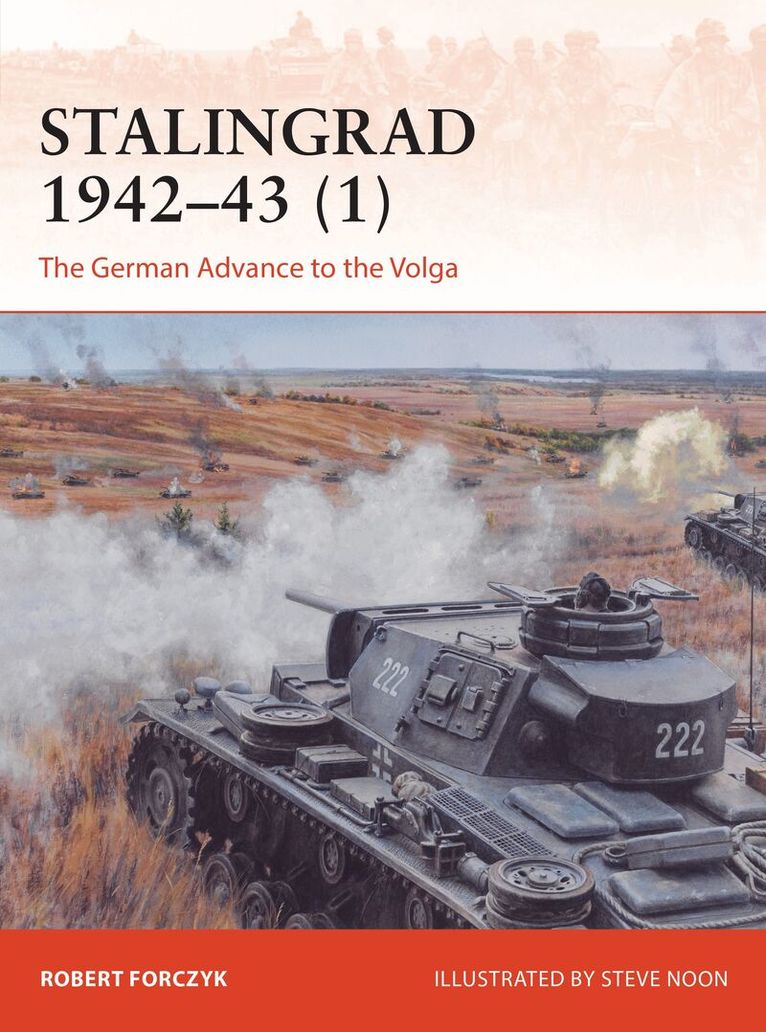
The first in a three-book series examining the Stalingrad campaign, one of the most decisive military operations in World War II that set the stage for the ultimate defeat of the Third Reich.After failing to defeat the Soviet Union with Operation Barbarossa in 1941, Adolf Hitler planned a new campaign for the summer of 1942 that was intended to achieve a decisive victory: Operation Blue (Case Blau). In this new campaign, Hitler directed that one army group (Heeresgruppe A) would advance to seize the Soviet oilfields in the Caucasus, while the other (Heeresgruppe B) pushed on to the Volga River. The expectation was for a rapid victory – instead, German forces had to fight hard just to reach the outskirts of Stalingrad, and then found themselves embroiled in a protracted urban battle amid the ruins of a devastated city on the Volga.The Soviet Red Army was hit hard by the initial German offensive but held onto the city and then launched Operation Uranus, a winter counteroffensive that encircled the German 6. Armee at Stalingrad. Despite a desperate German relief operation, the Red Army eventually crushed the German forces and hurled the remnants of the German southern front back in disorder.This first volume in the Stalingrad trilogy covers the period from 28 June to 11 September 1942, including operations around Voronezh. The fighting in the Don Bend, which lasted weeks, comprised some of the largest tank battles of World War II – involving more armour than the tanks employed at Prokhorovka in 1943. - Del 305 - Campaign
Kursk 1943
The Southern Front
Häftad, Engelska, 2017189 kr
Skickas
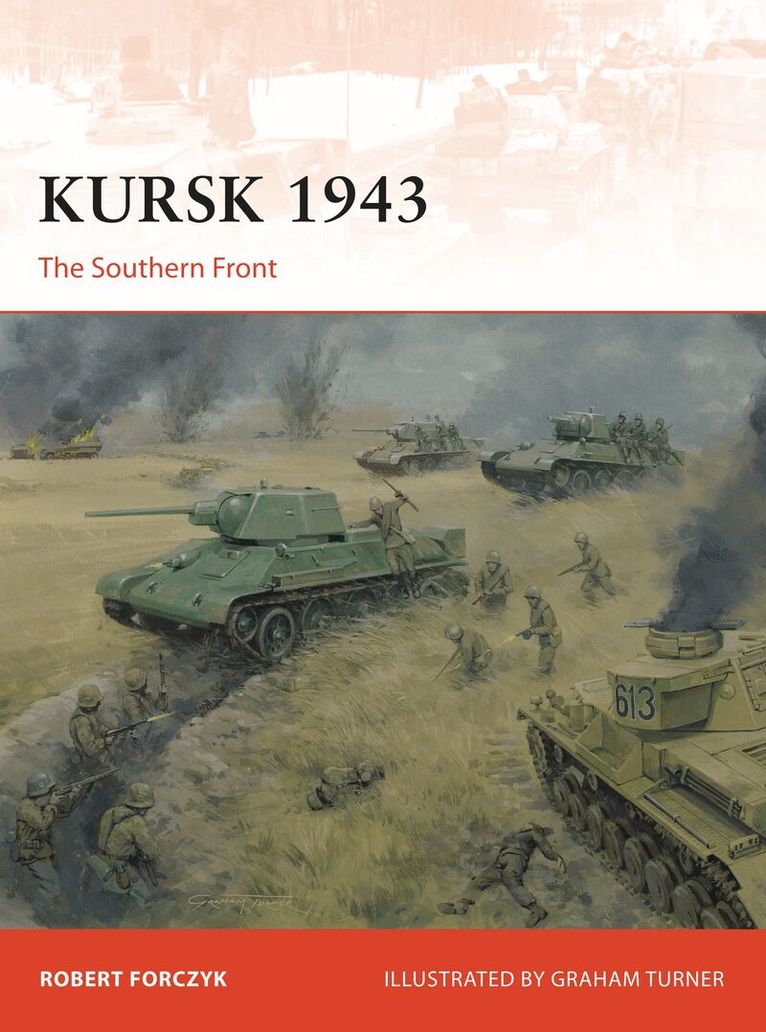
The Kursk campaign was the major German offensive of 1943 and the last strategic offensive the Germans were to launch on the Eastern Front in World War II.Mauled at Stalingrad, the German army looked to regain the initiative on the Eastern Front with a huge offensive launched near the city of Kursk, 280 miles south-west of Moscow. Armed with the new Panther tank, Hitler and Field Marshal von Manstein were confident that they could inflict another crushing defeat on the Soviet Union. What they did not know is that the Soviets knew about the coming attack, and they were ready.This book focuses on the southern front of this campaign, which featured one of the biggest clash of armour of the warin the battle of Prokhorovka which involved over a thousand tanks. It examines in detail the tactics and mistakes of the army commanders as they orchestrated one of the bloodiest battles in World War II.Using campaign maps, stunning photographs and vivid artwork, this new study, a companion to Campaign 272 Kursk 1943: The Northern Front, examines whether that the German offensive was doomed from the start as it takes the reader through this titanic clash of armour. - Del 272 - Campaign
Kursk 1943
The Northern Front
Häftad, Engelska, 2014245 kr
Skickas inom 10-15 vardagar
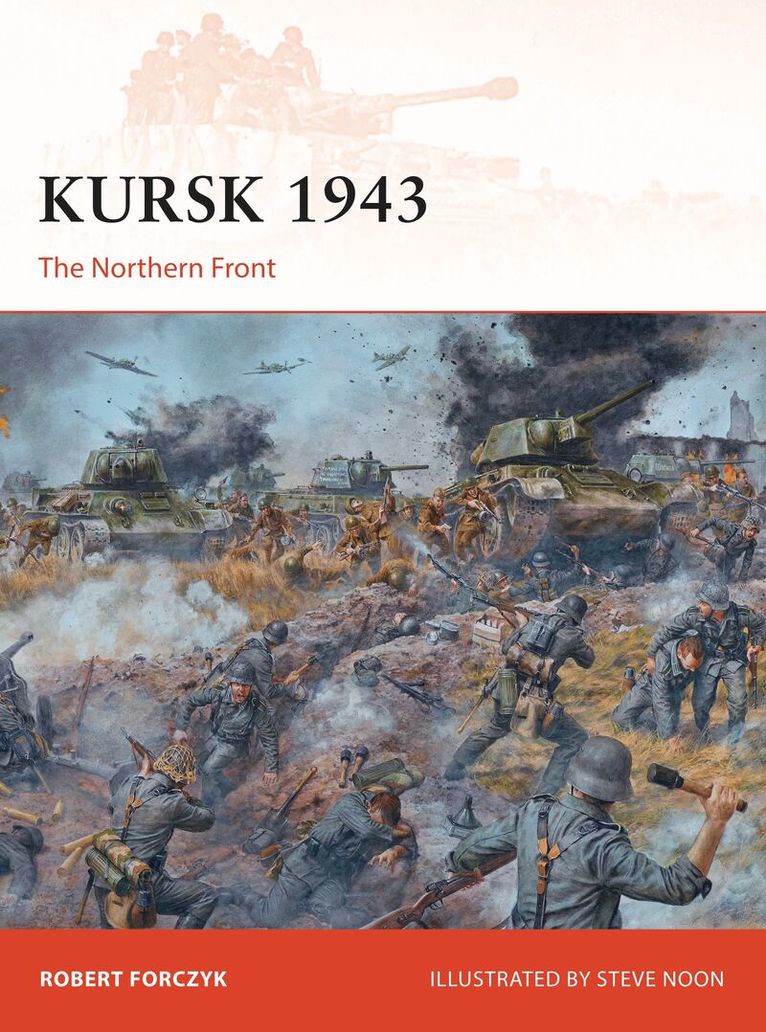
The Kursk campaign was the major German offensive of 1943 and the last strategic offensive the Germans were to launch on the Eastern Front in World War II.In the summer of 1943, recoiling from defeat at Stalingrad, Hitler conducted a limited objective offensive to eliminate the Soviet Kursk salient. Operating a classic pincer attack of the kind that succeeded during the 1942 Kharkov campaign he hoped that the resulting heavy losses inflicted on the Red Army would give the Wehrmacht time to recover its strength. However, the Soviet anticipation of the attack led to extensive losses on both sides as Soviet anti-tank mines and fierce fighting pushed the Germans back, liberating the German-held Orel in the process.Focusing on the northern front of the battle with Generaloberst, Walter Model’s forces pitted against General Rokossovsky’s Central Front between 5 July and 18 August, this volume will explore both the German offensive and the Soviet counteroffensive. Using documents from both sides, extensive photographs – both contemporary and modern, maps and bird’s-eye-views this title will shed new light on this often ignored part of the battle. - Del 368 - Campaign
Stalingrad 1942–43 (2)
The Fight for the City
Häftad, Engelska, 2021203 kr
Skickas
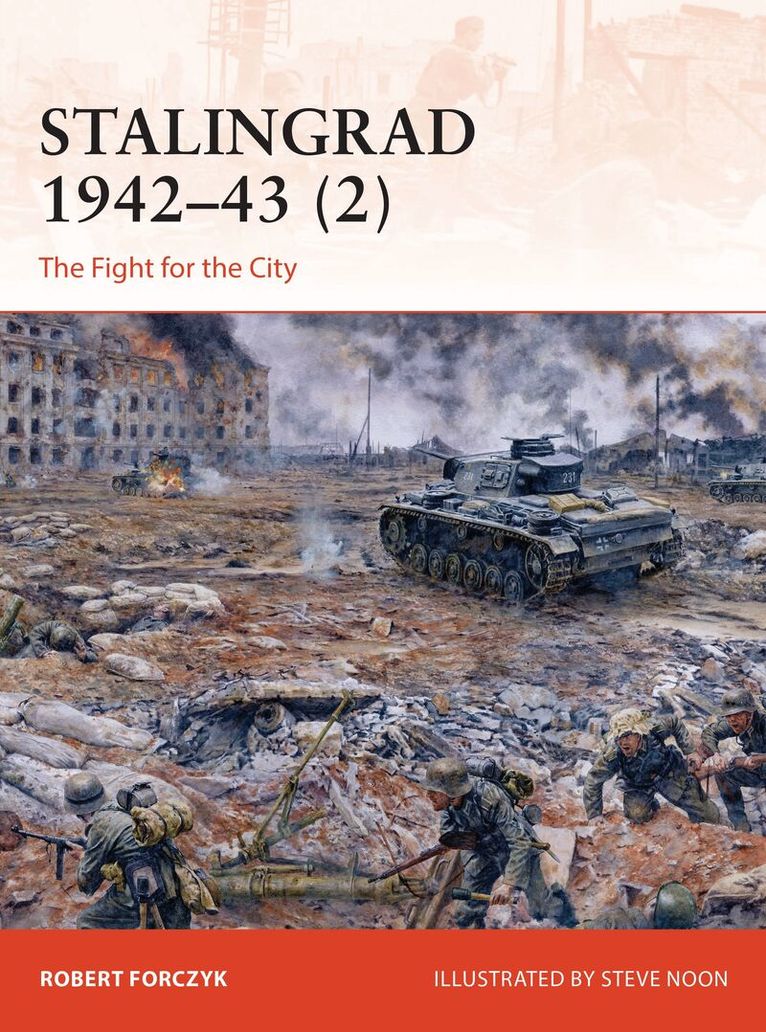
The second in a three-part series examining the Stalingrad campaign, one of the most decisive military operations in World War II, that set the stage for the ultimate defeat of the Third Reich.By early September 1942, 6.Armee and 4.Panzer-Armee had reached the outskirts of Stalingrad, and Hitler believed it was about to fall. He ordered for the capture of the city as soon as possible, but this was easier said than done.On 13 September, a direct German assault was launched against the city on the Volga and a protracted urban battle followed amid the ruins, already devastated by massive Luftwaffe raids. Although hit hard by the initial German offensive, a ruthless and obstinate Red Army was able to hold onto the city through a costly battle of attrition that sacrificed huge amounts of men and materiel.This second volume in the Stalingrad trilogy, written by a leading expert on the military history of the Eastern Front, brings the fighting in the city to life in full visual detail, including the iconic battles at the Krasny Oktyabr Steel Plant, the Grain Elevator, the Barrikady and STZ factories, the ‘Tennis Racquet’ and Rynok–Spartanovka.Drawing from sources on both sides, this book offers a truly comprehensive account of history’s greatest urban battle. - Del 385 - Campaign
Stalingrad 1942–43 (3)
Catastrophe: the Death of 6th Army
Häftad, Engelska, 2022215 kr
Skickas
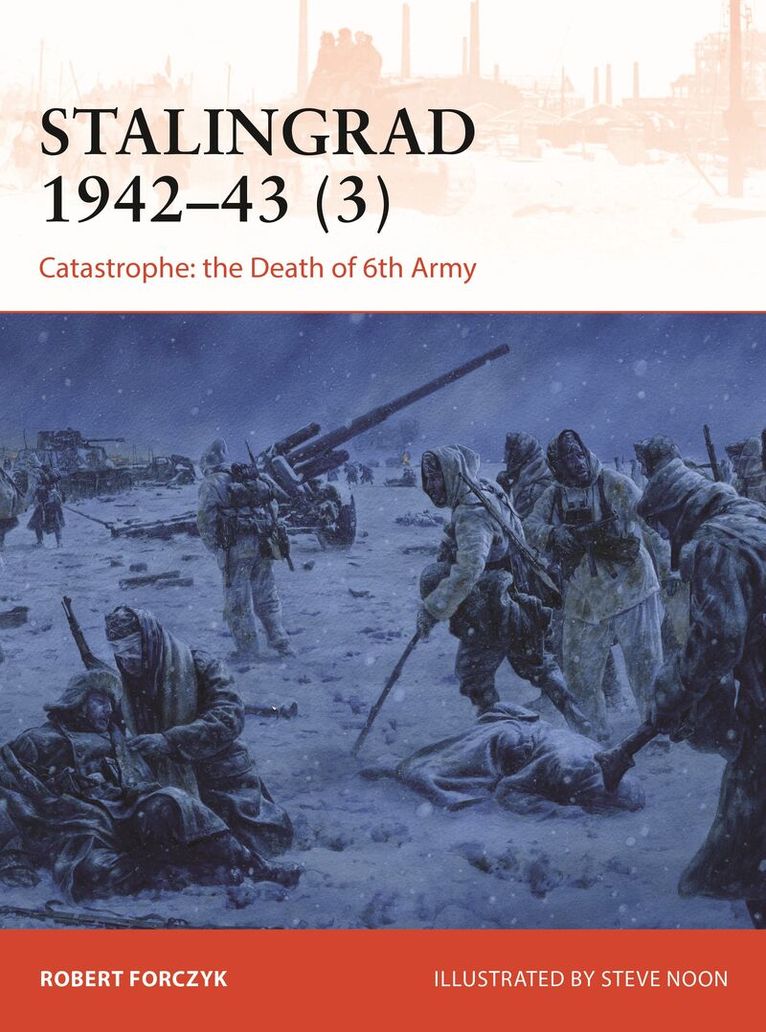
The final part in a three-book series on the Battle of Stalingrad, examining the Soviet encirclement, German relief efforts, and the final surrender of Paulus’ 6.Armee.Having fought hard just to reach the outskirts of Stalingrad, the Axis forces found themselves embroiled in a protracted urban battle amid the ruins of a devastated city on the Volga. The Soviet Red Army was able to hold onto the city then mount a surprise winter counter-offensive known as Operation Uranus, which succeeded in encircling the German 6.Armee at Stalingrad. Despite a desperate German relief operation, the Red Army eventually crushed the 6.Armee and hurled the remnants of the German southern front back in disorder.This third and final volume in the Stalingrad trilogy begins just after the German 6.Armee has been isolated at Stalingrad, and covers the period from 24 November 1942 to 2 February 1943. The specially commissioned maps and 3D diagrams guide the reader in step-by-step, easily to follow detail through the German relief operation (Wintergewitter), the fighting on the Chir River, and the Soviet operations Koltso and Little Saturn, and are complimented by the battlescene artworks that vividly depict the harsh conditions experienced by the common soldiers fighting on both sides. - Del 245 - Campaign
Demyansk 1942–43
The frozen fortress
Häftad, Engelska, 2012205 kr
Skickas inom 10-15 vardagar
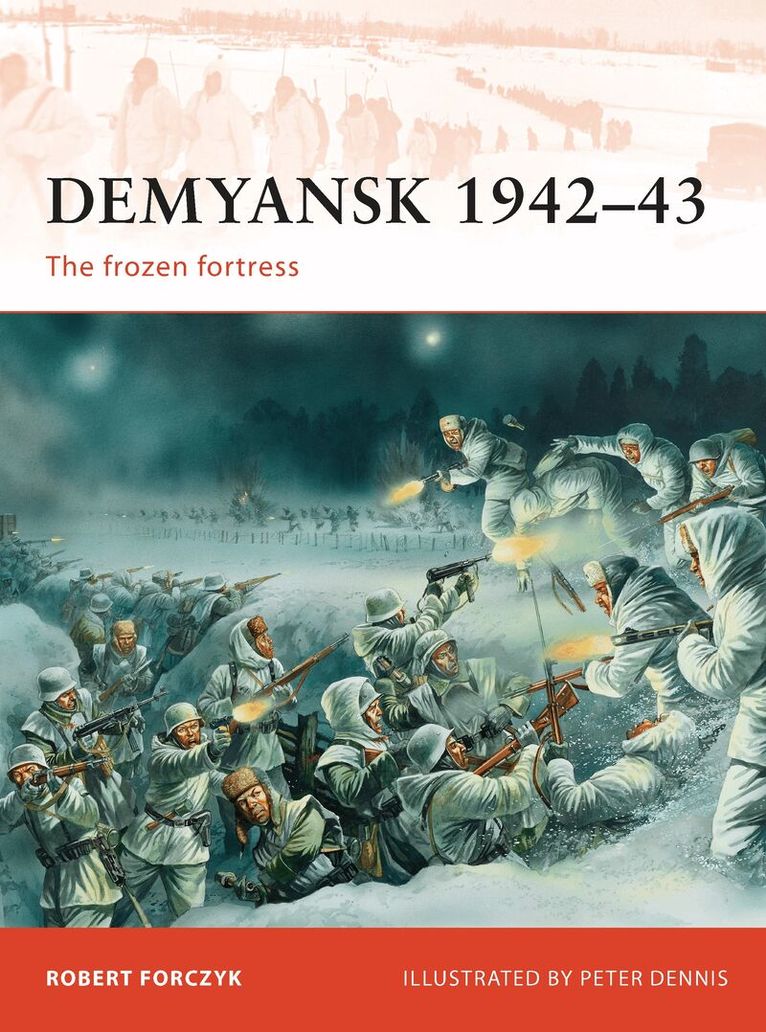
A highly illustrated account of the battle for the Demyansk Pocket on the Eastern Front in World War II.The fighting around the town of Demyansk was one of the longest encirclement battles on the Eastern Front during World War II, stretching from February 1942 to February 1943. Originally, the German 16. Armee occupied Demyansk in the autumn of 1941 because it was key terrain that would be used as a springboard for an eventual offensive into the Valdai Hills. Instead, the Soviet winter counteroffensive in February 1942 encircled the German II Armeekorps and other units, inside the Demyansk Pocket.Yet despite severe pounding from five Soviet armies, the embattled German troops held the pocket and the Luftwaffe organized a major aerial resupply effort to sustain the defenders. For the first time in military history, an army was supplied entirely by air. In February 1943, Marshal Timoshenko was ordered to launch an offensive to cut off the base of the salient and annihilate the 12 divisions.At the same time, Hitler finally came to his senses after the Stalingrad debacle and authorized the 16. Armee to withdraw from the pocket. This volume will conclude with the drama of a German Army-sized withdrawal under fire in winter, under attack from three sides. - Inbunden, Svenska, 2016
184 kr
Skickas
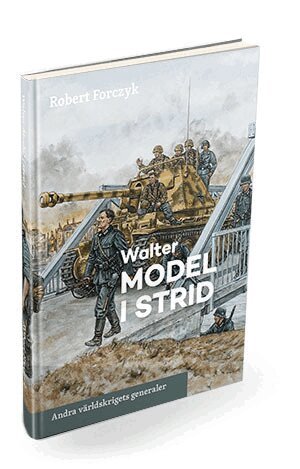
Walter Model är kanske inte lika känd som mer namnkunniga tyska generaler, som t ex Guderian och Rommel, men de insatser Model gjorde för Tyskland under andra världskriget var exceptionella. När andra, mer aggressiva generaler, hade kört fast och läget var på väg att utvecklas till katastrof, kallade Hitler in sin brandkårsgeneral för att rädda situationen. Model var så kompetent, och kanske framförallt när det gällde försvarsstrider, att ett talesätt utvecklades om honom: Där Model befinner sig kan inget gå åt skogen. Model stred till exempel vid Moskva, Rzjev, Orjol, Tarnopol och Warszawa, och även på västfronten och under hela krigets slutskede. Model hade en enastående förmåga att rädda till synes hopplösa situationer vid upprepade tillfällen under kriget. Denna förmåga, i kombination med hans insatser för att avvärja en total tysk kollaps på såväl öst- som västfronten sommaren 1944, utmärker Walter Model som en av andra världskrigets stora befälhavare. Detta och mycket mer om kan du läsa om i boken. Författaren Robert Forczyk är en mycket välkänd och uppskattad militärhistorisk författare. Översättningen har gjorts av en av Sveriges kunnigaste militärhistoriska översättare, Mikael Dahlgren. Serien Andra världskrigets generaler består av 10 titlar och beskriver tyska och allierade generaler som i hög grad påverkade andra världskrigets förlopp. Respektive titel beskriver alla de viktigaste fälttågen och slagen där generalen i fråga spelade en viktig roll, och ger dessutom insikt om personen bakom titeln och vad som hände efter kriget. - Häftad, Engelska, 2020
201 kr
Skickas
This fascinating title from renowned World War II historian Robert Forczyk tells the story of Case White.The German invasion of Poland on 1 September, 1939, designated as Fall Weiss (Case White), was the event that sparked the outbreak of World War II in Europe. The campaign has widely been described as a textbook example of Blitzkrieg, but it was actually a fairly conventional campaign as the Wehrmacht was still learning how to use its new Panzers and dive-bombers.The Polish military is often misrepresented as hopelessly obsolete and outclassed by the Wehrmacht, when in fact it was well-equipped with modern weapons and armour. Indeed, the Polish possessed more tanks than the British and had cracked the German Enigma machine cipher. Though the combined assault from Germany and the Soviet Union defeated Poland, it could not crush the Polish fighting spirit and thousands of soldiers and airmen escaped to fight on other fronts.The result of Case White was a brutal occupation, as Polish Slavs found themselves marginalized and later eliminated, paving the way for Hitler’s vision of Lebensraum (living space) and his later betrayal and invasion of the Soviet Union in 1941.Using a wide array of sources, Robert Forczyk challenges the myths of Case White to tell the full story of the invasion that sparked history’s greatest conflict. - Del 351 - Campaign
Velikiye Luki 1942–43
The Doomed Fortress
Häftad, Engelska, 2020206 kr
Skickas inom 10-15 vardagar
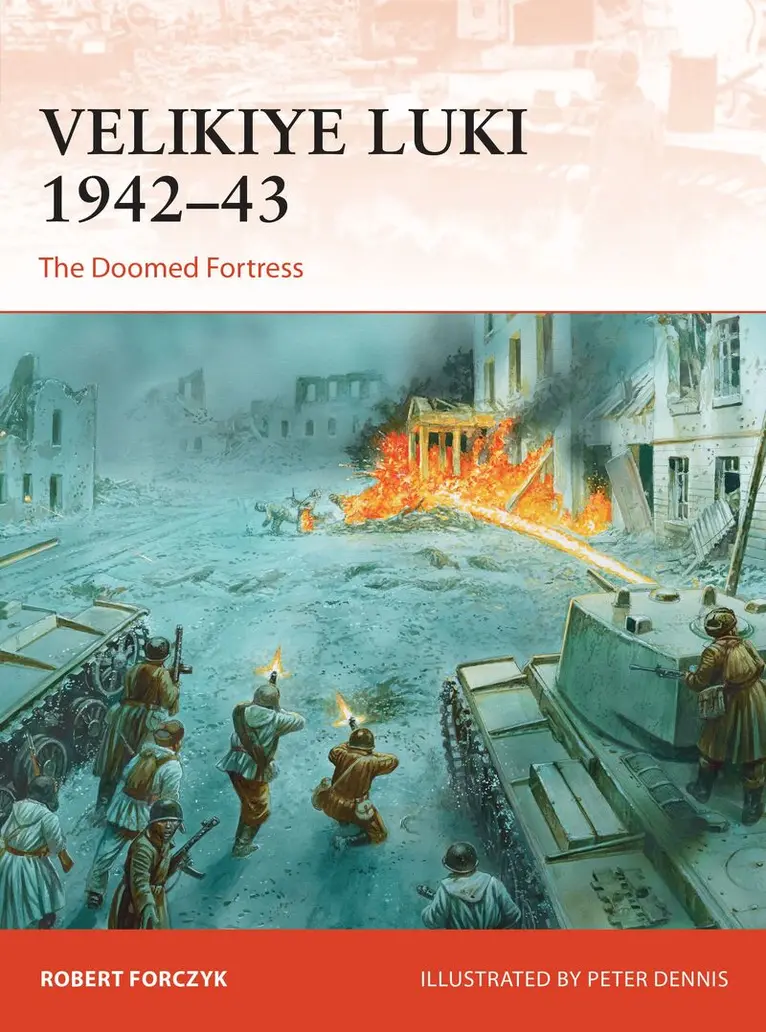
A highly illustrated study of one of the most dramatic yet overlooked episodes on the Eastern Front in World War II, the siege of Velikye Luki by Soviet forces in 1942–43.Velikiye Luki had been an important Russian fortress city since the 13th century and had become an important rail-hub by the 19th century. In August 1941, the Germans occupied the city of 30,000 during Operation Barbarossa and made it a bulwark on the boundary between Heeresgruppe Nord and Heeresgruppe Mitte.In the winter of 1942–43, while Soviet forces were encircling Stalingrad, the Stavka (High Command) conducted a simultaneous offensive to isolate and destroy the 7,500-man German garrison in Velikiye Luki. After surrounding the city on 27 November 1942, the Soviet 3rd Shock Army gradually reduced the city to rubble, while the German garrison, sustained by Luftwaffe air lifts, hunkered down in the medieval city and awaited rescue. This compact account reveals the full story of the tense seven-week siege of Velikiye Luki, which saw Soviet forces striving to liberate the city in the face of a determined garrison and fierce relief efforts.Detailed analysis by renowned World War II historian Robert Forczyk is complimented by stunning and historically accurate battlescenes, maps, and bird’s-eye-views to offer a comprehensive look at this gripping campaign. - E-bokEngelska, 2021
121 kr
Läs direkt efter köp
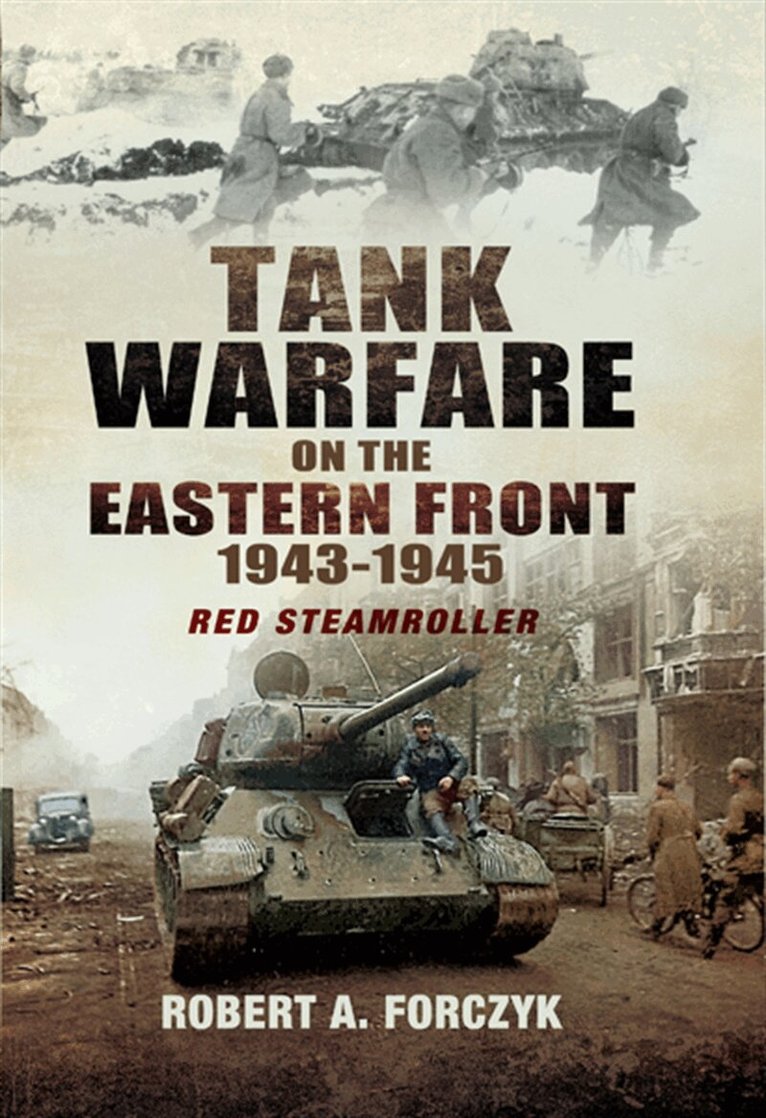
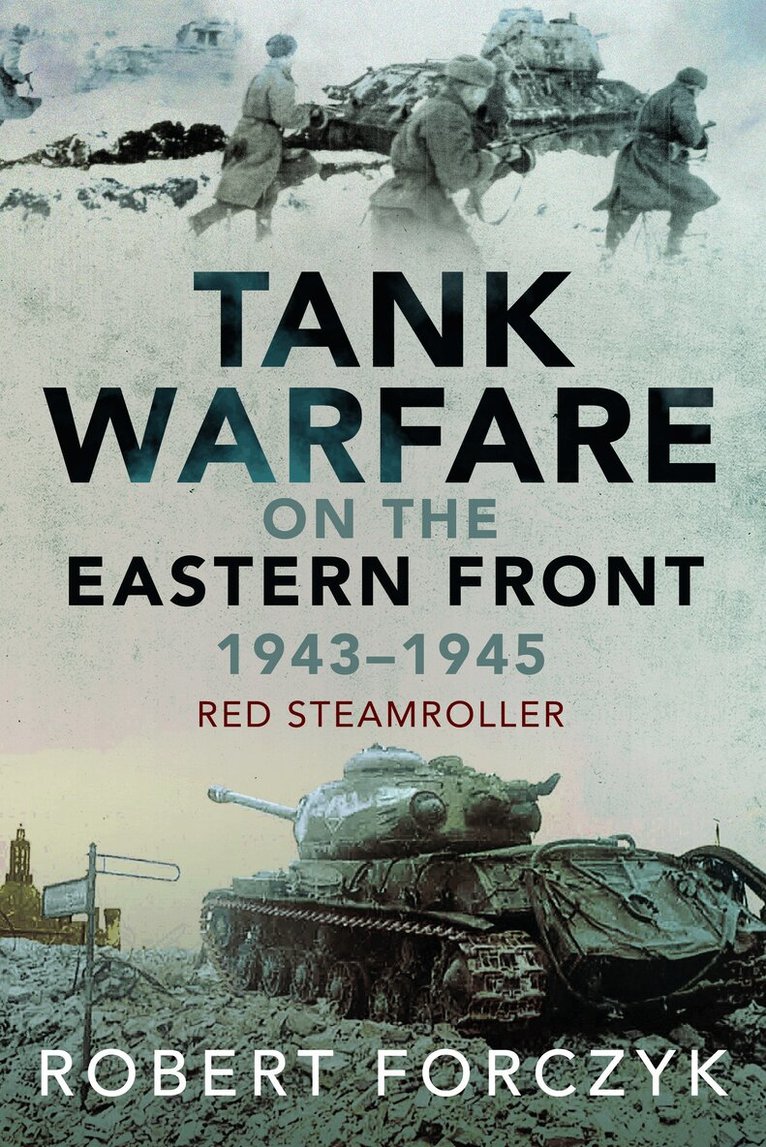
By 1943, after the catastrophic German defeat at Stalingrad, the Wehmacht’s panzer armies gradually lost the initiative on the Eastern Front. The tide of the war had turned. Their combined arms technique, which had swept Soviet forces before it during 1941 and 1942, had lost its edge. Thereafter the war on the Eastern Front was dominated by tank-led offensives and, as Robert Forczyk shows, the Red Army’s mechanized forces gained the upper hand, delivering a sequence of powerful blows that shattered one German defensive line after another. His incisive study offers fresh insight into how the two most powerful mechanized armies of the Second World War developed their tank tactics and weaponry during this period of growing Soviet dominance. He uses German, Russian and English sources to provide the first comprehensive overview and analysis of armoured warfare from the German and Soviet perspectives. This major study of the greatest tank war in history is compelling reading. - Häftad, Engelska, 2020
165 kr
Skickas
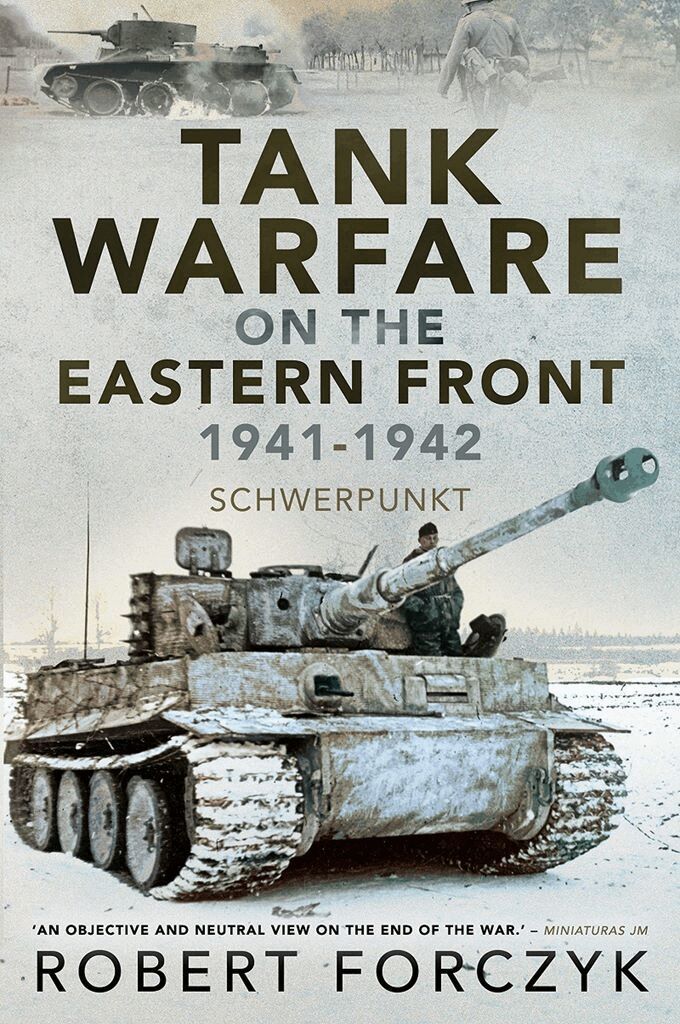
The German panzer armies that swept into the Soviet Union in 1941 were an undefeated force that had honed their skill in combined arms warfare to a fine edge. The Germans focused their panzers and tactical air support at points on the battlefield defined as Schwerpunkt - main effort - to smash through any defensive line and then advance to envelope their adversaries.Initially, these methods worked well in the early days of Operation Barbarossa and the tank forces of the Red Army suffered defeat after defeat. Although badly mauled in the opening battles, the Red Army's tank forces did not succumb to the German armoured onslaught and German planning and logistical deficiencies led to over-extension and failure in 1941\. In the second year of the invasion, the Germans directed their Schwerpunkt toward the Volga and the Caucasus and again achieved some degree of success, but the Red Army had grown much stronger and by November 1942, the Soviets were able to turn the tables at Stalingrad.Robert Forczyk's incisive study offers fresh insight into how the two most powerful mechanized armies of the Second World War developed their tactics and weaponry during the critical early years of the Russo-German War. He uses German, Russian and English sources to provide the first comprehensive overview and analysis of armored warfare from the German and Soviet perspectives. His analysis of the greatest tank war in history is compelling reading. - Del 411 - Campaign
Kamenets-Podolsky Pocket 1944
Encirclement of Hube’s 1st Panzer Army
Häftad, Engelska, 2025201 kr
Skickas
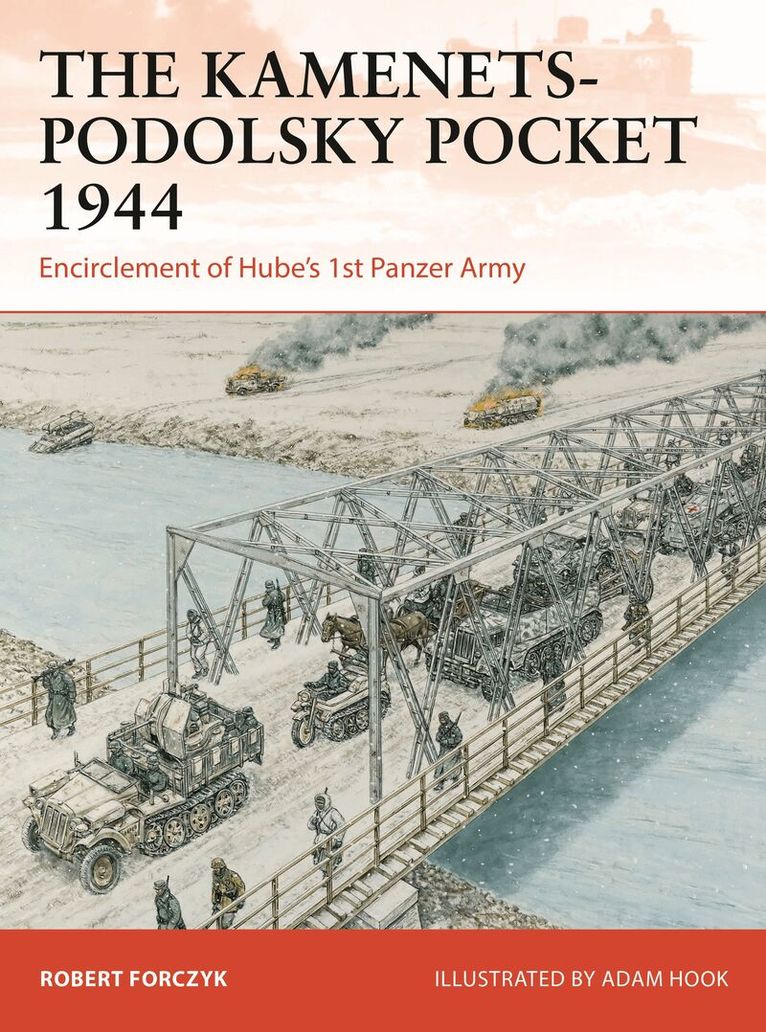
A detailed exploration of a critical month-long battle, which set the stage for German strategic-level defeats on both the Eastern and Western fronts.In February 1944, 1st Panzer Army (under Generaloberst Hube) played a major role in the relief operation that saved part of the German forces trapped in the Korsun Pocket. However, the losses suffered in that effort left Hube’s forces materially weakened, exhausted and with vulnerable flanks. Unexpectedly, Zhukov’s 1st Ukrainian Front and Konev’s 2nd Ukrainian Front attacked on 4 March, conducting a huge pincer operation against 1st Panzer Army. Within three weeks, Hube’s 200,000-strong army was isolated, with its back to the Dniester River. The destruction of Hube’s army would doubtless precipitate a rapid German collapse on the Eastern Front – two months before the Allied invasion of France. In this work, Eastern Front expert Robert Forczyk presents a superbly illustrated examination of the initial Soviet encirclement operation, Hube’s full-scale breakout operation to save his army, and the relief operation by 2nd SS-Panzer Corps (redeployed from the West) in April 1944. Although Hube’s army managed to escape Zhukov’s trap, it lost most of its equipment and was no longer fully combat capable. The German Army in the East had been seriously weakened, and the amount of German armour deployed in the West to counter any Allied landings in France had simultaneously been reduced. - Häftad, Engelska, 2026
166 kr
Kommande
By 1943, after the catastrophic German defeat at Stalingrad, the Wehmacht's panzer armies gradually lost the initiative on the Eastern Front. The tide of the war had turned. Their combined arms technique, which had swept Soviet forces before it during 1941 and 1942, had lost its edge. Thereafter the war on the Eastern Front was dominated by tank-led offensives and, as Robert Forczyk shows, the Red ArmyÕs mechanized forces gained the upper hand, delivering a sequence of powerful blows that shattered one German defensive line after another. His incisive study offers fresh insight into how the two most powerful mechanized armies of the Second World War developed their tank tactics and weaponry during this period of growing Soviet dominance. He uses German, Russian and English sources to provide the first comprehensive overview and analysis of armoured warfare from the German and Soviet perspectives. This major study of the greatest tank war in history is compelling reading. - Del 15 - Command
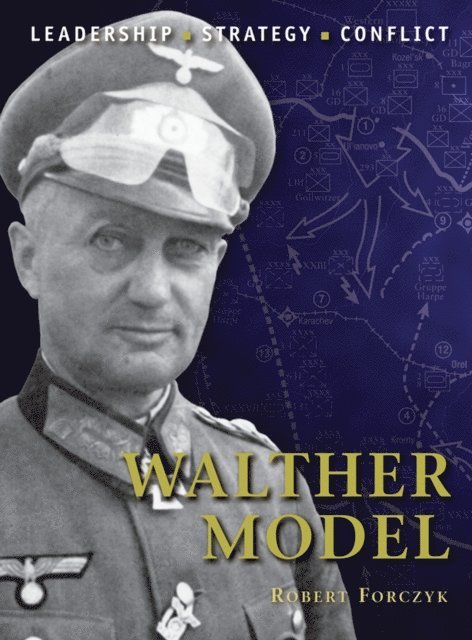
Walther Model
E-bokEngelska, 2013210 kr
Läs direkt efter köp
A military biography of one of the most successful and popular German generals of World War II.This volume details the military career and accomplishments of Walther Model, the youngest Generalfeldmarschall in the Wehrmacht in World War II and Hitler''s favourite commander. Model was a tough and tenacious commander, particularly when on the defensive, and his career rise was virtually unprecedented in German military history.Model really made his mark late in the war, when time was already running out for the Third Reich, but time and again he was rushed from one crumbling front to the next and succeeded in temporarily restoring the situation. Above all, Model deserves recognition as one of the great defensive commanders of modern military history. - Del 231 - Campaign
Nez Perce 1877
The Last Fight
E-bokEngelska, 2013235 kr
Läs direkt efter köp
A history of the campaign that saw the US Army''s pursuit and final capture of the Nez Perce Indians under Chief Joseph.With the wars between the US and the Native Americans drawing to a close, one tribe in Eastern Oregon continued to resist. The Nez Perce, led by the ''Red Napoleon'' Chief Joseph, refused to surrender and accept resettlement. Instead, Chief Joseph organized a band of 750 warriors and set off for the Canadian border, pursued by 2,000 US Army troops under Major-General Oliver Howard.The army chased the natives for three months, fighting 13 actions. Finally, just 40 miles from the Canadian border, the Army ran Chief Joseph to the ground, and forced him to surrender after a five-day battle near Bear Paw Mountain.Packed with illustrations, maps and detailed description, this book explores the various actions fought, from the beginnings of the campaign to the final surrender. - Del 281 - Campaign
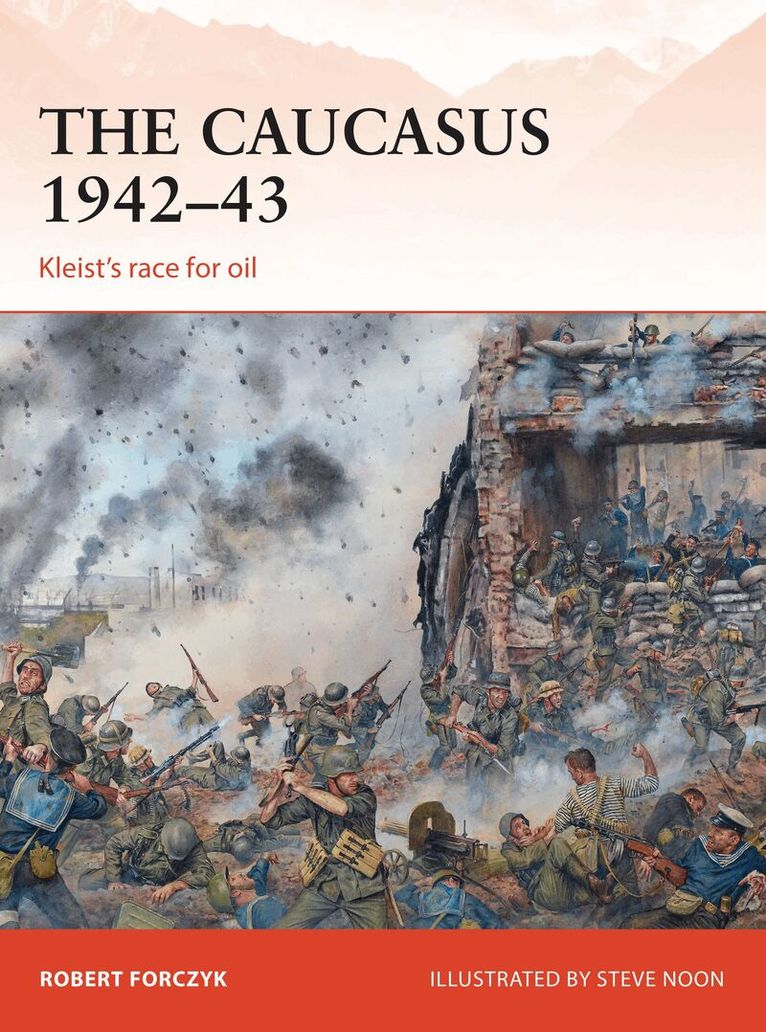
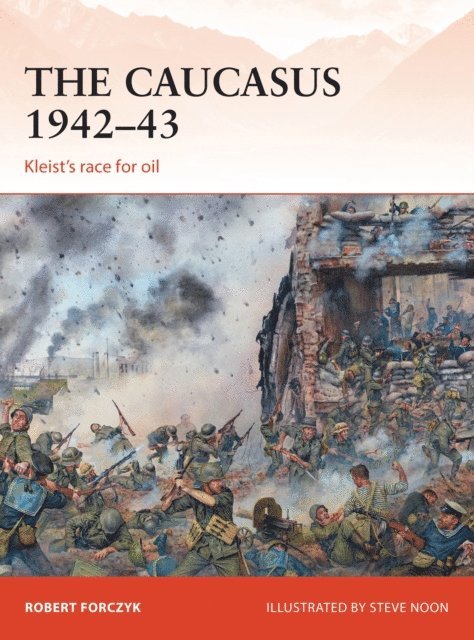
Caucasus 1942–43
Kleist’s race for oil
Häftad, Engelska, 2015201 kr
Skickas
Much has been written of the titanic clashes between the Wehrmacht and the Red Army at Stalingrad. This volume tells the other, equally important half of the story of Fall Blau (Case Blue).Learning from their experiences during the sweeping advances of Operation Barbarossa a year before, Wehrmacht commanders knew that Nazi Germany's lack of oil was a huge strategic problem. Seizure of the Caucasus oilfields, which were responsible for 82% of the Soviet Union's crude oil, would simultaneously alleviate the German army's oil shortages whilst denying vital fuel resources to the Red Army.Whilst Army Group B advanced along the Volga towards Stalingrad, Army Group A, spearheaded by Ewald von Kleist's elite Panzerarmee 1 was to advance into the Caucasus to seize the oilfields of Maikop, Grozny and Baku.Featuring full-colour artwork, archival photos and detailed analysis, this book follows the vicious, intense fighting that characterised one of the most important campaigns of World War II. - Del 281 - Campaign
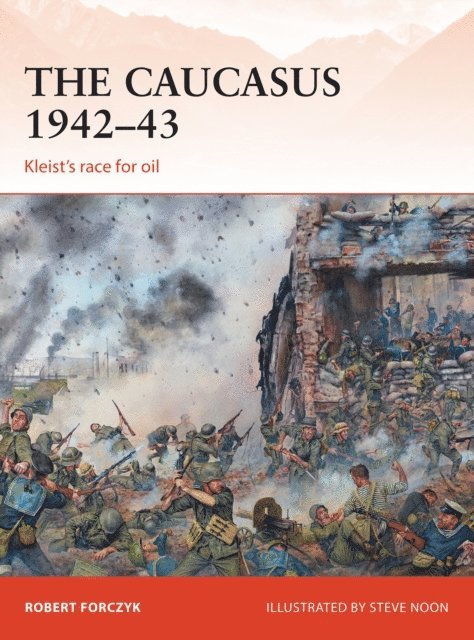
Caucasus 1942–43
Kleist’S Race for Oil
E-bokPDF, Engelska, 2015235 kr
Läs direkt efter köp
Much has been written of the titanic clashes between the Wehrmacht and the Red Army at Stalingrad. This volume tells the other, equally important half of the story of Fall Blau (Case Blue).Learning from their experiences during the sweeping advances of Operation Barbarossa a year before, Wehrmacht commanders knew that Nazi Germany''s lack of oil was a huge strategic problem. Seizure of the Caucasus oilfields, which were responsible for 82% of the Soviet Union''s crude oil, would simultaneously alleviate the German army''s oil shortages whilst denying vital fuel resources to the Red Army.Whilst Army Group B advanced along the Volga towards Stalingrad, Army Group A, spearheaded by Ewald von Kleist''s elite Panzerarmee 1 was to advance into the Caucasus to seize the oilfields of Maikop, Grozny and Baku.Featuring full-colour artwork, archival photos and detailed analysis, this book follows the vicious, intense fighting that characterised one of the most important campaigns of World War II. - Del 281 - Campaign
Caucasus 1942–43
Kleist’S Race for Oil
E-bokEngelska, 2015238 kr
Läs direkt efter köp
Much has been written of the titanic clashes between the Wehrmacht and the Red Army at Stalingrad. This volume tells the other, equally important half of the story of Fall Blau (Case Blue).Learning from their experiences during the sweeping advances of Operation Barbarossa a year before, Wehrmacht commanders knew that Nazi Germany''s lack of oil was a huge strategic problem. Seizure of the Caucasus oilfields, which were responsible for 82% of the Soviet Union''s crude oil, would simultaneously alleviate the German army''s oil shortages whilst denying vital fuel resources to the Red Army.Whilst Army Group B advanced along the Volga towards Stalingrad, Army Group A, spearheaded by Ewald von Kleist''s elite Panzerarmee 1 was to advance into the Caucasus to seize the oilfields of Maikop, Grozny and Baku.Featuring full-colour artwork, archival photos and detailed analysis, this book follows the vicious, intense fighting that characterised one of the most important campaigns of World War II. - E-bokEngelska, 2013
221 kr
Läs direkt efter köp
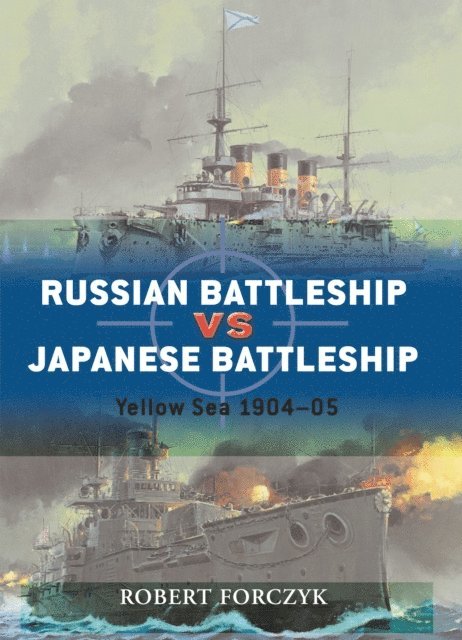
A fascinating account of a conflict which is often neglected, but had lasting international impact, with detailed analysis of the major technical aspects of the battleships, crew training and battle experiences.The first major clash between a European and Asian state in the modern era signalled the beginning of Japan''s rise as a major power on the world stage. Watched by the rest of the world''s superpowers, this incredibly violent war was disastrous for the Russians who, despite their superior numbers, were defeated by the Japanese underdogs in a spectacular fashion.Here, military expert Dr. Robert Forczyk covers the key technical elements of firepower, protection, maneuverability and communications for each side in detail. Accompanied by first-hand accounts and specially commissioned artwork, this compact volume explains and illustrates this historically significant duel. - Del 11 - Combat
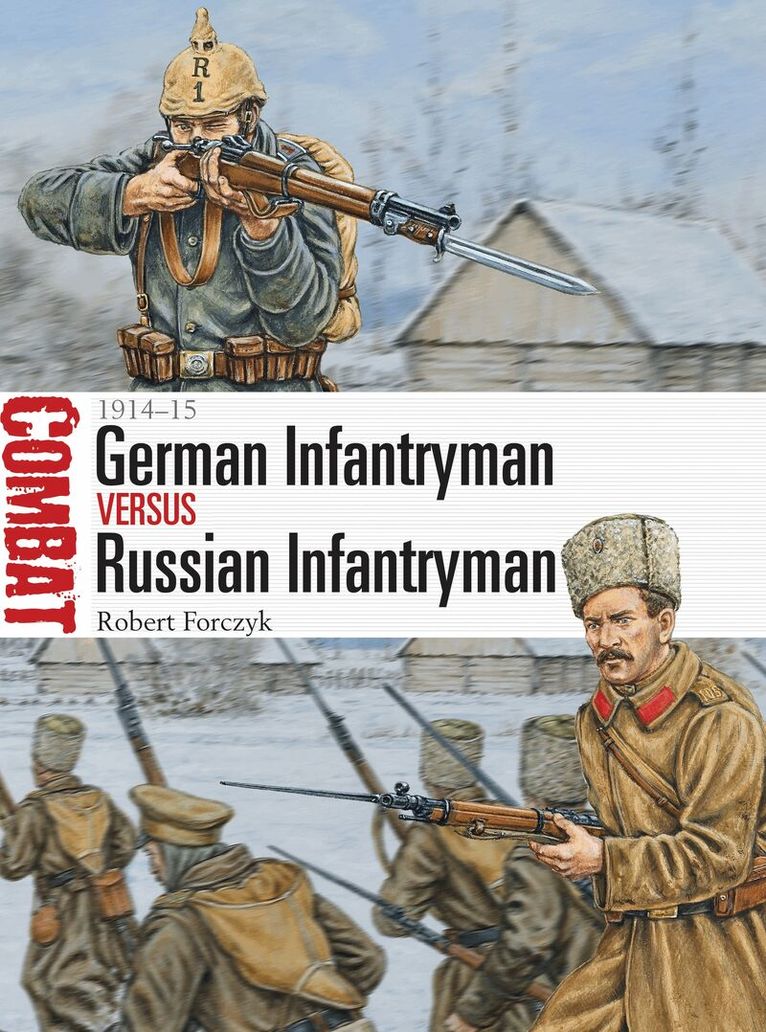
German Infantryman vs Russian Infantryman
1914–15
Häftad, Engelska, 2015195 kr
Skickas inom 10-15 vardagar
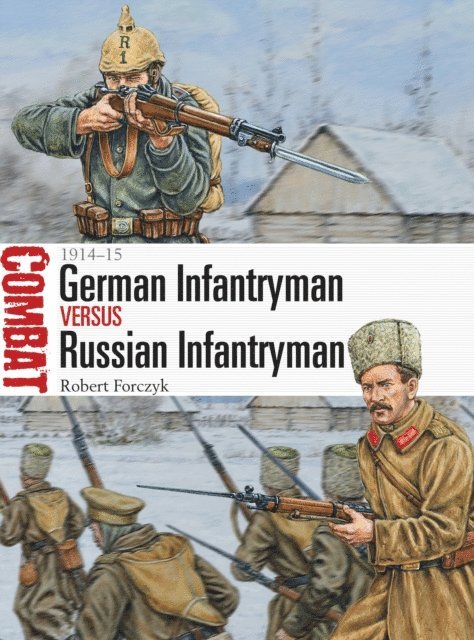
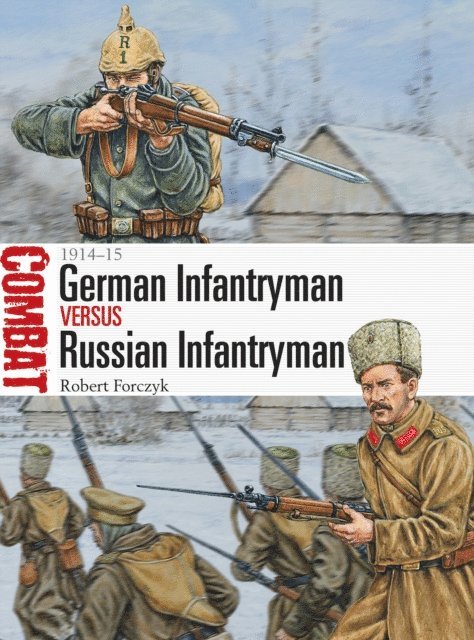
The Eastern Front of World War I is sometimes overshadowed by the fighting in the West.But the clashes between Imperial Germany and Tsarist Russia in East Prussia, Poland and Lithuania were every bit as gruelling for the participants as the great battles in Western Europe. In spite of the crushing German victory at Tannenberg in August 1914, the war in the East would grind on into 1918, hampered by supply problems, difficult terrain and appalling weather conditions.In this study, author Robert Forczyk assesses the tactics and combat performance of both sides fighting in the brutal clashes at Gumbinnen, Göritten and Mahartse, examining their contrasting fortunes and revealing the evolving nature of infantry warfare on the Eastern Front during World War I. - Del 11 - Combat
German Infantryman vs Russian Infantryman
1914–15
E-bokPDF, Engelska, 2015224 kr
Läs direkt efter köp
The Eastern Front of World War I is sometimes overshadowed by the fighting in the West.But the clashes between Imperial Germany and Tsarist Russia in East Prussia, Poland and Lithuania were every bit as gruelling for the participants as the great battles in Western Europe. In spite of the crushing German victory at Tannenberg in August 1914, the war in the East would grind on into 1918, hampered by supply problems, difficult terrain and appalling weather conditions.In this study, author Robert Forczyk assesses the tactics and combat performance of both sides fighting in the brutal clashes at Gumbinnen, Göritten and Mahartse, examining their contrasting fortunes and revealing the evolving nature of infantry warfare on the Eastern Front during World War I. - Del 11 - Combat
German Infantryman vs Russian Infantryman
1914–15
E-bokEngelska, 2015224 kr
Läs direkt efter köp
The Eastern Front of World War I is sometimes overshadowed by the fighting in the West.But the clashes between Imperial Germany and Tsarist Russia in East Prussia, Poland and Lithuania were every bit as gruelling for the participants as the great battles in Western Europe. In spite of the crushing German victory at Tannenberg in August 1914, the war in the East would grind on into 1918, hampered by supply problems, difficult terrain and appalling weather conditions.In this study, author Robert Forczyk assesses the tactics and combat performance of both sides fighting in the brutal clashes at Gumbinnen, Göritten and Mahartse, examining their contrasting fortunes and revealing the evolving nature of infantry warfare on the Eastern Front during World War I. - Del 291 - Campaign
Dnepr 1943
Hitler's eastern rampart crumbles
Häftad, Engelska, 2016202 kr
Skickas inom 5-8 vardagar
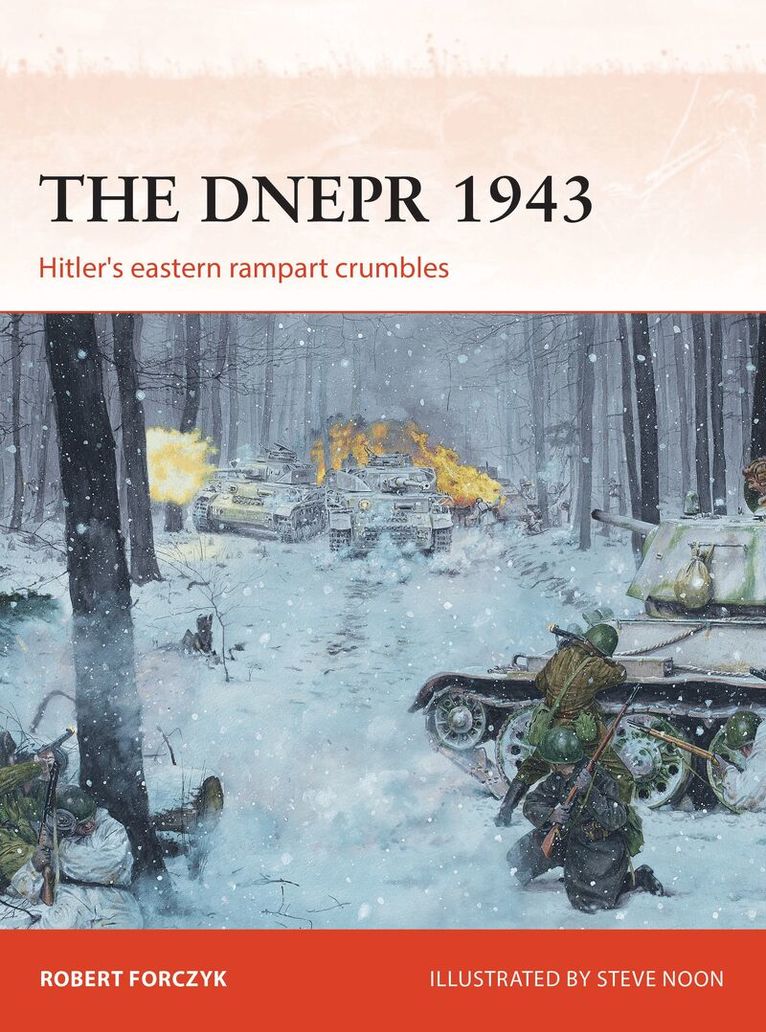
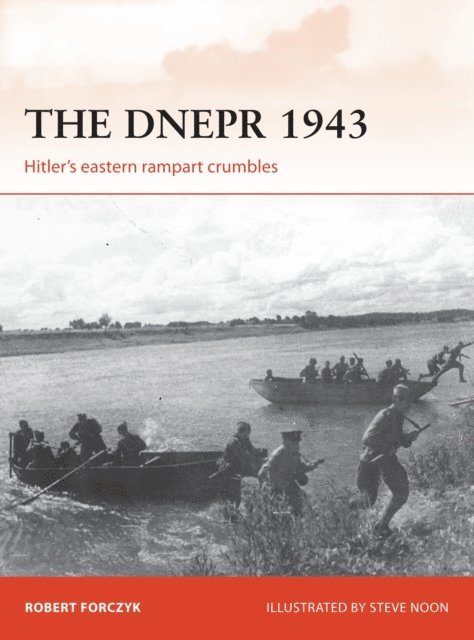
A highly illustrated account of the race for the River Dnepr in 1943, one of the major campaigns on the Eastern Front in World War II, written by one of the pre-eminent historians of Eastern Front military history.Against the wishes of Hitler, German forces under Erich von Manstein were forced to retreat following the failure of the Kursk offensive of July 1943. The weakened force only had one possible refuge, behind the wide Dnepr River. The race to the natural defensive line was on, with the Soviets launching one of their largest offensives of the war – with over 2 million men on the move. Robert Forczyk describes the dramatic four-month campaign that saw the Red Army not only succeed in crossing the Dnepr at multiple points, but also liberate Kiev, capital of the Ukraine.Revealing new detail about the largest Soviet airborne operation of the war and the increasingly desperate delaying tactics employed by Manstein as catastrophic casualties mounted on both sides, Forczyk charts the course of the battle that confirmed to many observers that the relentless Soviet advance westward could not be halted. Berlin would be next. - Del 291 - Campaign
Dnepr 1943
Hitler'S Eastern Rampart Crumbles
E-bokPDF, Engelska, 2016235 kr
Läs direkt efter köp
A highly illustrated account of the race for the River Dnepr in 1943, one of the major campaigns on the Eastern Front in World War II, written by one of the pre-eminent historians of Eastern Front military history.Against the wishes of Hitler, German forces under Erich von Manstein were forced to retreat following the failure of the Kursk offensive of July 1943. The weakened force only had one possible refuge, behind the wide Dnepr River. The race to the natural defensive line was on, with the Soviets launching one of their largest offensives of the war – with over 2 million men on the move. Robert Forczyk describes the dramatic four-month campaign that saw the Red Army not only succeed in crossing the Dnepr at multiple points, but also liberate Kiev, capital of the Ukraine.Revealing new detail about the largest Soviet airborne operation of the war and the increasingly desperate delaying tactics employed by Manstein as catastrophic casualties mounted on both sides, Forczyk charts the course of the battle that confirmed to many observers that the relentless Soviet advance westward could not be halted. Berlin would be next. - Del 291 - Campaign
Dnepr 1943
Hitler'S Eastern Rampart Crumbles
E-bokEngelska, 2016238 kr
Läs direkt efter köp
A highly illustrated account of the race for the River Dnepr in 1943, one of the major campaigns on the Eastern Front in World War II, written by one of the pre-eminent historians of Eastern Front military history.Against the wishes of Hitler, German forces under Erich von Manstein were forced to retreat following the failure of the Kursk offensive of July 1943. The weakened force only had one possible refuge, behind the wide Dnepr River. The race to the natural defensive line was on, with the Soviets launching one of their largest offensives of the war – with over 2 million men on the move. Robert Forczyk describes the dramatic four-month campaign that saw the Red Army not only succeed in crossing the Dnepr at multiple points, but also liberate Kiev, capital of the Ukraine.Revealing new detail about the largest Soviet airborne operation of the war and the increasingly desperate delaying tactics employed by Manstein as catastrophic casualties mounted on both sides, Forczyk charts the course of the battle that confirmed to many observers that the relentless Soviet advance westward could not be halted. Berlin would be next. - E-bokPDF, Engelska, 2016
160 kr
Läs direkt efter köp
We March Against England tells the thrilling tale of Operation Sea Lion, Hitler''s plan to invade Britain and end its involvement in World War II.In May 1940 Nazi Germany was master of continental Europe, the only European power still standing was Great Britain – and the all-conquering German armed forces stood poised to cross the Channel. Following the destruction of the RAF fighter forces, the sweeping of the Channel of mines, and the wearing down of the Royal Naval defenders, two German army groups were set to storm the beaches of southern England. Despite near-constant British fears from August to October, the invasion never took place after first being postponed to spring 1941 before finally being abandoned entirely.Robert Forcyzk, author of Where the Iron Crosses Grow, looks beyond the traditional British account of Operation Sea Lion, complete with plucky Home Guards and courageous Spitfire pilots, at the real scale of German ambition, plans and capabilities. He examines, in depth, how Operation Sea Lion fitted in with German air-sea actions around the British Isles as he shows exactly what stopped Hitler from invading Britain. - E-bokEngelska, 2016
159 kr
Läs direkt efter köp
We March Against England tells the thrilling tale of Operation Sea Lion, Hitler''s plan to invade Britain and end its involvement in World War II.In May 1940 Nazi Germany was master of continental Europe, the only European power still standing was Great Britain – and the all-conquering German armed forces stood poised to cross the Channel. Following the destruction of the RAF fighter forces, the sweeping of the Channel of mines, and the wearing down of the Royal Naval defenders, two German army groups were set to storm the beaches of southern England. Despite near-constant British fears from August to October, the invasion never took place after first being postponed to spring 1941 before finally being abandoned entirely.Robert Forcyzk, author of Where the Iron Crosses Grow, looks beyond the traditional British account of Operation Sea Lion, complete with plucky Home Guards and courageous Spitfire pilots, at the real scale of German ambition, plans and capabilities. He examines, in depth, how Operation Sea Lion fitted in with German air-sea actions around the British Isles as he shows exactly what stopped Hitler from invading Britain. - Häftad, Engelska, 2016
172 kr
Skickas inom 5-8 vardagar
The Crimean Peninsula was the setting for the destruction of a number of armies in World War II, both Soviet and German.When the Soviets fortified Sevastopol in 1941 it heralded the beginning of a period of intense fighting over the Crimea. In this remarkable work, acclaimed author Robert Forcyzk assembles new research to investigate the intense and barbaric fighting for the region in World War II, where first Soviet and then German armies were surrounded and totally obliterated.Forcyzk’s unique account provides a definitive analysis of the many unique characteristics of the conflict, exploring the historical context as it uncovers one of the most pivotal theaters of the Eastern Front during World War II.