Robert H. Kretsinger - Böcker
Visar alla böcker från författaren Robert H. Kretsinger. Handla med fri frakt och snabb leverans.
4 produkter
4 produkter
2 155 kr
Skickas inom 5-8 vardagar
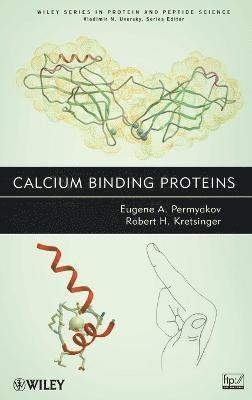
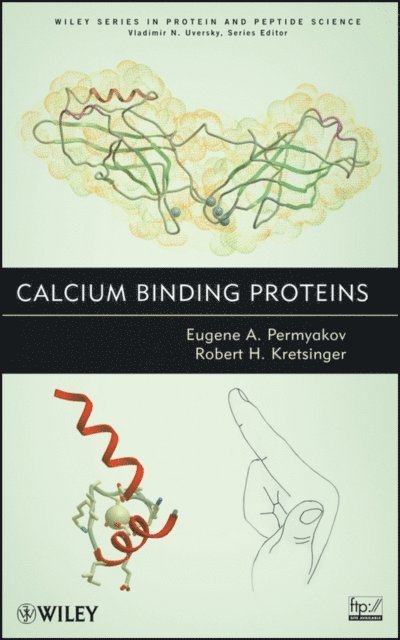
Calcium Binding Proteins explains the unique and highly diverse functions of calcium in biology, which are realized by calcium binding proteins. The structures and physical characteristics of these calcium binding proteins are described, as well as their functions and general patterns of their evolution. Techniques that underlie the description of proteins are discussed, including NMR, circular dichroism, optical rotatory dispersion spectroscopy, calorimetry,and crystallography. The book discusses the patterns of bochmical phenomena such as calcium homeostasis, mineralization, and cell signaling that involve specific proteins. It summarizes ongoing research and presents general hypotheses that help to focus future research, and also provides a conceptual framework and a description of the underlying techniques that permits someone entering the field to become conversant.
6 222 kr
Skickas inom 10-15 vardagar
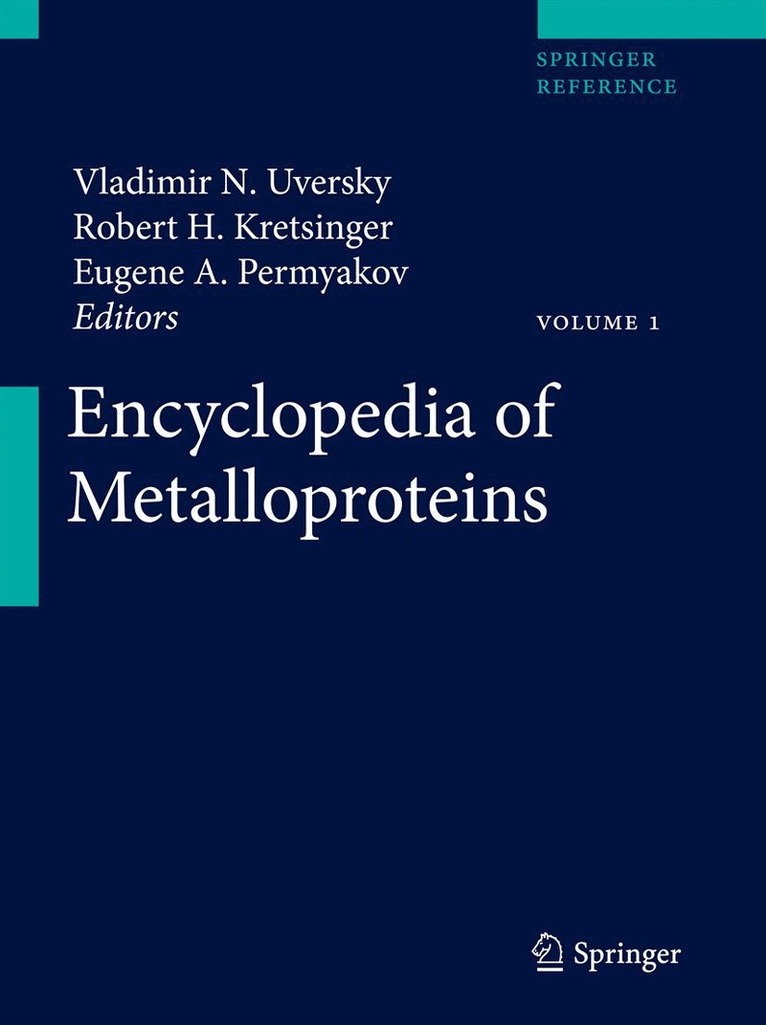
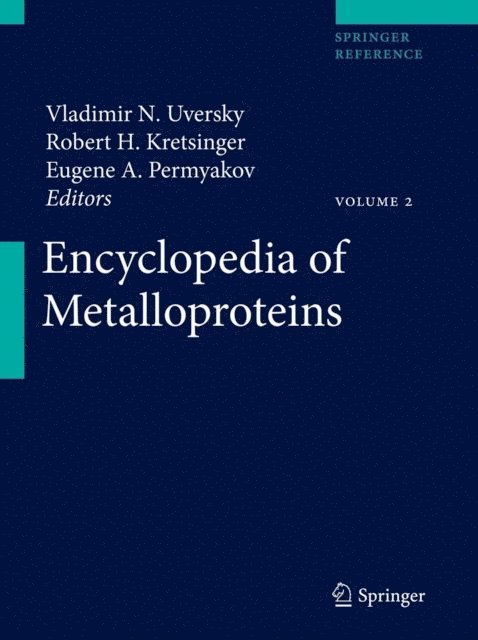
In biochemistry, a metalloprotein is a generic term for a protein that contains a metal cofactor. The metal may be an isolated ion or may be coordinated with a nonprotein organic compound, such as the porphyrin found in hemoproteins. In some cases, the metal is co-coordinated with a side chain of the protein and an inorganic nonmetallic ion. This kind of protein-metal-nonmetal structure is seen in iron-sulfur clustersMetalloproteins deals with all aspects related to the intracellular and extracellular metal-binding proteins, including their structures, properties and functions. The biological roles of metal cations and metal-binding proteins are endless. They are involved in all crucial cellular activities. Many pathological conditions are related to the problematic metal metabolism. Research in metalloprotein-related topics is therefore rapidly growing, and different aspects of metal-binding proteins progressively enter curricula at Universities andeven at the High School level on occasion. However, no key resource providing basic, but comprehensible knowledge on this rapidly expanding field exists. The Encyclopedia of Metalloproteins aims to bridge this gap, and will attempt to cover various aspects of metalloprotein/metalloproteomics and will deal with the different issues related to the intracellular and extracellular metal-binding proteins, including their structures, properties and functions. The goal is to cover exhaustively all catalytically and biologically crucial metal ions and to find at least one interacting protein for other metal ions. The Encyclopedia of Metalloproteins will provide a key resource for advanced undergraduate and graduate students, researchers, instructors, and professors interested in protein science, biochemistry, cell biology, and genetics.
1 269 kr
Skickas inom 5-8 vardagar
History and Philosophy of Biology summarizes the major philosophical ideas that have attended the development of science in general and of biology in particular. The book then explores how the techniques and the concepts of the physical sciences have impacted biology. A reductionist approach to biology — anatomy, physiology, genetics — complements the study of evolution by natural selection and an ecological perspective. The final section of the book explores several examples of the influence of science on society, and of society on science.Each of 46 chapters of History and Philosophy of Biology has been or could be the topic of a major tome. The book is unique in that it explores the web of interactions among issues of philosophy, techniques and concepts of the physical sciences, fields of biology, and the diverse relationships between society and science.The book should appeal to readers of Scientific American or the New York Review of Books even if they are not trained biologists. It is a good text, or additional reading, for an advanced undergraduate course treating history and/or philosophy of biology or of science in general.
758 kr
Skickas inom 5-8 vardagar
History and Philosophy of Biology summarizes the major philosophical ideas that have attended the development of science in general and of biology in particular. The book then explores how the techniques and the concepts of the physical sciences have impacted biology. A reductionist approach to biology — anatomy, physiology, genetics — complements the study of evolution by natural selection and an ecological perspective. The final section of the book explores several examples of the influence of science on society, and of society on science.Each of 46 chapters of History and Philosophy of Biology has been or could be the topic of a major tome. The book is unique in that it explores the web of interactions among issues of philosophy, techniques and concepts of the physical sciences, fields of biology, and the diverse relationships between society and science.The book should appeal to readers of Scientific American or the New York Review of Books even if they are not trained biologists. It is a good text, or additional reading, for an advanced undergraduate course treating history and/or philosophy of biology or of science in general.