Robert K. Brigham - Böcker
Visar alla böcker från författaren Robert K. Brigham. Handla med fri frakt och snabb leverans.
6 produkter
6 produkter
324 kr
Skickas
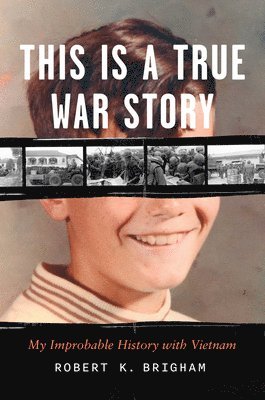
A personal account by a war historian and adoptee who discovers his biological father was a famous Marine combat photographer in Vietnam. Robert K. Brigham has had a substantial career as a historian of the Vietnam War, with a hand in nine books, a documentary, public history projects, and more. While many a historian has felt compelled at some point to write about a subject close to them personally, Brigham did not think he was doing that. But, at age fifty-eight, Brigham, who had long known he was adopted, discovered that he’d improbably and unknowingly been studying and talking about his biological father for decades. That man, Bruce Atwell, was a Marine Corps photographer who took some of that war’s most indelible and widely reproduced pictures. Brigham had used those images over and over again in decades’ worth of classes and public lectures, never knowing the truth. Both Brigham and Atwell were products of the American foster care and adoption system, and both were defined professionally by Vietnam. In a story shot through with echoes and shadows, Brigham not only reveals his own history as an adoptee but opens a startlingly fresh vantage on the fragility of American families; the power of social norms and taboos to shape lives; and the forces that inequitably disrupt families, not least of them war. The result is an accessible and moving book that is at once both a powerful personal story and an illuminating social critique.
612 kr
Skickas inom 10-15 vardagar
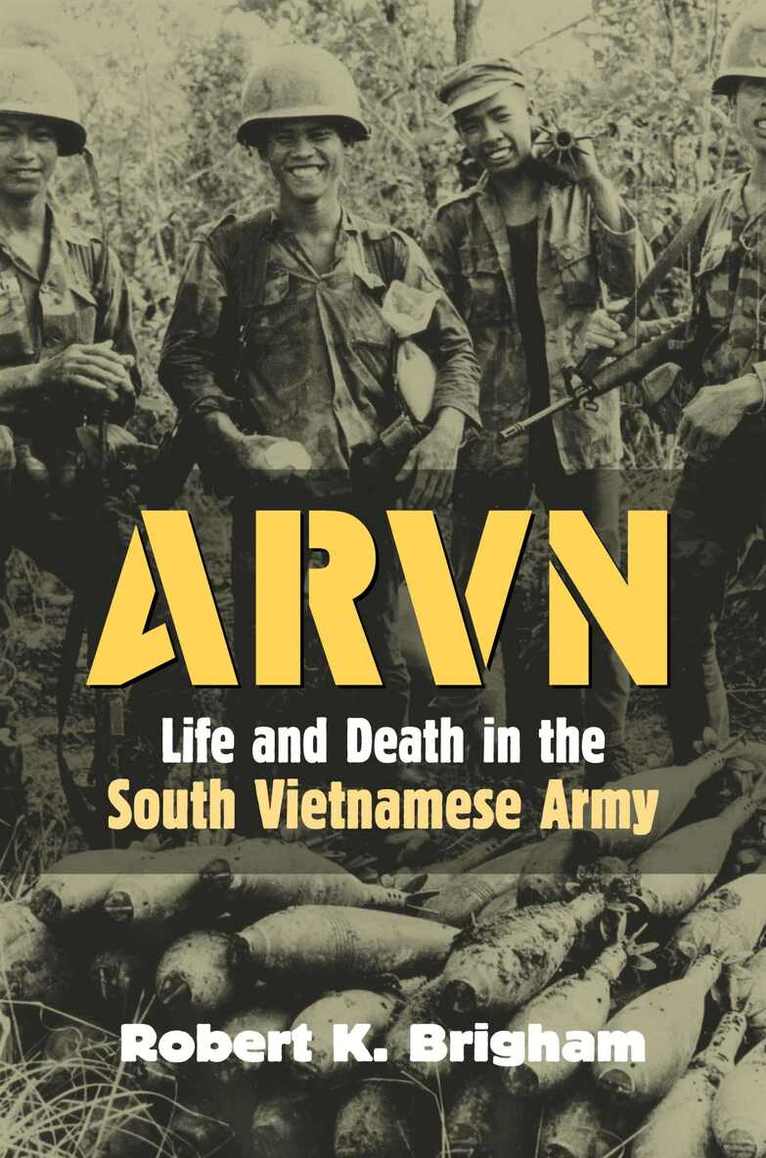
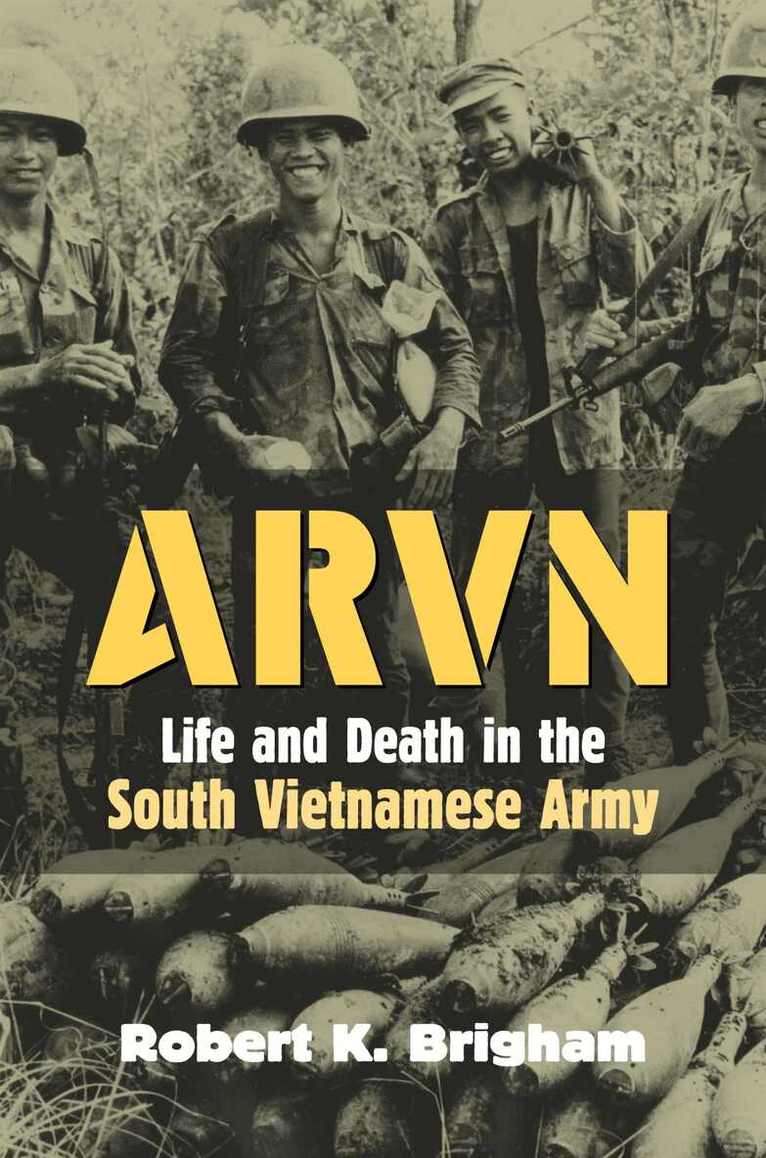
Scorned by allies and enemies alike, the Army of the Republic of Vietnam (ARVN) was one of the most maligned fighting forces in modern history. Cobbled together by U.S. advisers from the remnants of the French-inspired Vietnamese National Army, it was effectively pushed aside by the Americans in 1965. When toward the end of the war the army was compelled to reassert itself, it was too little, too late for all concerned. In this first in-depth history of the ARVN from 1955 to 1975, Robert Brigham takes readers into the barracks and training centers of the ARVN to plumb the hearts and souls of these forgotten soldiers. Through his masterly command of Vietnamese-language sources - diaries, memoirs, letters, oral interviews, and more - he explores the lives of ordinary men, focusing on troop morale and motivation within the context of traditional Vietnamese society and a regime that made impossible demands upon its soldiers. Offering keen insights into ARVN veterans' lives as both soldiers and devout kinsmen, Brigham reveals what they thought about their American allies, their Communist enemies, and their own government. He describes the conscription policy that forced these men into the army for indefinite periods with a shameful lack of training and battlefield preparation and examines how soldiers felt about barracks life in provinces far from their homes. He also explores the cultural causes of the ARVN's estrangement from the government and describes key military engagements that defined the achievements, failures, and limitations of the ARVN as a fighting force. Along the way, he explodes some of the myths about ARVN soldiers' cowardice, corruption, and lack of patriotism that have made the ARVN the scapegoat for America's defeat. Ultimately, as Brigham shows, without any real political commitment to a divided Vietnam or vision for the future, the ARVN retreated into a subnational culture that redefined the war's meaning: saving their families. His fascinating book gives us a fuller understanding not only of the Vietnam War but also of the problems associated with U.S. nation building through military intervention.
323 kr
Skickas inom 10-15 vardagar
Choice Outstanding TitleScorned by allies and enemies alike, the Army of the Republic of Vietnam (ARVN) was one of the most maligned fighting forces in modern history. Cobbled together by U.S. advisers from the remnants of the French-inspired Vietnamese National Army, it was effectively pushed aside by the Americans in 1965. When toward the end of the war the army was compelled to reassert itself, it was too little, too late for all concerned.In this first in-depth history of the ARVN from 1955 to 1975, Robert Brigham takes readers into the barracks and training centers of the ARVN to plumb the hearts and souls of these forgotten soldiers. Through his masterly command of Vietnamese-language sources-diaries, memoirs, letters, oral interviews, and more-he explores the lives of ordinary men, focusing on troop morale and motivation within the context of traditional Vietnamese society and a regime that made impossible demands upon its soldiers.Offering keen insights into ARVN veterans' lives as both soldiers and devout kinsmen, Brigham reveals what they thought about their American allies, their Communist enemies, and their own government. He describes the conscription policy that forced these men into the army for indefinite periods with a shameful lack of training and battlefield preparation and examines how soldiers felt about barracks life in provinces far from their homes. He also explores the cultural causes of the ARVN's estrangement from the government and describes key military engagements that defined the achievements, failures, and limitations of the ARVN as a fighting force. Along the way, he explodes some of the myths about ARVN soldiers' cowardice, corruption, and lack of patriotism that have made the ARVN the scapegoat for America's defeat. Ultimately, as Brigham shows, without any real political commitment to a divided Vietnam or vision for the future, the ARVN retreated into a subnational culture that redefined the war's meaning: saving their families. His fascinating book gives us a fuller understanding not only of the Vietnam War but also of the problems associated with U.S. nation building through military intervention.
624 kr
Skickas inom 3-6 vardagar
This book offers a concise history of US policy in Iraq since 1990 and how it has evolved over two decades. Examines US relations with Iraq from both a regional and international perspectiveArgues that the only way to clearly understand US policy toward Iraq is to see it in its proper historical context and within a transnational frameworkUses recently declassified documents at the end of each chapter to illustrate US decision-making in the wars for IraqAddresses the importance of the changing domestic climate surrounding two decades
333 kr
Skickas inom 5-8 vardagar
The American war in Vietnam was concluded in 1973 under the terms of a truce that were effectively identical to what was offered to the Nixon administration four years earlier. Those four years cost America billions of dollars and over 35,000 war deaths and casualties, and resulted in the deaths of over 300,000 Vietnamese. And those years were the direct result of the supposed master plan of the most important voice in the Nixon White House on American foreign policy: Henry Kissinger.Using newly available archival material from the Nixon Presidential Library and Kissinger's personal papers, Robert K. Brigham shows how Kissinger's approach to Vietnam was driven by personal political rivalries and strategic confusion, while domestic politics played an outsized influence on Kissinger's so-called strategy. There was no great master plan or Bismarckian theory that supported how the US continued the war or conducted peace negotiations. As a result, a distant tragedy was perpetuated, forever changing both countries. Now, perhaps for the first time, we can see the full scale of that tragedy and the machinations that fed it.
240 kr
Skickas inom 10-15 vardagar
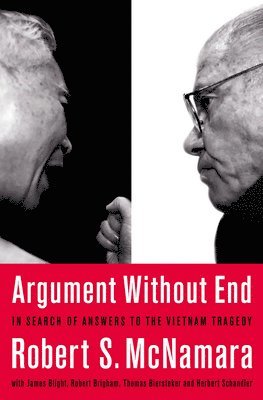
Did the Vietnam War have to happen? And why couldn't it have ended earlier? These are among the questions that Robert McNamara and his collabourators ask in Argument Without End, a book that will stand as a major contribution to what we know about the Vietnam War. Drawing on a series of meetings that brought together, for the first time ever, senior American and Vietnamese officials who had served during the war, the book looks at the many instances in which one side, or both, made crucial mistakes that led to the war and its duration. Using Vietnamese and Chinese documents, many never before made public, McNamara reveals both American and Vietnamese blunders, and points out ways in which such mistakes can be avoided in the future. He also shows conclusively that war could not be won militarily by the United States.McNamara's last book on Vietnam was one of the most controversial books ever published in this country. This book will reignite the passionate debate about the war, about McNamara, and about the lessons we can take away from the tragedy.