Robert K. Schaeffer - Böcker
Visar alla böcker från författaren Robert K. Schaeffer. Handla med fri frakt och snabb leverans.
11 produkter
11 produkter
809 kr
Skickas inom 10-15 vardagar
This interdisciplinary study provides a broad conceptual and factual base for a deeper understanding of the social, political, and economic forces that contribute to war and peace in the modern world. Focusing on war as an integral part of the political and economic development of the capitalist world-economy, the authors offer critiques of modern conflict theories and in-depth empirical analyses of war in the world-system during the past 400 years.Schaeffer's introductory chapter assesses theoretical approaches to the study of war from a world-system perspective. The historical relationship between economic development and war in the interstate system is explored on several levels. The emergence of the world-system is discussed, and the history of its globalization through diplomacy, aggressive trade expansion, conquest, and war is outlined. The authors examine the changing structure of political relations in the interstate system, and look at the connections between military conflict and political and economic developments within individual nations. The threat of nuclear war is considered, particularly as it shapes the world-system through deterrence ideology and the deployment of massive superpower nuclear arsenals. Other topics addressed are the relationship between militarization and national development, the origin and character of military-industrial complexes, the waging of war by absolutist states, and the impact of economic fluctuations on military expenditures and international relations. Drawn from a recent conference on War in the World-System, the studies in this book distill some of the most original and innovative thinking in the field. An appropriate choice for courses or research in war and peace studies, political economy, development, international relations, and allied disciplines.

465 kr
Skickas inom 10-15 vardagar
In the 1980s, U.S. officials adopted tax and monetary policies that channeled huge new resources into Wall Street, which fueled a stock market boom. To increase profits and payouts to investors as stock prices soared, corporate managers consolidated businesses, outsourced manufacturing to low-wage countries, and adopted new technologies to increase productivity. Government officials then facilitated mergers and negotiated free trade agreements to speed the process of globalization. Wall Street became an engine of capital accumulation and a force for global change.These developments resulted in massive job losses and stagnant wages for most Americans. Meanwhile, tax cuts and the stock market boom created vast new wealth for the rich, and the top 10 percent seized 50 percent of all income in the United States. The result was growing economic inequality.During the decades that followed, globalization triggered regional economic crises, toppled governments, transformed societies, galvanized economic development in China, and created new forms of wealth and inequality around the world. Then in 2008, a financial crisis rooted in Wall Street triggered the Great Recession, wrecked the legitimacy of globalization as a development strategy, and unleashed populist or "restrictionist" social movements and political parties that challenged globalization and attacked its economic and political foundations.This book examines the origins of globalization in the 1980s, the developments that triggered the Great Recession, and the political and economic forces that contributed to the disintegration of globalization as a force for change in the modern world. After Globalization explains what happened—and what comes next.
2 096 kr
Skickas inom 10-15 vardagar
In the 1980s, U.S. officials adopted tax and monetary policies that channeled huge new resources into Wall Street, which fueled a stock market boom. To increase profits and payouts to investors as stock prices soared, corporate managers consolidated businesses, outsourced manufacturing to low-wage countries, and adopted new technologies to increase productivity. Government officials then facilitated mergers and negotiated free trade agreements to speed the process of globalization. Wall Street became an engine of capital accumulation and a force for global change.These developments resulted in massive job losses and stagnant wages for most Americans. Meanwhile, tax cuts and the stock market boom created vast new wealth for the rich, and the top 10 percent seized 50 percent of all income in the United States. The result was growing economic inequality.During the decades that followed, globalization triggered regional economic crises, toppled governments, transformed societies, galvanized economic development in China, and created new forms of wealth and inequality around the world. Then in 2008, a financial crisis rooted in Wall Street triggered the Great Recession, wrecked the legitimacy of globalization as a development strategy, and unleashed populist or "restrictionist" social movements and political parties that challenged globalization and attacked its economic and political foundations.This book examines the origins of globalization in the 1980s, the developments that triggered the Great Recession, and the political and economic forces that contributed to the disintegration of globalization as a force for change in the modern world. After Globalization explains what happened—and what comes next.
1 572 kr
Skickas inom 10-15 vardagar
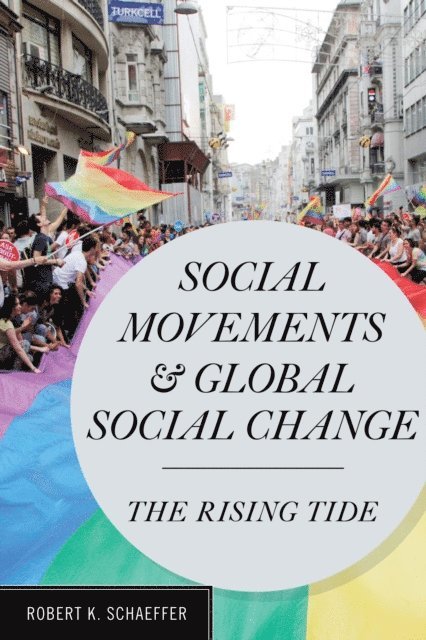
Social Movements and Global Social Change teaches students not only about how social change occurs but also how social movements can contribute to this change. The book links two concepts in sociology that are often related in real life, but that can seem disconnected in traditional approaches to teaching these courses. The book examines different types of social movements, including those often ignored in social change textbooks, such as riots, migration, and disorganized protest. It also looks at citizens’ rights and inequality in connection to social movements and change. The book features global perspectives and examples throughout.
568 kr
Skickas inom 10-15 vardagar
Social Movements and Global Social Change teaches students not only about how social change occurs but also how social movements can contribute to this change. The book links two concepts in sociology that are often related in real life, but that can seem disconnected in traditional approaches to teaching these courses. The book examines different types of social movements, including those often ignored in social change textbooks, such as riots, migration, and disorganized protest. It also looks at citizens’ rights and inequality in connection to social movements and change. The book features global perspectives and examples throughout.
Understanding Globalization
The Social Consequences of Political, Economic, and Environmental Change
Inbunden, Engelska, 2016
1 476 kr
Skickas inom 10-15 vardagar
Understanding Globalization introduces students to the concept of globalization, providing an essential history, overview of key themes and theories, and a wealth of engaging examples. The fifth edition has been completely revised to connect with students today, opening with a discussion of the far-reaching causes and effects of the recent financial crisis and including new material on global migration patterns, ISIS, and more, while maintaining the book’s accessible and student-friendly style.The book begins by examining the roots of the recent global financial crisis, looking at the roles of inflation, the housing crisis, Wall Street, policy makers, and more. It also explores the varying impact of globalization—from democratization and equality in some countries to destabilization and inequality in others. The fifth edition of Understanding Globalization is a compelling and current introduction to the myriad influences of globalization in our lives.
Understanding Globalization
The Social Consequences of Political, Economic, and Environmental Change
Häftad, Engelska, 2016
675 kr
Skickas inom 10-15 vardagar
Understanding Globalization introduces students to the concept of globalization, providing an essential history, overview of key themes and theories, and a wealth of engaging examples. The fifth edition has been completely revised to connect with students today, opening with a discussion of the far-reaching causes and effects of the recent financial crisis and including new material on global migration patterns, ISIS, and more, while maintaining the book’s accessible and student-friendly style.The book begins by examining the roots of the recent global financial crisis, looking at the roles of inflation, the housing crisis, Wall Street, policy makers, and more. It also explores the varying impact of globalization—from democratization and equality in some countries to destabilization and inequality in others. The fifth edition of Understanding Globalization is a compelling and current introduction to the myriad influences of globalization in our lives.
2 972 kr
Skickas inom 10-15 vardagar
Bringing feminist and world-systems theories together, this analytic anthology examines the rise of intersecting, women-centered movements that contribute to alternative development and the rise of new societies. The authors consider feminist movements and humanistic transformations that create new work and market relations, promote democracy and equality, redefine gender and sexuality, regenerate the environment, and construct nonviolent and peaceful relations. At the end of each chapter, articles by feminist theorists and practitioners on these topics are included to illustrate the analysis. Using a global, historical framework, the book shows how diverse, multicultural, and international feminist ideas can be brought together to provide a comprehensive and differentiated understanding of change.
977 kr
Skickas inom 10-15 vardagar
Bringing feminist and world-systems theories together, this analytic anthology examines the rise of intersecting, women-centered movements that contribute to alternative development and the rise of new societies. The authors consider feminist movements and humanistic transformations that create new work and market relations, promote democracy and equality, redefine gender and sexuality, regenerate the environment, and construct nonviolent and peaceful relations. At the end of each chapter, articles by feminist theorists and practitioners on these topics are included to illustrate the analysis. Using a global, historical framework, the book shows how diverse, multicultural, and international feminist ideas can be brought together to provide a comprehensive and differentiated understanding of change.
2 367 kr
Skickas inom 10-15 vardagar
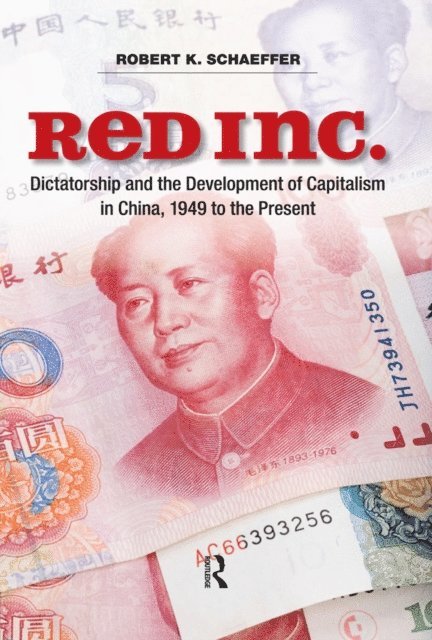
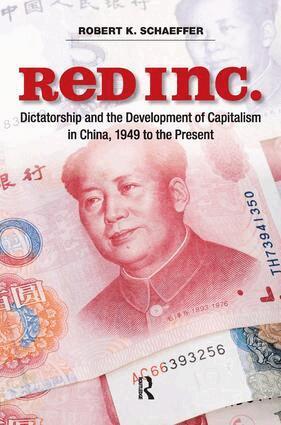
Red Inc. takes issue with the view that economic development will eventually promote democracy. It outlines in detail the enormous social costs of the rapid rise of China's economy. Although many observers argue that Deng Xiaoping introduced capitalism to China in the late 1970s, Schaeffer believes that capitalist development really began during the 1950s under Mao Zedong. But although Mao made relentless efforts to generate the capital needed to finance economic development, his regime failed to promote any real growth. Schaeffer shows that the remarkable rise of its economy in recent years has provided China with new and often corrupt sources of wealth and power that have enabled it to resist democracy. He brings into sharp focus the consequence of the regime's uncompromising approach to capital accumulation.
632 kr
Skickas inom 10-15 vardagar
Red Inc. takes issue with the view that economic development will eventually promote democracy. It outlines in detail the enormous social costs of the rapid rise of China's economy. Although many observers argue that Deng Xiaoping introduced capitalism to China in the late 1970s, Schaeffer believes that capitalist development really began during the 1950s under Mao Zedong. But although Mao made relentless efforts to generate the capital needed to finance economic development, his regime failed to promote any real growth. Schaeffer shows that the remarkable rise of its economy in recent years has provided China with new and often corrupt sources of wealth and power that have enabled it to resist democracy. He brings into sharp focus the consequence of the regime's uncompromising approach to capital accumulation.