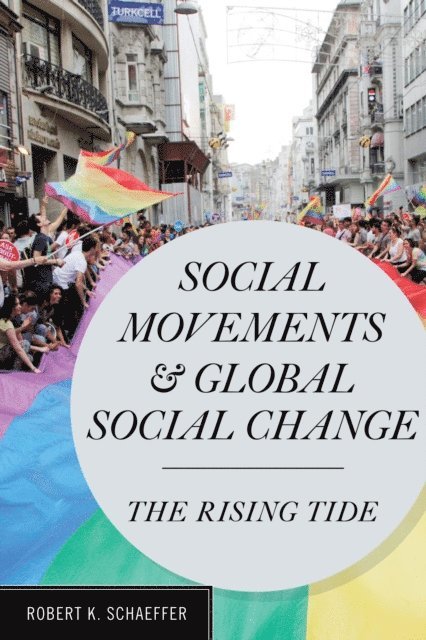
Social Movements and Global Social Change
The Rising Tide
591 kr
Beställningsvara. Skickas inom 10-15 vardagar. Fri frakt över 249 kr.
Du är på sajten för privatpersoner.
591 kr
Beställningsvara. Skickas inom 10-15 vardagar. Fri frakt över 249 kr.
Robert K. Schaeffer is professor of global sociology at Kansas State University. He is the author of several books, including Understanding Globalization.
Schaeffer identifies a significant set of global social changes over the past 200 years and then considers the role of diverse social movements in shaping them. Starting with the importance of moving from dynastic empires to republics–that is, constitutional governments based on popular sovereignty–the author traces the historical rise, democratization, and expansion of citizenship, beginning with the US. In addition to focusing first on social change and then examining how social movements contributed to it, a distinctive feature of this work is its consideration of how both liberty and equality have advanced in some ways, while subordination and inequality have endured in others. Schaeffer describes three types of social movements–aspiring, altruistic, and restrictionist–that create communities to make, assist, advance, and/or suppress change. The book closes with a critical discussion of primary social movement theories. The author takes an optimistic long view of social movements and social change 'tempered by a realistic appreciation of its limits.' Summing Up: Highly recommended. Most levels/libraries.
Du är på sajten för privatpersoner.
591 kr
Beställningsvara. Skickas inom 10-15 vardagar. Fri frakt över 249 kr.
Robert K. Schaeffer is professor of global sociology at Kansas State University. He is the author of several books, including Understanding Globalization.
Schaeffer identifies a significant set of global social changes over the past 200 years and then considers the role of diverse social movements in shaping them. Starting with the importance of moving from dynastic empires to republics–that is, constitutional governments based on popular sovereignty–the author traces the historical rise, democratization, and expansion of citizenship, beginning with the US. In addition to focusing first on social change and then examining how social movements contributed to it, a distinctive feature of this work is its consideration of how both liberty and equality have advanced in some ways, while subordination and inequality have endured in others. Schaeffer describes three types of social movements–aspiring, altruistic, and restrictionist–that create communities to make, assist, advance, and/or suppress change. The book closes with a critical discussion of primary social movement theories. The author takes an optimistic long view of social movements and social change 'tempered by a realistic appreciation of its limits.' Summing Up: Highly recommended. Most levels/libraries.