Robert M. Arkin - Böcker
Visar alla böcker från författaren Robert M. Arkin. Handla med fri frakt och snabb leverans.
3 produkter
3 produkter
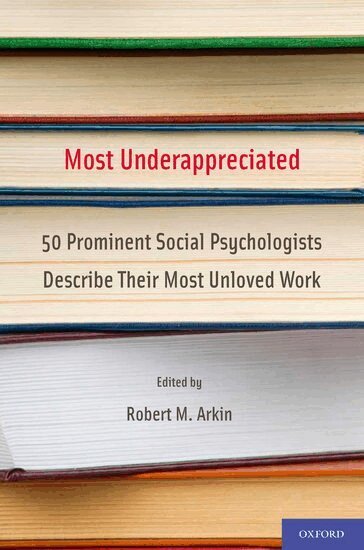
Most Underappreciated
50 Prominent Social Psychologists Describe Their Most Unloved Work
Häftad, Engelska, 2011
658 kr
Skickas inom 5-8 vardagar
Fifty of today's most prominent social psychologists describe their scholarship, focusing on the human and personal side of the "life of the mind." Each author spotlights his or her least appreciated work, and discusses theory, methods, findings, or application. The contributors also use this opportunity to provide the context behind their work.Some authors describe their mentors, the influential figures who led them to certain areas of research. Others offer advice to young researchers who are just entering the field and who can learn from their predecessors' mistakes and miscalculations. These contributors address issues like how to prepare for, and make the most of, a professorship in a liberal arts college context, and how to frame a research question, title an article, handle a controversy, pursue a passion, devise a method, think about a meta-analysis, and write persuasively. Still others discuss what makes their research important to them and to the field, describing the impact of their work on their own future research agendas. In fifty engaging and succinct essays, these eminent psychologists pull back the curtain on their professional lives. Their stories are personal and touch on relationships, passion for ideas, and the emotional highs and lows of academic life. This book is a truly unique glimpse behind scenes of social psychology and the people who have advanced the field.
4 151 kr
Skickas inom 10-15 vardagar
The issue of psychological security within an increasingly unstable, interconnected world has become a defining challenge of modern individual and cultural life. The terror attacks of September 11, 2001 and the global financial crisis that unfolded in 2008 have intensified a sense of global and personal insecurity. This concern with psychological insecurity is reflected in contemporary culture, politics, the business world, consumer behavior, the arts, and other areas.Within this context, the psychological sciences have kept pace, vigorously investigating these issues. This handbook features the latest theory and research examining cognitive, emotional, and behavioral responses to security threats. It expands the conceptual focus from specific security threats to the broader range of antecedents, processes, and consequences of psychological security/insecurity.The chapters are organized into four content areas: personal security in individual contexts, personal security in interpersonal contexts, personal security with cultural and health contexts, and interdisciplinary analyses of personal security. They represent a new and vibrant area of research unified by the common goal of understanding the factors that shape a sense of personal security. Together, these provocative chapters provide specific starting points that will shape future theory, policy, and practice on this dominant social issue of the 21st Century and, more importantly, offer opportunities to connect social and personality psychology to its scientific kin.
1 705 kr
Skickas inom 10-15 vardagar
The issue of psychological security within an increasingly unstable, interconnected world has become a defining challenge of modern individual and cultural life. The terror attacks of September 11, 2001 and the global financial crisis that unfolded in 2008 have intensified a sense of global and personal insecurity. This concern with psychological insecurity is reflected in contemporary culture, politics, the business world, consumer behavior, the arts, and other areas.Within this context, the psychological sciences have kept pace, vigorously investigating these issues. This handbook features the latest theory and research examining cognitive, emotional, and behavioral responses to security threats. It expands the conceptual focus from specific security threats to the broader range of antecedents, processes, and consequences of psychological security/insecurity.The chapters are organized into four content areas: personal security in individual contexts, personal security in interpersonal contexts, personal security with cultural and health contexts, and interdisciplinary analyses of personal security. They represent a new and vibrant area of research unified by the common goal of understanding the factors that shape a sense of personal security. Together, these provocative chapters provide specific starting points that will shape future theory, policy, and practice on this dominant social issue of the 21st Century and, more importantly, offer opportunities to connect social and personality psychology to its scientific kin.