Robert P. Crease - Böcker
Visar alla böcker från författaren Robert P. Crease. Handla med fri frakt och snabb leverans.
16 produkter
16 produkter
331 kr
Skickas inom 7-10 vardagar
From Nobel Prize-winning work in atomic physics to community concerns over radiation leaks, Brookhaven National Laboratory's ups and downs track the changing fortunes of "big science" in the United States since World War II. But Brookhaven is also unique; it was the first major national laboratory built specifically for basic civilian research. This text brings to life the people, the instruments, the science, and the politics of Brookhaven's first quarter-century. The book shows the experimental energy of Brookhaven's researchers, competing among themselves as well as with other laboratories around the world. Drawing on a wide variety of sources, from oral interviews and internal memos to lab notebooks and transcripts of security clearance hearings, Robert P. Crease recounts the difficult founding and siting of Brookhaven, the successful resolution of immense engineering and technical problems in the design and construction of experimental apparatus, and changing relations with the surrounding Long Island community.But most of all, Crease tells the stories of Brookhaven's scientists and their research, which has included detailed descriptions of the structure of the nucleus, early attempts at radiotherapy for inoperable tumours, and studies of strange particles and the weak and strong interactions.
579 kr
Skickas inom 10-15 vardagar
"Crease's brilliantly exploited theatrical analogy places scientific theorizing back into the wider context of experimental inquiry." —Robert C. ScharffCrease attacks the "mystical" account of experimentation embraced by the positivist and Kantian varieties of philosophy of science, according to which experimentation takes a backseat to theory.
279 kr
Skickas
Quantum Moment
How Planck, Bohr, Einstein, and Heisenberg Taught Us to Love Uncertainty
Inbunden, Engelska, 2014
262 kr
Tillfälligt slut
Time travel, parallel worlds, random behaviour: the language and the imagery of quantum mechanics are ubiquitous, yet the science—and its journey into everyday language—still confounds us. Robert P. Crease and Alfred Scharff Goldhaber tell how a controversial idea from an obscure branch of optics grew in complexity and authority, eventually dominating the scientific community and commanding the attention of the culture at large. Recounting fiery disputes between figures including Einstein, Schrödinger and Pauli, the authors trace popular images back to their scientific roots and uncover modern manifestations in everything from architecture and sculpture to the prose of John Updike. The Quantum Moment combines an exhilarating history of the quantum with shrewd insight into our experience of the everyday.
Workshop and the World
What Ten Thinkers Can Teach Us About Science and Authority
Inbunden, Engelska, 2019
241 kr
Skickas inom 7-10 vardagar
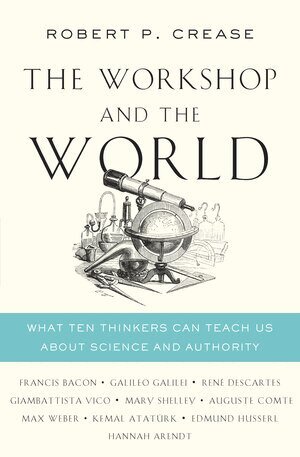
Robert P. Crease looks at questions about when a scientific discovery becomes accepted fact, who decides this and how citizens should interact with the scientific process. He answers by introducing the world’s greatest thinkers and explaining how they shaped scientific progress.At a time when the Catholic Church assumed total authority, Bacon, Galileo and Descartes were the first to articulate the idea of scientific expertise, while writers such as Shelley and Comte questioned the scientific process. Centuries later, scholars such as Atatürk and Arendt examined the relationship between the scientific community and the public—especially in times of distrust in experts. An exploration of what it means to practise science for the common good and who can question expertise, this book will help readers understand how we reached the current moment of anti-science rhetoric and what we can do about it.
159 kr
Skickas inom 7-10 vardagar
While we may be familiar with some of science’s greatest equations, we may not know that each and every equation emerged not in "Eureka!" moments but in years of cultural developments and scientific knowledge. With vignettes full of humor, drama, and eccentricity, philosopher and science historian Robert P. Crease shares the stories behind ten of history’s greatest equations, from the "first equation," 1 + 1 = 2, which promises a rational, well-ordered world, to Heisenberg’s uncertainty principle, which reveals the limitations of human knowledge. For every equation, Crease provides a brief account of who discovered it, what dissatisfactions lay behind its discovery, and what the equation says about the nature of our world.
171 kr
Skickas inom 7-10 vardagar
Millions of transactions each day depend on a reliable network of weights and measures. But achieving such a network was anything but easy, as Robert P. Crease, physicist and philosopher, demonstrates in this endlessly fascinating, always entertaining look at just how this international system evolved. From the link between musical pitch and distance in the dynasties of ancient China and the use of figurines to measure gold in West Africa to the creation of the French metric and British imperial systems, Crease takes readers along on one of history’s greatest philosophical and scientific adventures.
Quantum Moment
How Planck, Bohr, Einstein, and Heisenberg Taught Us to Love Uncertainty
Häftad, Engelska, 2015
299 kr
Skickas inom 5-8 vardagar
Time travel, parallel worlds, random behaviour: the language and the imagery of quantum mechanics are ubiquitous, yet the science—and its journey into everyday language—still confounds us. Robert P. Crease and Alfred Scharff Goldhaber tell how a controversial idea from an obscure branch of optics grew in complexity and authority, eventually dominating the scientific community and commanding the attention of the culture at large. Recounting fiery disputes between figures including Einstein, Schrödinger and Pauli, the authors trace popular images back to their scientific roots and uncover modern manifestations in everything from architecture and sculpture to the prose of John Updike. The Quantum Moment combines an exhilarating history of the quantum with shrewd insight into our experience of the everyday.
393 kr
Skickas inom 10-15 vardagar
In a career that included tenures as president of Stony Brook University, director of Brookhaven National Laboratory, and science advisor to President George W. Bush, John Marburger (1941–2011) found himself on the front line of battles that pulled science ever deeper into the political arena. From nuclear power to global warming and stem cell research, science controversies, he discovered, are never just about science. Science Policy Up Close presents Marburger’s reflections on the challenges science administrators face in the twenty-first century.In each phase of public service Marburger came into contact with a new dimension of science policy. The Shoreham Commission exposed him to the problem of handling a volatile public controversy over nuclear power. The Superconducting Super Collider episode gave him insights into the collision between government requirements and scientists’ expectations and feelings of entitlement. The Directorship of Brookhaven taught him how to talk to the public about the risks of conducting high-energy physics and about large government research facilities. As Presidential Science Advisor he had to represent both the scientific community to the administration and the administration to the scientific community at a time when each side was highly suspicious of the other.What Marburger understood before most others was this: until the final quarter of the twentieth century, science had been largely protected from public scrutiny and government supervision. Today that is no longer true. Scientists and science policy makers can learn from Marburger what they must do now to improve their grip on their own work..
443 kr
Skickas
402 kr
Skickas inom 5-8 vardagar
1 064 kr
Skickas inom 10-15 vardagar
philosophers with both hermeneutic-phenomenological and scientific back- grounds (such as Heelan, Ihde, Theodore Kisiel, Joseph Kockelmans) have begun to read the work of Heidegger, Merleau-Ponty, Gadamer, and others as also entailing a positive re-evaluation of practices of the natural sciences. A few professional scientists with a scholarly background in hermeneutic- phenomenological philosophy (among whom is Martin Eger) have begun to do the same. A number of more mainstream philosophers of science are utilizing hermeneutical insights effectively and perceptively (Joseph Rouse), while many sociologically-trained scholars who speak with the terminolo- gy and often the assumptions of analytic philosophy reveal in their work a deep appreciation for the hermeneutical insight into the nature of his tori- cally situated knowledge (Harry Collins, Bruno Latour, Andrew Pickering, Simon Schaffer, Steve Shapin and others inftuenced by social constructivism). of these initiatives manifest the rediscovery that all dis course is situat- All ed culturally and historically. The days are gone when it could be seriously 2 debated whether a hermeneutical perspective on the natural sciences exists.The challenge remains today to understand more explicitly the hermeneutical dimension of the natural sciences in terms of an overarching hermeneutic of all knowledge.
473 kr
Skickas inom 10-15 vardagar
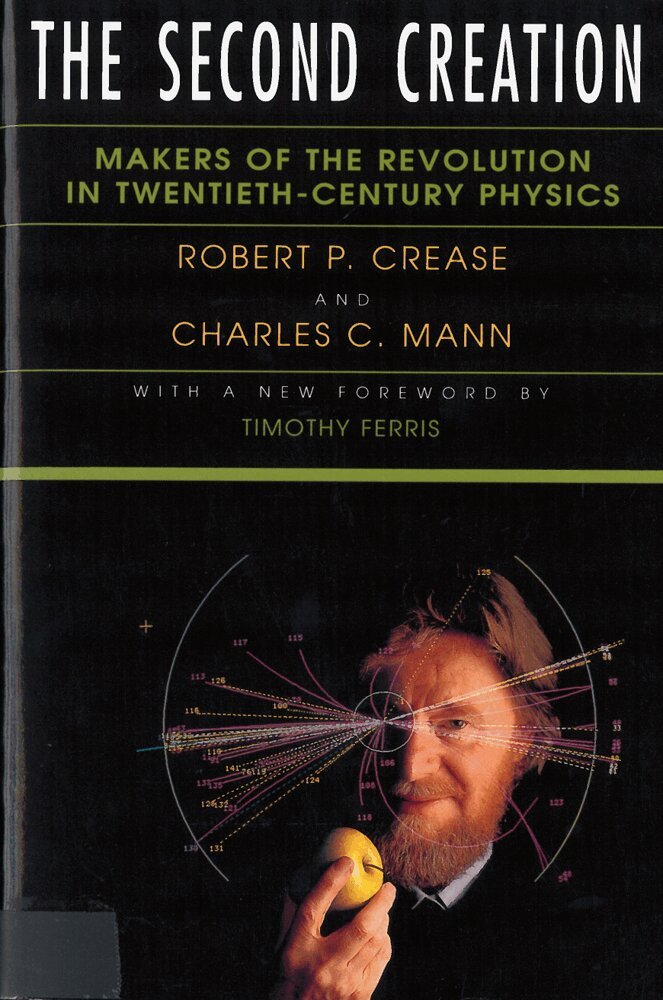
The Second Creation is a dramatic--and human--chronicle of scientific investigators at the last frontier of knowledge. Robert Crease and Charles Mann take the reader on a fascinating journey in search of "unification" (a description of how matter behaves that can apply equally to everything) with brilliant scientists such as Niels Bohr, Max Planck, Albert Einstein, Erwin SchrÖdinger, Richard Feynman, Murray Gell-Mann, Sheldon Glashow, Steven Weinberg, and many others. They provide the definitive and highly entertaining story of the development of modern physics, and the human story of the physicists who set out to find the "theory of everything." The Second Creation tells the story of some of the most talented and idiosyncratic people in the world--many times in their own words. Crease and Mann conducted hundreds of interviews to capture the thinking and the personalities as well as the science. The authors make this complex subject matter clear and absorbing.
634 kr
Skickas inom 5-8 vardagar
1 064 kr
Skickas inom 10-15 vardagar
philosophers with both hermeneutic-phenomenological and scientific back- grounds (such as Heelan, Ihde, Theodore Kisiel, Joseph Kockelmans) have begun to read the work of Heidegger, Merleau-Ponty, Gadamer, and others as also entailing a positive re-evaluation of practices of the natural sciences. A few professional scientists with a scholarly background in hermeneutic- phenomenological philosophy (among whom is Martin Eger) have begun to do the same. A number of more mainstream philosophers of science are utilizing hermeneutical insights effectively and perceptively (Joseph Rouse), while many sociologically-trained scholars who speak with the terminolo- gy and often the assumptions of analytic philosophy reveal in their work a deep appreciation for the hermeneutical insight into the nature of his tori- cally situated knowledge (Harry Collins, Bruno Latour, Andrew Pickering, Simon Schaffer, Steve Shapin and others inftuenced by social constructivism). of these initiatives manifest the rediscovery that all dis course is situat- All ed culturally and historically. The days are gone when it could be seriously 2 debated whether a hermeneutical perspective on the natural sciences exists.The challenge remains today to understand more explicitly the hermeneutical dimension of the natural sciences in terms of an overarching hermeneutic of all knowledge.
Between Science And Industry: Institutions In The History Of Materials Research
Inbunden, Engelska, 2024
2 686 kr
Skickas inom 3-6 vardagar
Materials science institutions have always been crucial to the development of materials research. Even before materials science emerged as a discipline in the 20th century, these institutions existed in various forms. They provided specialized facilities for research, educated new generations of researchers, drafted policies and funded programs, enabled valuable connections between research groups, or played any other role which were needed to further the progress of materials science.This volume, the third in a series of volumes covering the development and history of materials science, presents illuminating perspectives on material science institutions. Twenty chapters are organized into six comprehensive parts of which each cover a characteristic aspect or historical feature. True to the topic they write about, the contributors to this volume have varied backgrounds. Some are materials scientists and engineers, but others are historians, philosophers of science, sociologists, or even directors of institutions themselves. This comprehensive, unified collection is a valuable resource for undergraduates, graduate students, academics, policymakers and professionals who are actively interested in materials science and its development from the past to the future.