John H. Marburger III – författare
Visar alla böcker från författaren John H. Marburger III. Handla med fri frakt och snabb leverans.
3 produkter
3 produkter
Inbunden, Engelska, 2015
408 kr
Skickas inom 10-15 vardagar
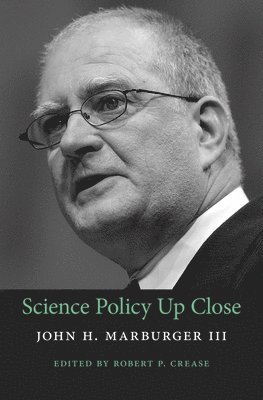
In a career that included tenures as president of Stony Brook University, director of Brookhaven National Laboratory, and science advisor to President George W. Bush, John Marburger (1941–2011) found himself on the front line of battles that pulled science ever deeper into the political arena. From nuclear power to global warming and stem cell research, science controversies, he discovered, are never just about science. Science Policy Up Close presents Marburger’s reflections on the challenges science administrators face in the twenty-first century.In each phase of public service Marburger came into contact with a new dimension of science policy. The Shoreham Commission exposed him to the problem of handling a volatile public controversy over nuclear power. The Superconducting Super Collider episode gave him insights into the collision between government requirements and scientists’ expectations and feelings of entitlement. The Directorship of Brookhaven taught him how to talk to the public about the risks of conducting high-energy physics and about large government research facilities. As Presidential Science Advisor he had to represent both the scientific community to the administration and the administration to the scientific community at a time when each side was highly suspicious of the other.What Marburger understood before most others was this: until the final quarter of the twentieth century, science had been largely protected from public scrutiny and government supervision. Today that is no longer true. Scientists and science policy makers can learn from Marburger what they must do now to improve their grip on their own work..
Inbunden, Engelska, 2011
1 056 kr
Skickas inom 3-6 vardagar
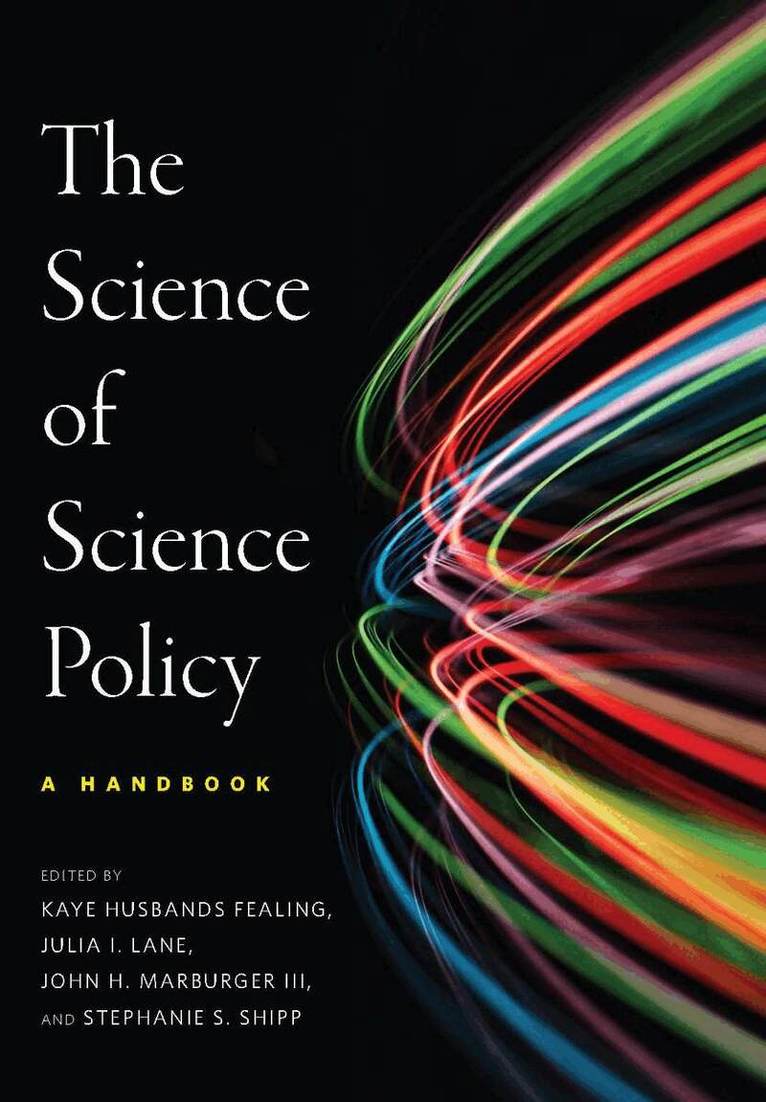
Basic scientific research and technological development have had an enormous impact on innovation, economic growth, and social well-being. Yet science policy debates have long been dominated by advocates for particular scientific fields or missions. In the absence of a deeper understanding of the changing framework in which innovation occurs, policymakers cannot predict how best to make and manage investments to exploit our most promising and important opportunities. Since 2005, a science of science policy has developed rapidly in response to policymakers' increased demands for better tools and the social sciences' capacity to provide them. The Science of Science Policy: A Handbook brings together some of the best and brightest minds working in science policy to explore the foundations of an evidence-based platform for the field.The contributions in this book provide an overview of the current state of the science of science policy from three angles: theoretical, empirical, and policy in practice. They offer perspectives from the broader social science, behavioral science, and policy communities on the fascinating challenges and prospects in this evolving arena. Drawing on domestic and international experiences, the text delivers insights about the critical questions that create a demand for a science of science policy.
E-bok
Engelska, 20111 152 kr
Läs direkt efter köp
Basic scientific research and technological development have had an enormous impact on innovation, economic growth, and social well-being. Yet science policy debates have long been dominated by advocates for particular scientific fields or missions. In the absence of a deeper understanding of the changing framework in which innovation occurs, policymakers cannot predict how best to make and manage investments to exploit our most promising and important opportunities. Since 2005, a science of science policy has developed rapidly in response to policymakers' increased demands for better tools and the social sciences' capacity to provide them. The Science of Science Policy: A Handbook brings together some of the best and brightest minds working in science policy to explore the foundations of an evidence-based platform for the field.The contributions in this book provide an overview of the current state of the science of science policy from three angles: theoretical, empirical, and policy in practice. They offer perspectives from the broader social science, behavioral science, and policy communities on the fascinating challenges and prospects in this evolving arena. Drawing on domestic and international experiences, the text delivers insights about the critical questions that create a demand for a science of science policy.