Kaye Husbands Fealing - Böcker
Visar alla böcker från författaren Kaye Husbands Fealing. Handla med fri frakt och snabb leverans.
7 produkter
7 produkter
1 700 kr
Skickas
An insightful, wide-ranging analysis of the economic hurdles facing America’s higher education system.The US higher education sector faces numerous economic challenges, including the stagnating number of college-age domestic students, geographic mismatch between population growth and the location of colleges and universities, financial pressures, including cutbacks in government support, growing student debt burdens, sticker prices that deter prospective applicants, and the risk of low capital market returns on endowment portfolios. This volume analyzes the responses of students, families, and the financial managers of higher education institutions to these challenges. It presents new insights into the substantial disparities in the financial structure of, and the financial challenges facing, different types of institutions. The volume draws together contributions from financial economics, public finance, and industrial organization, as well as the economics of education.
367 kr
Tillfälligt slut
The National Center for Science and Engineering Statistics (NCSES), at the U.S. National Foundation, is 1 of 14 major statistical agencies in the federal government, of which at least 5 collect relevant information on science, technology, and innovation activities in the United States and abroad. The America COMPETES Reauthorization Act of 2010 expanded and codified NCSES's role as a U.S. federal statistical agency. Important aspects of the agency's mandate include collection, acquisition, analysis, and reporting and dissemination of data on research and development trends, on U.S. competitiveness in science, technology, and research and development, and on the condition and progress of U.S. science, technology, engineering, and mathematics (STEM) education. Improving Measures of Science, Technology and Innovation: Interim Report examines the status of the NCSES's science, technology, and innovation (STI) indicators. This report assesses and provides recommendations regarding the need for revised, refocused, and newly developed indicators designed to better reflect fundamental and rapid changes that are reshaping global science, technology and innovation systems.The book also determines the international scope of STI indicators and the need for developing new indicators that measure developments in innovative activities in the United States and abroad, and Offers foresight on the types of data, metrics and indicators that will be particularly influential in evidentiary policy decision-making for years to come. In carrying out its charge, the authoring panel undertook a broad and comprehensive review of STI indicators from different countries, including Japan, China, India and several countries in Europe, Latin America and Africa. Improving Measures of Science, Technology, and Innovation makes recommendations for near-term action by NCSES along two dimensions: (1) development of new policy-relevant indicators that are based on NCSES survey data or on data collections at other statistical agencies; and (2) exploration of new data extraction and management tools for generating statistics, using automated methods of harvesting unstructured or scientometric data and data derived from administrative records.
Capturing Change in Science, Technology, and Innovation
Improving Indicators to Inform Policy
Häftad, Engelska, 2014
751 kr
Tillfälligt slut
Since the 1950s, under congressional mandate, the U.S. National Science Foundation (NSF) - through its National Center for Science and Engineering Statistics (NCSES) and predecessor agencies - has produced regularly updated measures of research and development expenditures, employment and training in science and engineering, and other indicators of the state of U.S. science and technology. A more recent focus has been on measuring innovation in the corporate sector. NCSES collects its own data on science, technology, and innovation (STI) activities and also incorporates data from other agencies to produce indicators that are used for monitoring purposes - including comparisons among sectors, regions, and with other countries - and for identifying trends that may require policy attention and generate research needs. NCSES also provides extensive tabulations and microdata files for in-depth analysis. Capturing Change in Science, Technology, and Innovation assesses and provides recommendations regarding the need for revised, refocused, and newly developed indicators of STI activities that would enable NCSES to respond to changing policy concerns.This report also identifies and assesses both existing and potential data resources and tools that NCSES could exploit to further develop its indicators program. Finally, the report considers strategic pathways for NCSES to move forward with an improved STI indicators program. The recommendations offered in Capturing Change in Science, Technology, and Innovation are intended to serve as the basis for a strategic program of work that will enhance NCSES's ability to produce indicators that capture change in science, technology, and innovation to inform policy and optimally meet the needs of its user community.
Science of Science and Innovation Policy
Principal Investigators' Conference Summary
Häftad, Engelska, 2014
495 kr
Tillfälligt slut
The National Science Foundation developed the Science of Science and Innovation Policy program (SciSIP) in 2006 to fund basic and applied research that bears on and can help guide public- and private-sector policy making for science and innovation. By design, SciSIP has engaged researchers from many domains in the development of a community of practice who work together to continually develop frameworks, tools, and datasets for implementing science and innovation policy. Since its inception, the SciSIP program has funded more than 150 researchers and their graduate students. The program also contributed to the initiation of the STAR METRICS (Science and Technology for America's Reinvestment: Measuring the Effect of Research on Innovation, Competitiveness and Science) program, a collaborative effort between the National Science Foundation and the National Institutes of Health. The STAR METRICS program develops tools and mechanisms for measuring federal expenditures on scientific activities, with particular focus on quantifying productivity and employment outcomes.Science of Science and Innovation Policy summarizes a public conference convened by the Committee on National Statistics of the National Academy of Sciences/National Research Council to present research funded by SciSIP and foster intellectual exchange among funded researchers, science, technology, and innovation policy practitioners, and other members of the science community. The conference highlighted advances in the emerging field of the science of science and innovation policy, in particular, models, frameworks, tools, and datasets comprising the evidentiary basis for science and innovation policy.This report focuses on return on investment models; organizational structures that foster accelerated scientific productivity; linkages between commercialized scientific knowledge and job creation; the roles of universities and government in technology transfer and innovation; technology diffusion and economic growth; non-economic impacts of science and innovation expenditures; regional and global networks of knowledge generation and innovation; mechanisms for encouraging creativity and measuring outputs and outcomes from transformative research; and development, manipulation and visualization of data representing scientific activities.
1 051 kr
Skickas inom 10-15 vardagar
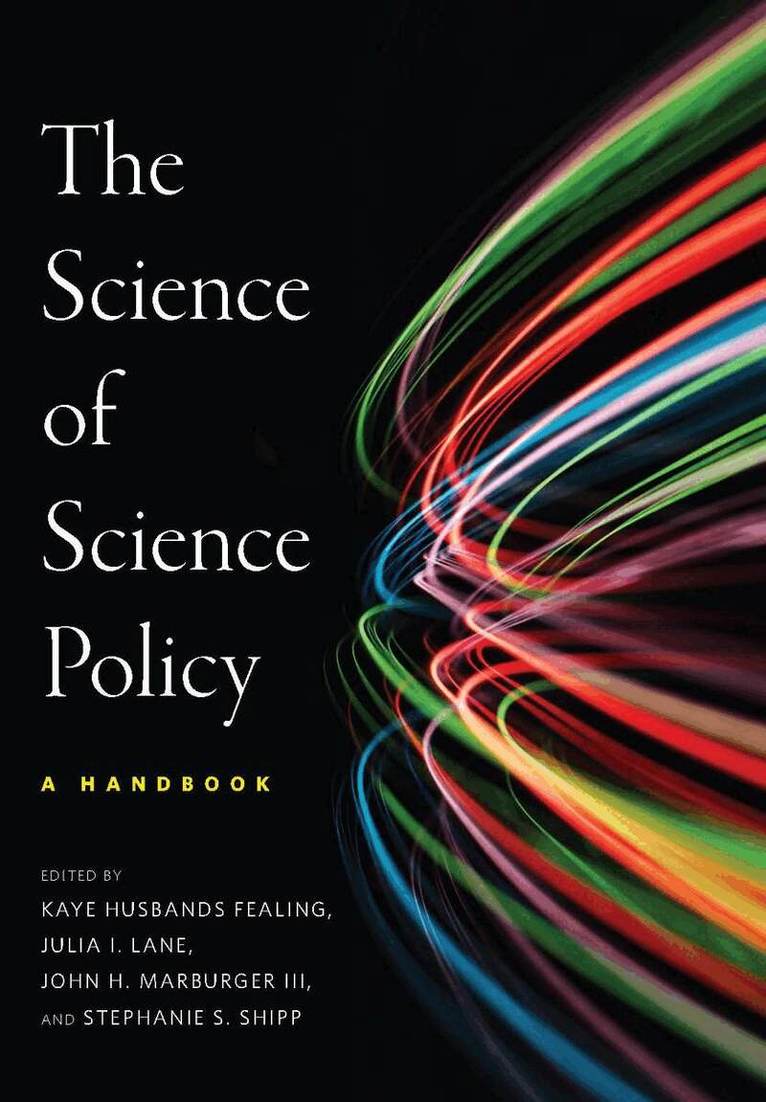
Basic scientific research and technological development have had an enormous impact on innovation, economic growth, and social well-being. Yet science policy debates have long been dominated by advocates for particular scientific fields or missions. In the absence of a deeper understanding of the changing framework in which innovation occurs, policymakers cannot predict how best to make and manage investments to exploit our most promising and important opportunities. Since 2005, a science of science policy has developed rapidly in response to policymakers' increased demands for better tools and the social sciences' capacity to provide them. The Science of Science Policy: A Handbook brings together some of the best and brightest minds working in science policy to explore the foundations of an evidence-based platform for the field.The contributions in this book provide an overview of the current state of the science of science policy from three angles: theoretical, empirical, and policy in practice. They offer perspectives from the broader social science, behavioral science, and policy communities on the fascinating challenges and prospects in this evolving arena. Drawing on domestic and international experiences, the text delivers insights about the critical questions that create a demand for a science of science policy.
1 297 kr
Skickas inom 7-10 vardagar
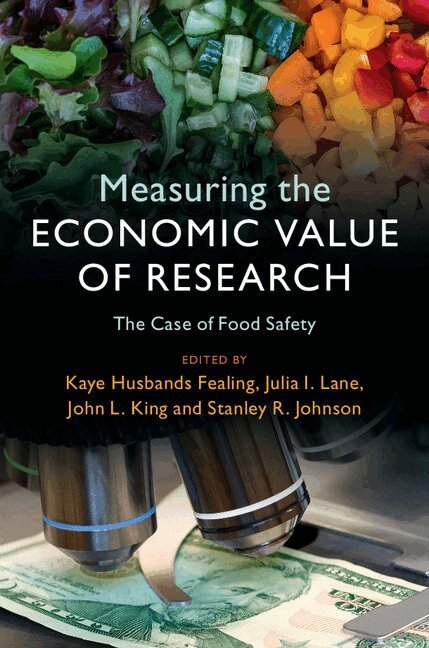
The scientific advances that underpin economic growth and human health would not be possible without research investments. Yet demonstrating the impact of research programs is a challenge, especially in areas that span disciplines, industrial sectors, and encompass both public and private sector activity. All areas of research are under pressure to demonstrate benefits from federal funding of research. This exciting and innovative study demonstrates new methods and tools to trace the impact of federal research funding on the structure of research, and the subsequent economic activities of funded researchers. The case study is food safety research, which is critical to avoiding outbreaks of disease. The authors make use of an extraordinary new data infrastructure and apply new techniques in text analysis. Focusing on the impact of US federal food safety research, this book develops vital data-intensive methodologies that have a real world application to many other scientific fields.
309 kr
Skickas inom 7-10 vardagar
The scientific advances that underpin economic growth and human health would not be possible without research investments. Yet demonstrating the impact of research programs is a challenge, especially in areas that span disciplines, industrial sectors, and encompass both public and private sector activity. All areas of research are under pressure to demonstrate benefits from federal funding of research. This exciting and innovative study demonstrates new methods and tools to trace the impact of federal research funding on the structure of research, and the subsequent economic activities of funded researchers. The case study is food safety research, which is critical to avoiding outbreaks of disease. The authors make use of an extraordinary new data infrastructure and apply new techniques in text analysis. Focusing on the impact of US federal food safety research, this book develops vital data-intensive methodologies that have a real world application to many other scientific fields.