Robert Roreitner – författare
Visar alla böcker från författaren Robert Roreitner. Handla med fri frakt och snabb leverans.
6 produkter
6 produkter
Inbunden, Engelska, 2025
2 212 kr
Skickas inom 3-6 vardagar
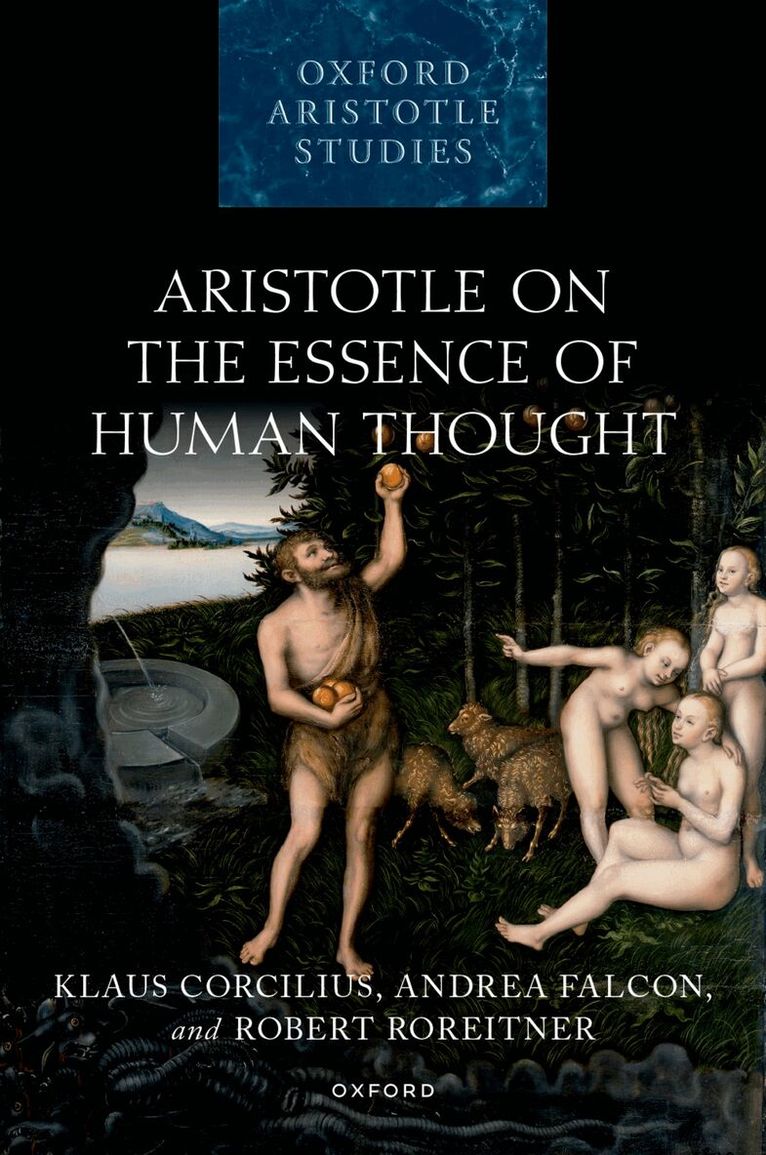
This is an open access title available under the terms of a CC BY-NC-ND 4.0 International licence. It is free to read on Oxford Academic and offered as a free PDF download from OUP and selected open access locations.Aristotle on the Essence of Human Thought offers a novel reading of one of the most difficult stretches of text in the whole Aristotelian corpus, De anima III 4-8, showing that this stretch of text contains a unitary and coherent account of the essence of the human capacity for thought. Aristotle gives this capacity the name nous. Nous is the first principle, and ultimate explanans, of human thinking. The volume argues for four key claims. The first claim is rationalism: humans come to know the world around us via two fundamentally different cognitive powers: nous and perception. They are fundamentally different cognitive powers because the nature of their corresponding objects is fundamentally different. The second claim is essentialism: the human capacity for thought is defined as a capacity for directly grasping essences of everything there is. It is this very capacity that Aristotle shows to be the principle of all human thinking. According to the third claim, separatism, human nous is a very special kind of power. It is unmixed with the body, has no dedicated bodily organ, and is separable from the body. As a result, it cannot be assimilated to any of the other parts of the soul. While nous belongs to our essence as human beings, it is not part of the natural world. Finally, the volume argues for embeddedness in the cognitive soul: human nous is always embedded in a cognitive soul, which among other things means that the distinctive activity of human nous--thinking--can only take place in the context of a larger set of activities which are common to the body and the soul.
E-bok
Engelska, 20241 357 kr
Läs direkt efter köp
This is an open access title available under the terms of a CC BY-NC-ND 4.0 International licence. It is free to read on Oxford Academic and offered as a free PDF download from OUP and selected open access locations.Aristotle on the Essence of Human Thought offers a novel reading of one of the most difficult stretches of text in the whole Aristotelian corpus, De anima III 4-8, showing that this stretch of text contains a unitary and coherent account of the essence of the human capacity for thought. Aristotle gives this capacity the name nous. Nous is the first principle, and ultimate explanans, of human thinking. The volume argues for four key claims. The first claim is rationalism: humans come to know the world around us via two fundamentally different cognitive powers: nous and perception. They are fundamentally different cognitive powers because the nature of their corresponding objects is fundamentally different. The second claim is essentialism: the human capacity for thought is defined as a capacity for directly grasping essences of everything there is. It is this very capacity that Aristotle shows to be the principle of all human thinking. According to the third claim, separatism, human nous is a very special kind of power. It is unmixed with the body, has no dedicated bodily organ, and is separable from the body. As a result, it cannot be assimilated to any of the other parts of the soul. While nous belongs to our essence as human beings, it is not part of the natural world. Finally, the volume argues for embeddedness in the cognitive soul: human nous is always embedded in a cognitive soul, which among other things means that the distinctive activity of human nous--thinking--can only take place in the context of a larger set of activities which are common to the body and the soul.
Inbunden, Engelska, 2025
1 175 kr
Skickas inom 7-10 vardagar
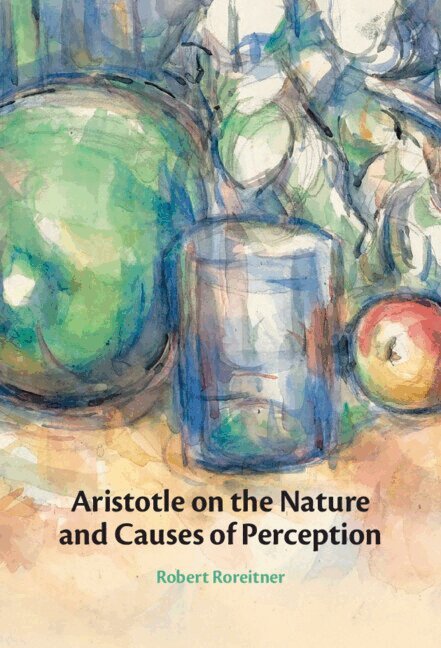
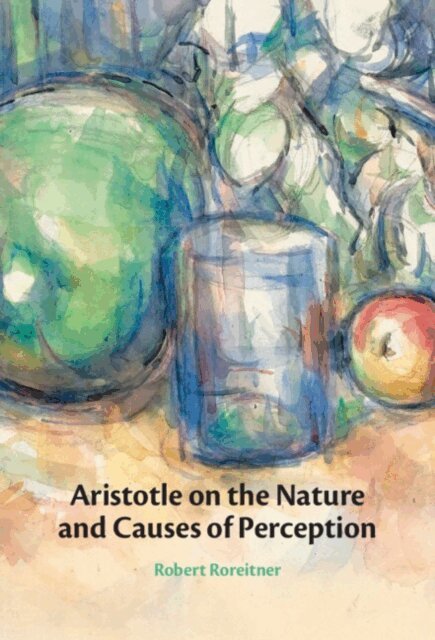
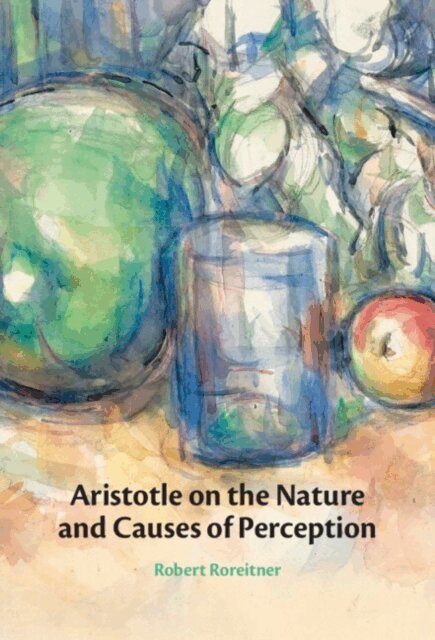
In this book Robert Roreitner offers a fresh interpretation of Aristotle's philosophically intriguing answers to what the nature of perception is, how it can be explained, and how perception is distinguished from mere appearance. He argues that for Aristotle, perception is a complete passive activity, and explains why this notion merely appears self-contradictory to us. He shows how Aristotle succeeds in integrating causal, qualitative, and relational aspects of perception, and explains why he is neither a 'spiritualist' nor a 'materialist'. He presses and resolves an unappreciated dilemma for Aristotle's hylomorphic account of perception and the role of the soul therein. This rich study shows that although Aristotle's understanding of perception may be in many respects outmoded, its core insights remain philosophically engaging. This title is also available as Open Access on Cambridge Core.
Häftad, Engelska, 2026
343 kr
Kommande
In this book Robert Roreitner offers a fresh interpretation of Aristotle's philosophically intriguing answers to what the nature of perception is, how it can be explained, and how perception is distinguished from mere appearance. He argues that for Aristotle, perception is a complete passive activity, and explains why this notion merely appears self-contradictory to us. He shows how Aristotle succeeds in integrating causal, qualitative, and relational aspects of perception, and explains why he is neither a 'spiritualist' nor a 'materialist'. He presses and resolves an unappreciated dilemma for Aristotle's hylomorphic account of perception and the role of the soul therein. This rich study shows that although Aristotle's understanding of perception may be in many respects outmoded, its core insights remain philosophically engaging. This title is also available as Open Access on Cambridge Core.
E-bok
PDF, Engelska, 20251 374 kr
Läs direkt efter köp
E-bok
Engelska, 20251 424 kr
Läs direkt efter köp