Robert S. Lawrence – författare
Visar alla böcker från författaren Robert S. Lawrence. Handla med fri frakt och snabb leverans.
13 produkter
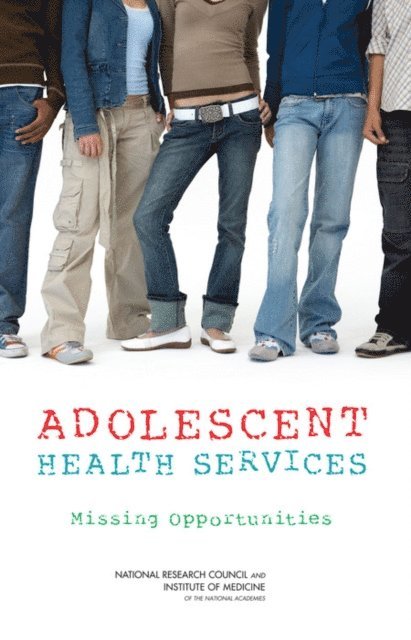
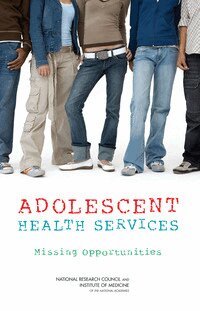
Adolescent Health Services
Missing Opportunities
Av and Healthy Development Committee on Adolescent Health Care Services and Models of Care for Treatment, Prevention, and Families Board on Children, Youth m. fl.
E-bok, 2008
698 kr
Lägg i varukorg
Adolescence is a time of major transition, however, health care services in the United States today are not designed to help young people develop healthy routines, behaviors, and relationships that they can carry into their adult lives. While most adolescents at this stage of life are thriving, …
Valuing Health for Regulatory Cost-Effectiveness Analysis
Av and Safety Regulation Committee to Evaluate Measures of Health Benefits for Environmental, Health, Board on Health Care Services m. fl.
E-bok, 2006
1126 kr
Lägg i varukorg
Promoting human health and safety by reducing exposures to risks andharms through regulatory interventions is among the most importantresponsibilities of the government. Such efforts encompass a wide array ofactivities in many different contexts: improving air and water quality; safeguardingthe …
Pacific Partnerships for Health
Charting a Course for the 21st Century
Av Committee on Health Care Services in the U.S.-Associated Pacific Basin, Institute of Medicine m. fl.
E-bok, 1998
660 kr
Lägg i varukorg
The U.S.-Associated Pacific Basin consists of six island jurisdictions: American Samoa, the Commonwealth of the Northern Mariana Islands, Guam, the Federated States of Micronesia, Republic of the Marshall Islands, and the Republic of Palau. This book examines one aspect of the ties and U.S. …
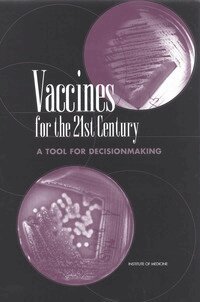
Vaccines for the 21st Century
A Tool for Decisionmaking
Av Committee to Study Priorities for Vaccine Development, Division of Health Promotion and Disease Prevention m. fl.
E-bok, 2001
1070 kr
Lägg i varukorg
Vaccines have made it possible to eradicate the scourge of smallpox, promise the same for polio, and have profoundly reduced the threat posed by other diseases such as whooping cough, measles, and meningitis. What is next? There are many pathogens, autoimmune diseases, and cancers that may be …
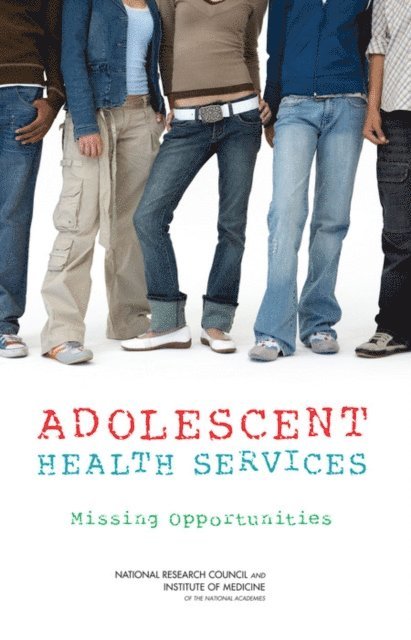
Adolescent Health Services
Missing Opportunities
Av and Healthy Development Committee on Adolescent Health Care Services and Models of Care for Treatment, Prevention, and Families Board on Children, Youth m. fl.
E-bok, 2008
831 kr
Lägg i varukorg
Adolescence is a time of major transition, however, health care services in the United States today are not designed to help young people develop healthy routines, behaviors, and relationships that they can carry into their adult lives. While most adolescents at this stage of life are thriving, …
Vaccines for the 21st Century
A Tool for Decisionmaking
Av Committee to Study Priorities for Vaccine Development, Division of Health Promotion and Disease Prevention m. fl.
E-bok, 2001
714 kr
Lägg i varukorg
Vaccines have made it possible to eradicate the scourge of smallpox, promise the same for polio, and have profoundly reduced the threat posed by other diseases such as whooping cough, measles, and meningitis. What is next? There are many pathogens, autoimmune diseases, and cancers that may be …
Pacific Partnerships for Health
Charting a Course for the 21st Century
Av Committee on Health Care Services in the U.S.-Associated Pacific Basin, Institute of Medicine m. fl.
E-bok, 1998
455 kr
Lägg i varukorg
The U.S.-Associated Pacific Basin consists of six island jurisdictions: American Samoa, the Commonwealth of the Northern Mariana Islands, Guam, the Federated States of Micronesia, Republic of the Marshall Islands, and the Republic of Palau. This book examines one aspect of the ties and U.S. …
Valuing Health for Regulatory Cost-Effectiveness Analysis
Av and Safety Regulation Committee to Evaluate Measures of Health Benefits for Environmental, Health, Board on Health Care Services m. fl.
E-bok, 2006
774 kr
Lägg i varukorg
Promoting human health and safety by reducing exposures to risks andharms through regulatory interventions is among the most importantresponsibilities of the government. Such efforts encompass a wide array ofactivities in many different contexts: improving air and water quality; safeguardingthe …
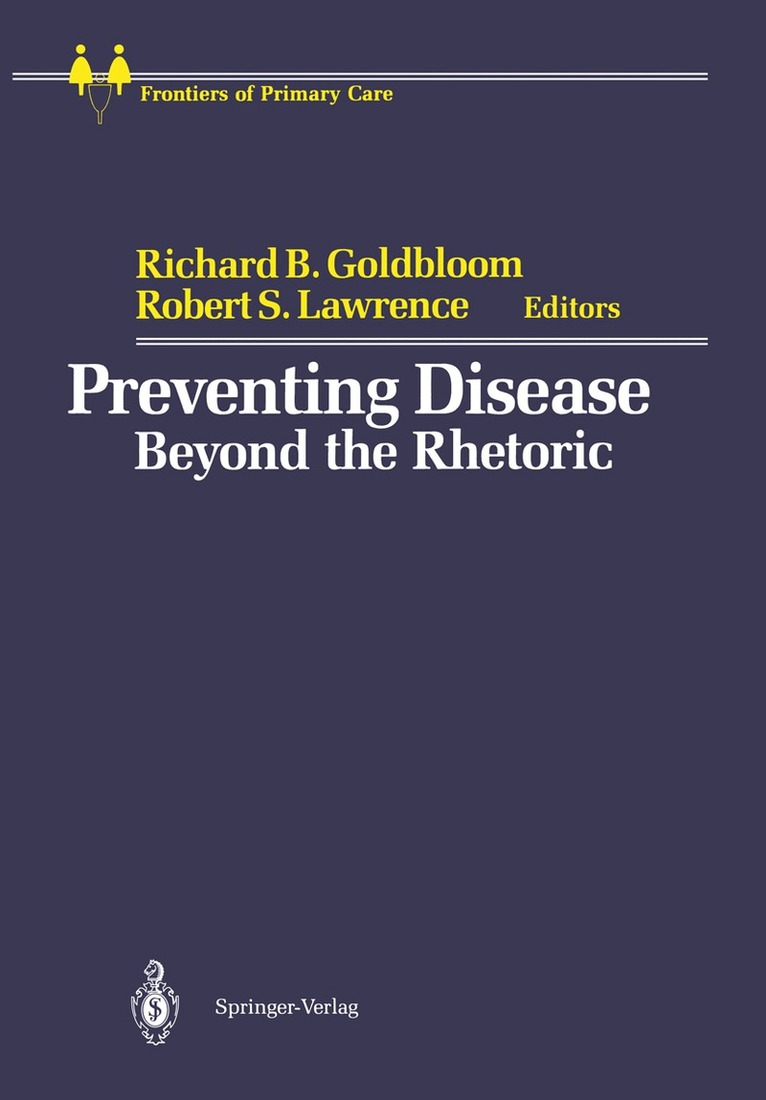
Preventing Disease
Beyond the Rhetoric
Av Robert S. Lawrence, Richard B. Goldbloom
E-bok, 2012
1502 kr
Lägg i varukorg
Preventing Disease, the offspring of an extraordinary collaboration between the U.S. and Canadian Preventive Services Task Forces, presents a meticulous and objective review of the published evidence on preventive measures. Examining such diverse and relevant topics as screening for endometrial …
Preventing Disease
Beyond the Rhetoric
Av Richard B. Goldbloom, Robert S. Lawrence
Häftad, 2011
1126 kr
Lägg i varukorg
Preventing Disease, the offspring of an extraordinary collaboration between the U.S. and Canadian Preventive Services Task Forces, presents a meticulous and objective review of the published evidence on preventive measures. Examining such diverse and relevant topics as screening for endometrial …
Vaccines for the 21st Century
A Tool for Decisionmaking
Av Institute of Medicine, Division of Health Promotion and Disease Prevention m. fl.
Inbunden, 2001
1656 kr
Tillfälligt slut
Vaccines have made it possible to eradicate the scourge of smallpox, promise the same for polio, and have profoundly reduced the threat posed by other diseases such as whooping cough, measles, and meningitis. What is next? There are many pathogens, autoimmune diseases, and cancers that may be …
Pacific Partnerships for Health
Charting a Course for the 21st Century
Av Institute of Medicine, Committee on Health Care Services in the U.S.-Associated Pacific Basin m. fl.
Häftad, 1998
1392 kr
Tillfälligt slut
The U.S.-Associated Pacific Basin consists of six island jurisdictions: American Samoa, the Commonwealth of the Northern Mariana Islands, Guam, the Federated States of Micronesia, Republic of the Marshall Islands, and the Republic of Palau. This book examines one aspect of the ties and U.S. …
Adolescent Health Services
Missing Opportunities
Av Institute of Medicine, National Research Council m. fl.
Inbunden, 2008
825 kr
Tillfälligt slut
Adolescence is a time of major transition, however, health care services in the United States today are not designed to help young people develop healthy routines, behaviors, and relationships that they can carry into their adult lives. While most adolescents at this stage of life are thriving, …