Robert W. Hamblin – författare
Visar alla böcker från författaren Robert W. Hamblin. Handla med fri frakt och snabb leverans.
14 produkter
14 produkter
E-bok
PDF, Engelska, 19991 366 kr
Läs direkt efter köp
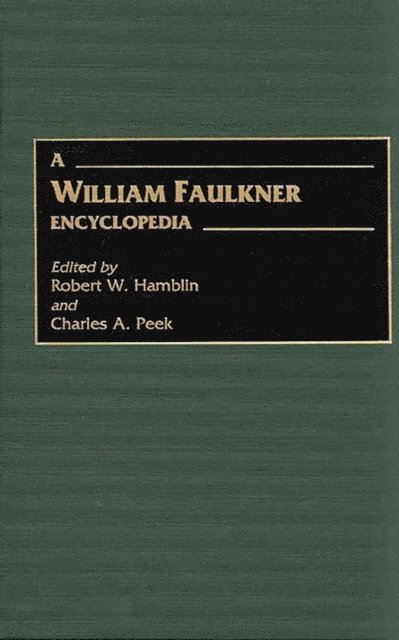
Sometimes called the American Shakespeare, William Faulkner is known for providing poignant and accurate renderings of the human condition, creating a world of colorful characters in his fictional Yoknapatawpha County, and writing in a style that is both distinct and demanding. Though he is known as a Southern writer, his appeal transcends regional and even national boundaries. Since winning the Nobel Prize for Literature in 1950, he has been the subject of more than 5,000 scholarly books and articles. Academic interest in his career has been matched by popular acclaim, with some of his works adapted for the cinema. This reference is an authoritative guide to Faulkner's life, literature, and legacy.The encyclopedia includes nearly 500 alphabetically arranged entries for topics related to Faulkner and his world. Included are entries for his works and major characters and themes, as well as the literary and cultural contexts in which his texts were conceived, written, and published. There are also entries for relatives, friends, and other persons important to Faulkner's biography; historical events, persons, and places; social and cultural developments; and literary and philosophical terms and movements. The entries are written by expert contributors who bring a broad range of perspectives and experience to their analysis of his work. Entries typically conclude with suggestions for further reading, and the volume closes with a bibliography and detailed index.
E-bok
PDF, Engelska, 20041 288 kr
Läs direkt efter köp
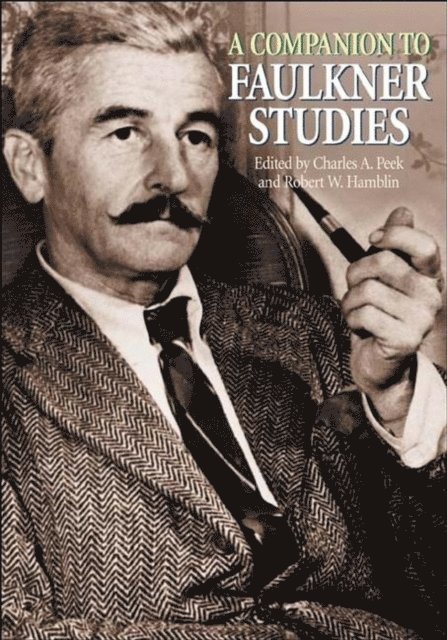
Faulkner scholarship is one of the largest critical enterprises currently at work. Because of its size and scope, accessing that scholarship has become difficult for scholars, students, and general readers alike. This reference includes chapters on individual approaches to Faulkner studies, including archetypal, historical, biographical, feminist, and psychological criticism, among others. Each chapter is written by an expert contributor and surveys the contributions of that approach to Faulkner scholarship. The volume concludes with a selected, general bibliography and glossary of critical terms.William Faulkner is one of the most widely read and studied American writers. His works have also generated a vast body of scholarship and elicited criticism from a wide range of approaches. Because of its size, scope, and diversity, accessing that scholarship has become difficult for scholars, students, and general readers alike. This reference comprehensively overviews the present state of Faulkner studies.The volume includes chapters written by expert contributors. Each chapter defines a particular critical approach and surveys the contributions of that approach to Faulkner studies. Some of the approaches covered are archetypal, biographical, feminist, historical, and psychological, among others. The book closes with a selected, general bibliography and glossary of critical terms.
Inbunden, Engelska, 1999
1 262 kr
Skickas inom 10-15 vardagar
Sometimes called the American Shakespeare, William Faulkner is known for providing poignant and accurate renderings of the human condition, creating a world of colorful characters in his fictional Yoknapatawpha County, and writing in a style that is both distinct and demanding. Though he is known as a Southern writer, his appeal transcends regional and even national boundaries. Since winning the Nobel Prize for Literature in 1950, he has been the subject of more than 5,000 scholarly books and articles. Academic interest in his career has been matched by popular acclaim, with some of his works adapted for the cinema. This reference is an authoritative guide to Faulkner's life, literature, and legacy.The encyclopedia includes nearly 500 alphabetically arranged entries for topics related to Faulkner and his world. Included are entries for his works and major characters and themes, as well as the literary and cultural contexts in which his texts were conceived, written, and published. There are also entries for relatives, friends, and other persons important to Faulkner's biography; historical events, persons, and places; social and cultural developments; and literary and philosophical terms and movements. The entries are written by expert contributors who bring a broad range of perspectives and experience to their analysis of his work. Entries typically conclude with suggestions for further reading, and the volume closes with a bibliography and detailed index.
Inbunden, Engelska, 2000
1 208 kr
Skickas inom 10-15 vardagar
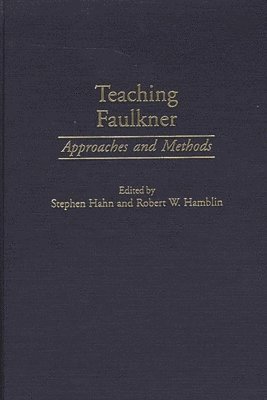
For decades now literary critics have universally praised Faulkner as one of the greatest writers of the modern era, yet students assigned to read his novels in university, college, and high school classes continue to struggle to make sense of his convoluted plots, prolix style, and complex characterizations. The broadest treatment to date of a topic of increasing concern, this book is designed to provide fresh strategies and practical suggestions for the classroom study of several of Faulkner's finest novels and stories, including The Sound and the Fury, Absalom, Absalom!, Light in August, The Unvanquished, and Go Down, Moses.The contributors, all noted Faulkner scholars who regularly teach Faulkner works in their courses, employ a variety of critical theories and approaches. In each chapter, theory is subordinated to tested classroom methods that both motivate and assist students in reading the texts and in understanding why Faulkner remains relevant for contemporary readers. The teaching strategies described in this book draw upon such diverse matters as cultural and social analysis, historical context, reading and rhetorical theory, film and stage techniques, comparative studies, and race, class, and gender issues.
Inbunden, Engelska, 2016
240 kr
Skickas inom 5-8 vardagar
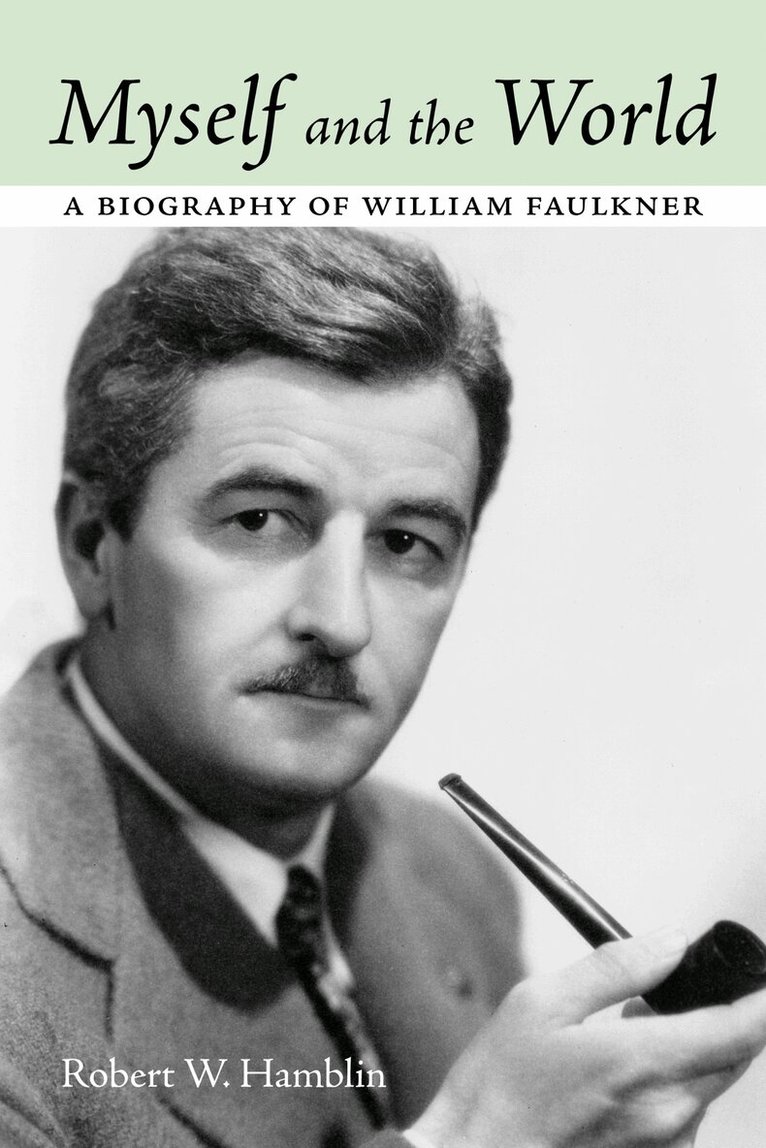
William Faulkner (1897-1962) once said of his novels and stories, ""I am telling the same story over and over, which is myself and the world."" This biography provides an overview of the life and career of the famous author, demonstrating the interrelationships of that life, centered in Oxford, Mississippi, with the characters and events of his fictional world. The book begins with a chapter on Faulkner's most famous ancestor, W. C. Falkner, ""the Old Colonel,"" who greatly influenced both the content and the form of Faulkner's fiction. Robert W. Hamblin then proceeds to examine the highlights of Faulkner's biography, from his childhood to his youthful days as a fledgling poet, through his time in New Orleans, the creation of Yoknapatawpha, the years of struggle and his season of prolific genius, and through his time in Hollywood and his winning of the Nobel Prize. The book concludes with a description of his last years as a revered author, cultural ambassador, and university writer-in-residence.In his Nobel Prize acceptance speech, Faulkner spoke of ""the agony and sweat of the human spirit"" that goes into artistic creation. For Faulkner, that struggle was especially acute. Poor and neglected for much of his life, suffering from chronic depression and alcoholism, and unhappy in his personal life, Faulkner overcame tremendous obstacles to achieve literary success. One of the major themes of his novels and stories remains endurance, and his biography exhibits that quality in abundance. Faulkner the man endured and ultimately prevailed.
E-bok
Engelska, 2017410 kr
Läs direkt efter köp
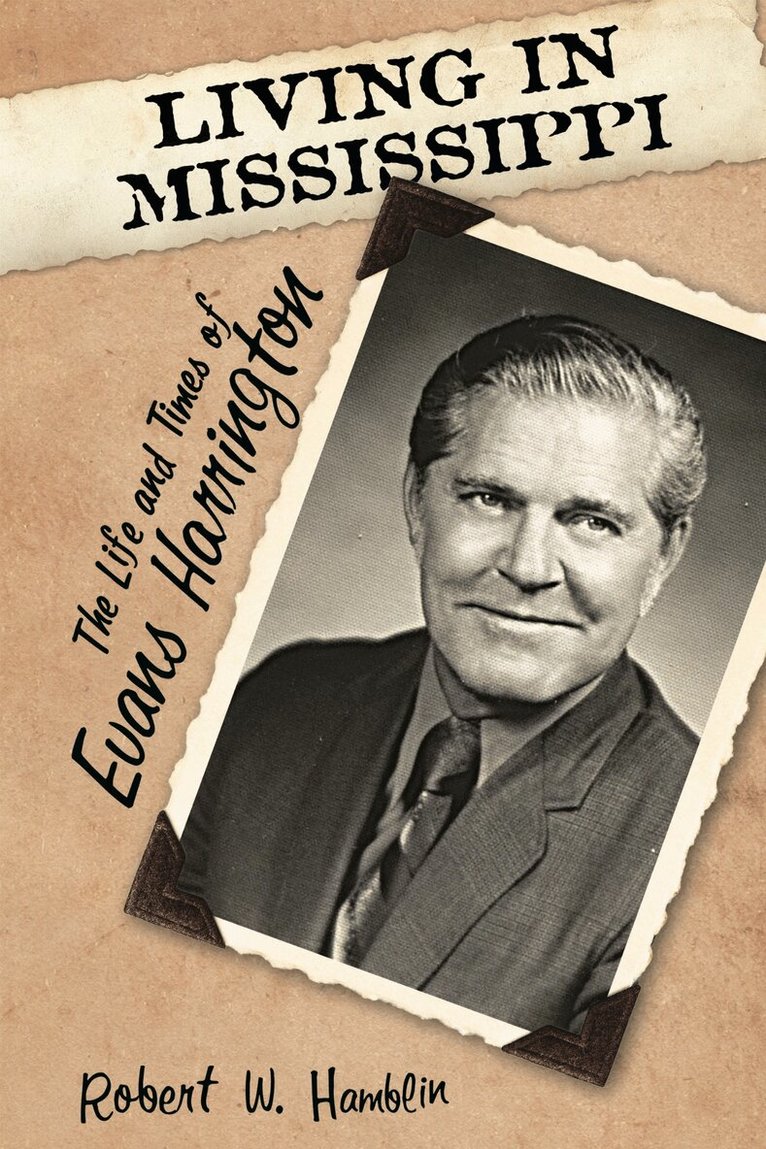
Robert W. Hamblin elevates Evans Harrington (1925–1997), as well as his remarkable achievements and writings, introducing his legacy to a new generation. Harrington continually found himself in conflict with the conservative, and often reactionary, institutions of his society—be they educational, political, or religious. Yet unlike many Mississippi liberals and moderates of his day—white as well as black—Harrington did not leave the state for a freer environment or better opportunities elsewhere. Except for his military service, he stayed in Mississippi his entire life, and his presence made a difference. In 1962, Harrington openly supported the enrollment of James Meredith, the first African American student to attend Ole Miss. In 1965, he invited African American students from Tougaloo College to attend the Southern Literary Festival hosted by Ole Miss—the first meeting of that organization to be integrated. In 1972, as faculty sponsor of Images, the Ole Miss literary journal, he joined his student writers in a successful suit against the university''s attempt to suppress an issue of the magazine that contained controversial content. In 1996, Harrington united with other ACLU members to support the cause of Lisa Herdahl, who had brought suit against the North Pontotoc, Mississippi, School Board for allowing sectarian prayers and devotionals in public school classrooms. Hamblin presents these and other examples, showing Harrington both as an exception to and as a representative figure of his time and place. This biography also explores Harrington and his writings, which include “Living in Mississippi,” a personal essay about being a white liberal in segregated Mississippi; several short stories; a novel, The Prisoners; and three popular novels issued under the pseudonym Gilbert Terrell: Willa, Missy, and Lily, as well as a number of unpublished manuscripts. Harrington also coedited, with Ann J. Abadie, four volumes of papers presented at the annual Faulkner and Yoknapatawpha Conference, which he cofounded.
E-bok
PDF, Engelska, 2017410 kr
Läs direkt efter köp
Robert W. Hamblin elevates Evans Harrington (1925–1997), as well as his remarkable achievements and writings, introducing his legacy to a new generation. Harrington continually found himself in conflict with the conservative, and often reactionary, institutions of his society—be they educational, political, or religious. Yet unlike many Mississippi liberals and moderates of his day—white as well as black—Harrington did not leave the state for a freer environment or better opportunities elsewhere. Except for his military service, he stayed in Mississippi his entire life, and his presence made a difference. In 1962, Harrington openly supported the enrollment of James Meredith, the first African American student to attend Ole Miss. In 1965, he invited African American students from Tougaloo College to attend the Southern Literary Festival hosted by Ole Miss—the first meeting of that organization to be integrated. In 1972, as faculty sponsor of Images, the Ole Miss literary journal, he joined his student writers in a successful suit against the university''s attempt to suppress an issue of the magazine that contained controversial content. In 1996, Harrington united with other ACLU members to support the cause of Lisa Herdahl, who had brought suit against the North Pontotoc, Mississippi, School Board for allowing sectarian prayers and devotionals in public school classrooms. Hamblin presents these and other examples, showing Harrington both as an exception to and as a representative figure of his time and place. This biography also explores Harrington and his writings, which include “Living in Mississippi,” a personal essay about being a white liberal in segregated Mississippi; several short stories; a novel, The Prisoners; and three popular novels issued under the pseudonym Gilbert Terrell: Willa, Missy, and Lily, as well as a number of unpublished manuscripts. Harrington also coedited, with Ann J. Abadie, four volumes of papers presented at the annual Faulkner and Yoknapatawpha Conference, which he cofounded.
Häftad, Engelska, 2018
440 kr
Skickas inom 10-15 vardagar
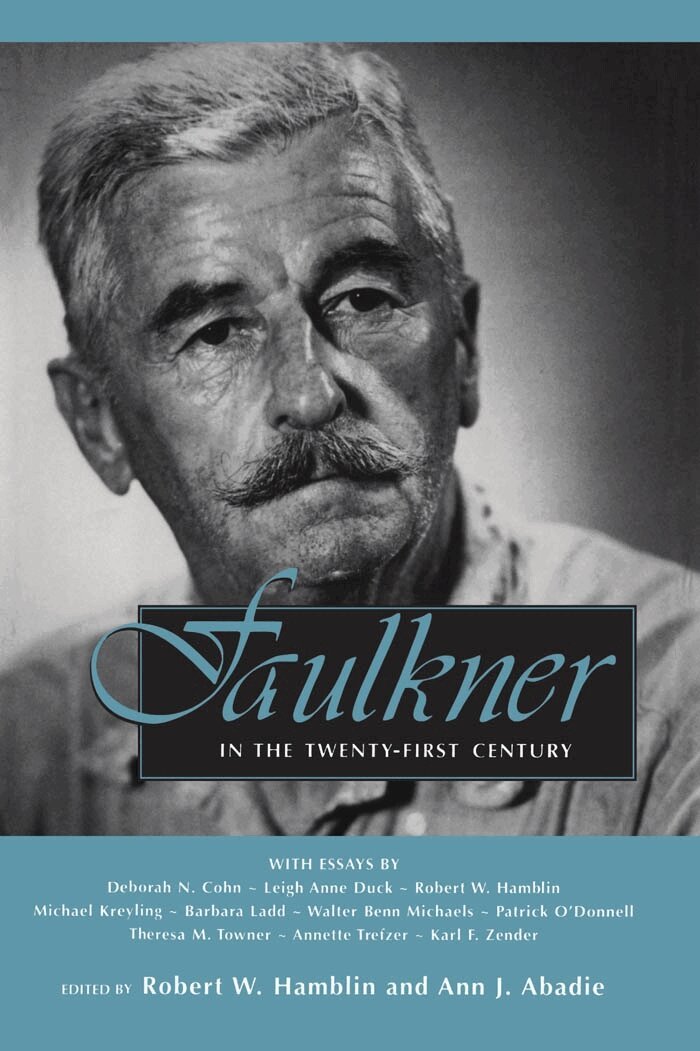
Contributions by Deborah N. Cohn, Leigh Anne Duck, Robert W. Hamblin, Michael Kreyling, Barbara Ladd, Walter Benn Michaels, Patrick O’Donnell, Theresa M. Towner, Annette Trefzer, and Karl F. Zender.Faulkner in the Twenty-First Century presents the thoughts of ten noted Faulkner scholars who spoke at the twenty-seventh annual Faulkner and Yoknapatawpha Conference at the University of Mississippi. Theresa M. Towner attacks the traditional classification of Faulkner’s works as “major” and “minor” and argues that this causes the neglect of other significant works and characters. Michael Kreyling uses photographs of Faulkner to analyze the interrelationships of Faulkner’s texts with the politics and culture of Mississippi.Barbara Ladd and Deborah Cohn invoke the relevance of Faulkner’s works to “the other South,” postcolonial Latin America. Also, approaching Faulkner from a postcolonial perspective, Annette Trefzer looks at his contradictory treatment of Native Americans.Within the tragic fates of such characters as Quentin Compson, Gail Hightower, and Rosa Coldfield, Leigh Ann Duck finds an inability to cope with painful memories. Patrick O’Donnell examines the use of the future tense and Faulkner’s growing skepticism of history as a linear progression. To postmodern critics who denigrate “The Fire and the Hearth,” Karl F. Zender offers a rebuttal. Walter Benn Michaels contends that in Faulkner’s South, and indeed the United States as a whole, the question of racial identification tends to overpower all other issues. Faulkner’s recurring interest in frontier life and values inspires Robert W. Hamblin’s piece.
Inbunden, Engelska, 2022
1 416 kr
Skickas inom 10-15 vardagar
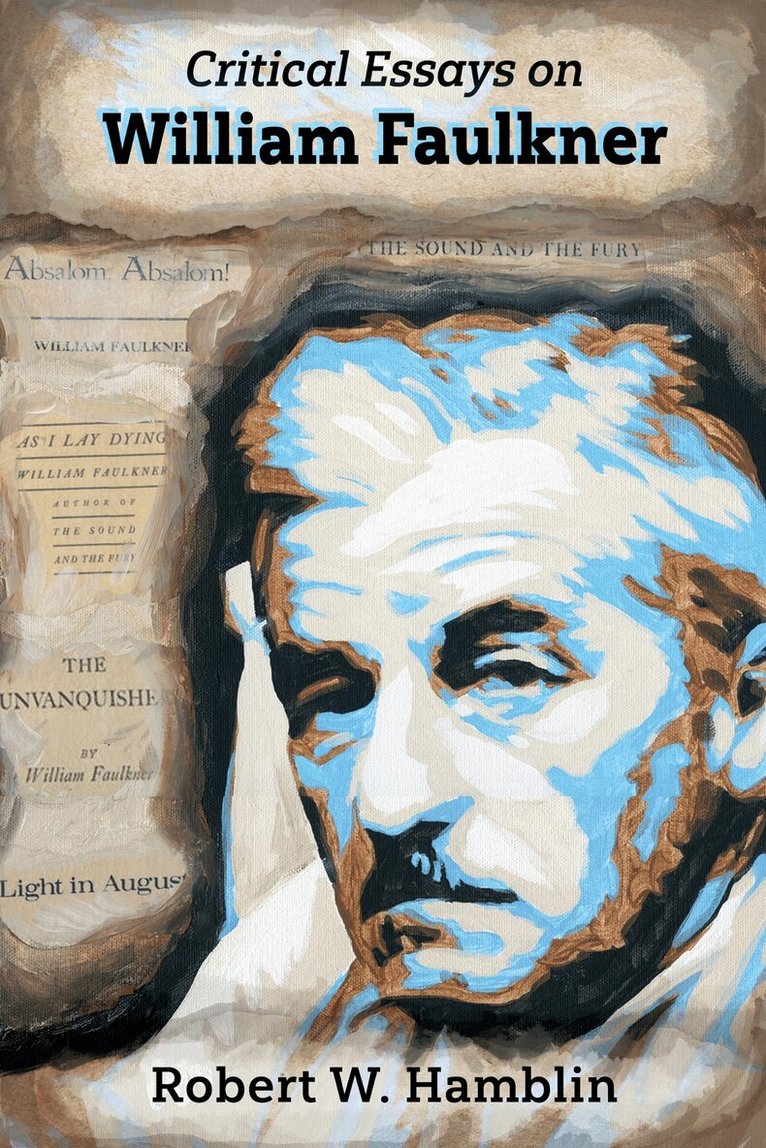
Critical Essays on William Faulkner compiles scholarship by noted Faulkner studies scholar Robert W. Hamblin. Ranging from 1980 to 2020, the twenty-one essays present a variety of approaches to Faulkner’s work. While acknowledging Faulkner as the quintessential southern writer—particularly in his treatment of race—the essays examine his work in relation to American and even international contexts. The volume includes discussions of Faulkner’s techniques and the psychological underpinnings of both the origin and the form of his art; explores how his writing is a means of "saying 'no' to death"; examines the intertextual linkages of his fiction with that of other writers like Shakespeare, Twain, Steinbeck, Warren, and Salinger; treats Faulkner’s use of myth and his fondness for the initiation motif; and argues that Faulkner’s film work in Hollywood is much better and of far greater value than most scholars have acknowledged.Taken as a whole, Hamblin’s essays suggest that Faulkner’s overarching themes relate to time and consequent change. The history of Faulkner’s Yoknapatawpha stretches from the arrival of the white settlers on the Mississippi frontier in the early 1800s to the beginnings of the civil rights movement in the 1940s. Caught in this world of continual change that produces a great degree of uncertainty and ambivalence, the Faulkner character (and reader) must weigh the traditions of the past with the demands of the present and the future. As Faulkner acknowledges, this process of discovery and growth is a difficult and sometimes painful one; yet, as Hamblin attests, to engage in that quest is to realize the very essence of what it means to be human.
Häftad, Engelska, 2022
440 kr
Skickas inom 10-15 vardagar
Critical Essays on William Faulkner compiles scholarship by noted Faulkner studies scholar Robert W. Hamblin. Ranging from 1980 to 2020, the twenty-one essays present a variety of approaches to Faulkner’s work. While acknowledging Faulkner as the quintessential southern writer—particularly in his treatment of race—the essays examine his work in relation to American and even international contexts. The volume includes discussions of Faulkner’s techniques and the psychological underpinnings of both the origin and the form of his art; explores how his writing is a means of "saying 'no' to death"; examines the intertextual linkages of his fiction with that of other writers like Shakespeare, Twain, Steinbeck, Warren, and Salinger; treats Faulkner’s use of myth and his fondness for the initiation motif; and argues that Faulkner’s film work in Hollywood is much better and of far greater value than most scholars have acknowledged.Taken as a whole, Hamblin’s essays suggest that Faulkner’s overarching themes relate to time and consequent change. The history of Faulkner’s Yoknapatawpha stretches from the arrival of the white settlers on the Mississippi frontier in the early 1800s to the beginnings of the civil rights movement in the 1940s. Caught in this world of continual change that produces a great degree of uncertainty and ambivalence, the Faulkner character (and reader) must weigh the traditions of the past with the demands of the present and the future. As Faulkner acknowledges, this process of discovery and growth is a difficult and sometimes painful one; yet, as Hamblin attests, to engage in that quest is to realize the very essence of what it means to be human.
E-bok
Engelska, 2022444 kr
Läs direkt efter köp
Critical Essays on William Faulkner compiles scholarship by noted Faulkner studies scholar Robert W. Hamblin. Ranging from 1980 to 2020, the twenty-one essays present a variety of approaches to Faulkner’s work. While acknowledging Faulkner as the quintessential southern writer—particularly in his treatment of race—the essays examine his work in relation to American and even international contexts. The volume includes discussions of Faulkner’s techniques and the psychological underpinnings of both the origin and the form of his art; explores how his writing is a means of “saying ''no'' to death"; examines the intertextual linkages of his fiction with that of other writers like Shakespeare, Twain, Steinbeck, Warren, and Salinger; treats Faulkner’s use of myth and his fondness for the initiation motif; and argues that Faulkner’s film work in Hollywood is much better and of far greater value than most scholars have acknowledged. Taken as a whole, Hamblin’s essays suggest that Faulkner’s overarching themes relate to time and consequent change. The history of Faulkner’s Yoknapatawpha stretches from the arrival of the white settlers on the Mississippi frontier in the early 1800s to the beginnings of the civil rights movement in the 1940s. Caught in this world of continual change that produces a great degree of uncertainty and ambivalence, the Faulkner character (and reader) must weigh the traditions of the past with the demands of the present and the future. As Faulkner acknowledges, this process of discovery and growth is a difficult and sometimes painful one; yet, as Hamblin attests, to engage in that quest is to realize the very essence of what it means to be human.
E-bok
PDF, Engelska, 2022444 kr
Läs direkt efter köp
Critical Essays on William Faulkner compiles scholarship by noted Faulkner studies scholar Robert W. Hamblin. Ranging from 1980 to 2020, the twenty-one essays present a variety of approaches to Faulkner’s work. While acknowledging Faulkner as the quintessential southern writer—particularly in his treatment of race—the essays examine his work in relation to American and even international contexts. The volume includes discussions of Faulkner’s techniques and the psychological underpinnings of both the origin and the form of his art; explores how his writing is a means of “saying ''no'' to death"; examines the intertextual linkages of his fiction with that of other writers like Shakespeare, Twain, Steinbeck, Warren, and Salinger; treats Faulkner’s use of myth and his fondness for the initiation motif; and argues that Faulkner’s film work in Hollywood is much better and of far greater value than most scholars have acknowledged. Taken as a whole, Hamblin’s essays suggest that Faulkner’s overarching themes relate to time and consequent change. The history of Faulkner’s Yoknapatawpha stretches from the arrival of the white settlers on the Mississippi frontier in the early 1800s to the beginnings of the civil rights movement in the 1940s. Caught in this world of continual change that produces a great degree of uncertainty and ambivalence, the Faulkner character (and reader) must weigh the traditions of the past with the demands of the present and the future. As Faulkner acknowledges, this process of discovery and growth is a difficult and sometimes painful one; yet, as Hamblin attests, to engage in that quest is to realize the very essence of what it means to be human.
E-bok
PDF, Engelska, 2009444 kr
Läs direkt efter köp
Contributions by Deborah N. Cohn, Leigh Anne Duck, Robert W. Hamblin, Michael Kreyling, Barbara Ladd, Walter Benn Michaels, Patrick O''Donnell, Theresa M. Towner, Annette Trefzer, and Karl F. Zender Faulkner in the Twenty-First Century presents the thoughts of ten noted Faulkner scholars who spoke at the twenty-seventh annual Faulkner and Yoknapatawpha Conference at the University of Mississippi. Theresa M. Towner attacks the traditional classification of Faulkner''s works as “major” and “minor” and argues that this causes the neglect of other significant works and characters. Michael Kreyling uses photographs of Faulkner to analyze the interrelationships of Faulkner''s texts with the politics and culture of Mississippi. Barbara Ladd and Deborah Cohn invoke the relevance of Faulkner''s works to “the other South,” postcolonial Latin America. Also, approaching Faulkner from a postcolonial perspective, Annette Trefzer looks at his contradictory treatment of Native Americans. Within the tragic fates of such characters as Quentin Compson, Gail Hightower, and Rosa Coldfield, Leigh Ann Duck finds an inability to cope with painful memories. Patrick O''Donnell examines the use of the future tense and Faulkner''s growing skepticism of history as a linear progression. To postmodern critics who denigrate “The Fire and the Hearth,” Karl F. Zender offers a rebuttal. Walter Benn Michaels contends that in Faulkner''s South, and indeed the United States as a whole, the question of racial identification tends to overpower all other issues. Faulkner''s recurring interest in frontier life and values inspires Robert W. Hamblin''s piece.
E-bok
Engelska, 2009444 kr
Läs direkt efter köp
Contributions by Deborah N. Cohn, Leigh Anne Duck, Robert W. Hamblin, Michael Kreyling, Barbara Ladd, Walter Benn Michaels, Patrick O''Donnell, Theresa M. Towner, Annette Trefzer, and Karl F. Zender Faulkner in the Twenty-First Century presents the thoughts of ten noted Faulkner scholars who spoke at the twenty-seventh annual Faulkner and Yoknapatawpha Conference at the University of Mississippi. Theresa M. Towner attacks the traditional classification of Faulkner''s works as “major” and “minor” and argues that this causes the neglect of other significant works and characters. Michael Kreyling uses photographs of Faulkner to analyze the interrelationships of Faulkner''s texts with the politics and culture of Mississippi. Barbara Ladd and Deborah Cohn invoke the relevance of Faulkner''s works to “the other South,” postcolonial Latin America. Also, approaching Faulkner from a postcolonial perspective, Annette Trefzer looks at his contradictory treatment of Native Americans. Within the tragic fates of such characters as Quentin Compson, Gail Hightower, and Rosa Coldfield, Leigh Ann Duck finds an inability to cope with painful memories. Patrick O''Donnell examines the use of the future tense and Faulkner''s growing skepticism of history as a linear progression. To postmodern critics who denigrate “The Fire and the Hearth,” Karl F. Zender offers a rebuttal. Walter Benn Michaels contends that in Faulkner''s South, and indeed the United States as a whole, the question of racial identification tends to overpower all other issues. Faulkner''s recurring interest in frontier life and values inspires Robert W. Hamblin''s piece.